For many homeowners, the garage is the most underutilized space in the house. It’s often a catch-all for storage, tools, and cars, but it holds the potential for so much more. Transforming a small corner of it into a dedicated wellness retreat is one of the most practical and impactful home upgrades you can make. It creates a clear separation from the daily routines of the main house, allowing you to fully disconnect. With its durable flooring and existing structure, the garage is an ideal environment for a personal sauna. A garage sauna in Charlotte offers a convenient, private space to build a consistent health ritual into your life, and the process is more straightforward than you might think.
Key Takeaways
- A garage is an ideal location for a home sauna: It provides a dedicated wellness space separate from your main living areas, and infrared models are particularly well-suited due to their lower moisture output and flexible installation requirements.
- A safe installation requires careful planning: Key considerations include a level floor for the foundation, proper ventilation to manage humidity in the Carolina climate, and professional electrical work to meet all local safety codes.
- Partnering with a local expert simplifies the process: An experienced installer can manage the entire project, from navigating Charlotte’s specific permit requirements to coordinating construction, ensuring a seamless and compliant installation.
Why a Garage Sauna Makes Sense in Charlotte
Adding a sauna to your home is about creating a dedicated space for health and recovery. For many homeowners here in the Carolinas, the garage is the perfect place for it. A garage sauna offers a practical way to build a wellness routine into your daily life without disrupting your main living areas. It’s an accessible, private retreat that works for you year-round. In our experience, transforming a small part of your garage into a wellness zone is one of the most effective home upgrades you can make.
Enjoy Wellness Through Every Carolina Season
Charlotte’s weather shifts from humid summer days to damp, chilly winters. A home sauna offers a consistent way to feel your best, no matter the season. During colder months, it provides a deep warmth that soothes muscles and joints. In the summer, a sauna session can help your body adapt to the heat and support detoxification. This year-round accessibility makes it easier to maintain a wellness practice. Having a personal home sauna means you can always find a moment to relax, feel refreshed, and support your overall health.
The Convenience of a Private, At-Home Retreat
The garage is an ideal location for a sauna for several practical reasons. It often has available space, a concrete floor that handles moisture well, and it keeps the heat and humidity separate from your home’s main living areas. This separation creates a more intentional experience. You’re not just stepping into another room; you’re entering a space designed for relaxation and recovery, making it easier to disconnect from daily distractions. This dedicated zone often becomes the foundation for a complete contrast therapy routine, with a cold plunge added nearby for a full hot-and-cold wellness cycle.
A Smart Addition to Your Home’s Value
A well-designed sauna is an investment in your daily well-being and your property. While the immediate benefits are personal, a permanent sauna adds tangible value to your home. In a health-conscious market like Charlotte, a dedicated wellness space is a highly attractive feature for future buyers. It signals a commitment to quality of life that resonates with modern homeowners. A premium installation delivers returns through enhanced property value and lifestyle improvement. When you’re ready to explore what this investment could look like, a free home consultation can help clarify the possibilities.
What’s the Best Type of Sauna for a Garage?
Choosing the right type of sauna is less about technology and more about how you want to feel. The decision between a traditional and an infrared sauna comes down to the kind of heat you prefer and how you plan to fit this wellness ritual into your life. Both are excellent tools for health and relaxation, but they work differently. In our experience helping homeowners across the Carolinas, understanding this difference is the key to making a choice you’ll be happy with for years to come.
Your garage environment also plays a role. Factors like available space, ventilation, and existing electrical capacity can make one type a more practical fit than the other. Let’s walk through the options so you can feel confident about what’s right for your home.
Traditional vs. Infrared: Making the Right Choice
A traditional sauna uses an electric heater to warm stones, which then heat the air around you to high temperatures, often between 150 and 195°F. This creates an intense, enveloping heat that you can soften by ladling water over the stones for a burst of steam. It’s a powerful, classic experience.
An infrared sauna, on the other hand, uses infrared emitters to warm your body directly, not the air. The temperatures are lower, typically 120 to 150°F, but the heat penetrates more deeply. Many people find this warmth gentler and more therapeutic. Both are effective, but they support different wellness goals, like those found in contrast therapy.
Why Infrared Is Often Ideal for Garage Spaces
For many garage installations, an infrared sauna has a few practical advantages. Because they don’t create the high humidity of a traditional sauna, they produce less moisture, which is a significant benefit in our Carolina climate. This simplifies ventilation and reduces concerns about dampness.
Infrared saunas also tend to be more compact and can operate comfortably under lower ceilings, making them easier to fit into an existing space without major modifications. They generally use less electricity and heat up faster, which makes them convenient for a quick, spontaneous session after a workout or at the end of a long day. These features make them a straightforward and popular choice for many homeowners.
Our Recommendation for Reliability: Tylo Saunas
After years of installations, we’ve learned what lasts. That’s why we confidently recommend Tylo saunas. They are a world-renowned brand known for exceptional craftsmanship, safety, and performance. Whether you prefer the deep warmth of infrared or the classic steam of a traditional unit, Tylo offers beautifully designed options in both categories.
Choosing Tylo means you aren’t sacrificing quality for convenience. Their systems are built for long-term reliability, ensuring your investment provides consistent wellness benefits without the headaches of frequent maintenance. It’s the peace of mind that comes from knowing your home wellness retreat is built to perform, session after session.
How Much Space and Ventilation Will You Need?
Before you can enjoy the daily ritual of a sauna, it’s important to get the fundamentals right. The placement, airflow, and construction of your sauna are what make it a safe, effective, and lasting part of your home. In our experience building wellness spaces across the Carolinas, we’ve found that a little planning around these three areas ensures your garage sauna feels like a seamless extension of your home, not an afterthought. Getting the technical details right from the start is the key to years of effortless relaxation and recovery.
Planning Your Layout: Dimensions and Ceiling Height
You don’t need a massive amount of room to create a dedicated wellness space. A cozy sauna for two people typically requires a footprint of about four feet by four feet. For a larger model that accommodates family or friends, you might plan for a space around six feet by eight feet. The more critical measurement is often ceiling height. Most traditional saunas need at least seven feet of clearance to allow for proper heat circulation. If your garage has a lower ceiling, an infrared model is often a better fit, as they can sometimes be installed in spaces with less overhead room. We can help you find the right Tylo® sauna to match your available space perfectly.
Why Proper Ventilation Is Non-Negotiable
Proper ventilation is essential for both your comfort and the health of your home. A well-designed sauna needs a steady supply of fresh air to keep oxygen levels comfortable and prevent the air from feeling stale or stuffy during your session. Just as importantly, good airflow helps manage the moisture that heat and steam create. This is non-negotiable for preventing mold, mildew, and potential damage to your garage’s structure over time. A professional installation always includes a ventilation plan that is tailored to your specific unit and garage layout, ensuring every session is as safe as it is relaxing.
Managing Insulation and Moisture in Our Climate
Here in the Carolinas, we know humidity. That’s why managing moisture is a critical part of any garage sauna installation. For traditional saunas that produce steam, a vapor barrier and quality insulation are vital. These elements work together to contain humidity within the sauna, protecting your garage walls and structure. The electrical setup is just as important. Most home saunas use an electric heater, which must be installed by a qualified electrician to ensure it meets all local codes and safety standards. During a free home consultation, we review all these requirements to make sure your installation is seamless and secure.
What Does a Garage Sauna in Charlotte Really Cost?
Understanding the cost of a garage sauna helps you plan with confidence. The price isn’t just the unit itself; it includes the initial investment, necessary prep work, and the cost of daily use. When homeowners in Charlotte ask us about pricing, we walk them through these three key areas. This way, there are no surprises, and you can focus on the real reason you want a sauna: to feel better every day. Let’s break down what you can expect.
Breaking Down the Initial Investment
The initial investment for a quality home sauna typically falls between $3,000 and $10,000. Simpler plug-and-play infrared models can start around $1,500, while a fully custom sauna can exceed $30,000. This range exists because you’re choosing the size, materials, and type of heat that best fits your wellness routine. In our experience, most homeowners find a perfect fit within that main range. Thinking about your budget is an important step, and flexible financing options can make a high-quality sauna more accessible without compromising on the features that matter for long-term use.
Planning for Electrical and Prep Work
Beyond the sauna itself, you’ll need to account for electrical work, a critical step for safety and performance. A simple infrared sauna might only need a dedicated 120V circuit, which a local electrician can install for $100 to $200. Most traditional saunas, however, require a more powerful 220/240V circuit, with work typically ranging from $250 to $900. This ensures your heater operates efficiently and safely. Because we manage these projects from start to finish, we can clarify what your space needs during a free home consultation. This planning prevents unexpected costs and ensures your installation meets all local codes.
Understanding Long-Term Operating Costs
Once your sauna is installed, the cost to run it is surprisingly low. An infrared sauna, used several times a week, might add only $5 to $15 to your monthly electric bill. A traditional electric model is also very efficient, typically costing between $15 and $30 per month. That’s less than a few weekly coffees for a daily wellness ritual. Brands like Tylo saunas are designed for excellent heat retention, which means they use energy wisely. This efficiency makes it easy to incorporate sauna use into your daily life without worrying about the utility bill.
Will You Need a Permit for Your Garage Sauna?
The topic of permits can feel complicated, but it’s really just about ensuring your sauna is installed safely and correctly. For homeowners here in the Carolinas, the answer isn’t a simple yes or no. It depends on the type of sauna you choose, the electrical work required, and your specific local regulations.
In our experience, it’s always best to assume you’ll need some form of approval until you’re told otherwise. This protects your investment and gives you peace of mind. The process usually involves checking three key areas: Charlotte’s building codes, electrical standards, and any neighborhood rules from your HOA. Understanding these ahead of time makes the entire installation process feel much smoother.
A Look at Charlotte’s Building and Permit Codes
Here in Mecklenburg County, a building permit is typically required for any new structure or significant modification. While a small, plug-in infrared sauna might not trigger this requirement, a larger, permanently installed traditional sauna often will. These installations are seen as an addition to your home’s structure and value.
The best first step is to clarify the requirements with your local building department. You can ask them directly whether your specific sauna plan requires a building permit, an electrical permit, or both. Because we manage these projects regularly, we can help guide you through this process during a free home consultation, ensuring you have the right information from the start.
Meeting Electrical and Safety Standards
More often than not, the need for a permit is tied to the sauna’s electrical requirements. Many high-performance traditional saunas, like the Tylo models we recommend, use a 240V hardwired heater for efficient and consistent heat. Any time you’re running a new 240V circuit, you can expect to need an electrical permit.
This isn’t just about paperwork; it’s a critical safety measure. The permit ensures a qualified electrician performs the installation and that the work is inspected to meet all local codes. This guarantees your sauna operates safely for years to come, preventing issues with your home’s electrical system and giving you confidence every time you step inside to relax.
What to Know About HOA and Zoning Rules
Beyond city and county rules, many Charlotte-area neighborhoods have a Homeowners’ Association (HOA) with its own set of guidelines. Before starting your project, it’s important to review your HOA covenants to see if there are any rules about home modifications, even for an interior space like a garage. This is especially true if your installation requires any exterior changes, such as adding a vent.
Zoning is another layer to consider, though it’s less commonly an issue for an interior garage sauna. Getting clarity on these local rules upfront prevents surprises down the road. As a local builder, we’re familiar with the nuances of different communities and can help ensure your project respects all necessary guidelines.
How to Plan a Seamless Garage Sauna Installation
Bringing a sauna into your home is an investment in your daily well-being. A thoughtful plan is the key to making the installation process feel as calm and restorative as the sauna itself. When you know what to expect, you can move confidently from the initial design conversation to your first session, knowing every detail has been handled correctly. The goal is a seamless transition, turning an underused part of your garage into a dedicated space for health and relaxation.
For homeowners here in the Carolinas, a successful installation comes down to three things: understanding the process, choosing the right partner, and planning for long-term reliability. With a clear path forward, you can focus on the benefits waiting for you, not the logistics of getting there.
What to Expect: From Site Prep to First Use
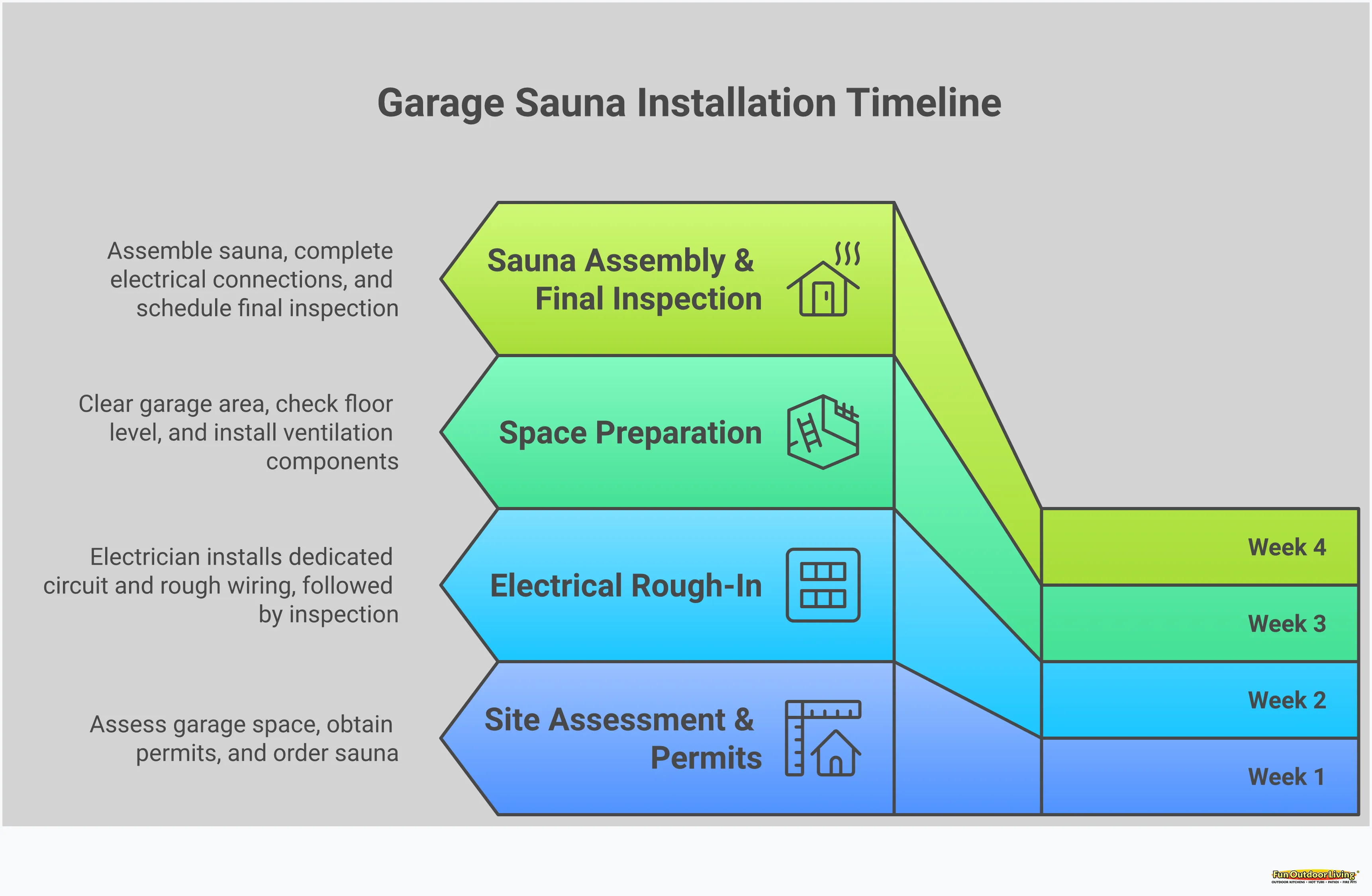
The journey to your first sauna session is a straightforward, step-by-step process. It begins with preparing the space. Your garage floor needs to be level and solid, and we’ll confirm the ideal location for proper clearance and access. The most critical step is the electrical work. Most traditional and infrared saunas, like the Tylo® models we recommend, require a dedicated 240V circuit. This must be installed by a licensed electrician to ensure safety and meet local codes.
Once the site is prepped, the sauna assembly can begin. After the unit is built, the electrician will return for the final hookup. We coordinate every step, so you don’t have to manage multiple schedules. This process often involves an electrical permit, and our team helps you prepare the necessary details for the application, ensuring everything is up to code for final inspection.
The Value of Working with a Local Expert
Coordinating a project with multiple contractors can be complicated. Working with a single, local expert simplifies everything. Instead of you finding a builder, an electrician, and a sauna supplier, we manage the entire process with our in-house teams. We’ve installed countless wellness spaces in Charlotte and the surrounding areas, so we understand the specific requirements, from permitting to working with local inspectors.
Our role is to be your single point of contact from the first design consultation to the final walkthrough. We’ve seen what works best in Carolina homes and can guide you through decisions with confidence. This integrated approach means fewer delays, clearer communication, and the peace of mind that comes from knowing one accountable team is responsible for bringing your private wellness retreat to life.
Ensuring Your Sauna Is Cared For Long-Term
A proper installation is the foundation for years of reliable performance. Adhering to local building codes isn’t just about passing an inspection; it’s about ensuring your sauna operates safely and efficiently for its entire lifespan. A building inspector will likely need to approve the final installation, assessing everything from the structure and ventilation to the electrical connections and fire safety measures.
Our commitment to you continues long after the installation is complete. Because we are a local company with our own certified service technicians, you have a direct line to expert support for any maintenance or questions that arise. This long-term relationship is one of the most important things we build. It’s the confidence that your investment is protected and that help is always just a local call away.
Related Articles
- Ultimate Sauna Installation Charlotte NC Guide
- Sauna Installation Cost Charlotte: 2026 Price Guide
- Find the Best Sauna Installers in Charlotte
Frequently Asked Questions
Which type of sauna feels better, infrared or traditional? This really comes down to personal preference and how you plan to use it. A traditional sauna provides an intense, enveloping heat that many people love for its classic, social feel. An infrared sauna offers a gentler, more direct warmth that penetrates deeply into your muscles, which is often preferred for targeted recovery after a workout or for longer, quieter sessions. The best way to decide is to think about the kind of experience you want to have day after day.
How much maintenance does a garage sauna require? A well-built sauna is surprisingly low-maintenance. The main tasks involve simply wiping down the benches and backrests after use to keep the wood clean and occasionally checking that the heater or emitters are clear of any debris. Because brands like Tylo are designed for durability, you won’t be spending your time on upkeep. It’s a wellness tool that should serve you, not the other way around.
Will a sauna make my garage damp or musty? This is a common concern here in the Carolinas, and the answer is no, as long as it’s installed correctly. A professional installation includes proper ventilation and, for traditional models, a vapor barrier. These elements work together to contain and manage all moisture within the sauna itself, protecting your garage’s structure. This is one of the most important reasons to work with an experienced installer who understands our local climate.
Do I need a special floor in my garage for a sauna? For most installations, your existing concrete garage floor is the ideal surface. It’s durable, level, and can easily handle the weight and heat of the sauna. The most important factor is that the surface is flat and solid to ensure the sauna is stable. During a home consultation, we always assess the specific location to confirm it’s a suitable foundation for your new wellness space.
How long does the entire installation process take? The process is more streamlined than many homeowners expect. After your initial design consultation, the first step is scheduling an electrician to run the necessary dedicated circuit, which usually takes a few hours. Once that is complete, the actual assembly of the sauna itself is often finished in just one day. We coordinate all the steps, so the entire project moves along smoothly from site prep to your first session.