A garage is one of the most practical places to install a home sauna, but it’s not a climate-controlled part of your home. This creates a few important considerations that we always plan for to ensure your sauna performs reliably for years. The main differences come down to temperature fluctuation, moisture management, and safe electrical work. An uninsulated garage in the Carolinas can affect how efficiently your sauna heats up and how much energy it uses. That’s why understanding the specific garage sauna electrical Charlotte regulations is so important. It ensures the power supply is not just adequate but perfectly matched to your sauna for consistent heat and long-term performance, turning your garage into a true wellness retreat.
Key Takeaways
- A dedicated circuit is essential for safety and performance: Every hardwired sauna needs its own power line with a GFCI breaker. This prevents tripped circuits and ensures your sauna heats up reliably every time you want to use it.
- Your sauna choice determines the electrical work: Traditional saunas almost always require a 240-volt connection, similar to a large appliance. Knowing this from the start helps you plan for a smooth and predictable installation process.
- Professional installation protects your home and warranty: Using a licensed electrician ensures all work is up to code, safe for your family, and compliant with the manufacturer’s requirements. This gives you peace of mind that your investment is protected.
Planning the Electrical for Your Garage Sauna
Before you can enjoy the quiet heat of a home sauna, it’s important to plan for its power source. The electrical work is the foundation of a safe, reliable, and effective sauna experience. While it might sound technical, understanding the basics helps you ask the right questions and ensure the installation is done correctly from the start. Proper wiring isn’t just about making the sauna turn on; it’s about protecting your home, your investment, and your family.
In our experience building wellness spaces across the Carolinas, we’ve seen that a little planning goes a long way. A dedicated, properly installed electrical line ensures your sauna heats efficiently and operates consistently for years to come. It prevents common issues like tripped breakers and ensures the system meets all safety standards. Thinking through these details beforehand makes the entire process smoother, allowing you to focus on the wellness benefits your new sauna will bring to your daily life.
Power Needs: Traditional vs. Infrared Saunas
The type of sauna you choose will determine its electrical requirements. Many smaller, one or two-person infrared saunas are designed for convenience and can often plug directly into a standard 120-volt household outlet. However, this isn’t always the case for larger models or for traditional saunas.
A traditional sauna, which uses an electric heater to warm rocks, requires more power to reach higher temperatures. Most of these, along with larger infrared models, need a dedicated 220 to 240-volt circuit, similar to what an electric stove or dryer uses. Understanding this distinction is a key first step in planning your installation and budget. We can help you explore the specific needs of different Tylo® traditional and infrared saunas to find the right fit for your home.
Essential Safety: Dedicated Circuits and GFCI
Two non-negotiable safety features for any hardwired sauna are a dedicated circuit and a GFCI breaker. A dedicated circuit means the sauna has its own electrical line running directly from your breaker panel. This prevents the sauna from overloading a circuit shared with other appliances, which could cause breakers to trip or create a fire hazard. It ensures the heater has all the power it needs to function correctly.
A Ground Fault Circuit Interrupter (GFCI) breaker is another critical safety device. It constantly monitors the flow of electricity and will instantly shut off the power if it detects any imbalance, which could indicate a risk of electric shock. Given that saunas are environments where moisture can be present, a GFCI provides essential protection for you and your family.
Local Codes: What Charlotte Requires for Sauna Wiring
Any electrical work done in your home must follow the National Electrical Code (NEC) as well as local regulations. Here in the Charlotte area, specific rules govern how a sauna must be wired to ensure it’s safe. This isn’t just about following rules; it’s about guaranteeing the installation is done right.
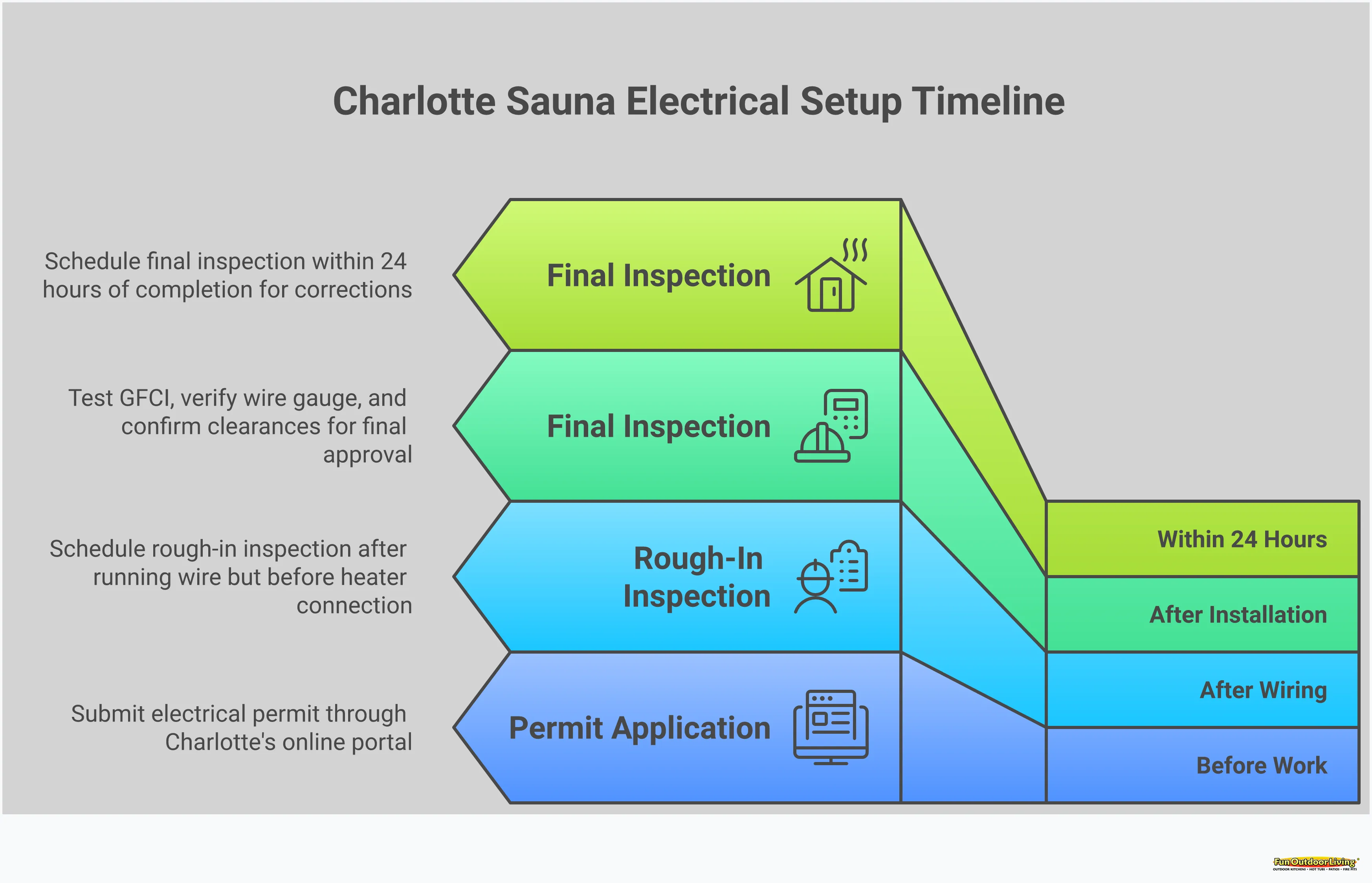
Before work begins, it’s important to check local building codes, as a permit may be required. In some cases, a building inspector will need to approve the final installation, assessing everything from the wiring and ventilation to fire safety clearances. A professional installation team handles these details for you, ensuring every aspect of the project is compliant and secure. This is a key part of our free home consultation, where we review your space and plan for a safe, seamless installation.
What Makes a Garage Sauna Installation Different?
A garage is one of the most practical places to install a home sauna. It’s typically located on a concrete slab, has enough open space, and offers a degree of privacy. Because garages have exterior walls and often a large door, planning for ventilation can also be more straightforward than in a finished basement or interior room. However, a garage is not a climate-controlled part of your home, and that creates a few important considerations that we always plan for to ensure your sauna performs reliably for years.
The main differences come down to three things: temperature fluctuation, moisture management, and safe placement. An uninsulated garage in the Carolinas experiences significant temperature swings, which can affect how efficiently your sauna heats up and how much energy it uses. Proper ventilation becomes even more critical to prevent moisture from getting trapped and causing long-term issues for your home and your sauna. Finally, ensuring the sauna has enough clearance from walls, vehicles, and stored items is essential for both performance and fire prevention. Addressing these points from the start is the key to making sure your sauna becomes a reliable wellness retreat, not a source of frustration or unexpected repairs.
How an Unheated Garage Affects Sauna Performance
The temperature inside your garage directly impacts how your sauna works. During a cold Carolina winter, an unheated garage forces your sauna’s heater to work much harder to reach and maintain its target temperature. This can mean longer pre-heat times and higher energy consumption. Conversely, summer heat can also play a role. While it might seem helpful, extreme ambient heat isn’t ideal for the longevity of the sauna’s components.
To ensure consistent performance, we often recommend insulating the garage walls and ceiling, especially the areas nearest the sauna. This simple step creates a more stable environment, allowing your sauna to operate efficiently year-round. It’s a small investment that pays off in reliable performance and a better, more predictable wellness routine.
Proper Ventilation: Preventing Moisture Issues
Every sauna, especially a traditional one that uses water on hot stones, produces steam and moisture. In an enclosed space like a garage, that moisture needs a clear path to escape. Without proper ventilation, it can lead to mold, mildew, and potential damage to your garage’s structure or anything you have stored nearby. Because home saunas must meet specific local standards for safety and operation, getting the ventilation right is non-negotiable.
Fortunately, a garage’s exterior walls make it easier to install the necessary vents. A well-designed ventilation system ensures a fresh, comfortable environment inside the sauna and protects your home outside of it. This is a key part of creating a complete contrast therapy space that is both safe and sustainable for long-term use.
Safe Placement: Clearances and Fire Prevention
Where you place the sauna in your garage is just as important as how it’s wired. Sauna heaters generate intense, focused heat and require adequate clearance from any combustible materials. This includes walls, shelving, and even items you might temporarily place nearby. We plan for a safe zone around the entire unit to ensure proper airflow, which helps the heater function correctly and prevents any fire hazards.
This focus on safety extends to the electrical work itself. Electric sauna heaters must be on a dedicated circuit with a GFCI breaker to protect against electrical shock, especially in an environment where moisture is present. Proper placement and professional wiring work together to give you peace of mind, allowing you to relax and enjoy the health benefits of your Tylo sauna without worry.
How Sauna Type Affects Your Electrical Needs
The type of sauna you choose is about more than just the kind of heat you prefer. It directly influences the electrical work required in your garage. A traditional sauna has different power needs than an infrared model, and understanding this from the start ensures your installation is safe, efficient, and planned correctly. It’s one of the first and most important conversations to have before you decide on a specific model for your home.
Powering a Traditional Electric Sauna
A traditional electric sauna delivers that classic, intense heat by warming stones with a powerful heater. To do this, most electric sauna heaters require a 240-volt circuit, similar to what an electric range or clothes dryer uses. This is not a standard wall outlet. It requires a licensed electrician to run a new, dedicated line from your home’s main electrical panel to the sauna’s location in your garage. This dedicated power ensures the heater operates safely and effectively without overloading your home’s electrical system. Planning for this step is essential for any traditional sauna installation.
Electrical Needs for an Infrared Sauna
Infrared saunas work differently, using light to create radiant heat that warms your body directly. Because of this, their power requirements are often less demanding. Smaller, one or two-person infrared units can sometimes operate on a standard 120-volt outlet, but they almost always need to be on a dedicated 15 or 20-amp circuit. This means no other appliances can share that circuit. Larger infrared models may still require a 240-volt connection. It’s important to check the specifications for the exact model you’re considering, as assuming it will just plug in can lead to tripped breakers or unsafe conditions.
Wiring for Tylo Saunas: What to Expect
As a provider of Tylo saunas, we know their electrical requirements well. For safety and performance, every Tylo electric heater must be wired to its own dedicated circuit. This prevents any other power draw from interfering with the sauna’s operation. Furthermore, these circuits require a GFCI (Ground Fault Circuit Interrupter) breaker. A GFCI is a fast-acting safety device that cuts power if it detects an imbalance, which is a critical protection in any area where moisture could be present. Our installation process ensures these requirements are met, giving you peace of mind that your wellness routine is built on a foundation of safety.
Understanding the Risks of a Garage Sauna Installation
A garage can be an ideal spot for a home sauna, but the environment presents unique challenges. Understanding these ahead of time is the key to a safe, reliable installation that you can enjoy for years. It’s not about avoiding the garage, but about preparing it correctly. From electrical safety to protecting the sauna itself, a thoughtful approach makes all the difference in creating a lasting wellness space.
Common Electrical and Fire Hazards
A sauna heater is a powerful appliance, and its electrical needs are specific. The most significant risk comes from improper wiring. Every electric sauna heater requires its own dedicated circuit, which means it doesn’t share power with any other outlets or lights. This prevents overloading, a primary cause of electrical fires. Furthermore, most modern codes require a special type of breaker called a GFCI (Ground Fault Circuit Interrupter) for added protection against shock. For homeowners here in the Carolinas, getting this part right isn’t just a recommendation; it’s essential for the safety of your home and family.
How a Garage Install Can Affect Your Warranty
Your sauna is an investment, and its warranty is there to protect it. However, most manufacturer warranties come with conditions, and the environment is a big one. A typical Carolina garage experiences significant temperature swings, from hot, humid summers to cold winter nights. These extremes can put extra strain on the sauna’s heater and electronic components. Many warranties specify an acceptable operating temperature range, and placing a sauna in an unconditioned space like a garage can potentially void that coverage. We help homeowners select the right Tylo® saunas built to handle these conditions and ensure the installation meets all warranty requirements from day one.
Preventing Long-Term Damage From Moisture
Saunas produce heat and steam, which means moisture is part of the experience. In an enclosed space like a garage, managing that moisture is critical. Without proper ventilation, condensation can build up on walls and ceilings, leading to mold, mildew, and even structural damage over time. It can also affect the longevity of your sauna’s wood. In our experience, preparing the garage itself is a crucial step. This can involve adding insulation to nearby walls or ensuring a proper ventilation system is in place. A free home consultation allows us to assess your specific space and plan for these details, ensuring your sauna enhances your home, not harms it.
Why Professional Installation Protects Your Investment
A sauna is an investment in your daily wellness. To get the most out of it, the installation needs to be as reliable as the sauna itself. While it might seem straightforward, the electrical and structural details of a garage installation are complex. Getting it right from the start ensures your sauna is safe, efficient, and ready for you whenever you need it. In our experience, professional installation isn’t just a service; it’s the foundation for years of consistent performance and peace of mind. It protects your home, your warranty, and the wellness ritual you’re looking forward to.
Ensuring Your Sauna is Safe and Up to Code
Local building codes aren’t just about paperwork; they are designed to keep your home and family safe. Electric and infrared saunas have specific wiring requirements that must follow the National Electrical Code as well as local rules here in the Carolinas. A licensed professional understands these regulations inside and out, from the type of wiring needed to proper ventilation and fire safety clearances. We manage the entire permitting and inspection process, ensuring every detail is approved. This way, you can relax in your new sauna knowing it was installed correctly and safely from day one.
Protecting Your Warranty and Homeowner’s Insurance
Your sauna’s manufacturer warranty is there to protect your investment, but it often depends on a proper installation. Many manufacturers specify that the sauna must be installed indoors under certain conditions. Placing it in a garage that gets too cold or damp without the right preparation could potentially void your warranty coverage. Similarly, an unpermitted installation could create complications with your homeowner’s insurance policy if an issue ever arises. Professional installation provides the documentation and compliance needed to keep both your warranty and your insurance fully intact, giving you one less thing to worry about.
Achieving Reliable, Long-Term Performance
The single most important factor for your sauna’s performance is the electrical work. When it’s done correctly, your sauna heats up efficiently and holds its temperature consistently, session after session. A professional installation guarantees your sauna is on a dedicated circuit with the right voltage, preventing tripped breakers or inconsistent heating. For homeowners here, this means your wellness routine is never interrupted. Our in-house technicians have installed countless Tylo saunas in garages across the Carolinas. We know how to ensure your sauna performs reliably for years, becoming a dependable part of your daily life.
What to Expect for Electrical Installation Costs
Understanding the cost of electrical work for your sauna isn’t about getting a single number. It’s about knowing what factors influence the final price so you can plan with confidence. The goal is a safe, reliable installation that performs perfectly for years, and the electrical work is the foundation for that peace of mind. Pricing for this kind of work isn’t arbitrary; it’s directly tied to your home’s specific layout, your existing electrical system, and the sauna model you choose.
We believe transparency matters. That’s why we focus on explaining why costs can change, not just what the numbers are. When homeowners understand the trade-offs between a more powerful heater and the wiring it requires, or why the location of their garage matters, decisions become easier and far more confident. Our process always starts with a professional assessment, so you receive a clear, accurate quote with no surprises. This ensures the power supply is not just adequate, but perfectly matched to your sauna for consistent heat and long-term performance.
What Determines Sauna Wiring Costs in Charlotte?
The primary cost driver for sauna wiring is the power your heater requires. A more powerful heater, which creates a more immersive heat experience, needs a more substantial, dedicated circuit. This is typically between 20 and 60 amps. The second key factor is the distance from your garage to your home’s main electrical panel. A longer distance requires more copper wiring and labor to run the line safely and securely. In our experience with homes across the Carolinas, these two factors, heater size and the length of the wire run, account for most of the variability in installation pricing.
Will You Need to Upgrade Your Electrical Panel?
This is a common and important question. The answer depends entirely on your home’s existing electrical capacity. Most modern sauna heaters require a 240-volt circuit, which is standard in most homes for appliances like dryers or ovens. However, your main panel must have an open slot and enough available power to support the sauna without overloading the system. If your panel is already full, a licensed electrician may recommend an upgrade. This ensures your sauna receives the clean, dedicated power it needs for reliable performance, protecting its sensitive components and giving you a flawless experience every time you use it.
Factoring in Permit and Inspection Fees
In Charlotte and surrounding areas, electrical work for a new appliance like a sauna requires a permit and a final inspection. This isn’t just red tape; it’s a critical safety step that protects your home and family. The process ensures all wiring meets the strict standards of the National Electrical Code (NEC) and all local regulations. A qualified electrician handles the permitting paperwork and schedules the inspection, giving you documented proof that the job was done right. This provides peace of mind and is often essential for your homeowner’s insurance.
How to Prepare Your Garage for Sauna Wiring
Getting the electrical details right is the most important part of a safe and reliable garage sauna installation. While it might seem technical, a little preparation on your end makes the entire process smoother for you and our installation team. Thinking through these steps beforehand ensures your new sauna will be a source of relaxation, not stress.
Checking Your Home’s Electrical Panel
The first step is to look at your home’s main electrical panel. Every electric sauna heater needs its own dedicated circuit to operate safely and effectively. This means it can’t share power with other appliances like your garage freezer or power tools. In our experience, this prevents tripped breakers and ensures the heater gets the consistent power it needs. For safety, a Ground Fault Circuit Interrupter (GFCI) breaker is also required. This device is designed to shut off power instantly if it detects an imbalance, protecting you from electrical shock. A licensed electrician can confirm if your panel has enough capacity and space for these additions.
Preparing the Sauna’s Location
Once you know your electrical panel is ready, you can finalize the sauna’s placement. Garages are often a great choice because their exterior walls and doors can simplify the ventilation planning a sauna requires for proper air circulation and moisture management. The ideal spot will have a solid, level concrete floor. Before our team arrives, take a moment to measure the space, making sure there’s enough clearance around all sides of the sauna for airflow and future service access. This simple step ensures a perfect fit and long-term performance.
Clearing the Way for a Safe Installation
A clear space makes for a safe and efficient installation. We ask homeowners to clear a path from the driveway to the sauna’s final location, removing any vehicles, storage boxes, or equipment that might be in the way. It’s also critical to move any flammable materials, such as gasoline cans, paint thinners, or propane tanks, far away from the installation area. Taking a few minutes to prepare the space helps our team work safely and allows us to focus on getting your sauna set up perfectly. If you have questions about your specific layout, a free home consultation is the best way to plan ahead.
Key Questions to Ask Your Electrical Contractor
Choosing the right electrical contractor is just as important as selecting the perfect sauna. A proper installation is the foundation for safety, performance, and years of reliable wellness. To make sure your project goes smoothly, it’s helpful to have a clear conversation with your electrician before the work begins.
We’ve seen hundreds of sauna installations across the Carolinas, and these are the key questions we recommend asking. They will help you confirm your contractor understands the specific needs of a sauna and is prepared to do the job right.
-
Are you familiar with the electrical requirements for sauna heaters? A sauna isn’t like a standard appliance. Most electric heaters require a dedicated 240-volt circuit to operate safely and effectively. An electrician experienced with saunas, hot tubs, or similar high-draw equipment will immediately understand these needs, which is a good sign you’re in capable hands.
-
Will my sauna need a dedicated circuit and a GFCI breaker? The answer should be a confident “yes.” A dedicated circuit ensures your sauna has all the power it needs without overloading your home’s electrical system. A Ground Fault Circuit Interrupter (GFCI) is a critical safety device that shuts off power instantly if it detects an imbalance, protecting you from shock. It’s an essential component for any wiring near potential moisture.
-
Have you reviewed the specific power requirements for my sauna model? Different sauna heaters have different amperage needs. Your electrician should base their plan on the manufacturer’s specifications for your exact Tylo sauna or other model. This ensures the breaker and wiring are correctly sized, which protects the heater from damage and allows it to perform as designed.
-
Are you licensed and insured, and will you pull the necessary permits? This is a non-negotiable question. Proper licensing and insurance protect you, and pulling a permit ensures the work complies with local building codes. It also means the installation will be reviewed by a local inspector, giving you complete peace of mind that everything was done correctly.
-
Does your quote include the final inspection? A final electrical inspection is the last step in ensuring a safe installation. Asking this upfront clarifies the full scope of the contractor’s work and helps you avoid unexpected costs. A professional’s process should always include this final sign-off.
Having these conversations early helps build confidence and sets the stage for a successful installation. When the electrical work is handled correctly, you can focus on what matters most: enjoying the wellness benefits of your new sauna.
Which Saunas Perform Best in a Carolina Garage?
A garage can be an ideal spot for a home sauna, but the fluctuating temperatures and humidity we see here in the Carolinas mean not just any model will do. An uninsulated garage space requires a sauna built for performance and durability, one that can heat efficiently and maintain its structure for years without issue. The goal is consistent, reliable heat every time you want to use it, not a unit that struggles to keep up with our humid summers or chilly winter mornings.
In our experience, the most important factors are robust construction, powerful and efficient heating, and proper insulation. A well-built sauna will not only perform better but will also be safer and more energy-efficient over its lifetime. It’s less about finding a sauna that can simply fit in the garage and more about choosing one designed to thrive there. For homeowners who want that authentic, intense heat, a traditional model is often the best fit for this environment.
Why We Recommend Tylo for Garage Environments
When homeowners ask us what works best in a garage, we often point them toward traditional models, specifically the Tylö® saunas we offer. These units are engineered for performance, with efficient heaters that can create an intense, steamy environment regardless of the conditions outside. Their robust construction stands up well to the non-climate-controlled setting of a typical garage. Because garages often have nearby electrical panels and straightforward wall access, the wiring for a powerful 240V heater is usually simpler, allowing the sauna to operate at its full potential. A Tylo sauna provides the kind of deep, enveloping heat that makes it a true wellness ritual.
Key Features for Reliability in a Garage Setting
Beyond a specific brand, reliability in a garage sauna comes down to a few key features. First is the electrical setup. For safety and performance, every electric sauna heater needs its own dedicated circuit with a GFCI breaker. This isn’t just a recommendation; it’s a critical safety measure that prevents electrical issues. Second, look for superior insulation and high-quality wood construction. Better insulation means the sauna heats up faster and holds its temperature more efficiently, which saves energy and provides a better experience. These details ensure your sauna is a dependable part of your routine for years to come.
Matching Performance to Your Wellness Goals
Ultimately, the best sauna is the one that fits your daily life and wellness ambitions. The choice often comes down to the kind of heat you prefer. If you’re looking for an intense, steamy session that promotes a deep sweat and detoxification, a traditional sauna is the perfect tool. It’s a deliberate and powerful experience. If you prefer a gentler, radiant warmth for longer periods of relaxation and muscle relief, an infrared model might be a better match. Thinking through your home sauna options and how you plan to use them will ensure your final choice truly enhances your daily routine.
Related Articles
- Your Guide to Infrared Sauna Home Installation
- Infrared Sauna Home Installation – Steps, Costs & Benefits
- Sauna Installation Cost Charlotte: 2026 Price Guide
Frequently Asked Questions
What is the biggest factor that determines the cost of wiring a garage sauna? The cost is mainly influenced by two things: the power of the sauna’s heater and the distance from your garage to your home’s main electrical panel. A more powerful heater requires heavier, more expensive wiring to operate safely. Similarly, a longer distance between the panel and the sauna requires more materials and labor to run the dedicated line correctly.
Can I use an existing outlet in my garage for my new sauna? For safety and reliable performance, almost every sauna needs its own dedicated circuit. Plugging a powerful appliance like a sauna heater into an outlet that shares power with other devices can overload the circuit, cause breakers to trip, and create a fire hazard. Even smaller infrared models that use a standard plug often require that outlet to be on its own circuit to function properly.
Do I need to insulate my garage before the sauna is installed? While it isn’t always a requirement, we strongly recommend insulating the garage walls, especially the area surrounding the sauna. In an unheated Carolina garage, the temperature swings can force the heater to work much harder, leading to longer pre-heat times and higher energy use. Insulation helps create a more stable environment, which allows your sauna to perform more efficiently year-round.
How much clearance does a sauna need from my garage walls and stored items? The exact clearance needed depends on the specific model, but it’s a critical safety detail we plan for during every installation. Sauna heaters produce intense heat and require adequate space for proper airflow to prevent fire hazards and ensure the unit functions correctly. We follow the manufacturer’s precise guidelines to establish a safe zone around the entire sauna, away from walls and any stored items.
Is it easier to install an infrared sauna in a garage than a traditional one? The installation process is similar for both, but the electrical needs can differ. Some smaller infrared saunas can use a standard 120-volt dedicated circuit, which can sometimes be simpler to install than the 240-volt circuit required by most traditional heaters. However, larger infrared models often need a 240-volt connection as well. The most important factor for any sauna is ensuring the electrical work is done professionally to match the specific unit you choose.