When you decide to invest in your backyard, you’re planning for more than just a season of enjoyment; you’re creating a setting for years of memories.
The most successful projects are the ones that feel just as right in year five as they do on day one. Achieving that kind of longevity comes from making informed choices during the planning phase.
We’ve compiled this guide to walk you through the most important outdoor living mistakes to avoid, from foundational site work to choosing materials that last. Our goal is to help you create a space that’s not just a beautiful addition, but a lasting and effortless part of your daily life.
Key Insight: “The biggest threat to your outdoor project isn’t budget or space—it’s neglecting the ‘boring’ stuff. Drainage, electrical planning, and soil prep are the invisible foundation of a lasting backyard.” 🏗️🏡
Key Takeaways
- Prioritize Function First: Consider how you’ll move through the space. Define clear zones for cooking, lounging, and dining to ensure effortless flow.
- Design for Four Seasons: Don’t just plan for spring. Incorporate shade for Carolina summers and fire features for cool autumn evenings.
- Plan for the Total Investment: A realistic budget includes site prep, electrical runs, and professional installation—not just the cost of materials.
Three Planning Mistakes We See Most Often
A beautiful outdoor space begins long before the first stone is laid. In our experience building backyards across the Carolinas, we’ve seen common oversights that turn dream projects into frustrations.
Thinking through these elements from the start is the key to creating a space that feels effortless.
Forgetting to Plan for Drainage
Here in the Carolinas, we’re no strangers to heavy downpours and red clay soil. The single most important factor for longevity is how your space handles water. We’ve seen beautiful paver patios become uneven because the ground wasn’t properly prepared. Without a solid grading plan, water pools near foundations, causing erosion and damage.
Designing for One Season Instead of All Four
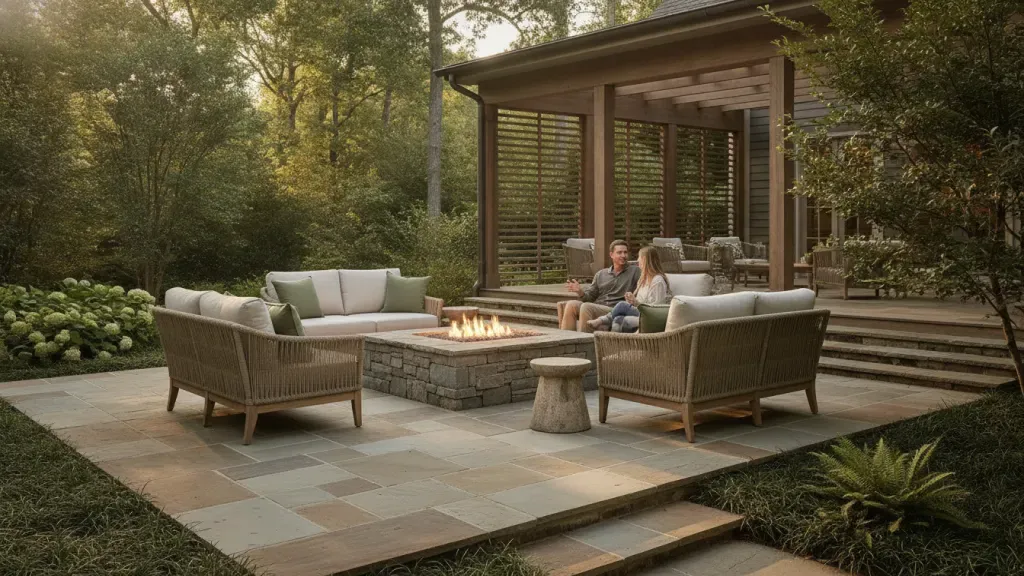
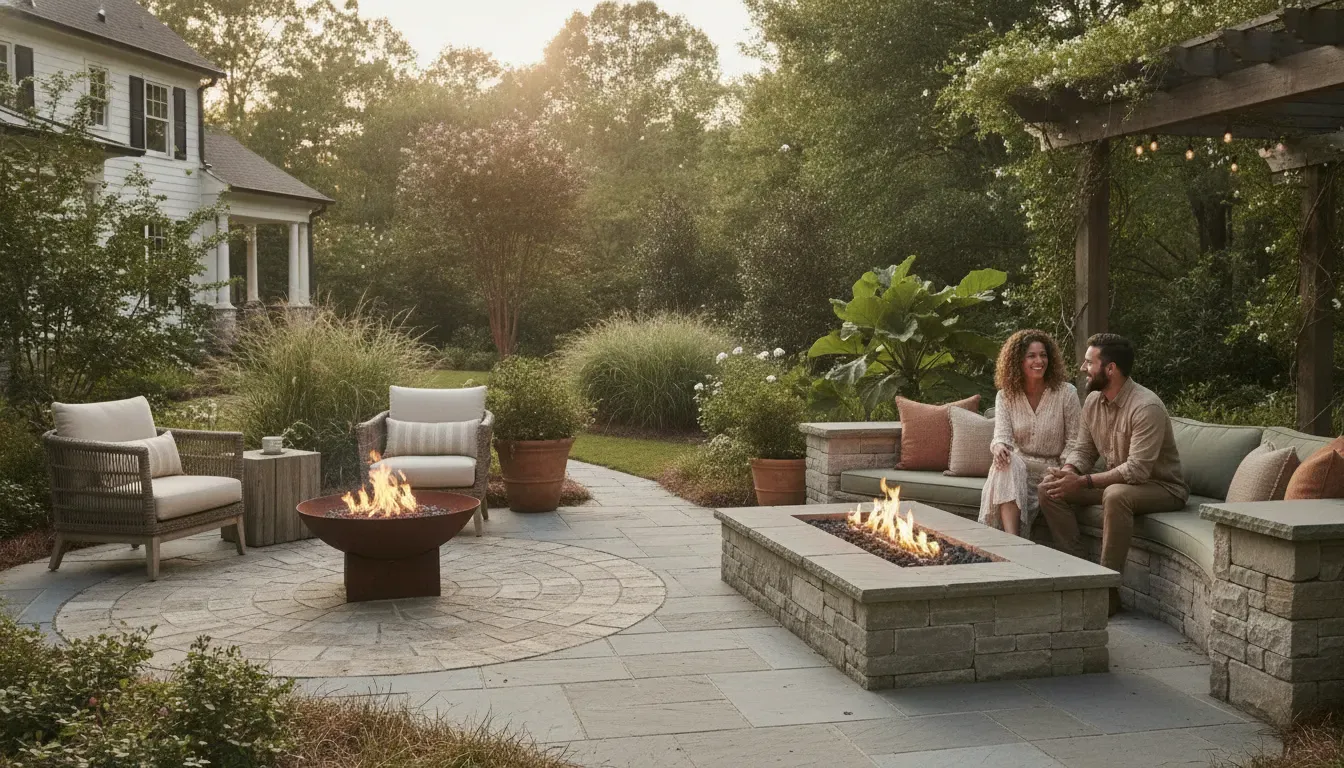
It’s easy to plan for a perfect 75-degree day, but a great space is usable year-round. A common mistake is ignoring the extremes. In the Carolinas, you need shade (pergolas/porches) for humid August afternoons and heat (fire pits/heaters) for crisp November nights. These elements transform a seasonal patio into a year-round room.
Overlooking Utilities and Access
The best spaces have infrastructure hidden in plain sight. Outdoor kitchens, hot tubs, and lighting all require gas lines, electrical wiring, and plumbing. Planning these routes before construction prevents tearing up brand-new hardscapes later. Also, ensure there is an accessible service path for future hot tub maintenance.
Common Design Mistakes That Limit Your Space
A beautiful backyard is one thing; a functional one is another. Small design missteps can keep a space from reaching its potential.
Designing Without Clear Zones
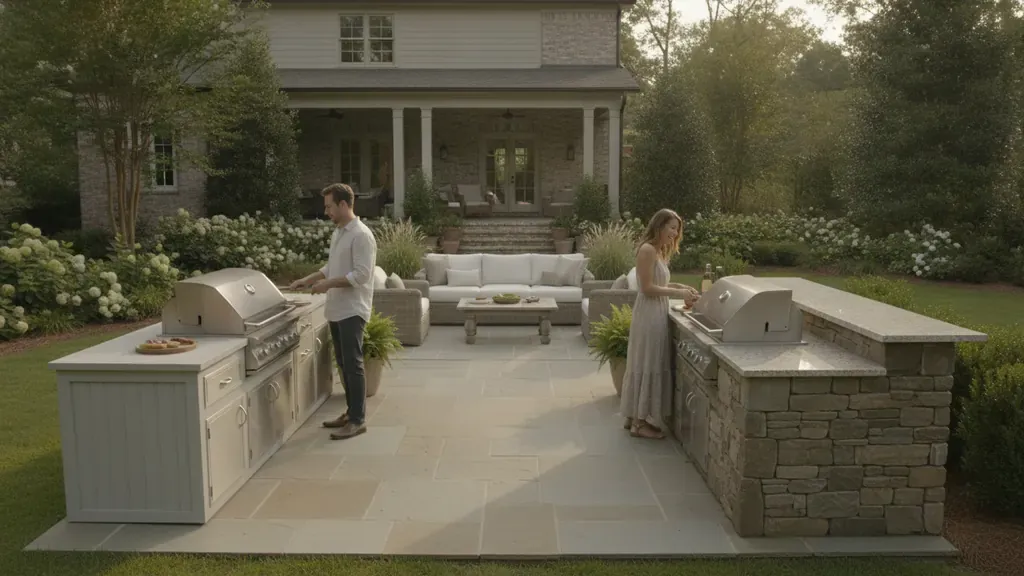
An outdoor space without zones feels unfocused. Before you begin, ask: How do we want to live here? Define distinct areas for cooking, dining, and lounging. This creates purpose and flow, making the entire space more functional.
Ignoring Traffic Flow
How you move through the space matters. Avoid cramping furniture or blocking natural pathways. Ensure there is a wide, intuitive path from the back door to the grill or hot tub. A thoughtful layout considers traffic flow from the start.
Choosing Styles That Clash
Your outdoor space should feel like an extension of your home. A sleek, modern kitchen might clash with a traditional brick home. We help homeowners select materials that complement their existing architecture, creating a cohesive indoor-outdoor transition.
How to Choose Materials That Last
Materials might look good on day one, but how will they look after five Carolina summers? Choosing for longevity saves you time and money.
Underestimating Sun and Humidity
The Carolina sun is relentless. Wood that isn’t suited for our climate can warp and rot quickly. We guide homeowners toward durable options like composite decking and high-quality pavers that withstand heat and moisture without constant maintenance.
Not Planning for Maintenance
The goal is to relax, not work. Understand the upkeep required for your materials. Some woods need annual sealing; composites need a simple wash. Choosing low-maintenance materials ensures your backyard remains a retreat, not a chore.
Why Thoughtful Lighting Changes Everything
Lighting is often treated as an afterthought, but it determines how much you’ll use your space after sunset.
Forgetting Evening Ambiance
A sunny patio is great, but without light, it’s unusable at night. Harsh floodlights kill the mood. A layered lighting plan—ambient, task, and accent—invites you outside. It transforms a dark yard into a cozy, intimate retreat for evening gatherings.
Relying on One Light Source
Don’t rely on a single back porch light. Use multiple, lower-intensity fixtures. Path lights, step lights, and uplighting create depth and safety without the glare.
Furnishing Your Space: Common Layout Mistakes
Buying furniture before finalizing the layout is a classic mistake.
Scale and Flow
A bulky sectional can overwhelm a small deck. Ensure your furniture is proportional to the space. Plan your layout first, then buy pieces that fit the zones you’ve created.
Off-Season Storage
Even durable furniture needs protection. Plan for storage—a deck box or a designated spot in the garage—to keep cushions clean and dry during winter months.
Planning for Year-Round Comfort
Don’t let your investment sit unused for half the year.
Managing Heat and Cold
A stone patio without shade is a heat island in July. A seating area without warmth is abandoned in October. Design for extremes. Add shade structures for summer and fire features for winter to extend your outdoor season.
Routine Maintenance
Plan for upkeep. From cleaning gutters to balancing spa water, a little maintenance goes a long way. Our Spa Valet Plans take the work out of hot tub ownership, ensuring it’s always ready when you are.
How to Set a Realistic Budget
A successful project starts with a clear budget.
Budgeting for the Complete Project
Don’t just budget for the hot tub or the pavers. Include site prep, electrical work, permits, and landscaping. These “hidden” costs are essential for a safe, durable build. A free home consultation helps you map out a comprehensive budget.
Professional Installation vs. DIY
Cutting corners on installation is risky. Professional grading and electrical work ensure safety and longevity. It’s an investment in doing it right the first time.
Available Financing
Creating your dream space is a significant investment. We offer financing options to help you get the features you want now, spreading the cost over time.
Connecting Your Outdoor Space to Your Home
The best designs blur the line between indoors and out.
Creating Seamless Transitions
Carry indoor flooring tones or color palettes outside. Match the style of your pergola to your home’s trim. This continuity makes your living space feel larger and more connected.
Privacy and Property Lines
Consider sightlines. Use landscaping or privacy screens to create intimacy without feeling closed in. Also, respect property setbacks and easements to avoid legal headaches later.
Thinking Ahead: Planning for Long-Term Care
A well-designed space is easy to care for.
Professional Installation Matters
Proper installation prevents future issues like sinking pavers or drainage problems. A professional team understands local soil and codes, building a foundation that lasts.
Warranties and Service
Ask about warranties and who handles repairs. A partner with in-house service technicians ensures you have reliable support for the life of your investment.
Related Articles
- The Biggest Backyard Renovation Mistakes (And How to Avoid Them)
- How to Plan Your Backyard Renovation: A Step-by-Step Guide
- Deck & Pergola Contractors SC: The Ultimate Guide
- Patios & Walkways in North Carolina
Frequently Asked Questions
What is the most common mistake? Overlooking groundwork. Proper drainage and grading are critical in the Carolinas to prevent water damage and shifting pavers.
How do I make it feel like part of my home? Match materials and colors to your home’s architecture. Create a seamless flow from indoor living areas to outdoor zones.
What other costs should I expect for a hot tub? Budget for electrical work (220V), a concrete pad or reinforced deck, and potentially a crane for delivery.
How do I use my space year-round? Incorporate shade (pergolas) for summer and heat (fire pits/heaters) for winter. This extends usability significantly.
Do I need a pro for a paver patio? Yes. Proper base preparation is essential to prevent sinking and uneven surfaces over time. DIY patios often fail within a few years.