Looking at your backyard, you might wonder if there’s enough space or flexibility to create the personal oasis you’ve been wanting. It’s a common concern, particularly for homeowners in planned communities with strict architectural guidelines. But a small lot or an HOA doesn’t mean you have to give up on your vision. Modern design and innovative products have opened up a world of possibilities. The most successful projects we build often involve HOA friendly pool alternatives Charlotte families love because they are designed for real life. This guide will walk you through options that fit into compact spaces, integrate beautifully with your landscape, and provide a daily dose of wellness and relaxation.
Key Takeaways
- Work with your HOA, not against them: A smooth approval process comes from understanding your HOA’s priorities. Address their main concerns upfront, which are typically property setbacks, neighborhood aesthetics, and installation safety.
- Choose based on your daily routine: The best option for your home is the one that fits your lifestyle. Decide if your goal is year-round fitness, family fun, or quiet relaxation to help guide your choice between a versatile swim spa and a therapeutic hot tub.
- A complete proposal is your best tool: Make it easy for your review committee to say yes by providing a detailed plan. Including site maps, material specifications, and safety features shows you are a responsible homeowner and simplifies their decision.
What Does Your HOA Look for in a Pool Alternative?
For many homeowners in the Carolinas, an HOA is a simple fact of life. While their rules can sometimes feel restrictive, they exist to protect property values and maintain a sense of community harmony. When it comes to adding a water feature to your backyard, your HOA isn’t trying to prevent you from enjoying your home; they just want to ensure the project is a good fit for the neighborhood.
In our experience helping hundreds of local families, we’ve found that HOA review committees tend to focus on three main areas: how the project fits on your property, how it looks from the street or a neighbor’s yard, and whether the installation plan is safe and professional. Understanding these priorities from the start makes the entire process feel less like a hurdle and more like a collaboration. A well-thought-out plan that respects these guidelines is almost always the key to a smooth and successful approval.
Fitting into Your Lot: Size and Setbacks
One of the first things an HOA will consider is how a new water feature fits within your property lines. Every community has rules about setbacks, which dictate how far structures must be from your home, fences, and neighboring lots. This is where traditional in-ground pools often run into trouble on smaller properties. Pool alternatives, however, offer much more flexibility.
Many HOAs don’t classify a self-contained unit like a swim spa as a permanent pool because all the plumbing and equipment are built-in. This distinction can be a significant advantage. An Endless Pools® Fitness System can be installed above ground, partially in-ground, or fully recessed, allowing it to adapt to your yard’s specific topography and meet setback requirements more easily. This versatility gives you options that simply aren’t possible with a traditional pool build.
Blending with the Neighborhood’s Look
Beyond the technical specs, your HOA cares deeply about maintaining the neighborhood’s cohesive aesthetic. They want to see a project that complements the existing architecture and landscaping, rather than something that looks out of place. The goal is to ensure your new addition enhances the community’s overall appeal. This is an area where a thoughtful design can make all the difference.
We help homeowners create plans that integrate their new water feature seamlessly. By surrounding a swim spa with a beautiful composite deck, adding a stone paver patio, or incorporating landscaping, the project becomes a natural extension of your home. Presenting your HOA with a complete vision, not just a product, shows that you’ve considered the bigger picture. A professional 3D design can help the review committee visualize how the finished space will elevate your property and fit beautifully within the neighborhood.
Planning for Installation and Permits
Finally, your HOA needs assurance that the project will be completed safely and professionally. Before breaking ground, they will want to see a detailed proposal that outlines every aspect of the installation. This isn’t just about the pool alternative itself; it includes plans for electrical work, any required safety fencing, and confirmation that everything complies with local building codes.
Preparing this formal proposal can feel overwhelming, but it’s a standard part of the process. The plan should include clear designs, blueprints, and a timeline for the work. This documentation gives the HOA confidence that the project will be managed correctly from start to finish, minimizing disruption to your neighbors and ensuring a safe, lasting result. A partner who can help you prepare and present this information makes the approval process much simpler.
Our Top HOA-Friendly Pool Alternatives
When an in-ground pool isn’t the right fit for your lot or HOA, you don’t have to give up on a backyard water retreat. In our experience helping homeowners across the Carolinas, several excellent alternatives offer the relaxation of a pool with a smaller footprint and simpler approval process. Here are four of the most popular options we see.
Swim Spas: Year-Round Fitness and Fun
A swim spa thoughtfully blends a swimming pool and a hot tub. These self-contained units are heated, offer massage jets, and feature a current you can swim against for a great workout. Because they are a single vessel, they often face fewer placement restrictions. We’ve seen Endless Pools® Fitness Systems become a centerpiece for year-round wellness, used for aquatic fitness and family fun. They require less space, cost less to maintain, and can be enjoyed in any season, making them a versatile choice for many Carolina homes.
Container Pools: A Modern, Streamlined Look
For homeowners drawn to a modern aesthetic, container pools are an intriguing option. These are custom swimming pools made from repurposed shipping containers, offering a unique, industrial-chic look. Their modular design can be configured in various sizes, and because they are built off-site, installation is remarkably fast. This approach minimizes disruption to your yard and can be more cost-effective than a traditional build. Their distinct style and efficient installation make them a compelling choice for contemporary homes.
High-End Above-Ground Pools
Today’s above-ground pools are a world away from the simple models of the past. High-end designs offer a sophisticated alternative, often featuring beautiful materials like wood or composite siding that integrate with your deck and landscaping. Because they don’t require major excavation, installation is far less intensive, making them a great solution for sloped or tricky lots. For homeowners who want the feel of a pool without the permanent commitment and construction timeline, a modern above-ground model provides a stylish and practical middle ground.
Hot Tubs: The Easiest Path to Approval
Of all the alternatives, a hot tub is often the easiest path to HOA approval. Its compact footprint and self-contained design require minimal site preparation and fit comfortably on a patio or deck. The real value lies in the daily wellness ritual it provides. A therapeutic hot tub offers a dedicated space for stress relief, muscle recovery, and quiet connection. Because they are so common, most HOAs have clear guidelines for their installation, making the process straightforward for homeowners.
How to Understand Your HOA’s Rules
Working with a Homeowners Association doesn’t have to be a source of stress. In our experience helping homeowners across the Carolinas, a smooth approval process comes down to understanding what your HOA is responsible for and preparing a clear plan that respects the community’s guidelines. Most HOAs aren’t trying to prevent you from improving your home; they simply want to ensure that any new addition is safe, harmonious, and helps maintain the neighborhood’s property values for everyone.
The key is to approach it as a partnership. Before you fall in love with a specific design, the first step is to locate and read your community’s Covenants, Conditions, and Restrictions (CC&Rs). This document is the official rulebook for your property, and it outlines exactly what the architectural review committee will look for when you submit your project. Getting familiar with it early helps you plan a project that’s likely to be approved without major revisions. Most of their requirements will fall into three main categories: where the structure can be placed, what safety features are needed, and what paperwork you’ll have to submit for approval. By preparing for these points ahead of time, you make the decision easy for them.
Where Can It Go? Placement and Design Rules
An HOA’s primary concern is how a new addition will affect the look and feel of the neighborhood. Your CC&Rs will have specific rules about placement, often called “setbacks,” which dictate how far your pool alternative must be from property lines, your house, and other structures. They may also have guidelines on visibility, preferring that structures are kept to the backyard and not easily seen from the street.
Beyond just location, most HOAs have rules about design. This can include the size of the structure and the materials used for any surrounding decks or patios. The goal is to ensure your project blends with the existing architectural style of the community. A thoughtful design consultation can help you plan a project that not only meets your needs but also fits seamlessly within these aesthetic guidelines, making approval much more likely.
Fencing, Covers, and Safety Requirements
After aesthetics, safety is the next priority for any HOA. Because pools and spas involve water, the rules here are non-negotiable and exist to protect residents, especially children. Your CC&Rs will almost certainly specify safety measures like fence height, the type of materials allowed for fencing, and requirements for self-latching gate locks. These rules often mirror local building codes but can sometimes be even stricter.
For hot tubs and swim spas, a locking safety cover is another critical component. We’ve seen many HOA review boards require proof that the cover is ASTM-certified for safety. This isn’t just a formality; it’s a crucial feature that prevents accidental access and provides peace of mind for you and your neighbors. Presenting these safety features as part of your initial plan shows the committee that you are a responsible homeowner.
The Paperwork: What You’ll Need to Submit
To get approval, you’ll need to submit a formal proposal to your HOA’s architectural review committee. A complete and professional package is your best tool for a quick and positive response. This proposal should be a detailed plan that leaves no room for questions. It typically needs to include a site plan or blueprint showing exactly where the pool alternative will be placed in your yard, including its dimensions and distance from property lines.
Your submission should also include product specifications, like photos and details from the swim spa gallery or manufacturer’s brochure. If you’re building a deck or patio, you’ll need to provide information on the materials and colors. Finally, including proof that your plan adheres to local building codes demonstrates that you’ve done your homework. A clear, thorough application makes it easy for the committee to say “yes.”
Comparing Cost, Installation, and Upkeep
When you’re considering a pool alternative, the initial price is only part of the story. The real value comes from understanding the complete picture: the installation process, the day-to-day upkeep, and the long-term costs. In our experience helping Carolina homeowners, these three areas are where options like swim spas truly show their advantages over traditional pools. Making an informed choice here helps ensure your investment fits both your budget and your lifestyle for years to come.
What to Expect for Your Initial Investment
A common question we hear is how the cost of a swim spa compares to a traditional in-ground pool. Generally, a high-quality swim spa represents a more contained initial investment. Because it’s a self-contained unit, you avoid the extensive excavation, plumbing, and finishing work that drives up the price of a conventional pool. While the final cost depends on the model, delivery access, and site preparation, homeowners often find that a swim spa provides a year-round wellness solution for a fraction of a pool’s price. We also find that offering flexible payment plans helps homeowners get the right fit for their goals without compromising on quality.
How Long Does Installation Take?
One of the most significant benefits of a swim spa is the speed of installation. A traditional pool build can disrupt your backyard for weeks or even months. In contrast, most of our swim spa installations are completed in just a few days. The process is straightforward: once your site is prepared with a concrete pad and the proper electrical work, the spa is delivered and set in place. This minimal disruption means you and your family can start enjoying your new wellness hub almost immediately, a key advantage for homeowners who value their time and peace at home.
Factoring in Long-Term Maintenance Costs
Long-term upkeep is where the thoughtful design of a modern swim spa truly shines. They are engineered for efficiency, using far less water and energy than a full-sized pool. This translates directly to lower monthly utility bills. The water care is also simpler. Advanced filtration and sanitation systems mean you spend less time testing and adding chemicals and more time swimming, exercising, or relaxing. For homeowners who want to simplify their routine even further, we offer routine spa care plans to handle all the maintenance for you, ensuring your water is always perfect.
Finding the Right Fit: Pros and Cons of Each Option
Choosing a pool alternative is about more than just following HOA rules. It’s about finding the right fit for your lifestyle, your property, and your long-term goals. Each option offers a different experience, and understanding the trade-offs is the key to making a confident decision. In our experience helping Carolina homeowners, the best choice is the one that feels like a natural part of your daily life.
Here, we’ll walk through the pros and cons of the most common pool alternatives we see in neighborhoods around Charlotte, from swim spas to hot tubs.
The Swim Spa: Is It Right for You?
A swim spa is a unique blend of a swimming pool and a hot tub. It provides a current to swim against for exercise, along with heated water and massage jets for relaxation. Because all the equipment is self-contained within the unit, many HOAs do not classify them as permanent pools, which can simplify the approval process.
For many homeowners, the real benefit is year-round use. Unlike a traditional pool you close in the fall, an Endless Pools® Fitness System can be enjoyed in every season. They also tend to have lower installation and maintenance costs than in-ground pools. If your goal is a combination of fitness, therapy, and family fun that is not limited by the weather, a swim spa is an excellent choice.
The Container Pool: What to Consider
Container pools, made from repurposed shipping containers, have become a popular choice for their modern, industrial aesthetic. They are modular, so they can be customized in different sizes, and installation is typically much faster than a traditional in-ground pool. This streamlined process can often save homeowners a significant amount on initial construction costs.
However, it’s important to consider the long-term ownership experience. The interior finish may not be as smooth or comfortable as an acrylic spa shell, and finding a local company that can service the unique plumbing and filtration systems can be a challenge. While the look is compelling, be sure you have a clear plan for maintenance and support before committing.
The Above-Ground Pool: Benefits and Trade-Offs
Modern above-ground pools have improved significantly in quality and design, offering a straightforward way to bring swimming to your backyard. Their main advantage is a lower initial investment and a less permanent installation, which can be appealing if you are not ready for a major construction project.
The trade-off often comes down to aesthetics and longevity. Even high-end models may not integrate as seamlessly into a landscape design, and they typically lack the therapeutic features of a spa. Most HOAs will have specific rules regarding decking, fencing, and visibility from the street, so a well-designed plan that accounts for these requirements is essential for getting approval.
The Hot Tub: A Simple and Therapeutic Choice
For many homeowners, a hot tub is the simplest and most direct path to adding a wellness feature to their backyard. Because of their smaller footprint and self-contained design, they are often the easiest option to get approved by an HOA. Many can be placed on a reinforced deck or a simple paver patio with minimal site preparation.
The primary benefit of a Hot Spring® Spa is the focus on therapeutic relaxation and recovery. It’s a space for quiet connection and stress relief that can be used year-round, day or night. If your main goal is wellness and you have a smaller space, a hot tub provides an incredible amount of value and enjoyment without the complexity of a larger water feature.
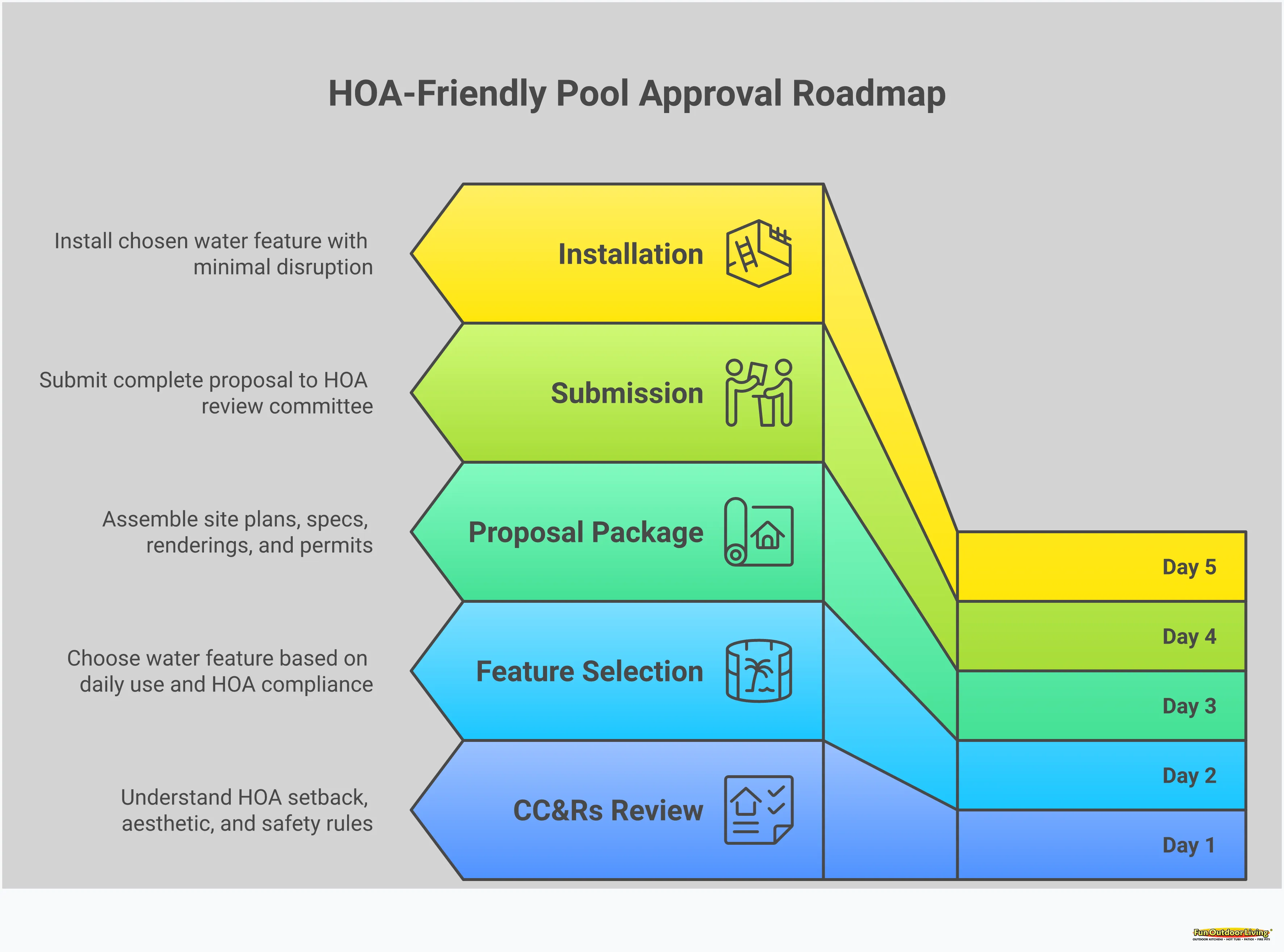
A Simple Guide to Getting HOA Approval
Working with a Homeowners Association doesn’t have to be a source of stress. In our experience, most HOAs simply want to ensure that any new addition to a home is safe, harmonious with the neighborhood, and properly installed. A thoughtful approach and clear communication are the keys to a smooth approval process. By preparing correctly, you can present your project with confidence and get one step closer to enjoying your new outdoor space.
This guide breaks the process down into three simple steps. Following them will help you feel prepared and show your HOA review committee that you’re a responsible and considerate neighbor.
Step 1: Do Your Homework First
Before you fall in love with a specific design, the first step is to understand the rules. Your HOA’s governing documents, often called Covenants, Conditions, and Restrictions (CC&Rs), are the official playbook for what’s allowed in your community. These documents will outline specific requirements for structures, placement, and materials. You can usually get a copy from your HOA board or management company.
Reading these rules first prevents surprises and helps set realistic expectations. It allows you to tailor your plans from the start, making the approval process much smoother. During a free home consultation, we can help you review these guidelines and discuss designs that align with them.
Step 2: Create a Clear and Complete Proposal
Once you understand the rules, the next step is to create a formal proposal for the HOA to review. A vague idea isn’t enough; they need a detailed plan that shows exactly what you intend to build. This proposal should include professional designs or blueprints, a site plan showing placement on your property, and information on materials and colors. It’s also wise to include proof that your project will follow all local building codes.
A thorough proposal demonstrates professionalism and makes it easy for the review committee to say yes. It answers their questions before they even have to ask. This is a standard part of our design process, ensuring every detail is documented for a clear and confident presentation.
Step 3: Presenting to the Review Committee
After submitting your proposal, be prepared for the review process to take a few weeks. The committee members are often volunteers who need time to review the details. We recommend attending the review meeting if possible, as it gives you a chance to answer questions and show your commitment to the project.
Approach the conversation with a collaborative spirit. Be open to feedback and willing to make small adjustments if requested. Keeping your immediate neighbors informed about the project is also a thoughtful gesture that can build support. Having a trusted partner to help you present the plan can make all the difference, ensuring technical questions are answered clearly and confidently.
How to Choose the Right Option for Your Home
Choosing a pool alternative isn’t just about what fits in your yard. It’s about what fits into your life. The right choice depends on how you want your days to feel, whether you’re seeking a quiet morning wellness routine, a place for the kids to splash on a summer afternoon, or a warm, relaxing soak on a cool Carolina evening.
In our experience helping homeowners across the Carolinas, the most satisfied clients are those who think about their daily rituals first. Before you get lost in features and models, take a moment to consider these three things. They will guide you toward a decision that feels right not just on installation day, but for years to come.
Consider Your Space and Layout
The first step is understanding the physical possibilities of your property. Many modern Charlotte-area neighborhoods have smaller lots and specific HOA rules about setbacks, which can make a traditional pool impractical. This is where the compact footprint of a pool alternative becomes a real advantage.
For example, swim spas like the Endless Pools® Fitness Systems we carry come in various lengths, often starting around 11 feet. This allows them to fit into tight spaces where a larger pool simply wouldn’t be an option. A hot tub requires even less room, making it one of the easiest additions to get approved. When we visit a home for a consultation, we look at the entire layout, considering access for installation, proximity to the house, and how the new feature will flow with your existing patio or deck.
Define Your Goals: Wellness, Family, or Both?
Once you know what fits, think about how you want to use it. Are you looking for a way to stay active, a place to unwind, or a hub for family fun? Your answer will point you toward the right solution.
A swim spa is incredibly versatile. You can use it for low-impact exercise like swimming against a current or walking in the water, which is gentle on your joints. Then, you can turn on the massage jets and use the therapy seating to relax, just like a hot tub. If your primary goal is therapeutic relaxation and connection, a dedicated Hot Spring® Spa might be the perfect fit. Thinking through these daily moments helps ensure your investment truly enhances your lifestyle.
Plan for Year-Round Use in the Carolinas
One of the biggest benefits of a swim spa or hot tub is the ability to enjoy it throughout the year. Unlike a traditional pool that sits unused for much of the fall and winter, these options are designed for every season in the Carolinas.
You can keep the water in a swim spa comfortably cool for an invigorating workout on a hot summer day, then heat it to a perfect 99 degrees for a warm, soothing soak when the weather turns chilly. This four-season usability completely changes the value of your investment. It’s not just a summer feature, but a year-round part of your wellness and relaxation routine. We’ve seen this become a favorite ritual for local homeowners, especially for unwinding on a crisp autumn evening under the stars.
Finding a Trusted Partner in the Carolinas
Bringing a vision for your backyard to life should feel exciting, not overwhelming. The right partner doesn’t just sell you a product; they guide you through the entire process, from the first sketch to long after the work is done. Because we’ve helped hundreds of homeowners in the Carolinas, we know that trust is built on transparency, local expertise, and a commitment that lasts for the life of your outdoor space.
What to Look For in a Design-Build Partner
A design-build partner combines architectural planning and physical construction into a single, seamless process. For homeowners, this means you have one team and one point of contact from start to finish, which helps avoid the stress of juggling different contractors, timelines, and budgets. The designer and builder are on the same team from day one, ensuring the final project is both beautiful and buildable within your budget. In our experience, this collaborative approach is the key to a low-stress project. It all begins with a clear plan, which is why a free home consultation is often the best first step to exploring what’s possible for your home.
The Importance of In-House Service and Support
A beautiful new backyard is wonderful on day one, but the real value of a partnership shows up years later. When you have a question about water care or need a repair, who do you call? Choosing a company with dedicated, in-house teams for service and support provides lasting peace of mind. It means the people who built your space are the same people who will help you maintain it. This single point of contact removes the guesswork and ensures you get help from certified technicians who are experts on the exact products in your yard. This commitment to long-term care is what turns a one-time project into a lifetime of enjoyment.
Key Questions to Ask Before Committing
Feeling confident in your choice of partner is the most important part of the process. Before you commit, it helps to ask a few questions that give you a clear sense of their experience and approach. Instead of just asking if they can do the job, consider asking if you can see their work. A good partner will be proud to share before and after photos of projects similar to yours. It’s also fair to ask how they manage budgets and what happens if costs change. A transparent team will explain their process clearly. Finally, ask what past clients have to say. Seeing a history of positive customer reviews shows a track record of keeping promises.
Related Articles
Frequently Asked Questions
Is a swim spa really easier to get approved by an HOA than a traditional pool? In our experience, yes, it often is. Because a swim spa is a self-contained vessel with all its plumbing and equipment built-in, many HOAs view it differently than a permanent, in-ground pool. This can provide more flexibility with placement and setback rules. The installation is also much less disruptive, which review committees appreciate. A thoughtful plan that includes decking or landscaping helps present it as a complete, integrated part of your backyard.
What is the very first thing I should do if I’m considering a swim spa or hot tub? Before you start shopping for models, the best first step is to get a copy of your community’s governing documents, often called the CC&Rs. This rulebook will give you a clear picture of what your HOA looks for regarding placement, safety features, and design. Once you have it, we can review it with you during a free home consultation and help you create a plan that respects the guidelines from the very beginning.
What happens if my HOA denies my initial proposal? A denial is rarely the end of the road. Usually, it’s a request for more information or a small adjustment to the plan. We can help you understand the committee’s feedback, which might be something as simple as adding more landscape screening or shifting the location by a few feet. We will then work with you to revise the design and resubmit a plan that addresses their concerns.
How long does the entire process, including HOA approval, usually take? The timeline can vary, but the longest part is often the HOA review period itself. Most committees meet monthly, so it can take a few weeks to get on their agenda and receive a decision. Once you have approval, the physical installation is quite fast. Preparing the site and setting the swim spa in place can often be completed in just a few days, which is much quicker than a traditional pool build.
Will you help me prepare the paperwork for my HOA? Absolutely. Helping you create a clear and complete proposal is a key part of our process. We provide the professional site plans, product specifications, and 3D designs that your architectural review committee needs to see. Our goal is to give you a polished and thorough package that answers all their questions, making it simple for them to understand your vision and grant approval.