A fire feature can turn a quiet patio into a place people naturally gather, but choosing a fire pit ring involves more than picking a diameter from a product listing. The opening, fuel, surround, seating, drainage, and access all affect how the finished space works. A little planning helps you create a fire area that feels comfortable on an ordinary evening and fits the rest of your backyard.
Talk through a fire feature for your backyard
What should a fire pit ring do in your backyard?
Start with the experience you want, not the ring size. Will the fire be a focal point for two or three people, a gathering place for a larger group, or one part of a broader patio with cooking and conversation areas? The answer helps set the scale and layout before you choose materials.
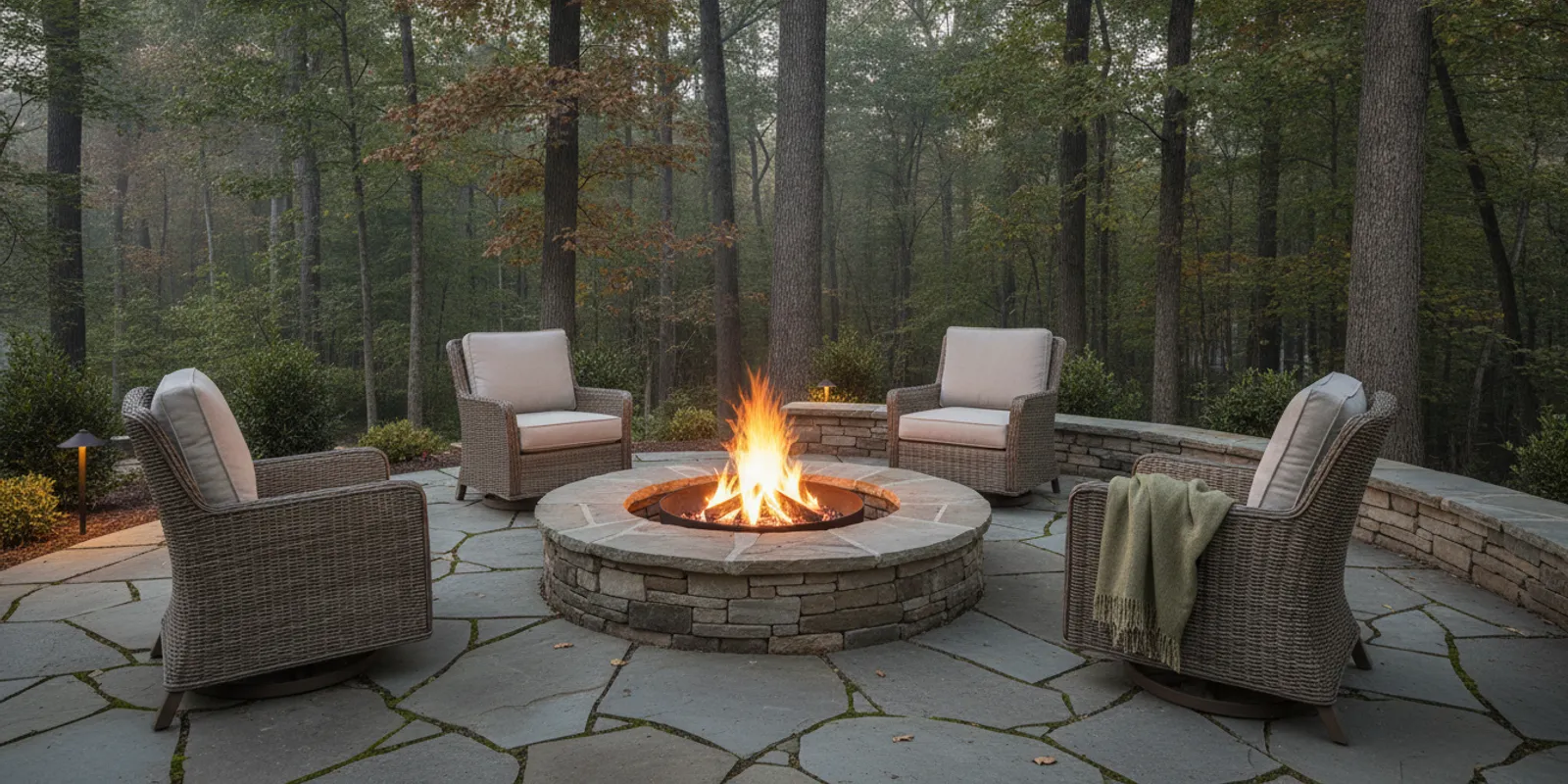
A ring usually provides a defined opening for the fire and may be installed inside a masonry surround. The ring and surround are not necessarily the same diameter. A listed ring measurement may describe its inner opening, while the outside edge of the finished surround takes up more room. This distinction matters when checking space between the pit, chairs, a walkway, and the patio edge.
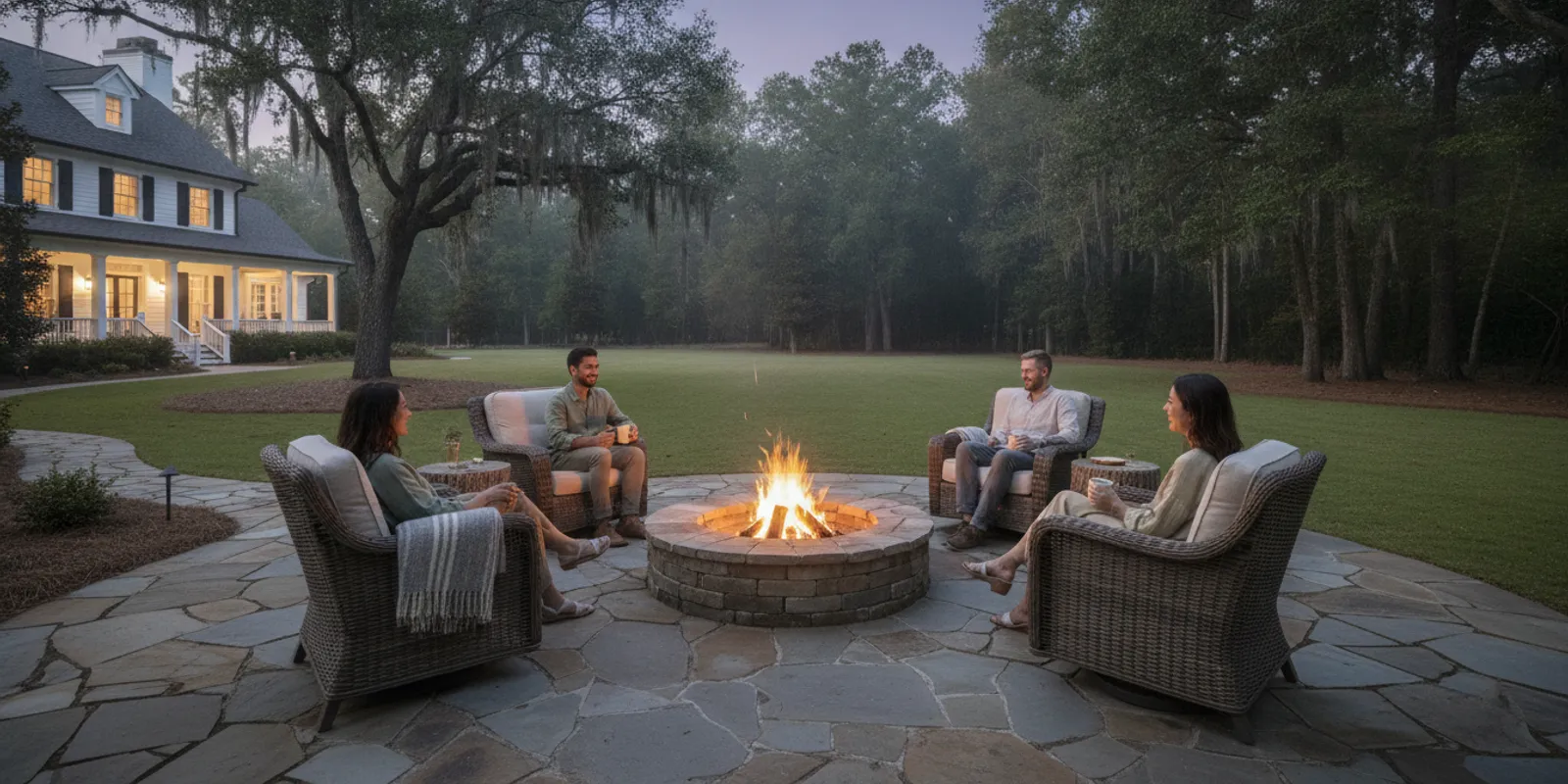
Think about how people will approach and leave the seating area. A fire feature that looks centered on a drawing can feel crowded if chairs block a route through the yard or there is no easy place to set down a drink. Leave clear paths so the fire remains part of the gathering rather than an obstacle. For a wider look at how the feature can fit into an outdoor room, browse the outdoor kitchen design information and consider how cooking, dining, and lounging zones might relate.
How do you choose the right ring diameter?
There is no single diameter that works for every property. Start with the number of people you expect to seat regularly, the scale of the patio, and the kind of fire experience you prefer. A compact opening may suit an intimate seating area. A larger ring can make a more substantial focal point, but it needs more room around it and may call for a bigger surround.
Before comparing product dimensions, sketch the complete footprint. Mark the ring opening and the outside dimensions of the surround. Add the planned chairs, a walking route, and nearby structures or landscape elements. This shows whether the whole feature fits, not just the circle at its center. Measure the clear patio space, rather than assuming the entire yard is usable: steps, slopes, doors, planted beds, and existing furniture affect the layout.
- Measure the usable area. Note patio edges, doors, steps, paths, slopes, and fixed structures.
- Choose the seating arrangement. Decide how many chairs you expect to use and whether they will move.
- Account for the whole build. Include the ring, components specified by the product, wall thickness, capstones, and outside edge of the surround.
- Check circulation. Leave a practical route to and from the house and around the seating group.
- Confirm product dimensions. Ring measurements and installation details vary, so use the manufacturer’s instructions for the model you select.
A useful layout test is to mark the proposed outside edge on the ground with a garden hose, rope, or removable chalk. Set temporary chairs around it and walk through the space. This will not replace a site review, but it can reveal awkward spacing before construction. Remember that a chair needs room not only for its footprint, but also for someone to sit down, stand up, and pass another guest. Check the arrangement from the house, too; the fire feature may be visible through windows even when no one is seated outside.
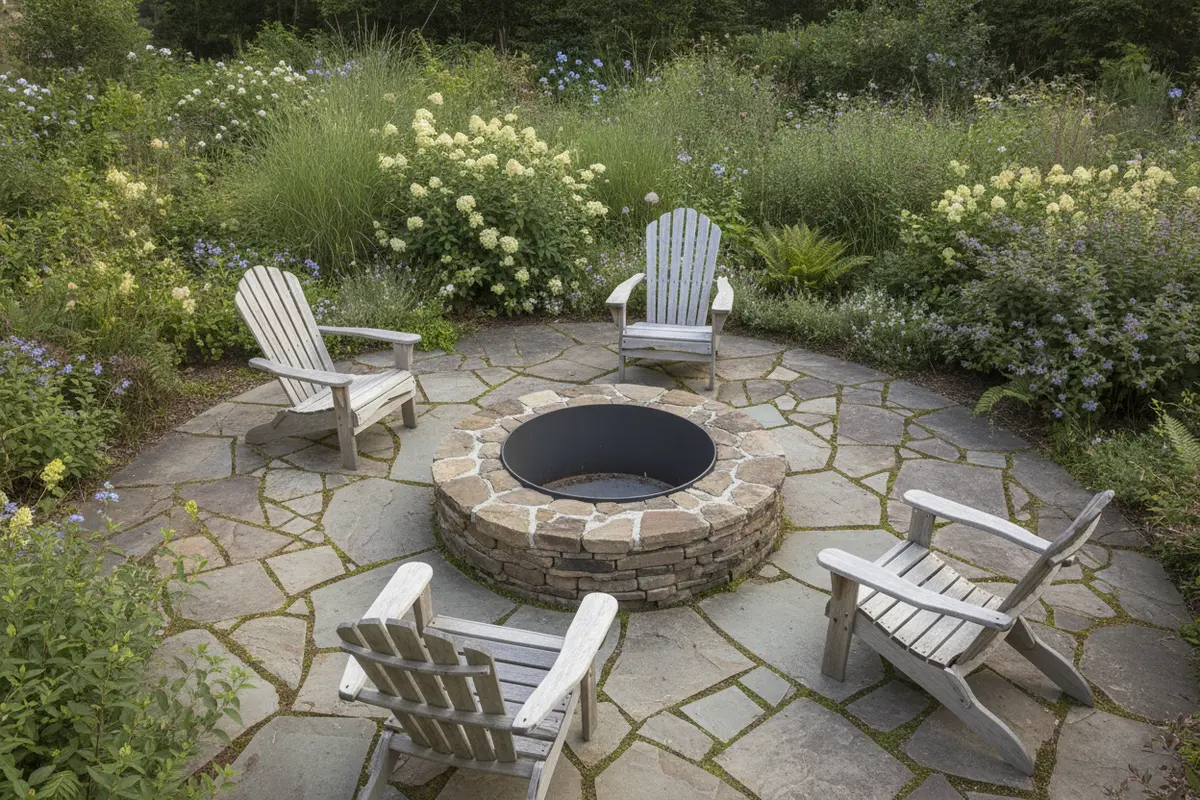
Which fire pit ring materials should you compare?
Material affects appearance, installation details, and how the fire pit relates to the rest of the yard. The best choice depends on the product and complete assembly. Do not assume a material is appropriate simply because it looks suitable. Follow the manufacturer’s instructions and make sure the ring, burner or wood-burning components, and surround are compatible.
| Option | What it contributes | What to confirm |
|---|---|---|
| Steel ring | A defined liner or support within a masonry fire pit assembly. | Material and finish, intended fuel, dimensions, and clearances specified for the product. |
| Stainless steel ring | A metal option often selected for its clean appearance and outdoor use. | Construction, component compatibility, care guidance, and fit within the surround. |
| Masonry surround | Stone, pavers, or other masonry creates the visible outer form and ties the fire feature to a patio. | Heat suitability, wall thickness, cap details, base preparation, drainage, and required installation space. |
| Packaged fire feature | A coordinated set may include components designed to work together. | Exactly what is included, installation instructions, fuel connections, and parts supplied separately. |
This is a comparison framework, not a claim that every material or kit can be paired with every fire feature. Check the manufacturer’s documentation before purchasing components. When reviewing a ring, look beyond the advertised diameter. Check whether it describes the inner opening, outside of the metal ring, or another dimension in the product drawing. Details such as wall height, depth, metal thickness, finish, and included hardware help you understand how the ring fits the planned masonry. Ask the supplier for a dimensioned drawing if a listing is unclear.
The surround’s finish has an everyday side, too. A broad cap can frame the opening, while a narrower top may keep the construction visually lighter. The parts nearest the fire should be selected for the intended application and installed as directed. Confirm the stone profile and transition to the patio before work starts. If the project includes hardscape, review the outdoor paver options as part of the surface design. Materials do not have to match exactly; a considered contrast can look intentional when colors and lines relate.
Gas burner or wood fire: which fits your routine?
Fuel choice changes how you use and maintain the fire area. A gas burner can be convenient when you want to turn the feature on and off without preparing logs or managing ash. A wood fire offers the familiar sound, scent, and tending ritual many people enjoy, but it also calls for dry fuel storage and a plan for ash and cleanup.
Ownership habits matter as much as the first lighting. Ask what routine checks or seasonal care the chosen system needs, how the ring and surrounding materials should be cleaned, and what cover or storage practices the manufacturer recommends. With wood, include ash removal and fuel storage in your plan, not just the evening ritual. With gas, understand the controls and follow the supplier’s operating directions. Keep product instructions available for the people who will use the feature. These small considerations can clarify whether the convenience, ambiance, and upkeep match the way your household actually spends time outside.
With gas, the burner and ring need to be compatible, and the gas supply must be planned as part of installation. Confirm whether the product is designed for natural gas or propane, what connection is needed, and where controls and access points will sit. Do not assume a burner can be converted or connected in a way the manufacturer does not specify. A qualified professional should evaluate site-specific work and applicable requirements.
With wood, consider fire-area size and depth, how smoke may move through the yard, where fuel will be stored, and how ashes will be handled after the fire is completely out. Nearby windows, roofed spaces, trees, and neighbors can influence where a wood-burning feature feels comfortable. Leave room for people to gather without putting seating or common paths in the way of tending the fire. Neither fuel is automatically right for every household. A family seeking a simple occasional evening fire may value ease of operation; someone who enjoys tending flames may welcome the slower ritual.
How should the surround be constructed?
The surround gives a fire pit its finished character, but it also has to work with the ring and the ground beneath it. The required assembly varies by product and site. A properly prepared base helps the feature sit evenly, while correct spacing allows the selected components to be installed as intended. A ring should not be forced into an opening that is too small or left unsupported because the surround was designed for a different size.
Plan wall height and cap with the use of the feature in mind. A lower surround can make the pit feel open and give an unobstructed view of the flames. A taller edge creates a stronger visual boundary, but can affect sightlines and how close people sit. If the top edge is meant to be a place to rest a cup, consider its width and finish while keeping product instructions in view. Ask how the finish will meet the patio, whether the edge will be flush or raised, and how water will move around the base.
When comparing design ideas, ask to see the feature in context, not only as a close-up of the stonework. A simple plan view can show the ring, surround, chairs, and routes at once; a perspective view can help you judge height and sightlines. If you are reviewing two possible sizes, compare both at the same scale and include the furniture footprint. This makes trade-offs easier to see. A larger fire opening may feel more prominent, while a smaller one can preserve more open patio. Neither is automatically the better choice. The useful comparison is how each option serves your household without crowding other uses of the yard.
It is also reasonable to ask what design choices change the project scope. Ring dimensions, surround materials, site preparation, access, utility coordination, and drainage work can all affect the amount of labor and material involved. The exact factors vary with the property and selected system. Ask which decisions need to be made early, which can be refined later, and what assumptions the proposal uses. Understanding those points is more useful than comparing a single headline figure without knowing what work is included. If you are planning other backyard improvements, discuss the sequence and shared site work together so you can see how the pieces fit.
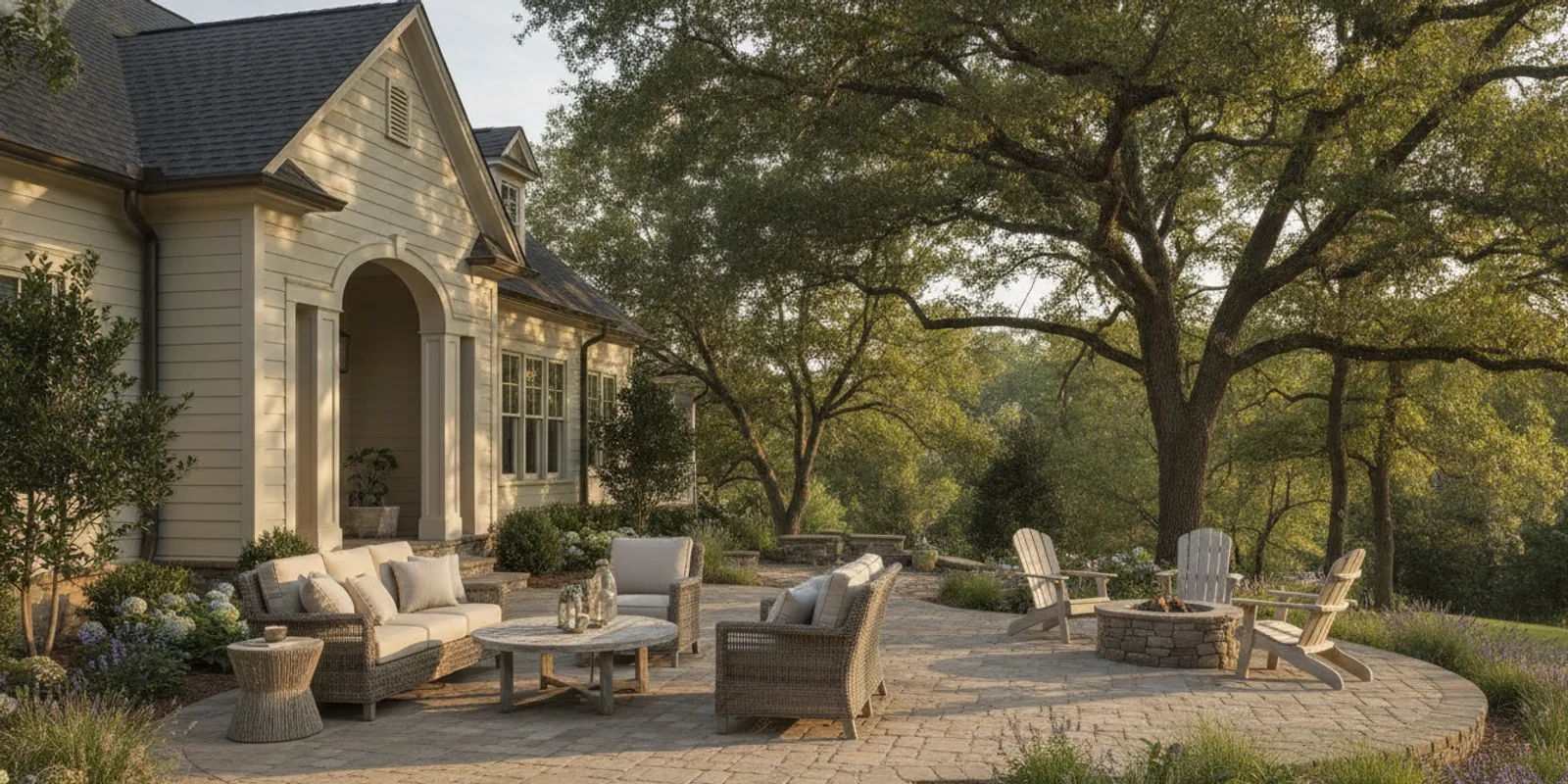
If the yard slopes, the design may need to address changes in grade rather than simply placing a ring on the existing surface. The finished height should feel natural next to seating, retaining walls, steps, or planters. For a fire area connected with a deck or porch, coordinate the design early. Review the deck and porch design information when considering how the feature relates to nearby outdoor spaces. The full layout matters more than assuming a fire pit belongs on any surface.
How much room should you leave for seating and movement?
Comfort depends on the whole seating zone, not just the fire opening. People need room to approach chairs, turn, and walk behind someone seated. Leave space for the furniture you plan to use, including deep lounge chairs that extend farther back than dining chairs. Check the area against actual furniture dimensions when possible.
Think about the routes people naturally take. A clear path between home and patio helps guests avoid cutting between a chair and the fire. Keep access to doors, steps, and other features easy to use. If the fire pit sits near an outdoor kitchen or dining table, preserve enough room for both activities without crowding either one. You may want to place a small table within reach of chairs, but avoid letting it narrow a primary route.
There is no universal clearance number for every product, fuel type, property, or local situation. Follow the fire feature’s instructions and ask the installer to identify the distances that apply to your equipment and materials. Do not treat a generic diagram or a neighbor’s layout as a substitute for the requirements of your project. Consider the space when the fire is not in use, too. The feature should invite people without making the rest of the patio harder to use.
Where should the fire pit sit, and how should water drain?
Look at the whole setting before choosing a location. Note overhead branches, nearby walls and structures, windows, roof edges, fences, furnishings, and the normal direction people move through the yard. For gas, consider where the supply line and shutoff access will be planned. For wood, think about smoke and the handling of firewood and ashes. The appropriate location depends on the equipment, property, and local conditions.
It helps to think about placement at different times of day, not only when you imagine a gathering. Notice where afternoon sun falls, which direction wind typically moves through the space, and whether the route from the house is convenient after dark. Those observations can influence whether you want the fire feature close to the main patio or set farther into the yard. They also help you decide which side should face the view, which chairs will get the best sightline, and whether lighting is needed along the approach. A location that looks balanced in a plan may be less comfortable if smoke tends to drift toward the usual seating area or if people must cross a busy cooking zone to reach it.
Consider what else needs to happen around the feature. Will someone carry food from the kitchen, serve drinks, or move between the fire and a covered porch? Do children or guests often use the lawn as a play area? Will you want to bring chairs in during poor weather? These everyday patterns are part of good placement. They do not dictate a single answer, but they help prevent the fire pit from occupying the easiest route or the only flexible part of the patio. In a compact yard, it may be worth sketching more than one layout and comparing how each handles movement and views before settling on a location.
Drainage deserves the same attention as the visible finish. Water that collects in the fire pit or around its base can make the space unpleasant and may affect components over time. The design should account for patio slope, runoff from nearby surfaces, and where water can go without creating a problem elsewhere. Avoid directing water toward a foundation, neighboring property, or a path where it could create a slippery area.
Ask how the pit will handle rain when it is not being used. Some systems have product-specific covers or drainage provisions; follow the instructions for the exact system. If the yard has a low spot or poor drainage, mention it before finalizing the location. A site review can reveal constraints that are hard to judge from a photo or rough sketch. Homeowners planning a broader patio or path can review patio and walkway planning as part of the full layout. Surface, drainage, and route to the fire area work together.
What should you ask before installation?
Installation details depend on the system and site. A useful planning conversation should make the scope clear before work begins. Ask for explanations in plain language and resolve open questions before materials are ordered.
- What is the ring’s inner opening, and what are the finished outside dimensions of the surround?
- Which fuel is the system designed for, and are the ring, burner, and controls compatible?
- What base, spacing, ventilation, or access details does the manufacturer require?
- How does the location account for nearby structures, overhead features, seating, and circulation?
- Where will rainwater go, and what happens if the site has a slope or low area?
- What work is included, and what site preparation or utility coordination is separate?
- How will the feature connect with patio, deck, kitchen, or other outdoor zones?
- What care, operating, and seasonal guidance will you receive?
Clear answers help you compare proposals on more than appearance. If two concepts have different dimensions or scopes, ask what accounts for the difference. An estimate should describe the intended materials and work rather than leave important assumptions unstated.
Agree on the order of work, too. A fire feature may involve layout decisions, surface preparation, masonry, and fuel or utility coordination, depending on the system. Confirm which parts are included, who is responsible for each handoff, and what must be completed before the next step begins. If the patio or deck is changing, establish final grades and elevations before fixing the ring location. That sequence can reduce the chance of an awkward transition or late layout change.
Ask what to expect on installation day and what needs to remain accessible afterward. A gas system may need access to controls or a shutoff; other designs have their own operating and service considerations. Find out what care is recommended once the feature is in use. Good planning cannot remove every unknown, especially if site conditions emerge during work, but it makes responsibilities easier to understand.
Fun Outdoor Living works across outdoor living design and construction in North and South Carolina. When a fire feature is part of a broader backyard plan, a home design consultation is a practical way to discuss how the space should function. Find a convenient next step through the showroom and contact information.
How can you make a lower-risk choice?
Choosing the right ring is a sequence of connected decisions. First, settle on the role of the fire feature and the number of people you want to seat. Next, map the complete footprint, including the surround and paths. Then compare compatible ring and fuel options, check product instructions, and plan the base, drainage, and connections for the actual site.
Professional planning can help surface conflicts before the build: a surround that grows larger than expected, a cramped chair path, water with nowhere to go, or a fuel plan that does not match the selected burner. It also gives you a chance to coordinate the fire feature with patios, decks, outdoor kitchens, and other elements instead of treating each as a separate project. Browse the outdoor fire gallery to explore different ways a fire feature can anchor a gathering space.
For general fire-safety information, consult the U.S. Fire Administration. Product instructions and applicable local requirements should guide decisions for a particular installation; general information is not a substitute for site-specific advice.
A few deliberate checks make the decision easier: verify the ring’s actual opening, measure the full outside footprint, confirm component compatibility, and walk the proposed layout before construction. When those details are settled, the fire pit can feel like a natural part of the backyard rather than a feature the rest of the space must work around.
Discuss your backyard fire feature and layout
Frequently asked questions
How do I know what size fire pit ring to choose?
Start with the people you expect to seat and the usable patio area. Compare the ring’s inner opening with the full outside dimensions of the surround, then map chairs and walking routes around that footprint. Confirm product dimensions and instructions before ordering.
Can I use any burner with any fire pit ring?
No. The burner, ring, fuel type, and other components must be compatible according to the manufacturers’ instructions. Confirm whether the system is designed for natural gas or propane and whether any conversion is permitted before purchasing or connecting components.
How far should chairs be from a fire pit?
There is not one distance that applies to every fire feature and site. Follow product instructions and have the layout reviewed for the equipment, fuel, materials, and surroundings. Include enough room for people to sit, stand, and move through the space comfortably.
Does a fire pit need drainage?
The design should account for rain and runoff so water does not collect where it causes problems. The right approach depends on the product and the yard’s slope and surfaces. Ask how the base and surrounding patio will direct water before construction begins.
Should I plan the fire pit before or after building the patio?
Plan them together whenever possible. The ring and surround affect patio footprint, seating, circulation, and drainage. Coordinating the design early makes it easier to place the fire feature comfortably and connect it with other outdoor spaces.
Thoughtful sizing and site planning help create a fire area that feels comfortable, practical, and connected to the rest of your backyard.