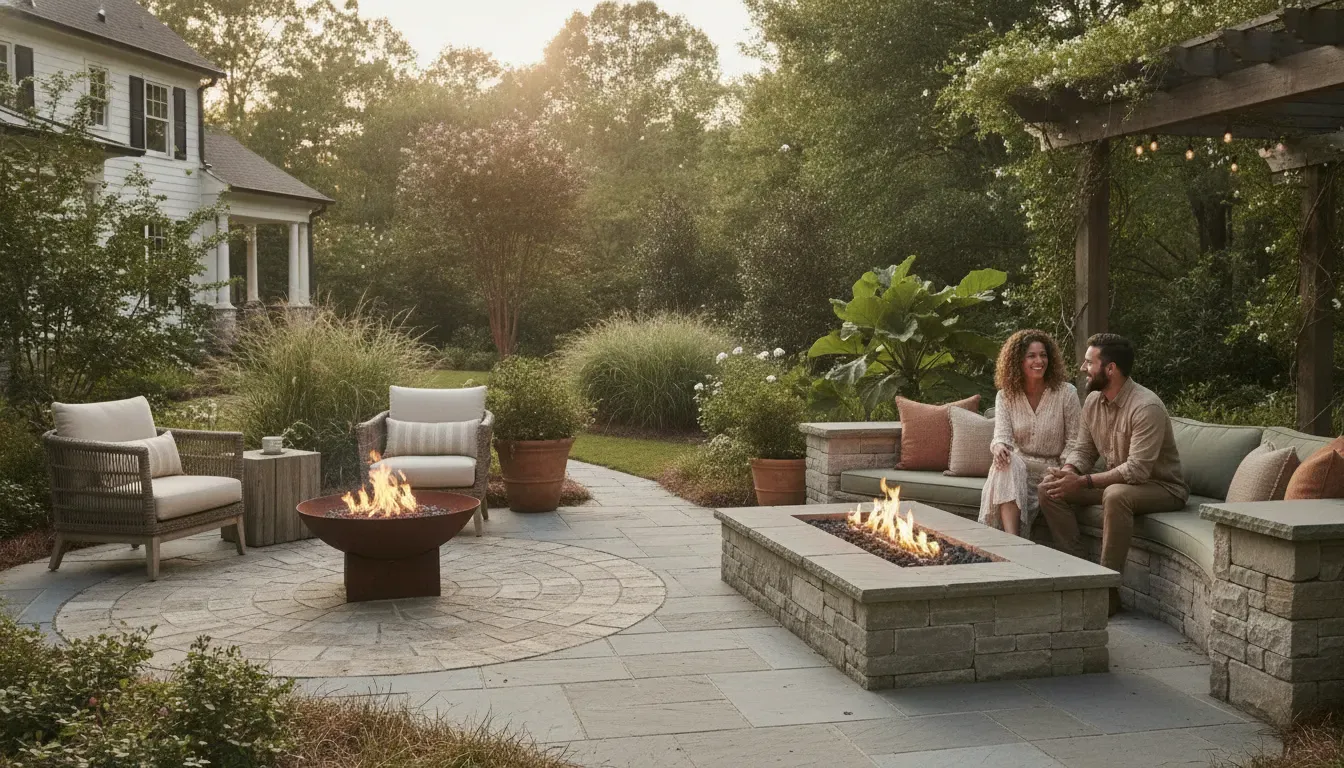
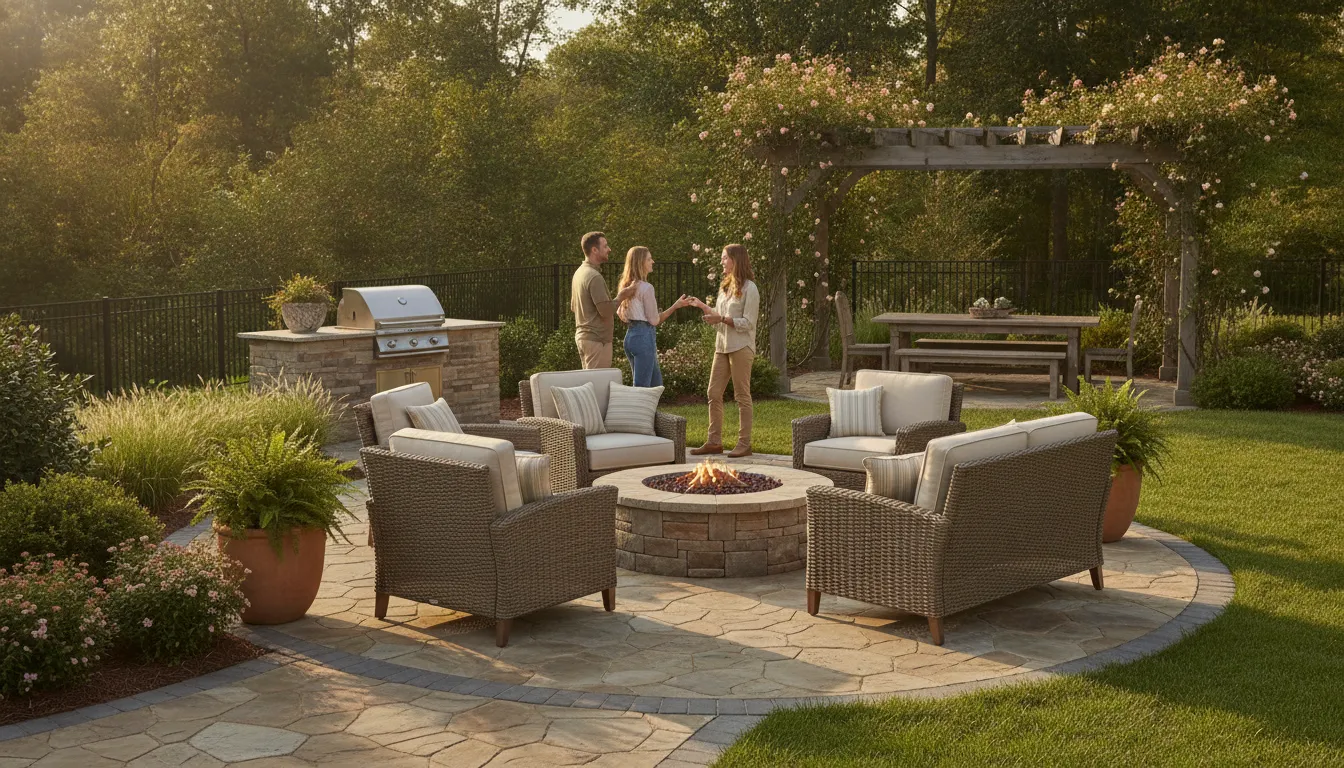
Building a backyard in the Carolinas means planning for our specific climate. The intense sun and humidity play a big role in what materials last and which ones don’t. That’s why looking at national averages for an outdoor kitchen and patio cost can be misleading. The real cost is tied to making smart, durable choices that are right for our region. In our experience, the most successful projects are built on a foundation of local knowledge. This guide explains the costs from a local perspective, helping you understand where to invest for longevity and how to avoid common mistakes we’ve seen homeowners make right here.
Key Takeaways
- Your budget is built on three main decisions: The final cost is shaped by your kitchen’s size, your choice of materials, and the appliances you select. Understanding these trade-offs helps you invest in the features that matter most to your lifestyle.
- Plan for the groundwork, not just the grill: The most common budget surprises come from site preparation, running utility lines, and securing permits. Factoring in these foundational costs from the beginning is the key to a smooth project without unexpected expenses.
- Invest in durability for long-term enjoyment: Choosing materials designed for the Carolina climate is the smartest way to protect your investment. A kitchen built to last requires less maintenance, saving you time and money for years to come.
What Does an Outdoor Kitchen and Patio Really Cost?
Understanding the investment for an outdoor kitchen and patio is the first step in bringing your vision to life. While every project is unique to the home and the family, we can provide a clear picture of what to expect. The final cost isn’t just a number; it’s a reflection of your design choices, material quality, and the long-term value you want to create.
Our goal is to help you feel confident in your decisions. We believe in transparency, which means explaining what drives costs—not just what the numbers are. When you understand the trade-offs between different materials, appliances, and design complexities, you can build a budget that aligns perfectly with how you want to live outdoors.
A look at average project costs
When homeowners start planning an outdoor kitchen, the first question is always about cost. It’s helpful to have a starting point. While every project is unique, national reports show that a typical outdoor kitchen build costs around $16,500, with most falling between $6,300 and $27,000. A simple grill island will naturally be on the lower end of that spectrum, while a fully equipped space with premium appliances can go much higher. Think of these numbers less as a price tag and more as a guide. They help frame the conversation around what’s possible for your home and your budget, which is where the real planning begins.
Why prices can vary so much
That wide price range makes sense when you consider all the decisions that go into a project. The three biggest factors are always the kitchen’s size, the materials you choose, and the appliances you select. A compact grill station is very different from a sprawling L-shaped kitchen with a sink, refrigerator, and bar seating. Likewise, choosing durable, locally sourced stone for your countertops creates a different budget than a simpler finish. These choices, along with the complexity of site preparation and whether you opt for a prefabricated or a fully custom kitchen design, are what shape the final cost.
What Drives the Cost of Your Project?
When homeowners ask us about the cost of an outdoor kitchen and patio, the honest answer is: it depends on your vision. The final price isn’t arbitrary—it’s a direct reflection of four key decisions you’ll make during the planning process. Understanding these factors will help you set a realistic budget and prioritize what matters most for your home and lifestyle. Think of it less as a fixed price tag and more as a custom plan built around how you want to live outdoors.
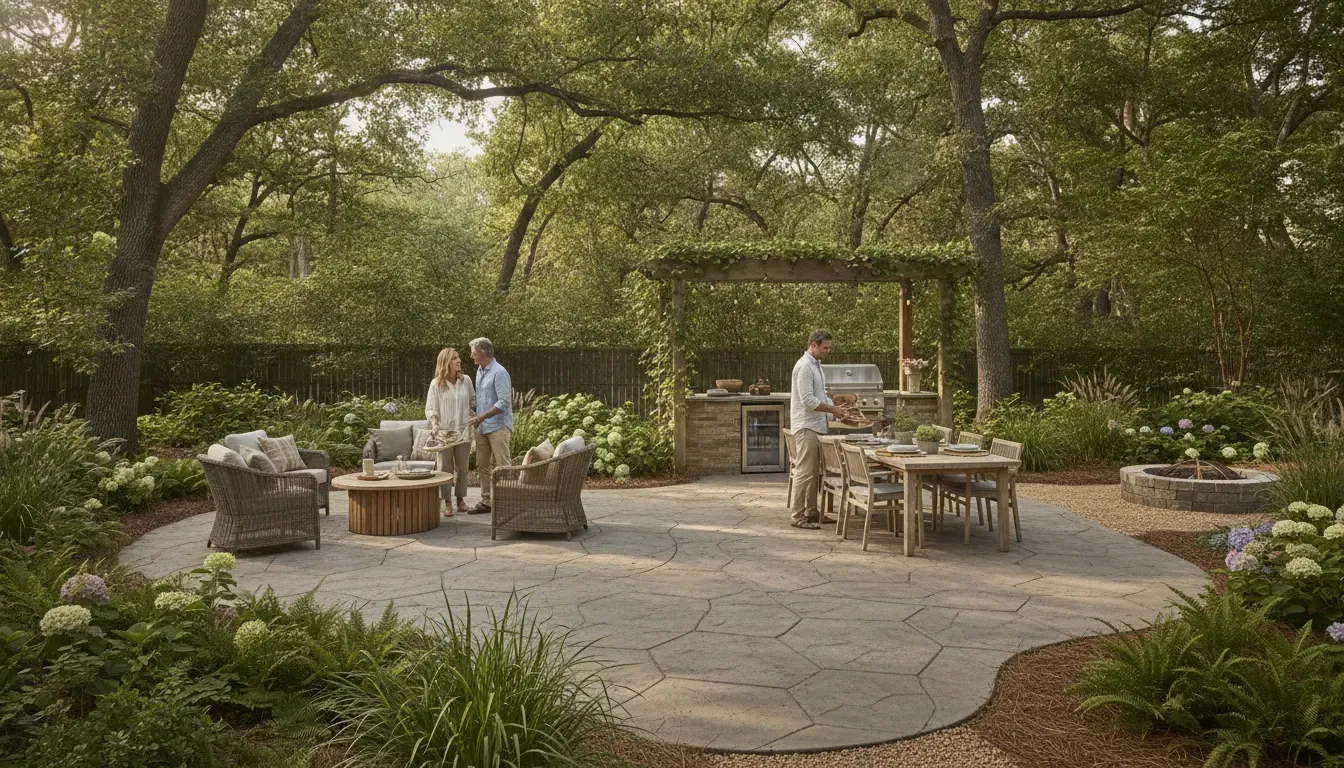
Size, layout, and design
The physical footprint of your outdoor kitchen is the first major factor in its cost. A simple, straight-line grill island is a wonderful and efficient starting point. A more expansive L-shaped or U-shaped kitchen with bar seating, however, requires more materials, more counter space, and more labor to build. As the design grows in complexity, so does the investment. We encourage homeowners to think about how they’ll use the space. Will it be for intimate family dinners or for hosting larger neighborhood gatherings? Seeing different outdoor kitchen layouts can help you decide on a scale that feels right for your backyard.
Your choice of materials
The materials you choose for countertops, cabinets, and veneers define the look and durability of your kitchen. Just like an indoor kitchen, options range from modest to premium. For instance, a durable granite countertop will have a different price point than poured concrete. The stone or brick veneer that wraps the base of your kitchen also plays a significant role. In our experience building in the Carolinas, selecting materials that can withstand our specific climate of humidity and sun is crucial for long-term value. Your choices here are about finding the right balance between your aesthetic, your budget, and the need for weather-resistant durability.
Appliances and grills
The appliances are the heart of your outdoor kitchen, and your selections are a primary cost driver. A high-performance built-in grill from a brand like Lynx or DCS will be a larger investment than a simpler model. Beyond the grill, every addition contributes to the final cost. Do you envision an outdoor refrigerator for cold drinks, a sink for easy cleanup, a side burner for sauces, or a pizza oven for family fun? The number and quality of these key appliances determine the kitchen’s ultimate functionality and price. This is where you can truly customize the space to match your cooking style.
Site preparation and your property
What’s happening on your property before we even break ground is a critical and often overlooked cost factor. A perfectly flat, accessible area is the ideal canvas. However, many backyards here require grading to create a level surface, which involves extra labor and equipment. We also need to consider access to utilities. Running new gas, electrical, and plumbing lines from your home to the kitchen site will impact the budget. The closer your new kitchen is to existing utility connections, the more straightforward this process becomes. A professional site assessment is the best way to understand these foundational costs early on.
Pricing the Key Components of Your Kitchen
An outdoor kitchen’s final price tag is really a collection of individual choices. Understanding what goes into each component helps you create a realistic budget and decide where to invest. Think of it less as a single purchase and more as building a custom space, piece by piece. From the grill that becomes the centerpiece of every gathering to the countertops that handle years of Carolina weather, each element plays a role in the final cost and, more importantly, in how you’ll enjoy the space for years to come.
Grills and cooking stations
The grill is the heart of your outdoor kitchen, and it’s often the first decision homeowners make. The options range from high-performance built-in gas grills to specialty appliances like smokers, pizza ovens, and side burners. The brand you choose—like a versatile Big Green Egg or a powerful Bull grill—and the features included will be a primary driver of cost. While the grill itself is a key component, it’s part of a larger structure. A fully finished outdoor kitchen can range from $1,200 to $2,000 per linear foot, so the size and complexity of the cooking station have a significant impact on the overall budget.
Countertops and finishes
Your countertops define the look and feel of the kitchen, but they also need to be incredibly durable. Materials like granite, sealed concrete, and outdoor-rated quartz are popular choices here in the Carolinas because they can withstand humidity, direct sun, and temperature changes. Granite offers a natural, timeless look but requires periodic sealing. Engineered materials can provide a more uniform appearance with less maintenance. We’ve found that the best approach is to select materials that complement your home’s existing style while providing the resilience you need for outdoor living.
Cabinetry and storage
Cabinetry forms the foundation of your kitchen, housing your appliances and providing essential storage. Unlike indoor cabinets, outdoor versions must be built to resist moisture, pests, and temperature swings. Stainless steel is a classic choice for its durability and sleek look, while marine-grade polymers offer incredible resistance to warping, fading, and rot. The cost for the cabinetry alone can range from $13,000 to $20,000 for an average project, as it creates the entire structure of your kitchen. You can see how different materials look in our outdoor kitchen gallery.
Plumbing, gas, and electrical
The costs for running utilities are often what homeowners forget to budget for. Adding a sink requires plumbing for hot and cold water and a drainage line. A gas grill needs a dedicated gas line, and appliances like refrigerators, ice makers, and outlets for lighting all require professional electrical work. One of the most effective ways to manage these costs is to position your new kitchen close to your home’s existing utility connections. This simple planning step can reduce the labor and materials needed, making your project more affordable without sacrificing function. A home consultation is the best way to map this out.
How Patio Materials Affect Your Budget
The patio is the foundation of your entire outdoor living area—it sets the stage for your kitchen, dining space, and fire pit. The material you choose for this surface is one of the most significant factors in your project’s budget, but the decision goes beyond just the initial cost. It influences the look, feel, and long-term maintenance of your space for years to come. Think of it as the floor of your new favorite room. Does it feel warm and inviting? Is it easy to clean after a cookout? Will it stand up to the Carolina sun and summer storms?
In our experience building backyards here, the right material feels like a natural extension of your home. It should be comfortable underfoot, durable enough to handle our weather, and complementary to your home’s architecture. A simple concrete slab serves a different purpose and comes at a different price point than hand-laid natural stone. Understanding the trade-offs between pavers, concrete, and stone will help you make a confident decision that aligns with both your vision and your budget. It’s about finding the balance between the aesthetic you want and the practical performance you need for years of enjoyment.
Paver patios
Paver patios are a popular and incredibly versatile choice for homeowners. Because they are individual units fitted together, they allow for a huge range of colors, shapes, and patterns—from a classic running bond to intricate circular designs. This flexibility means we can create a truly custom look that complements your home. The cost is influenced by the specific paver you select and the complexity of the installation. While more intricate designs require more labor, the long-term benefit is that if a paver ever cracks or stains, it can be replaced individually—a much simpler fix than repairing a solid slab. We often use outdoor pavers to create a cohesive look that ties the patio to the kitchen structure and surrounding walls.
Concrete and stamped concrete
Poured concrete is a durable and often budget-friendly foundation for an outdoor space. A simple, broom-finished slab is straightforward and functional. However, many homeowners opt for stamped concrete, which adds texture and color to mimic the appearance of more expensive materials like slate, flagstone, or brick. This process adds to the cost but offers a more decorative finish. While concrete is known for its strength, it can be prone to cracking over time due to ground shifts or freeze-thaw cycles. Unlike pavers, repairing a crack in a concrete slab can be more noticeable and complex, which is an important long-term consideration.
Natural stone and other premium options
For a truly unique and elegant look, nothing compares to natural stone. Materials like flagstone, travertine, or slate bring an organic beauty to a patio that can’t be replicated. Each stone has its own distinct color, texture, and character. This premium quality comes with a higher price tag, driven by both the cost of sourcing the stone and the skilled, labor-intensive process of fitting each irregular piece. It’s an investment in a timeless, high-end finish that becomes a central feature of the landscape. This approach is common in the fully integrated patios and decks we design, where every material is chosen to create a cohesive, luxurious feel.
Understanding Professional Installation Costs
The final cost of an outdoor kitchen and patio is about more than just materials and appliances. The installation itself is a critical investment in your project’s safety, beauty, and longevity. The skill of the team building your space is what transforms a collection of high-quality parts into a seamless, functional outdoor room that feels like a natural extension of your home. This craftsmanship is reflected in the installation costs, which are shaped by a few key factors.
How project complexity affects labor
A simple, freestanding grill island has very different labor needs than a fully integrated kitchen with a sink, refrigerator, and custom stonework. The more complex your design—especially when it involves plumbing, gas lines, and electrical work—the more specialized expertise is required. This isn’t just about assembling pieces; it’s about ensuring every connection is safe, every utility is up to code, and the entire structure is built to withstand Carolina weather for years. In our experience, professional labor is what ensures your outdoor kitchen is not only beautiful on day one but also durable for the long term.
What to expect here in the Carolinas
Where you live in the Carolinas plays a role in the final installation cost. A project in a dense Charlotte neighborhood might have different logistical challenges, like site access and specific permitting, than one on a spacious property near Lake Norman. Labor rates can also vary between bustling metro areas and more suburban communities. Because we design and build exclusively in this region, we understand these local nuances. We plan for them from the start, which helps ensure a smooth process without surprises. Our teams are familiar with the conditions and codes in every community we serve.
How your timeline influences cost
Outdoor construction has a natural rhythm. Most homeowners start thinking about their backyards in the spring and summer, which makes it the busiest time for installations. If your own timeline is flexible, planning your project for the late fall or winter can be a smart approach. With fewer projects happening at once, there is often more flexibility in scheduling. It’s a great way to get ahead of the spring rush and ensure your new space is ready for the first warm day of the year. The best first step is always to start a conversation and explore the possibilities for your home, which you can do anytime by scheduling a free consultation.
Costs Homeowners Often Overlook
When planning a new outdoor kitchen or patio, it’s easy to focus on the exciting parts—the grill, the countertops, the beautiful pavers. While those are key components of your budget, our experience building backyards here in the Carolinas has shown us that a few less-visible costs can catch homeowners by surprise.
Thinking about these items from the start doesn’t have to be overwhelming. In fact, planning for them is the best way to ensure your project runs smoothly and stays on track. A well-planned budget accounts for the entire process, from the first shovel in the ground to the final landscape lighting. This is a core part of our design and consultation process, where we help you see the full picture before any work begins. Let’s walk through the four areas that are most often overlooked.
Permits and inspections
Most substantial outdoor projects, especially those involving electrical, gas, or plumbing lines, require permits from your local city or county. This isn’t just red tape; it’s a system designed to ensure all work is done safely and to current building codes. The cost for permits can range from a few hundred to a couple of thousand dollars, depending on your project’s scope. Skipping this step can lead to fines and complications down the road, especially when it comes time to sell your home. We handle the entire permitting process for our clients, ensuring everything is filed correctly and all inspections are passed.
Grading and site work
Before the first paver can be laid, the ground beneath it needs to be perfectly prepared. This is one of the most critical steps for ensuring your patio and kitchen will last for decades without shifting or settling. Site work can involve clearing grass, removing old concrete, leveling uneven ground, and ensuring proper drainage to direct water away from your home’s foundation. Depending on the condition of your yard, this preparation can be a significant part of the labor costs. We assess your property’s specific needs early on to provide a clear and accurate plan for a stable, long-lasting foundation.
Running utility lines
Your outdoor kitchen’s functionality depends on its connections. Running lines for water to a sink, electricity for a refrigerator and lighting, and a natural gas line for your grill are all specialized tasks that add to the final cost. An electrician may be needed for several hours to safely run and connect wiring, and a licensed plumber is essential for gas and water. Planning for these utility connections early in the design phase is crucial, as it’s far more efficient to run them before a patio is installed than to try and add them later.
Landscaping and final touches
An outdoor kitchen doesn’t exist in a vacuum—it’s part of your larger backyard ecosystem. The final touches are what seamlessly blend your new space with the rest of your yard. This can include adding new sod around the patio, creating garden beds, installing low-voltage lighting for ambiance and safety, or building pathways to connect different areas. While these elements are often considered “extras,” they are what make the project feel truly finished and integrated. You can see how these details complete a space in our project galleries.
Where to Save: Smart Material and Appliance Choices
Building an outdoor kitchen is an investment, and managing the budget wisely is about making smart choices, not just cutting corners. The goal is to find the right balance between upfront cost, long-term durability, and how you actually plan to use the space. In our experience, the most satisfied homeowners are those who prioritize quality where it matters most—in the materials that face the Carolina weather and the core appliances they’ll use every week.
Thinking through these decisions ahead of time helps ensure your budget is allocated to the features that will bring the most value and enjoyment for years to come. It’s less about finding the cheapest option and more about investing in the right one for your home and lifestyle. A well-planned kitchen, built with durable components, will always feel like a better value than one that requires frequent repairs or doesn’t quite fit your needs.
Durable, cost-effective materials
Here in the Carolinas, outdoor materials have to stand up to humidity, intense sun, and seasonal temperature swings. “Cost-effective” really means choosing materials that won’t warp, fade, or degrade after a few years. While some options have a lower initial price tag, they may cost more in the long run through maintenance and replacement. Finishes like natural stone, brick, and high-quality stucco provide a classic look and exceptional durability. We often recommend outdoor pavers for patios because they are resilient, easy to repair if one gets damaged, and offer timeless appeal. Investing in a solid foundation and resilient finishes is one of the smartest decisions you can make for the longevity of your outdoor kitchen.
Needs vs. wants in appliances
The heart of any outdoor kitchen is the grill, but from there, the options can feel endless. The key to managing your budget is to clearly define your needs versus your wants. A high-performance built-in grill, an outdoor-rated refrigerator, and weatherproof storage are the essential pillars for most homeowners. These are the items that enable you to cook and entertain with ease. Beyond that, think about how you truly envision using the space. Do you host large parties, or is it mostly for quiet family dinners? Appliances like side burners, warming drawers, or a pizza oven are fantastic additions but aren’t necessary for a functional and beautiful kitchen. Start with the core components and consider adding specialty items later if your budget allows.
Investing in long-term value
The best way to save money on an outdoor kitchen is to build it right the first time. This means investing in materials and appliances designed specifically for outdoor use. For instance, stainless steel cabinets and appliance finishes cost more than other options, but they resist rust and corrosion, which is critical in our humid climate. Similarly, choosing a durable countertop material that won’t stain or crack under the sun protects your investment. This focus on long-term value extends to the design and installation itself. A thoughtful layout makes the kitchen more efficient and enjoyable to use, which is a return you’ll appreciate every time you step outside. A professional consultation can help you identify where to invest for the greatest durability and personal enjoyment.
Common Budgeting Missteps to Avoid
After helping hundreds of homeowners in the Carolinas build their dream outdoor spaces, we’ve seen where budgets tend to go off track. It’s rarely one big thing, but a series of small oversights that add up. A thoughtful plan considers the project from every angle—not just the exciting parts like choosing a grill, but the practical realities of construction, materials, and long-term use.
Thinking through these common missteps ahead of time is the best way to keep your project on track and ensure the final result is a space you can enjoy for years without any financial surprises. It’s about building with confidence, knowing you’ve made informed decisions from the very beginning.
Misjudging the full scope
One of the easiest mistakes to make is focusing only on the kitchen components themselves—the grill, the countertops, the refrigerator. But a successful project includes everything it takes to prepare the site and connect those elements. This includes grading the land, running utility lines, securing permits, and even the final landscaping that makes the new kitchen feel like a natural part of your yard. A truly comprehensive plan accounts for the entire process, which is why a free home consultation can be so valuable for understanding the complete picture before you commit.
Selecting materials not suited for the outdoors
The Carolina climate, with its humidity, strong sun, and seasonal changes, is tough on outdoor materials. Products that work beautifully inside your home often can’t withstand the elements. We’ve seen homeowners regret using certain types of wood that warp or stone that stains easily without proper sealing. Choosing materials specifically rated for outdoor use is essential for longevity. Finishes like stone, brick, and specially treated pavers are designed to last, saving you from costly repairs and replacements down the road. Our outdoor kitchen gallery shows how durable materials can create a beautiful, lasting space.
Forgetting about long-term upkeep
The initial price of a material is only one part of its total cost. Some options may seem more affordable upfront but require significant annual maintenance, like staining a wood deck or resealing porous stone countertops. Over time, these costs and the effort involved can become a burden. In our experience, it’s often better to invest in durable, low-maintenance materials from the start. This way, you can spend your time enjoying your new kitchen with family and friends, not performing constant upkeep.
Not planning for utility access
The location of your outdoor kitchen has a major impact on the final cost. Running gas, electrical, and water lines across your yard requires trenching and professional installation, which can add thousands to the budget. By strategically placing your kitchen closer to your home’s existing utility connections, you can significantly reduce these expenses. This is a key detail we focus on during the design phase. A well-thought-out layout not only improves function but also makes the entire project more cost-effective by minimizing complex and expensive utility runs.
Getting the Most from Your Investment
An outdoor kitchen and patio are more than just additions to your home; they’re investments in your daily life. The real value isn’t just in the final price tag, but in how well the space serves you and your family for years to come. A thoughtfully planned project brings a sense of ease, connection, and enjoyment that you’ll appreciate every time you step outside.
In our experience, the most successful projects aren’t always the most expensive. They’re the ones built on smart, forward-thinking decisions. By focusing on a few key areas, you can ensure your investment delivers lasting satisfaction and becomes a true extension of your home.
Focusing on functional design
Before a single paver is laid, the most important work happens on paper. A functional design is the foundation of a space you’ll love to use. It’s less about trends and more about how you actually live. Think about the flow from your indoor kitchen to your outdoor grill. Consider how many people you typically host and where they’ll gather. Will you need ample counter space for prep, or is a simple grilling station all you need?
A well-designed outdoor kitchen feels intuitive. Everything is where you need it to be, making cooking and entertaining feel effortless rather than a chore. Planning for these practical details upfront ensures the layout supports your lifestyle, which is the greatest return you can get.
Making strategic material choices
Here in the Carolinas, our outdoor spaces face everything from intense summer sun and humidity to cool, damp winters. Your material choices are your first line of defense, protecting your investment from the elements. While aesthetics are important, durability should guide your decisions. Opting for high-grade stainless steel appliances, dense stone countertops, and properly sealed cabinetry prevents rust, warping, and fading over time.
The same principle applies to your patio. High-quality outdoor pavers resist cracking and staining far better than basic concrete, reducing long-term maintenance and preserving the beauty of your space. Making strategic choices in materials means you’ll spend more time enjoying your backyard and less time worrying about upkeep.
Building your project in phases
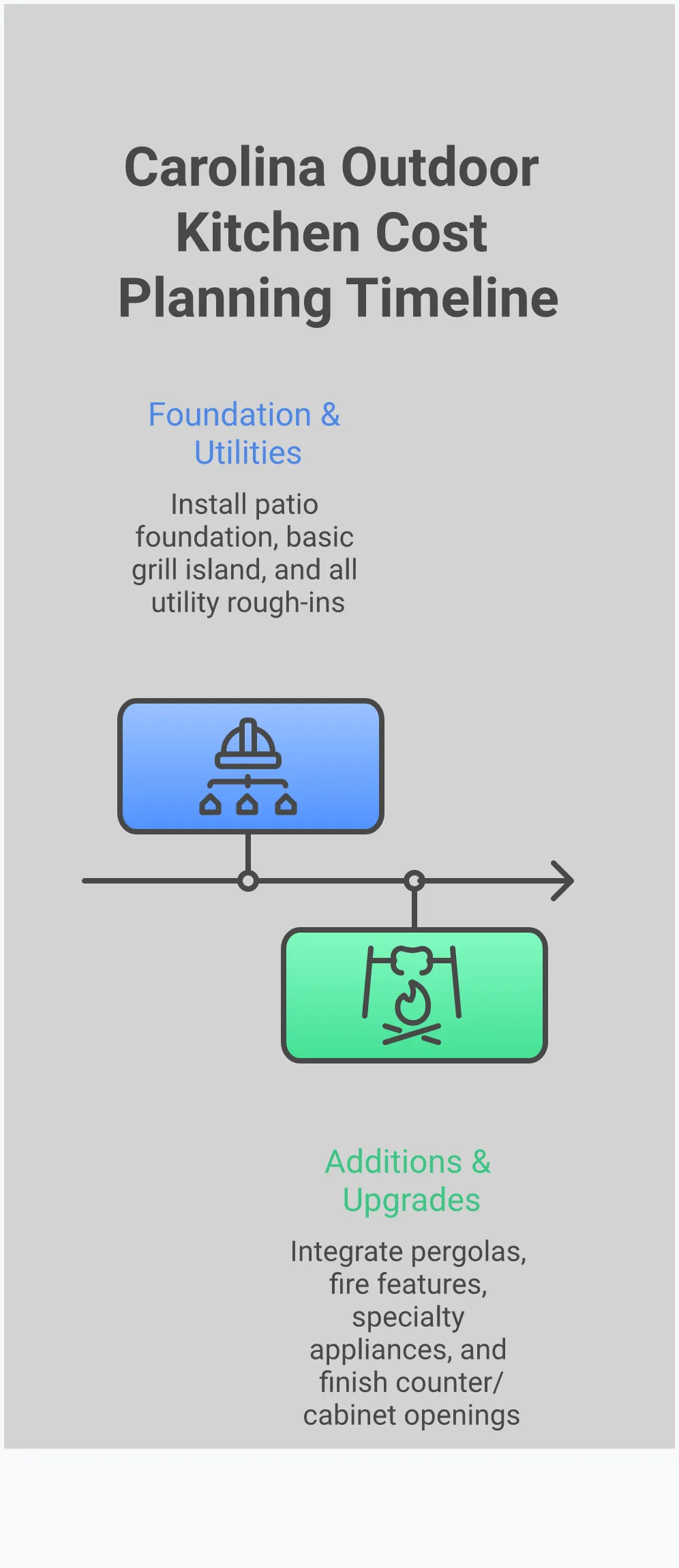
Creating your dream backyard doesn’t have to happen all at once. In fact, building in phases is often the smartest approach. It allows you to align your project with your budget without compromising on the quality of the core components. You can start with the essential foundation—a well-built patio and the primary grill station—and plan for future additions.
This method ensures the groundwork, like running utility lines, is done correctly from the start. Later, you can add features like a pizza oven, a beverage fridge, or a pergola as your needs and budget allow. Phasing the project gives you financial flexibility and the confidence that every part of your outdoor kitchen is built to last.
The value of a single, experienced team
Coordinating multiple contractors for demolition, grading, plumbing, electrical, and construction can be one of the most stressful parts of any home project. When communication breaks down, costly mistakes and delays often follow. Working with a single, integrated team removes that complexity and risk. When one group understands the project from the initial design to the final touches, the entire process becomes seamless.
An experienced team can also identify opportunities to save on costs, like positioning the kitchen to minimize the distance for new utility lines. This unified approach ensures accountability and a smoother timeline. When you’re ready to explore what’s possible for your home, a free home consultation can help you visualize the entire project with confidence.
Planning Your Project with Confidence
Moving from a dream to a detailed plan is where your project truly begins. It’s also the point where questions about cost, priorities, and long-term value come into focus. Approaching these decisions with clarity is the key to creating a space you’ll love for years to come. In our experience, homeowners who feel most confident are the ones who take the time to understand the trade-offs and align the project with their lifestyle. This isn’t about spending more or less; it’s about investing wisely in the moments you want to create. A thoughtful plan ensures the final result feels like a natural extension of your home and how you want to live in it.
Setting a realistic budget
Understanding the cost of an outdoor kitchen and patio is the first step toward a successful project. While online estimators can be a starting point, a realistic budget is built on your specific choices. Nationally, a custom outdoor kitchen can range from $1,200 to over $2,000 per linear foot, but that number is shaped by materials, appliances, and site conditions. For homeowners here in the Carolinas, we find it’s more helpful to think about the complete picture—from the patio foundation to the final lighting. A clear budget helps guide every decision, ensuring the final space meets both your vision and your financial comfort zone.
Deciding what matters most to you
Before you choose a single material, think about how you want to live in your new space. Will this be the hub for weekend family barbecues, or a quiet spot for morning coffee? Your answer guides everything. If you envision large gatherings, you might prioritize a high-capacity grill and plenty of counter space. If it’s about simple, relaxing evenings, perhaps a comfortable seating area around a fire feature is more important than a complex cooking station. Selecting the right materials and appliances becomes much easier once you’ve defined the feeling you’re after.
Thinking about resale value
An outdoor living space is more than just an addition; it’s an investment in your home’s appeal and marketability. A well-designed outdoor kitchen and patio can offer a significant return on investment, often between 55% and 80%. The key is creating a space that feels like a natural extension of the home. Timeless design, durable materials suited for our Carolina climate, and a functional layout are what add lasting value. While personal touches are important, focusing on quality and usability ensures your investment will be just as attractive to a future buyer as it is to you today.
Exploring your financing options
A beautiful, functional outdoor space doesn’t have to be an all-at-once expense. Many homeowners find that breaking the cost into manageable monthly payments makes their dream project possible without straining their budget. This approach allows you to build the space you truly want now, rather than compromising on quality or function. By exploring our flexible financing options, you can move forward with confidence, knowing the investment fits comfortably within your financial plans. It’s a straightforward way to start enjoying your new backyard sooner.
Related Articles
- Are Outdoor Kitchens Worth the Investment?
- The Cost of a Backyard Renovation: What to Expect
- How to Find the Best Outdoor Kitchen Builders
Frequently Asked Questions
What’s a realistic starting budget for a quality outdoor kitchen and patio? While every project is different, a good starting point for a well-built, functional outdoor kitchen and a foundational paver patio often begins in the $15,000 to $25,000 range. This typically covers a straightforward grill island, durable countertops, and the necessary site work for a modest-sized patio. The final number is shaped by your material choices, appliance selections, and the specific conditions of your property, but this range provides a solid baseline for initial planning.
What is the single biggest factor that impacts the final cost? More than any specific appliance or material, the overall size and complexity of your design have the greatest impact on the budget. A simple, straight-line grill station will naturally be a smaller investment than a large, U-shaped kitchen with a bar, sink, and multiple appliances. The more linear feet of countertops and cabinetry you have, and the more intricate the layout, the more materials and skilled labor are required to bring it to life.
How can I manage costs without ending up with a cheap-looking space? The key is to invest in the parts of the project that provide long-term value and durability. We advise homeowners to prioritize a high-quality grill, weather-resistant countertops, and a properly installed paver patio foundation. These are the elements that have to withstand the Carolina climate. You can manage costs by starting with the essential appliances you know you’ll use constantly, like the grill and an outdoor refrigerator, and planning to add specialty items like a pizza oven or side burner in the future.
Are there any “hidden” costs I should be aware of? What homeowners often overlook are the foundational costs required before the kitchen itself is even built. This includes securing local permits, preparing the site with proper grading and drainage, and running utility lines for gas, electricity, and water. These steps are essential for a safe and durable installation. We make sure to include these items in our initial consultation so you have a clear and complete picture of the entire investment from the very beginning.
Do I need to build my entire dream backyard all at once? Not at all. In fact, building your project in phases is a very smart and common approach. You can begin with the core components—the patio and the main cooking station—and ensure they are built to the highest standard. Then, as your budget and needs evolve, you can add other elements like a fire pit, a pergola, or additional appliances. This allows you to create your ideal space over time without compromising on the quality of the foundation.