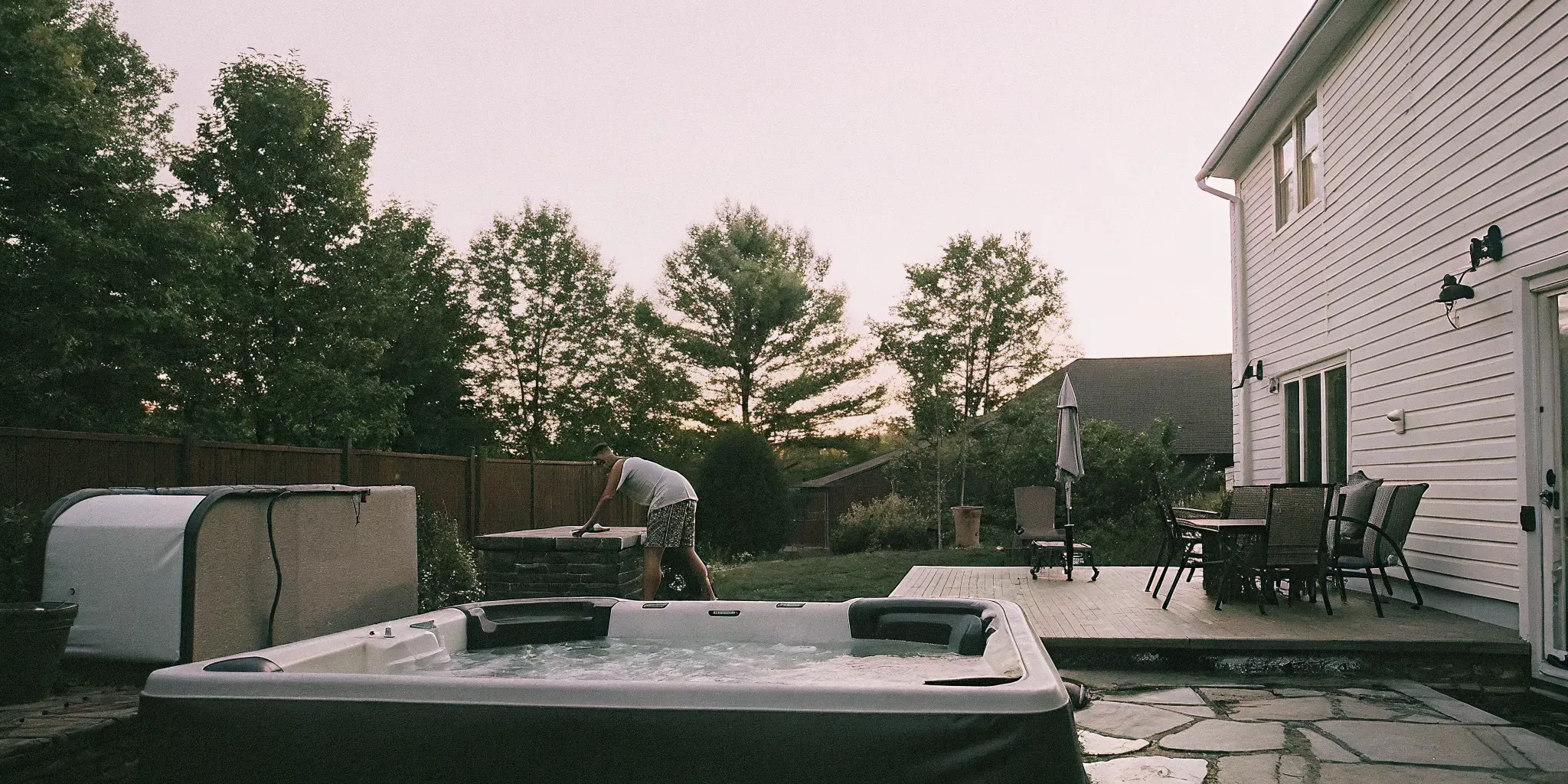
One of the first questions we hear from homeowners is, “What does it really cost?” While that’s an important question, a better one might be, “What value am I getting for that cost?” The financial investment for a swim spa or a pool is only part of the story. The real value is found in daily use, year-round accessibility, and therapeutic benefits. When you evaluate the swim spa vs swimming pool cost NC, it’s essential to consider factors like energy efficiency and maintenance time. This article will walk you through a complete comparison, moving beyond the initial price to help you see the long-term worth of each choice for your home and lifestyle.
Key Takeaways
- Look Beyond the Initial Price: A swim spa’s cost is predictable, covering the self-contained unit and a straightforward installation. A traditional pool is a full construction project, and its final cost often grows with necessary additions like excavation, patios, and fencing that are not in the base price.
- Choose for Your Daily Routine, Not Just Summer Parties: The best choice fits how you want to live year-round. A swim spa supports consistent wellness with daily fitness and hydrotherapy, while a pool is centered around seasonal recreation and large gatherings.
- Factor in Your Time and Space: A swim spa delivers a complete aquatic experience in a compact footprint, leaving more room in your yard. Its smaller size and efficient design also mean maintenance is a simple weekly task, not a time-consuming chore.
Comparing Upfront Costs: Swim Spa vs. Pool
When you’re looking at the initial investment for a swim spa versus a pool, it’s helpful to think of it as choosing between an appliance and a construction project. A swim spa arrives as a complete, self-contained system, making the costs much more predictable. A traditional pool, on the other hand, is a custom construction project with many moving parts. Understanding this key difference is the first step to comparing the true upfront costs for your home.
What a Swim Spa Costs to Install
A swim spa arrives as a self-contained unit, which makes its upfront cost much more predictable. For most homeowners, a complete Endless Pools® Fitness System costs between $30,000 and $60,000. This price includes the shell, the current system, plumbing, and all the built-in heating and filtration components. The main additional costs are for site preparation: a solid, level concrete pad to sit on and the proper electrical hookup. Because the unit is self-contained, the installation process is straightforward and avoids the complexities of a major construction job. You’re essentially installing a single, high-performance piece of equipment.
What a Traditional Pool Costs to Build
Building a traditional in-ground pool is a different process entirely. The initial quote, which might start around $40,000, is often just for the pool shell itself. The total investment grows from there. You’ll need to budget for significant site work, which in our experience can easily add 50% or more to the initial cost. This includes excavation, running electrical and gas lines, and installing legally required safety fencing. It also includes the surrounding deck or paver patio that makes the pool usable. These elements are essential for the finished project but are rarely included in the base price of the pool.
What Influences the Upfront Cost?
For both swim spas and pools, factors like size and special features will influence the final price. However, the scale of those variables is very different. With a pool, your choices in materials (like vinyl, fiberglass, or gunite) and the complexity of the landscape design can dramatically change the budget. With a swim spa, the costs are more contained within the unit itself. You’re choosing features, not commissioning a multi-stage construction project. The best way to understand what makes sense for your home and budget is to talk through the specifics. A free home consultation can help clarify the exact costs for your unique space, without any pressure.
What Are the Long-Term Costs of Ownership?
The initial investment is just the beginning. To make a confident choice, it’s important to understand what ownership will feel like years down the road. Long-term costs involve more than just money; they include your time and energy. When we help homeowners compare a swim spa to a traditional pool, we focus on three key areas that affect your daily life and budget over time.
Energy Use and Your Monthly Bills
The impact on your monthly utility bill is a practical place to start. A modern, well-insulated swim spa is designed for efficiency. Because it holds less water and has a high-quality, custom-fit cover, it uses far less energy to maintain its temperature. Most homeowners find it costs just a few dollars a day to run. A heated swimming pool, with its large, open surface, requires significantly more energy to keep warm, especially during cooler months. This makes a swim spa a more predictable and manageable part of your household budget, allowing for comfortable, year-round use without surprising energy spikes.
Water and Chemical Needs
Maintaining clean water is a weekly ritual, but the time and expense can vary greatly. A swim spa’s smaller water volume is a major advantage, requiring up to 50% fewer chemicals than a full-sized pool. This means less money spent on supplies and, more importantly, less time spent testing and adjusting the chemistry. For homeowners who value simplicity, this is a significant benefit that gives you more time to actually enjoy the water. To make it even easier, you can bring a sample to any of our showrooms for a free water analysis, ensuring your water is always perfectly balanced.
The Cost of Seasonal Care and Winterization
In the Carolinas, a traditional pool season has a definite start and end, which includes the costs of opening and closing it each year. A swim spa, however, is built for year-round wellness. Because it’s designed to be used in every season, you never have to winterize it. There are no seasonal service fees to budget for. Instead, you gain the ability to use your Endless Pools® Fitness System on a crisp fall morning or enjoy a relaxing soak on a cool winter evening. This transforms your investment from a seasonal amenity into a daily part of your life, ready whenever you are.
How Long Does Installation Really Take?
One of the most important questions we hear from homeowners is, “How soon can we actually use it?” The time it takes to go from a decision to your first day of enjoyment is a major factor, and it’s one of the biggest differences between a swim spa and a traditional pool. The installation process affects not just your timeline, but also the level of disruption to your backyard and your daily life.
A traditional pool build is a significant construction project, involving weeks of work, heavy machinery, and multiple crews. A swim spa installation, on the other hand, is much more streamlined. Because we’ve managed hundreds of these projects here in the Carolinas, we can help you understand the real-world timeline for each, so you can plan for what the process actually feels like. Understanding this from the start helps you make a choice that fits not just your budget, but your life.
The Swim Spa Installation Timeline
A swim spa installation is measured in days, not weeks or months. Because a swim spa is a self-contained vessel, the process is straightforward. The main preparation involves creating a solid, level foundation, typically a concrete pad, and having a licensed electrician run the necessary power. Once the site is ready, we can often deliver and install your Endless Pools® Fitness System in a single day.
This efficiency means far less disruption to your home and yard. There’s no major excavation or prolonged construction. For many homeowners, the speed and simplicity are key benefits. You can go from planning your wellness routine to living it in a fraction of the time it takes to build a traditional pool.
The Traditional Pool Construction Timeline
Building a traditional in-ground pool is a multi-stage construction project that can transform your backyard into a work site for several weeks. While the actual construction might take anywhere from seven to 21 days in ideal conditions, this timeline doesn’t account for potential weather delays, inspections, or landscaping that follows.
The process involves several distinct phases: excavation, framing the pool walls, running plumbing and electrical lines, pouring concrete or installing a liner, and finally, finishing the surrounding patio and landscape. Each step requires coordination and time. It’s a rewarding process, but one that requires patience and a clear understanding that your yard will be undergoing a major transformation for an extended period.
Understanding Permits and Site Prep
Before any work can begin on a traditional pool, you have to go through the permitting process. This involves submitting plans to your local municipality, waiting for approval, and scheduling multiple inspections throughout the build. In our experience, this administrative phase can add weeks or even months to the project timeline. Traditional pools also have strict safety rules, often requiring specific fencing that adds to the cost and complexity.
Swim spas generally have a much simpler path. While some projects may require an electrical permit or a building permit for an associated deck or patio, the requirements are far less intensive than for a full pool. We handle the coordination for you, ensuring everything is planned correctly from the start, which removes a significant source of stress for homeowners.
How Does Day-to-Day Maintenance Compare?
Any body of water, whether it’s a swim spa or a swimming pool, requires consistent care to stay clean, safe, and ready for you to enjoy. The real difference lies in how much time and effort that care demands. In our experience helping Carolina homeowners, the goal is always the same: to spend more time relaxing in the water and less time working on it. The primary factor that shapes your maintenance routine is water volume. A swim spa holds significantly less water than a traditional pool, which makes everything from balancing chemicals to heating the water a simpler, faster, and more manageable task.
This difference in scale changes the entire ownership experience. Instead of dedicating a large part of your weekend to upkeep, swim spa maintenance often feels like a small, simple ritual. It’s about a few minutes of attention each week, not hours of labor. This allows you to focus on what matters: using your investment for wellness, fitness, and connection with family.
What a Typical Week of Maintenance Looks Like
For a swim spa owner, a typical week involves a few brief check-ins. You’ll test the water with a strip a couple of times and add a small amount of sanitizer to keep it balanced. Because the system is enclosed and covered when not in use, you don’t have to worry about constantly skimming out leaves, pollen, or debris. The filtration system does most of the work for you. It’s a simple routine that quickly becomes second nature.
A traditional pool, especially here in the Carolinas, requires a more hands-on approach. Weekly tasks often include skimming the surface, brushing the walls, vacuuming the floor, and clearing out skimmer baskets. The larger water volume and exposure to the elements mean chemical balancing is a more frequent and involved process. If you’re ever unsure about your water chemistry, you can always bring a sample to any of our showrooms for a free water analysis.
When You’ll Need Professional Service
With a swim spa, the need for professional service is often predictable. The components are part of an integrated system, and our in-house technicians can handle any repairs or routine check-ups efficiently. Many homeowners find that with consistent self-care, professional visits are infrequent. For those who want a completely hands-off experience, our Spa Valet plans provide routine care so your swim spa is always ready.
Traditional pools involve more variables. Seasonal opening and closing procedures are common tasks for professionals, as are repairs to liners, plaster, and complex plumbing or filtration systems. Because a pool is a collection of separate components from different manufacturers, coordinating service can sometimes be a challenge. Having a single, trusted team to call for any issue provides peace of mind that many homeowners value.
Equipment Lifespan and Replacement Costs
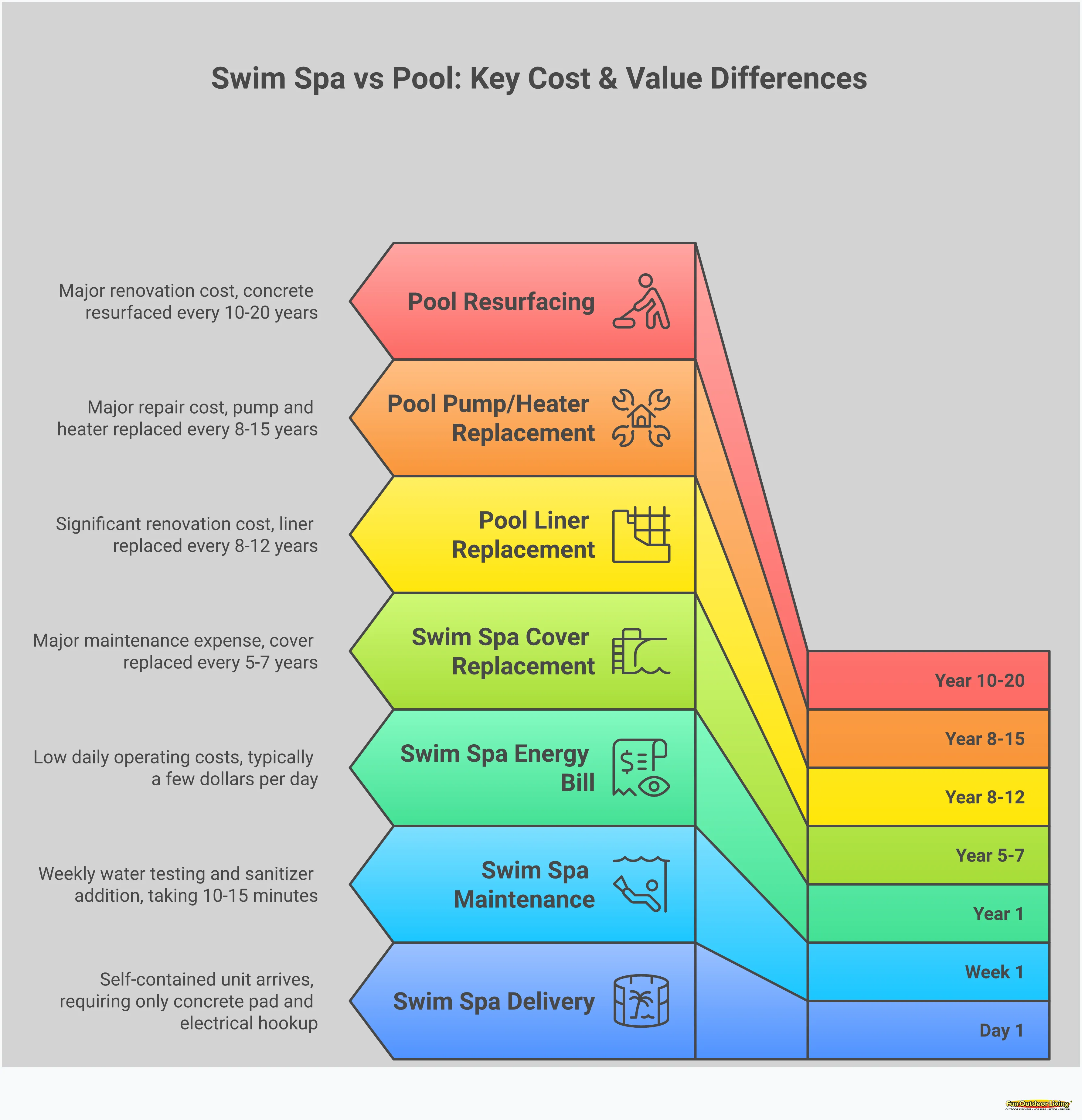
A swim spa is an all-in-one appliance, engineered for efficiency and durability. High-quality systems like Endless Pools® Fitness Systems are designed from the ground up for year-round use, with components built to withstand constant operation. The most common replacement item is the insulated cover, which is a manageable expense every five to seven years.
A swimming pool’s equipment has varying lifespans. Pumps and heaters may last for years, but a vinyl liner will likely need replacement within a decade, which can be a significant project and expense. Concrete or gunite pools require resurfacing over time as well. These long-term costs are important to factor into the total cost of ownership, as they represent major investments that occur outside of your monthly utility bills.
Clearing Up Common Cost Myths
When you’re comparing a swim spa to a traditional pool, the conversation often turns to cost. It’s a significant investment, and it’s easy to get lost in conflicting information. We’ve found that many homeowners make decisions based on assumptions that don’t quite hold up in the real world. Let’s clear the air on a few of the most common myths we hear from families here in the Carolinas.
Myths About Ongoing Expenses
Many people assume that heating a body of water year-round will lead to high utility bills, but a modern swim spa is built differently than a pool. Unlike a traditional swimming pool that loses heat to the surrounding ground, a swim spa is a self-contained vessel with multiple layers of high-density foam insulation and a locking cover. This design holds heat incredibly well, making it far more energy-efficient to keep at a comfortable temperature. In our experience, the monthly utility cost is often a pleasant surprise for new owners, especially when compared to the expense of trying to heat a full-sized pool for even a few extra months.
Assumptions About Maintenance Time
Another common assumption is that a swim spa requires the same demanding maintenance schedule as a pool. In reality, the day-to-day upkeep is much simpler. Because a swim spa holds significantly less water, balancing the chemistry is faster and requires fewer chemicals. The advanced, multi-stage filtration systems also do a lot of the work for you, keeping the water clear with less effort. This means you spend more time enjoying your investment and less time on chores. For homeowners who want a completely hands-off experience, a professional service plan can handle everything.
Hidden Costs to Keep in Mind
While a swim spa often has a lower upfront cost than an inground pool, the true value becomes even clearer over the long term. Traditional pools come with periodic “hidden” costs that swim spas don’t have, like replacing a vinyl liner every decade or so, which can be a major expense. Furthermore, the ability to use your swim spa all year long changes the value equation entirely. Instead of a three-month season, you get twelve months of fitness, relaxation, and family fun. When you look at the cost per use, a swim spa often provides far more value for your daily life.
How Much Space Do You Really Need?
This is one of the first questions homeowners ask, but the answer isn’t just about square footage. It’s about how you want your backyard to feel and function every day. Do you envision a dedicated wellness corner that leaves room for the garden and kids’ play area? Or is your goal to create a large, central hub for summer gatherings? The amount of space you need depends entirely on the life you want to live in your yard.
In our experience building backyards across the Carolinas, we’ve seen that the most successful projects aren’t always the biggest. They are the ones that match the scale of the home and the lifestyle of the family. A swim spa offers a compact, focused way to bring swimming and hydrotherapy home, while a traditional pool makes a much larger statement, defining the entire landscape. Understanding the footprint of each is the first step to deciding what’s right for you.
Swim Spa Footprints and Placement Options
A swim spa is designed to deliver a complete aquatic experience in a surprisingly small footprint. Most models, like the Endless Pools® Fitness Systems we install, are between 12 and 19 feet long. Because they are self-contained units, all the plumbing and equipment is built right in. This means you don’t need to sacrifice extra yard space for a separate pump house or extensive excavation. This efficiency opens up so many possibilities for placement. We often integrate them into decks, set them on a simple concrete or paver pad, or build a partially-recessed installation that blends beautifully with the landscape. It’s a versatile way to add daily wellness without surrendering your entire backyard.
Space Planning for a Traditional Pool
A traditional pool requires a different level of planning. The pool itself is just the beginning. You also have to account for the surrounding deck or patio, which needs to be large enough for safe foot traffic and lounging. Add in the space for required safety fencing, landscaping, and a dedicated pad for the pump and filter equipment, and the total footprint grows quickly. For many homeowners, this means the pool becomes the single organizing feature of the backyard. It’s a wonderful centerpiece for summer fun, but it’s a decision that shapes every other element of your outdoor living space for years to come.
Which Features Matter Most for Carolina Homeowners?
While cost is an important part of any backyard project, we’ve found that the final decision between a swim spa and a traditional pool rarely comes down to just the numbers. It’s about how you want to live your life outdoors. For homeowners here in the Carolinas, the conversation almost always turns to a few key questions: How can I use this investment for more than just a few months a year? How will it support my family’s health and wellness? And how can I create a space for fun without giving up my entire backyard?
A traditional pool is a wonderful centerpiece for summer, but a swim spa is designed around daily routines and year-round wellness. It’s a different approach to outdoor living, one that prioritizes consistency, therapy, and flexibility. In our experience, understanding these differences is what helps homeowners make a choice they feel confident in for years to come. The right answer depends entirely on what you value most and how you picture your day-to-day life unfolding.
Year-Round Use in the Carolina Climate
One of the biggest advantages of a swim spa is its ability to be used all year long, which is a perfect match for the Carolina climate. While our summers are hot, our spring and fall seasons are long and beautiful, and our winters are relatively mild. A traditional pool often sits covered and unused for more than half the year. A swim spa, however, is designed for four-season enjoyment. Thanks to its compact water volume, excellent insulation, and efficient heating system, you can keep it at the perfect temperature without breaking your energy budget.
Imagine enjoying a gentle swim on a crisp October morning or soaking in the warm, moving water on a clear January afternoon. This is the reality for swim spa owners. It transforms your backyard from a seasonal destination into a daily retreat. Instead of limiting your outdoor aquatic fitness to the warmest months, you can maintain your wellness routine from one season to the next without interruption.
Health, Wellness, and Therapeutic Use
More and more, homeowners are looking for ways to bring health and wellness into their daily lives. A swim spa is far more than just a place to cool off; it’s a personal wellness center. The powerful current allows for low-impact exercise like swimming, walking, or rowing, which is ideal for cardiovascular health without stressing your joints. At the other end, integrated seating with hydrotherapy jets provides targeted massage to ease sore muscles, reduce stress, and improve circulation.
For many of our clients, these therapeutic benefits are the primary reason they choose a swim spa. It becomes a vital part of their routine for managing chronic pain, recovering from workouts, or simply unwinding after a stressful day. While a traditional pool is built for recreation, an Endless Pools® Fitness System is engineered for restoration, offering tangible health benefits you can feel every day.
Space for Entertainment and Family Fun
In many growing Carolina neighborhoods, backyard space is a precious commodity. A traditional in-ground pool requires a significant footprint, extensive excavation, and can often dominate the entire yard. A swim spa offers a much more flexible solution. Because they are self-contained units, they can be installed on a reinforced concrete slab or integrated into a deck or patio design, making them perfect for smaller lots.
This compact design doesn’t mean you have to sacrifice fun. A swim spa creates a natural gathering spot for the whole family. Kids can splash and play in the open current area while adults relax in the hydrotherapy seats. It’s a space that encourages connection and can easily be the centerpiece of your backyard entertainment, fitting neatly alongside your grill, fire pit, and outdoor seating on beautiful paver patios. It provides a hub for activity without consuming all your available green space.
How Will It Affect Your Property Value?
Thinking about your home’s future is a smart part of any big investment. While both a swim spa and a traditional pool can be attractive features, they appeal to different buyer priorities and fit into a home’s story in unique ways.
Thinking Ahead to Your Home’s Resale Value
A traditional in-ground pool has long been seen as a feature that can attract buyers, especially those looking for a classic, entertainment-focused backyard. While both options can certainly add value to a property, they send different messages about the home’s lifestyle.
In our experience, a swim spa presents a more modern value proposition. Instead of appealing broadly, it strongly resonates with buyers who prioritize wellness, fitness, and year-round use. A well-integrated swim spa is seen as a thoughtful, high-end upgrade, much like a home gym or a dedicated wellness space. It signals a commitment to a healthier lifestyle, which is a powerful draw for a growing number of homeowners.
What Buyers in the Carolinas Are Looking For
Here in the Carolinas, we see a clear trend: buyers are becoming more practical and lifestyle-focused. When homeowners compare options, questions about long-term costs and maintenance almost always come up first. A large pool can be a deterrent for those worried about upkeep, energy bills, and a swimming season that doesn’t last all year.
This is where a swim spa aligns perfectly with what many modern buyers want. Its smaller footprint, energy-efficient design, and year-round usability make it a sensible luxury. It offers a combination of relaxation, exercise, and hydrotherapy that fits neatly into a daily wellness routine. For a buyer who values their time and wants a low-maintenance way to stay active and relaxed at home, a swim spa is often the more compelling choice.
Which Choice Offers the Best Value for Your Life?
The best value isn’t measured by a price tag. It’s found in how an investment fits into your daily life. When homeowners in the Carolinas consider adding water to their backyard, the choice between a swim spa and a traditional pool is less about which is better and more about how you want to live. One is designed for year-round wellness and consistent routine, while the other offers expansive space for seasonal gatherings. In our experience, the most satisfied homeowners are those who choose the option that truly aligns with their day-to-day rhythms. It’s a decision about lifestyle first and features second. Thinking through how you’ll use the space on a quiet Tuesday morning, not just on a holiday weekend, is what leads to a choice you’ll appreciate for years to come.
A Look at the Total Cost of Ownership
When you look at the complete financial picture, a swim spa often represents a lower total cost of ownership. The initial investment for an Endless Pools® Fitness System is typically more contained than that of an inground pool, which requires significant excavation, construction, and landscaping. Because a swim spa is a self-contained vessel, the installation is simpler and faster, causing less disruption to your home and yard.
Beyond the upfront price, the long-term expenses for energy, water, and chemicals are considerably lower. A swim spa’s smaller water volume and insulated cover mean it costs far less to heat and maintain, making year-round use practical and affordable. We believe in explaining these long-term realities so you can plan with confidence, which is also why we offer clear financing options to help you budget for the right solution.
Matching Your Investment to Your Daily Life
The true worth of your investment is measured in daily use. A traditional pool is a wonderful centerpiece for summer parties and family fun, offering wide-open space for play and relaxation during the warmest months of the year. Its value is concentrated in those social, sunny moments.
A swim spa, however, is designed to become part of your daily ritual, 365 days a year. It’s there for a morning workout against a smooth, adjustable current or a quiet hydrotherapy session to unwind in the evening. For homeowners here in the Carolinas, it means you can enjoy the water on a cool autumn night just as easily as on a hot summer day. The maintenance is also more manageable, fitting into a busy schedule rather than dominating it. This makes it a powerful tool for anyone focused on consistent health, wellness, and stress relief.
Related Articles
Frequently Asked Questions
Is a swim spa always cheaper than a pool? When you compare the total project cost, a swim spa is often the more predictable and contained investment. The price of a swim spa includes the entire system in one unit. A traditional pool’s initial quote is usually just the starting point, with the final cost growing significantly after adding essential construction like excavation, electrical work, and the surrounding patio. Over time, the lower energy and chemical needs of a swim spa also make it a more affordable system to own and operate month to month.
Can you actually swim properly in a swim spa? Yes, absolutely. The experience is different from swimming laps in a large pool, but it is just as effective. A swim spa generates a smooth, adjustable current that you swim against. This allows you to swim continuously in one place, without ever needing to turn around. It provides an excellent workout for swimmers of all levels, from those training for fitness to those who simply enjoy a gentle swim, all within a compact space.
Is a swim spa good for family fun, or is it just for exercise? While they are fantastic for fitness, swim spas are designed to be a hub for family connection. Most models have a spacious area for swimming and playing against the current, which kids love. They also feature separate hydrotherapy seats with massage jets, creating a perfect spot for adults to relax and talk while still being part of the fun. It’s a versatile space that serves everyone, blending exercise, relaxation, and family time together.
How much time will I really spend on maintenance each week? The maintenance for a swim spa is refreshingly simple and fits easily into a weekly routine. For most homeowners, it involves just a few minutes a week to test the water and add a small amount of sanitizer. Because the water volume is smaller and the system is covered, you avoid the constant skimming and cleaning that a traditional pool requires. It’s a small ritual that keeps your water ready whenever you are.
What is the first step if I’m considering a swim spa? The best first step is to think about how you want to use your backyard every day. Picture your ideal routine, whether it involves a morning workout, family playtime, or a quiet evening soak. Once you have that vision, visiting one of our showrooms can be incredibly helpful. You can see the different models in person and talk with an expert about how they might fit into your space and your life, all without any pressure.