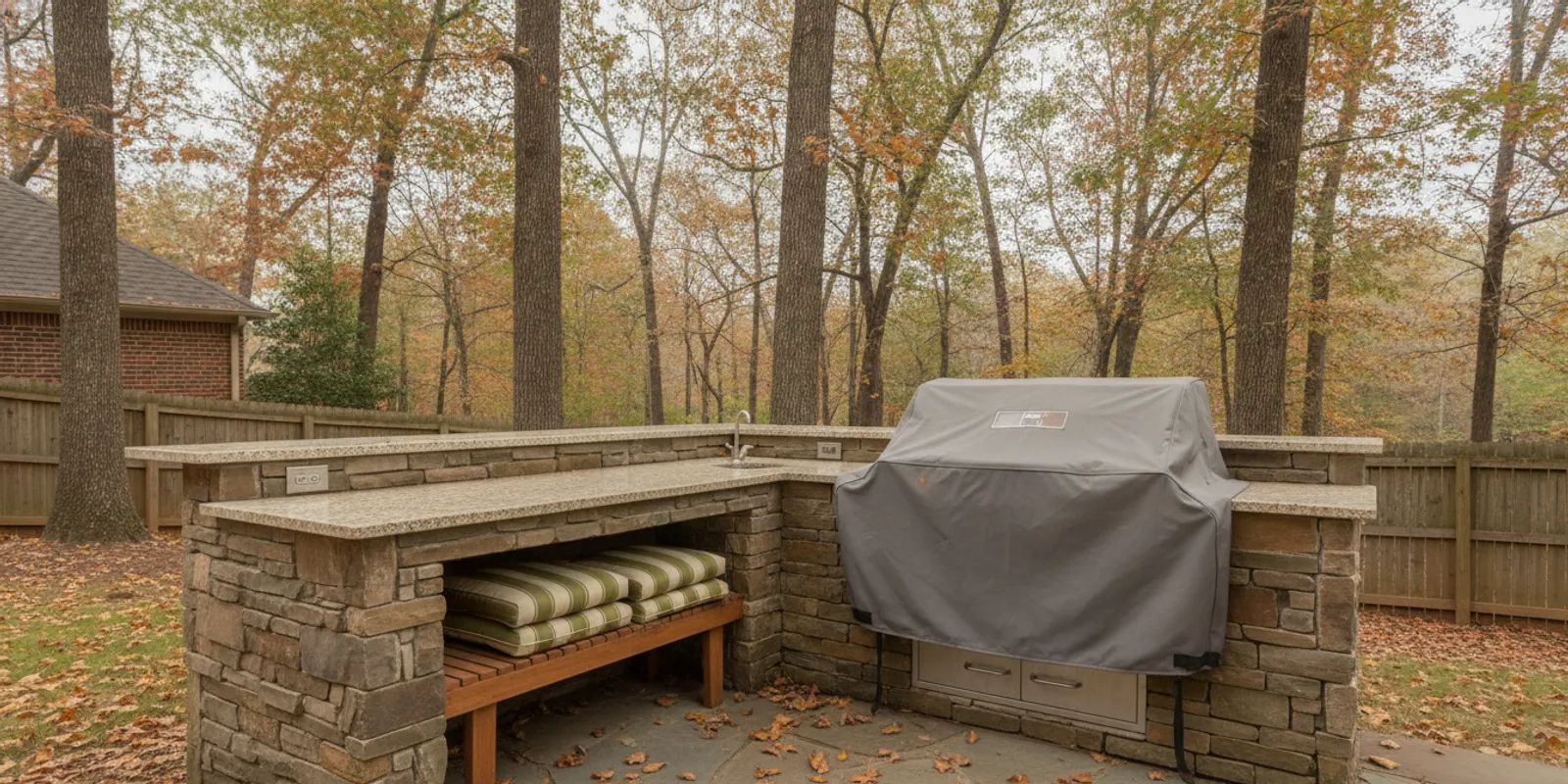
Outdoor kitchen winterizing Carolinas homeowners do well starts with one practical question: what can hold water, and what will stay exposed when temperatures drop? A kitchen may be used on a mild December afternoon and still face an abrupt freeze later that week. A measured seasonal routine protects the parts most at risk without treating every grill, sink, or counter as if it were built the same way.
Talk through your outdoor kitchen plans
What should you check before you begin?
Walk through the full outdoor cooking and dining area before you put covers on or shut anything down. The aim is to make a short inventory, identify the equipment instructions, and decide which tasks are routine homeowner care and which depend on a particular installation. Do not start by disconnecting fittings or opening appliance panels. First find out how each component is designed to be shut down.
Make a simple map or checklist that names each item and its location. Mark the water shutoff, gas shutoff, electrical disconnects if present, drain points, manuals, and any appliance model labels. If a shutoff is hidden behind a cabinet or is difficult to identify, stop and get help rather than turning an unknown valve.
- List water-connected fixtures: sink, faucet, filtered-water tap, refrigerator, ice maker, or other accessories.
- Record the grill and appliance types, fuel sources, and model information.
- Look for exposed pipes, hoses, low points, valves, and fittings that may retain water.
- Check counter seams, sink cutouts, cabinet doors, drainage paths, and places where leaves collect.
- Decide what can be stored indoors and what needs a weather-appropriate cover.
For homeowners planning a new build, think about maintenance access as part of the layout. A shutoff that can be reached without unloading a cabinet is easier to check, and a place for covers and accessories keeps them from becoming a last-minute problem. A well-planned custom outdoor kitchen considers how people use the space as well as how its components will be cared for.
Why does water need the closest attention?
Water left in a line or fixture can expand as it freezes. The concern is not limited to a faucet that is visibly outdoors: water can remain in a low section of pipe, a filter housing, a valve, an appliance connection, or a drain assembly. Closing a faucet does not necessarily empty the plumbing. The correct sequence depends on the installation, so use the system instructions or the advice of the installer or a qualified plumbing professional.
Begin with the water system itself. Locate the shutoff that serves the outdoor kitchen and confirm what it controls. Some properties have a dedicated valve; others may have a setup that needs more careful identification. Once you have confirmed the right supply, follow the recommended process to shut it off and drain the lines and fixtures. Do not force a valve or use compressed air, antifreeze, or improvised fittings unless the specific system instructions call for that method.
- Identify the full route. Trace which fixtures connect to the outdoor water supply, including appliances that may have a separate branch.
- Check the prescribed shutoff. Use the correct valve and do not assume that turning off one faucet isolates every component.
- Drain as directed. Follow the installation or appliance instructions for opening taps, drain points, or low-point valves.
- Check removable connections. Disconnect and store hoses or accessories where their manuals permit, and inspect exposed fittings.
- Recheck before a cold spell. If water seems trapped, a valve leaks, or you are unsure whether the line is clear, ask a qualified professional.
Municipal guidance for home winter preparation advises disconnecting and draining outdoor hoses, protecting outside faucets, and insulating pipes in unheated areas. The City of Durham winterizing guidance is useful background for those exposed outdoor connections. It is not a substitute for the directions for a built-in kitchen system, sink, refrigerator, or other appliance.
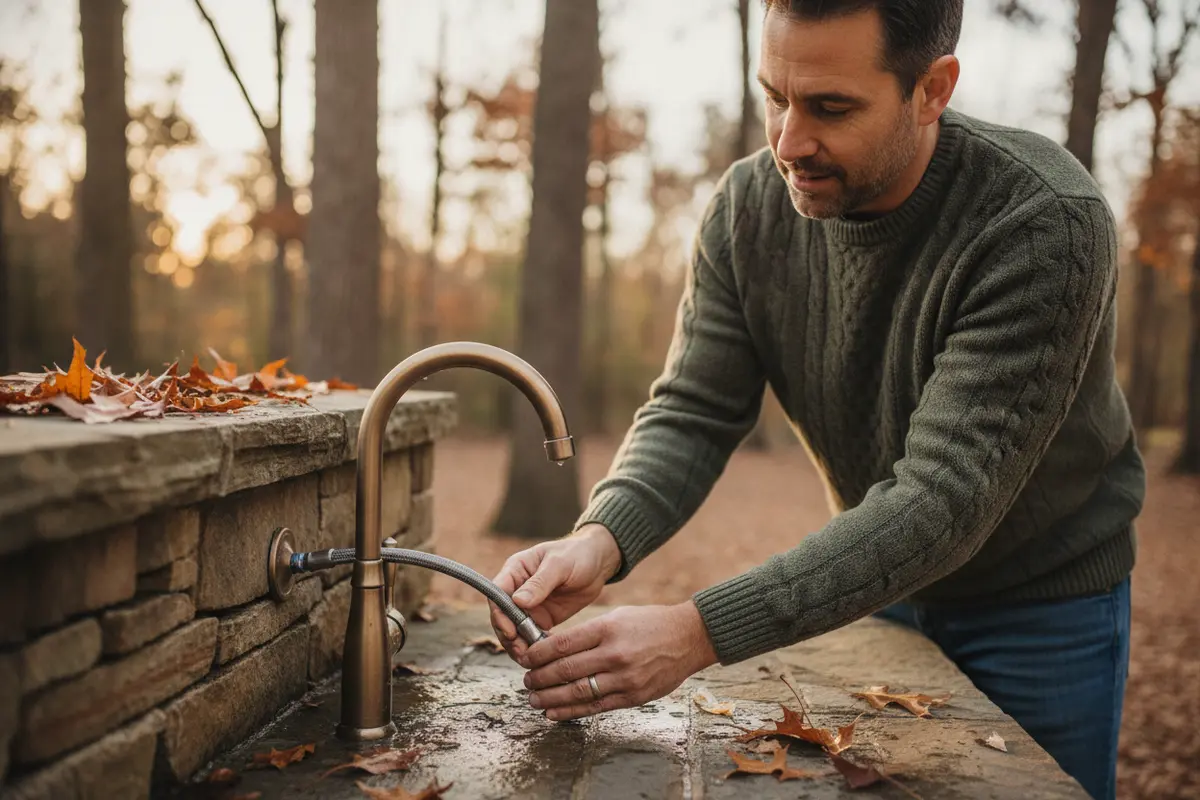
What if there is a refrigerator, ice maker, or filter?
Treat each water-connected appliance as its own system. A refrigerator or ice maker may have a separate supply line, shutoff, and manufacturer-prescribed draining procedure. A filter can hold water even after the main faucet stops running. Read the instructions for the model and any connected filter, and note whether the appliance should remain powered, be emptied, or be left open during storage. Do not assume a general sink procedure also prepares the appliance.
If an appliance will be off for the season, remove food and clean and dry the interior as its manual directs. Follow the maker’s advice about doors, ventilation, power, and water connections. If the manual is unavailable, use the model number to obtain instructions from the manufacturer rather than guessing at a procedure that might damage the unit.
How should you prepare the grill and cooking appliances?
Grills are intended for outdoor cooking, but their shutdown and cover instructions vary by model, fuel, and construction. Give the appliance time to cool completely before cleaning or covering it. Remove grease and food residue from cooking surfaces and trays according to the manufacturer’s guidance. Leaving grease in place can make the first use of spring unpleasant and may attract pests; aggressive scraping or unsuitable cleaners can damage finishes.
For a gas grill, use the specified shutdown sequence and make sure you know which shutoff controls the appliance. Do not disconnect, cap, or alter a natural-gas line as a seasonal shortcut. Follow the grill and fuel-cylinder instructions for storage. Keep cylinders in the location and position required by those instructions and applicable local safety guidance; do not store them where they may be exposed to heat, impact, or an enclosed space.
For charcoal equipment, wait until ash is fully cold before removing it. Place ash in a suitable noncombustible container and keep it away from combustible materials. Kamado-style cookers, pizza ovens, smokers, and other specialized appliances can use ceramic, stone, or other materials with different care requirements. Check each product manual before applying a cover or cleaning solution. Fun Outdoor Living’s outdoor kitchen examples can help with planning, but the appliance manufacturer is the authority on model-specific winter care.
Which tasks change with the component?
A useful winter plan separates tasks by material and function rather than using one method for everything. The table below is a planning aid, not a replacement for the manufacturer’s procedure. When instructions differ from general advice, follow the appliance or system instructions.
| Component | Seasonal preparation | Check before you proceed |
|---|---|---|
| Sink and supply line | Shut off and drain the system as specified; disconnect permitted hoses. | Confirm the right shutoff and whether low points or fittings hold water. |
| Filter, refrigerator, or ice maker | Follow the appliance’s shutdown and line-draining steps. | Look for separate water branches and filter-specific instructions. |
| Gas grill or cooktop | Cool, clean, and shut down according to the product manual. | Do not alter fuel piping; use the approved cover and storage guidance. |
| Charcoal cooker or pizza oven | Remove residue and cold ash using material-appropriate methods. | Confirm the appliance is fully cool and the ash is completely cold. |
| Countertops and cabinets | Clean, dry, and clear drains and seams. | Match cleaner and sealant care to the specific material. |
| Cushions, tools, and accessories | Clean, dry, and store in a protected place. | Avoid sealing damp fabric or equipment in a container. |
How should counters, cabinets, and covers be handled?
Stone, concrete, stainless steel, porcelain, and other counter materials do not all respond to the same cleaner or maintenance routine. Remove food and grease with a product approved for the actual surface. Dry the area around sink cutouts and seams, where moisture may linger. If the counter has a sealant, check its care directions and timing; applying a product in unsuitable conditions can be less helpful than waiting for the recommended conditions.
Wipe cabinet fronts, handles, and exposed hardware dry. Open the doors briefly to check that interiors are dry and free of debris, then close them as appropriate for the design. Make sure drainage channels remain clear. If rainwater flows from a roof or pergola toward the kitchen, correct the leaf buildup or drainage issue rather than relying on a cover to solve it.
A cover should fit the appliance or area it is meant to protect. Choose one approved for that equipment, and put it on only when the surface is cool and dry. A poorly fitted cover can trap moisture, rub against finishes, or interfere with required ventilation. Covers also do not replace draining water lines or completing a manufacturer’s shutdown procedure. Where the kitchen is beneath a covered structure, consider wind-driven rain and the path runoff takes across the patio. Nearby decks, porches, and pergolas can shape exposure, but each appliance still needs the clearance and airflow its manual requires.
How do you prepare the whole space for winter?
Winter care is easier when the cooking area and the parts around it are considered together. Clear leaves from drains and walking routes so water can move away rather than pooling at a cabinet base or freezing on a frequently used path. Check that the ground around the kitchen is not directing runoff toward the structure. For a paver area, keep joints and drainage features clear and use care products appropriate to the surface; the paver planning page offers context for integrating hardscape with outdoor spaces.
Bring cushions, paper goods, portable tools, and removable accessories into a dry storage area. Clean and dry fabric before storing it, and avoid putting damp items into sealed bins. Keep grill tools and small parts together so they are easy to find later. If there is no indoor storage nearby, a dry, ventilated protected area is generally more practical than leaving loose items on counters under a cover.
Think about how often you expect to use the kitchen. A household that cooks outdoors on mild winter days may choose to keep some equipment available while shutting down water-connected components that are vulnerable to cold. That calls for a clear separation between what remains in service and what has been drained or disconnected. Mark the shutoff status on your maintenance checklist, and tell other household members which fixtures should not be used until spring. Never try to operate an appliance that has been shut down or prepared for storage without first following its restart instructions.
What if you still want to cook on mild winter days?
In the Carolinas, winter routines can include both cold spells and comfortable afternoons. You do not have to decide that the entire outdoor kitchen is either fully open or fully closed. Instead, make a component-by-component plan. For example, a homeowner might keep a grill available for use according to its manual, while closing and draining an exposed sink supply before a forecast freeze. Another home may have a refrigerator or ice maker that needs a more complete seasonal shutdown. The right plan depends on the actual installation.
Before each use, check that the cooking appliance is dry, clear of leaves and debris, and ready according to its instructions. Remove the cover only when it is safe to do so. After cooking, let the appliance cool fully before cleaning or replacing the cover. Keep clear access around the grill, maintain the ventilation required by its design, and do not use an appliance in a way its manual prohibits. If water lines were winterized, do not reopen or use them until you have completed the proper restart steps.
Weather changes are a prompt to review the plan, not to improvise a repair. Check the forecast before leaving water-connected components in service. If a hard freeze is expected and you cannot confirm that a line is protected, shut down only the system you can identify and get qualified guidance for the rest. A simple written note can prevent a family member from turning on a faucet that has already been drained.
How can you make a winter checklist that fits your kitchen?
A checklist works best when it records actions and status, not just a broad reminder to “winterize.” Write down the component, the step required, who will do it, and whether it is complete. Keep the manual or model number with the list. That makes it easier to repeat the right process next season and reduces the chance that someone assumes a faucet or appliance is still available after it has been shut down.
For example, imagine a kitchen with a natural-gas grill, a sink, and a refrigerator with an ice maker. The grill’s cleaning and shutoff steps come from its manual. The sink supply must be isolated and drained using the home’s actual plumbing arrangement. The refrigerator and ice maker require their own appliance instructions, including what to do with their water connection. These are three separate tasks; completing one does not confirm the others are ready for cold weather.
Now consider a simpler setup with a portable charcoal cooker and no plumbed sink or appliances. Water-line preparation may not apply, but safe ash handling, full cooling, suitable storage, and material-specific cover guidance still matter. The difference is why a component list is more useful than copying a generic checklist from another property. Your kitchen’s age, exposure, cabinet layout, and appliance models determine which instructions fit.
Make a brief final walk-through after the work is complete. Confirm that shutoff status is noted, removable items are stored dry, covers are in place only where appropriate, drains are clear, and access paths remain safe. If the checklist contains an unanswered item, mark it unresolved and get the right guidance before the next freeze or before using that component again. A clear “not checked” note is safer than assuming a task is finished.
When should you ask a professional?
Ask for help if the water shutoff is unclear, a line will not drain, a valve or fitting leaks, a connection looks damaged, or the appliance instructions call for service. Stop using equipment if you smell gas, see damaged electrical wiring, or notice a leak. Follow appropriate safety guidance and do not attempt a repair beyond your training. For a specific appliance question, have the model information and manual available; for plumbing or gas work, contact a qualified professional who can assess the system.
Service questions and construction planning are different needs. For existing equipment that needs attention, use the service request page. If you are considering a new layout, plan for access to shutoffs, sheltered storage, drainage, and safe appliance clearances before construction begins. A full design conversation can also account for how the cooking area connects with seating, a covered porch, or other backyard features. You can explore outdoor fire features as part of the broader setting, while keeping their own placement and operating instructions in view.
Fun Outdoor Living works with homeowners on integrated backyard spaces, including custom outdoor kitchens and related outdoor features. A consultation can help you think through the layout and practical details before a project takes shape.
Request an outdoor living design consultation
Frequently asked questions
When should I winterize an outdoor kitchen in the Carolinas?
Prepare vulnerable water lines and equipment before freezing weather is expected, rather than waiting until a freeze is already underway. Check the forecast through the season and follow the instructions for each appliance and plumbing system.
Can I leave the outdoor kitchen water on through winter?
That depends on the location, design, exposure, and freeze protection built into the system. Do not assume an insulated cabinet or mild average weather makes every line safe. Confirm the system’s instructions and ask a qualified professional if you cannot verify how it is protected.
Should I cover a built-in grill for the whole season?
Use a cover only when the grill manufacturer permits or recommends it. Clean and cool the grill first, and use a cover made for the appliance that does not trap moisture or block required ventilation.
Can I use antifreeze in an outdoor kitchen water line?
Do not add antifreeze unless the plumbing or appliance instructions identify the correct product and procedure. Different components may require different preparation, so confirm with the manufacturer or a qualified professional before using any treatment.
What should I do before using the kitchen again in spring?
Follow the restart procedure for each appliance and water connection. Inspect exposed fittings, check that no cover or storage item blocks ventilation, restore water only as directed, and look for leaks before regular use. If anything appears damaged or does not operate as expected, leave it off and ask for assistance.
A little preparation can help your outdoor kitchen move through cold snaps with less guesswork and make the first spring meal easier to plan. If you are mapping out a new backyard project, talk with the design team about a layout that fits how you want to use the space.