An open Carolina yard is a gift until the breeze finds the water. A soak that feels quiet on a still evening can feel sharp when wind crosses a field, a lake, or a new subdivision with little planting yet. The right hot tub wind protection options do not have to close the yard in. They slow the air where you sit, keep the cover from lifting, and leave enough movement that a humid summer night does not feel trapped.
Get hot tub placement help before you commit to a screen, a planting plan, or a structure.
What does wind change about a soak?
Wind changes the evening before it changes the equipment. It cools wet skin, pushes steam across the deck, and makes conversation harder. It also moves heat off the water surface while the cover is open. That is why a sheltered corner often feels warmer than an identical spa set in the middle of a lawn, even when the set temperature is the same.
A closed cover has a different job. It holds heat between soaks. Hot Spring describes a custom-fit cover and cabinet insulation as part of how a spa stays ready, which is why a cover that flaps or sits slightly open works against the rest of the system. Wind protection around the yard and a cover that stays seated are related, but they are not the same decision.
In our experience, homeowners notice three patterns on open lots around Charlotte, Lake Norman, and Rock Hill:
- A steady cross-breeze that makes shoulders cold even when the water is right.
- Gusts that lift a cover or slide a loose strap during an afternoon storm.
- Winter wind that turns the short walk from the door into the reason the spa goes unused.
None of those patterns calls for the same fix. A strap will not warm your shoulders. A solid wall will not, by itself, keep a cover locked down. Start with the breeze you actually feel.
How should you read the yard before you build?
Stand where the spa would sit on a windy afternoon and again after dark. Note which way the air moves, and whether the house, a fence, or a tree line already breaks it. In much of the Piedmont the prevailing flow is from the southwest, but a lake lot, a ridge, or a gap between houses can send the uncomfortable breeze from another direction. The spa only cares about the air at seating height.
A useful placement check is simple:
- Keep the walk from the door short, especially for cool-season use.
- Put the open, view side away from the strongest breeze when you can.
- Leave clear space to lift the cover and reach the equipment panel.
- Do not block the path a technician needs for water care or a repair.
Orientation is the least expensive of the hot tub wind protection options, and it is the one people skip once a pad is poured. If the best view and the worst wind are the same direction, that is useful information. You can keep the view and add a screen on the windward side instead of turning the spa toward a wall.
Showroom time helps here in a different way. A free test soak will not reproduce your yard, but it does show how a deeper seat, a lounge, and a higher shell feel when you are actually in the water. That makes the later placement conversation more concrete. If the install itself is the open question, the installation preparation guide covers access, surface, and electrical planning that a wind screen should not undo.
Which screen fits an open Carolina lot?
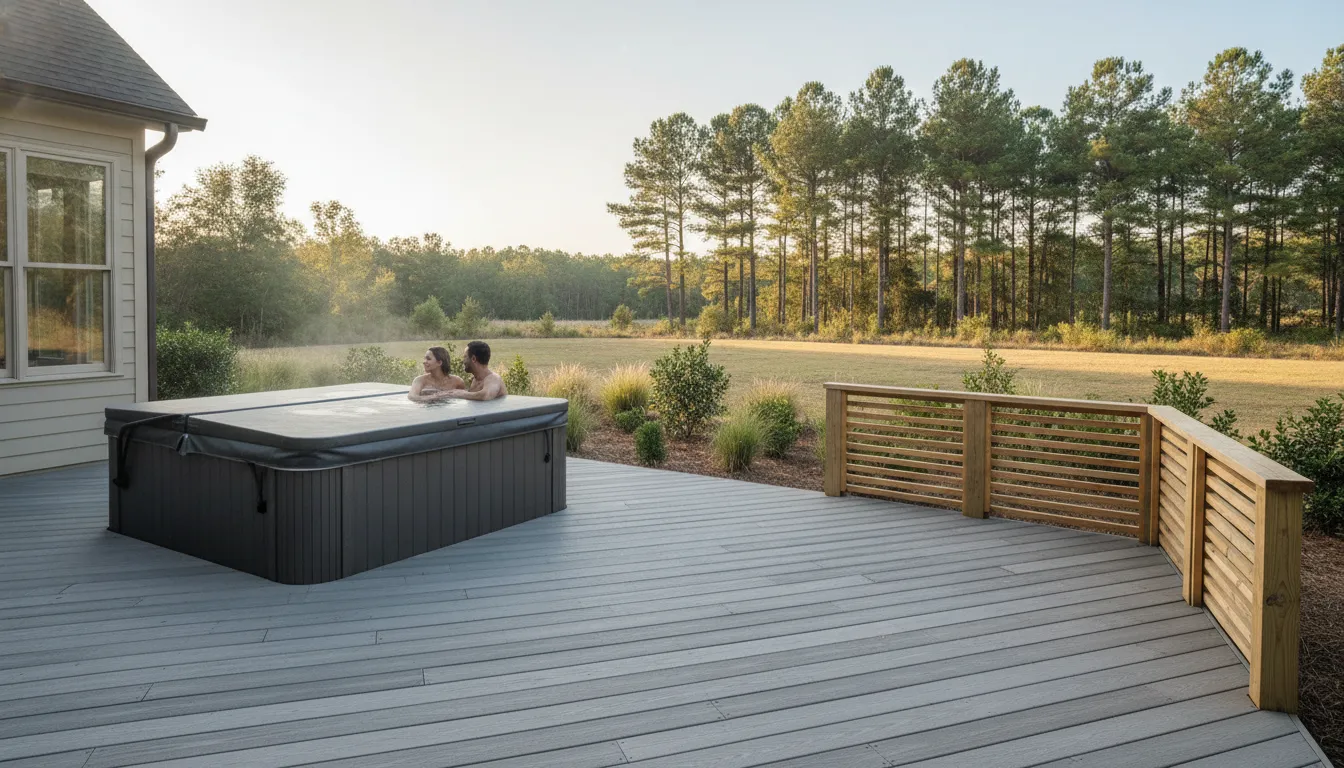
A screen is usually the first built answer, and the material matters less than how much air it stops. Solid panels block more wind. They also catch more of it. A slatted or louvered screen slows the breeze and keeps a view through the gaps. On a wide lot, that is often a better fit than a tall solid wall.
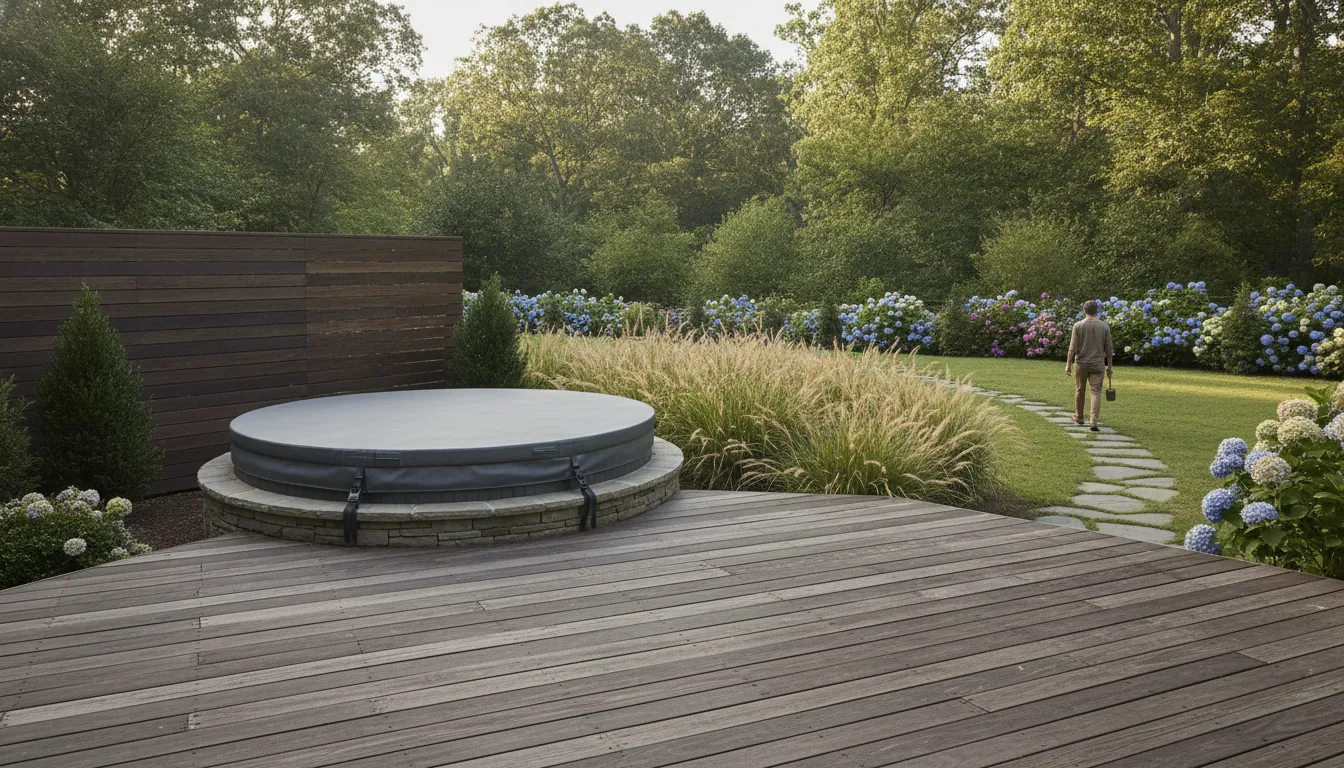
Place the screen on the windward side, a few feet back from the shell, not tight against it. That gap gives you room to walk, lift the cover, and reach the cabinet. It also lets the slowed air spill around the screen instead of dumping over the top directly onto the seats. A screen that only solves the neighbor view may sit on the wrong side for wind. Privacy and wind protection can share a panel, but only after you have checked both jobs.
Carolina weather argues for materials that can dry out. Horizontal wood slats, powder-coated metal, and composite boards all work when they are detailed to shed water. Lattice by itself is a light touch. It softens a breeze and rarely stops a gust. Freestanding panels are useful while you test a direction, and a poor choice as the permanent answer on an exposed deck.
If the screen is really about sightlines from a neighboring deck, use the deck privacy ideas as the guide for that problem. This comparison stays with comfort in moving air.
Can landscaping slow the breeze?
It can, if you treat plants as a filter rather than a wall. A single row of shrubs planted tight to the spa often disappoints. Wind slips through the gaps, and the plants struggle in the splash zone. A staggered band of evergreen shrubs, ornamental grasses, and one or two small trees, set several feet out, slows air over a wider area and still looks like part of the yard.
A living break also takes time. New construction lots around Charlotte and Rock Hill often have turf and a few saplings, which means the first two winters will still feel open. That is a fair reason to pair a slatted screen now with plantings that take over some of the work later. It is not a reason to promise that a hedge will replace a structure.
Keep the planting honest about maintenance. Leaves collect on covers. Irrigation should not spray the cabinet. Mulch and soil should slope away from the pad. If you want the spa to feel settled in the yard rather than parked on it, plan the plants with the deck and the screen. Do not add them after the crane leaves.
When is a structure the right option?
A pergola or a covered patio becomes the right option when wind is only one of the problems. If afternoon sun, light rain, and a wish for a defined place to soak are all on the list, a structure does more than a screen. An open pergola with a carefully placed side screen can break the breeze and keep the sky. A solid roof changes the room. It sheds rain and blocks high sun, and it needs a plan for humid air so the space does not feel closed on a July night.
Posts are the detail that causes regret. A post that lands in the cover’s swing path, or in front of the equipment door, turns a pleasant shelter into a weekly obstacle. Plan the spa and the structure together. The pergola planning guide goes deeper on shade, clearance, and service access. The covered patio ideas page is the place for roof and material choices. Use those when the question has moved from “what slows the wind” to “what should we build.”
For many open yards, the structure can wait. A good orientation, a slatted screen, and a planted edge answer the comfort question without committing the whole backyard. When you are ready to see how a screen, pergola, or roof would sit with the spa, the decks, porches, and pergolas gallery is a calmer reference than a single photo online.
How do hot tub wind protection options compare?
Match the option to the breeze you have, not to the most permanent thing you could build. Covers and straps protect the spa between soaks. Screens, plants, and structures protect the people in the water.
| Option | Best for | What it does not do |
|---|---|---|
| Orientation and a closer door path. | A yard that already has a house wall, fence, or tree line. | Stop a wide-open prevailing breeze by itself. |
| Slatted or louvered screen. | Slowing wind while keeping a view and airflow. | Replace a roof or lock a cover down. |
| Solid panel. | A short, focused gust from one direction. | Feel open, or stay comfortable if it traps humid air. |
| Layered plantings. | Filtering breeze across a broad lot over time. | Help much during the first seasons on a new lot. |
| Pergola with a side screen. | Wind plus sun, when you still want an open feel. | Shed a Carolina downpour the way a roof does. |
| Covered patio. | Wind, rain, and a year-round room for the spa. | Stay simple, or skip ventilation and post planning. |
| Cover straps or locks. | Keeping a closed cover seated in gusts. | Make the open-water soak feel warmer. |
Two of these can work together. A screen plus a planted edge is a common pair. A covered patio plus straps is another. Stacking a solid wall, a roof, and a hedge on every side is how a calm soak starts to feel like a closet.
What should the cover and the spa handle?
The yard plan and the product plan meet at the cover. Use the straps or locks the manufacturer supplies, and replace a cover that no longer sits flat. A cover that hovers at one corner loses heat and can become a sail. That is a service question, not a landscaping question. If the cover is aging, cracked, or saturated, the service team is the right next call. Ongoing water care is separate again. Many owners use Spa Valet so the weekly chemistry does not become the reason the spa sits covered.
Cabinet insulation and a well-fitted cover are doing their work between soaks, not while you are in the water. Hot Spring’s energy-efficiency guidance points to custom-fit covers and insulated cabinets as the reason a spa can stay ready without reheating from scratch. Wind across an open yard does not erase that. It does mean placement and a wind break still matter on the evenings you actually use the spa. The North Carolina weather buying guide is the place to compare how different spas are built for this climate. This article stays with the yard around the one you choose.
The U.S. Consumer Product Safety Commission says a cover fails its safety job when it is left off or unlocked between soaks. See the CPSC pools and spas guidance. Wind management supports that habit. It does not replace supervision, a required barrier, or securing the cover after the soak.
A calm way to choose
Start with a windy evening in the yard. Face the breeze, then decide whether orientation, a slatted screen, plantings, or a structure answers it. Keep the cover’s swing and the equipment door clear. Add straps if gusts move the cover, and add a roof only when rain and sun belong in the same project.
Fun Outdoor Living has helped Carolina homeowners with that kind of choice since 2004, from the showrooms in Charlotte, Matthews, Cornelius, Winston-Salem, and Rock Hill. The useful visit is not a rush to pick a spa. It is a look at where the breeze comes from, how you want the evening to feel, and which option fits the yard you have.
If you are still comparing, that is a fine place to be. Bring the direction of the wind and a few photos of the open side. We would rather talk through the trade-offs than sell you a wall you do not need.
Request a free home consultation when you want a second set of eyes on placement, screening, or a structure.
Frequently asked questions
What are the most useful hot tub wind protection options?
For an open Carolina yard, start with orientation, then a slatted screen on the windward side, then layered plantings. Add a pergola or covered patio when sun and rain matter too. Use cover straps to keep a closed cover seated. They do not warm the soak itself.
Will a privacy fence stop the wind?
A solid fence blocks more wind and also catches more of it. A slatted screen usually feels better beside a spa because it slows the breeze without trapping humid air or closing off the yard. Put either one far enough back that the cover and equipment panel stay easy to reach.
Does wind make a hot tub cost more to run?
Wind across open water pulls heat away while you are soaking, and a cover that wind holds ajar loses heat between soaks. A fitted, strapped cover and an insulated cabinet address the closed hours. Shelter and placement address the time you are actually in the water. There is no single dollar figure that fits every yard.
Can landscaping replace a screen?
On a mature lot, a deep band of evergreens and grasses can filter a breeze. On a new lot it will not do that for the first seasons. Many homeowners use a screen now and let the planting take on more of the job as it fills in.
Where should the screen sit?
On the side the wind comes from, a few feet from the shell, with room to walk and to swing the cover. If the best view is also the windy side, keep the view and screen the windward edge rather than turning the seats toward a wall.