A patio should make the backyard easier to enjoy, not create a new list of worries every time it rains. For Carolina homeowners, concrete pavers can provide a structured, adaptable surface for outdoor dining, grilling, walking, and relaxing. The important decision is not simply choosing a color. It is understanding how the units, base, drainage plan, and surrounding features need to work together.
Learn More about a free consultation and design appointment
What Are Concrete Pavers?
Concrete pavers are manufactured paving units made for outdoor surfaces such as patios, walkways, and driveways. They are installed as individual pieces over prepared layers instead of poured as one continuous slab. Their range of shapes, colors, textures, and patterns gives homeowners design flexibility, while the individual units can be lifted and reset when access or repairs are needed.
That distinction matters. A poured surface depends on one large piece, while a paver surface is a system of smaller units, joint material, edge restraint, and a prepared foundation. The surface can perform well when the entire system is designed for the site and its intended use. It can also settle, spread, or allow weeds into joints when preparation is rushed or water is directed where it should not go.
The Concrete Network overview of concrete paving stones describes the same practical advantages homeowners often notice: ready-to-install units, a wide range of appearance options, and the ability to remove and replace individual pavers. Those advantages make concrete pavers worth considering for a patio that may need to evolve with the rest of the backyard.
Why Do Concrete Pavers Work Well for Carolina Backyards?
Concrete pavers suit many Carolina backyards because they combine a finished appearance with a repair-friendly surface. When the base and drainage plan are appropriate, the patio can support everyday use through humid summers, heavy rain, changing temperatures, and the movement that can occur in local soils. The right installation turns material choice into a dependable part of the outdoor room.
- Design flexibility: Select shapes, colors, textures, borders, and patterns that relate to the home and landscape.
- Repair access: Individual units can be removed to reach utilities or correct a localized area without demolishing the entire surface.
- Adaptable layouts: A patio can connect naturally to a walkway, outdoor kitchen, fire feature, steps, or planting bed.
- No curing wait for the surface: Unlike poured concrete, installed units do not require a slab to cure before the surface can be used, although the completed project still needs careful finishing and cleanup.
- Practical maintenance: Sweeping, rinsing, targeted stain treatment, and occasional joint attention can keep the area looking cared for.
Concrete pavers are not automatically the best answer for every site. A steep yard, persistent runoff, expansive clay, a large structure, or a patio supporting an outdoor kitchen may require more detailed planning. Material selection should follow the use of the space and the site’s conditions, rather than the other way around.
How Should You Plan for Carolina Soil and Rain?
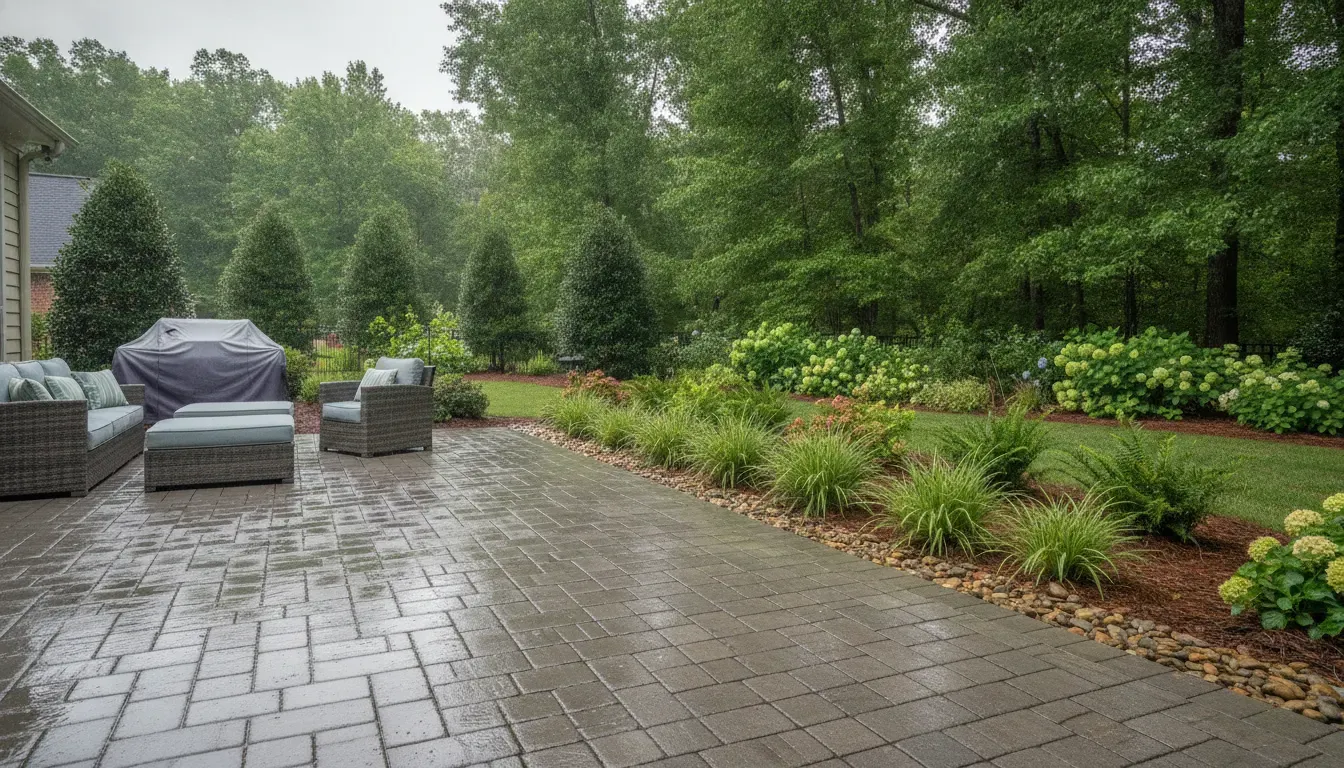
Plan the patio as a water-management project as well as a surface project. Before selecting a pattern, identify where roof runoff, yard runoff, and surface water will go. Evaluate soil, slope, existing drainage, and the relationship between the patio and the house. A sound plan keeps water moving away from structures without sending a new problem toward a neighbor or low point.
Carolina sites can include dense or shifting soils, wooded roots, slopes, and areas that collect water after a storm. Heavy rain can expose a low edge or poorly compacted area quickly. The practical questions are simple, even when the answers require experience:
- Does the proposed patio slope away from the house and other vulnerable structures?
- Where will downspouts discharge during a heavy storm?
- Will the patio connect to an existing walk, porch, deck, or retaining wall?
- Does the soil need removal, improvement, or additional preparation?
- Would a drain, swale, channel, or permeable section improve the overall plan?
Permeable paver systems are a separate design approach, not simply a different color or open-looking joint. They use specified units and open-graded layers to manage water below the surface. The Concrete Masonry and Hardscapes Association guidance on permeable pavers is useful technical background, but a local installer still needs to evaluate soil, slope, intended use, and the site’s drainage requirements.
What Goes Under a Concrete Paver Patio?
A concrete paver patio normally depends on more than the visible units. The installation includes the prepared soil, a compacted base suited to the site, a setting layer, the pavers, joint material, and edge restraint. The exact build-up should be selected for the soil, drainage, slope, traffic, and project use. There is no responsible one-size-fits-all layer specification for every Carolina yard.
Soil preparation and grading
The first layer is the site itself. Organic material, unstable areas, and unsuitable soil may need to be addressed before the base is placed. Grading establishes the direction of water flow and the finished relationship to doors, steps, planting areas, and adjoining surfaces. Small elevation errors become more noticeable once furniture and structures are added.
Base preparation
The base provides the working foundation for the paver system. It must be placed and compacted in a way that matches the material, site, and intended use. A patio carrying ordinary furniture has different demands from a driveway or a project that includes substantial built elements. The base discussion should also remain distinct from the surface choice: even attractive concrete pavers cannot correct a weak foundation.
Setting layer, joints, and edge restraint
The setting layer helps create an even bed for the units. Joint material fills the spaces between pavers and helps the pattern act as a system. Edge restraint holds the outside edge in position, especially where the patio meets soil, a planting bed, or an open lawn. These less visible details often determine whether the finished pattern stays orderly.
Which Concrete Paver Design Choices Matter Most?
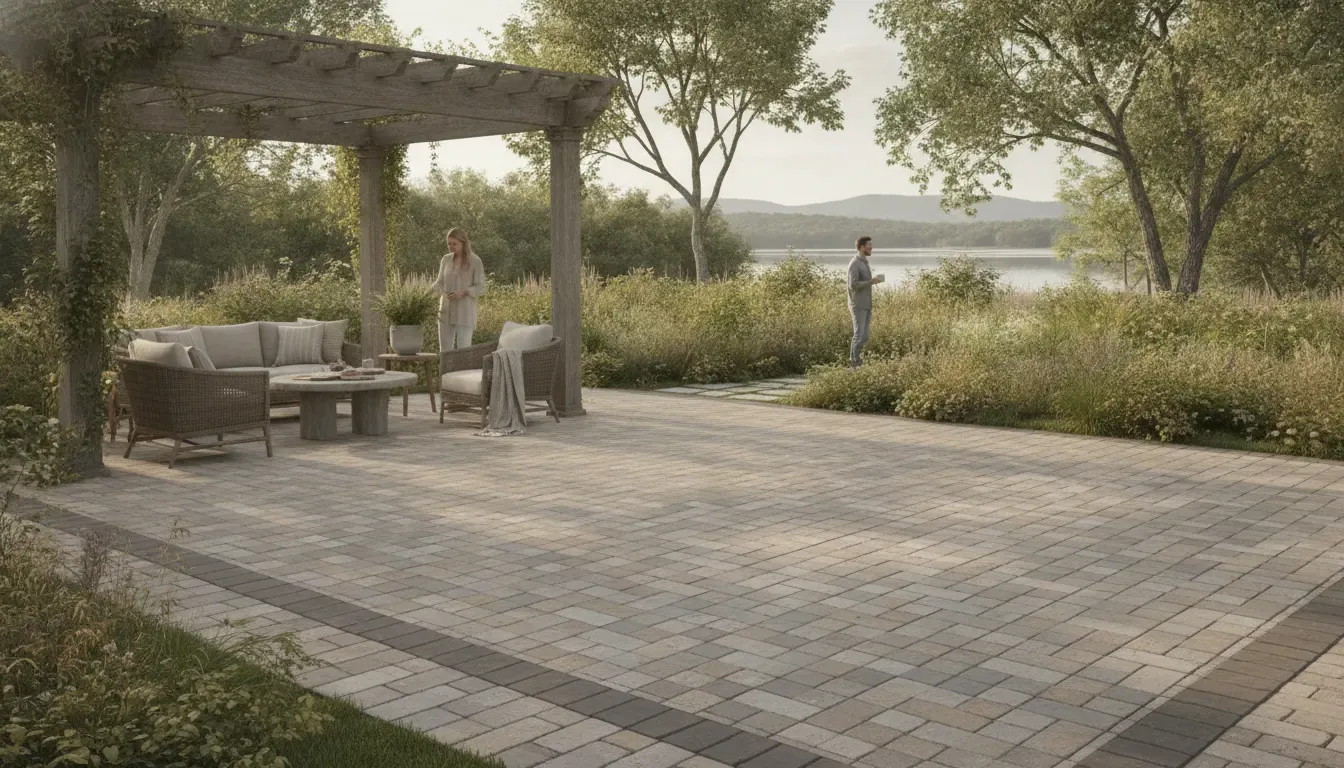
The best design begins with how the patio will feel and function. Color and pattern matter, but scale, transitions, edge treatment, and maintenance should be considered at the same time. A quiet pattern can make a smaller space feel more settled, while a larger backyard may have room for borders or a defined dining zone without looking busy.
| Design decision | What it affects | Useful planning question |
|---|---|---|
| Unit size | Visual scale, layout flexibility, and the number of joints | Will the units relate to the home’s architecture and the patio’s size? |
| Color blend | Connection to brick, siding, stone, furniture, and planting | Will the surface still feel right in sun, shade, and after rain? |
| Pattern | Movement, emphasis, and the way zones are defined | Does the pattern support the room instead of competing with it? |
| Border or band | Edges, transitions, and visual organization | Where should dining, cooking, walking, or fire-side areas begin and end? |
| Texture and finish | Appearance, feel underfoot, and cleaning considerations | Does the finish fit the way the household will use the patio? |
For a calm, connected look, start with the home and the larger landscape rather than a single sample. Bring brick, stone, paint, or furniture colors into the conversation. A paver patio should feel like a natural extension of the house. It should not look like a separate display placed in the middle of the yard.
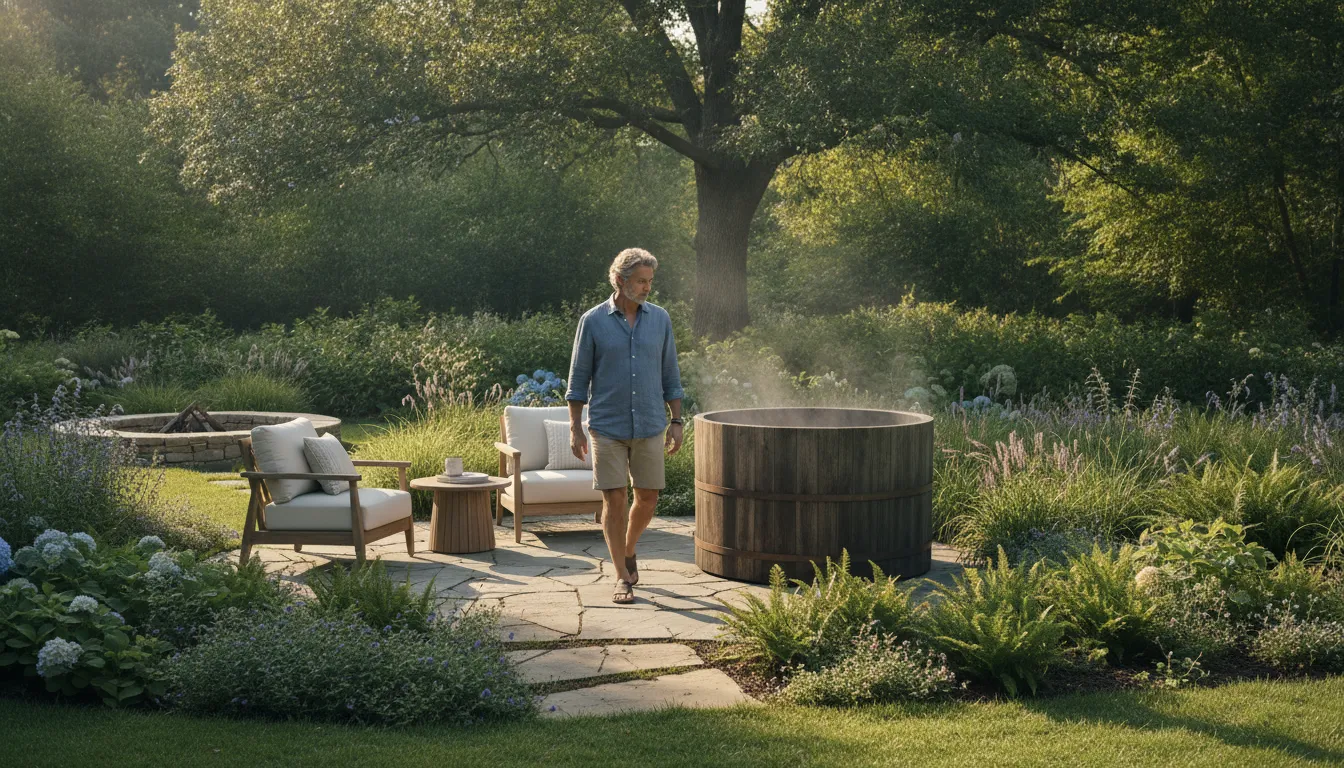
Think about transitions early. A path to the garden may need a quieter pattern than the main entertaining area. A border can frame a dining space, while a change in direction can guide guests toward an outdoor kitchen. If the project includes a hot tub or swim spa, plan service access and equipment access before the pattern is finalized.
How Do Concrete Pavers Fit with Fire Pits and Outdoor Kitchens?
Concrete pavers can form the visual floor of a larger outdoor living plan, but the surrounding features need to be designed as one project. An outdoor kitchen brings utility connections, work clearances, and movement through the space. A fire feature brings heat, seating, fuel, and safety considerations. The paver pattern should support those decisions rather than hide them.
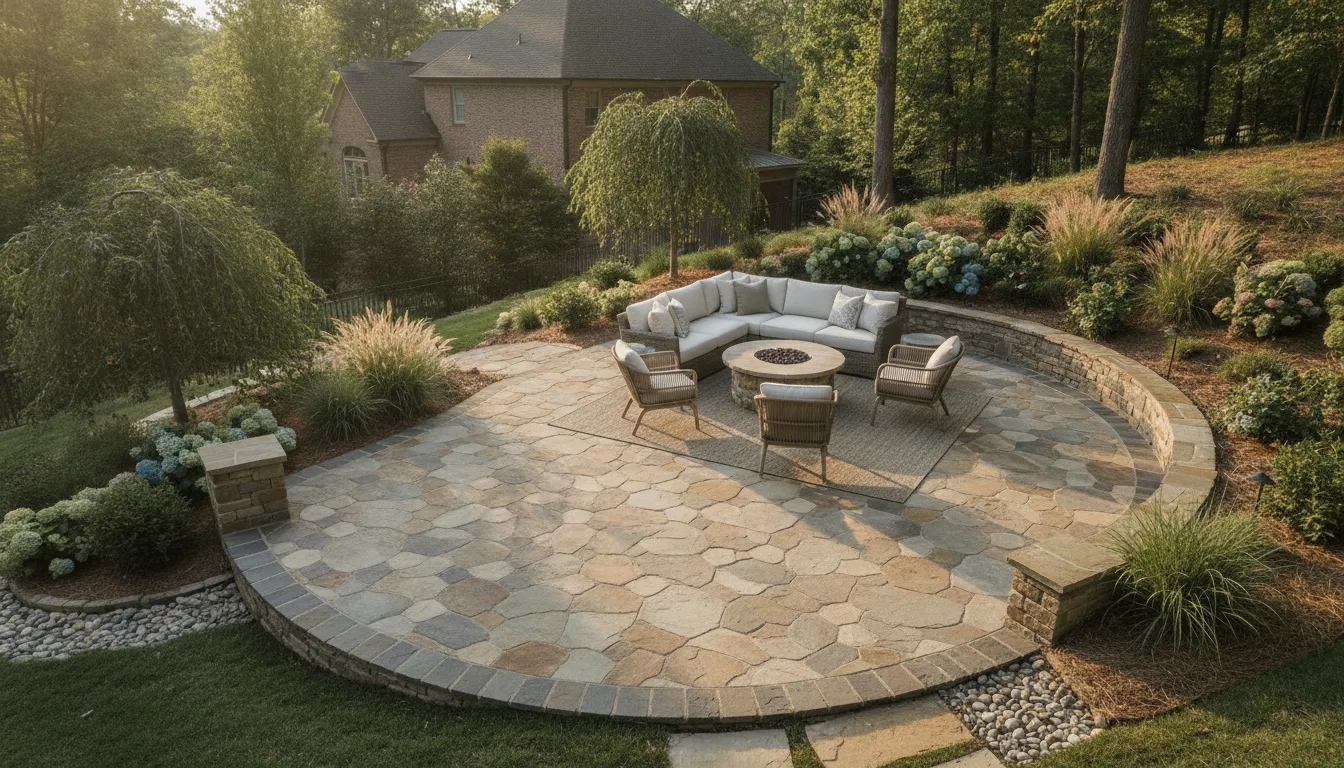
For a fire feature, consider how people will approach and leave the seating area, where sparks or ash could affect nearby finishes, and how the feature relates to the house and overhead structures. Fun Outdoor Living’s outdoor fire feature gallery can help homeowners think about proportion and placement without treating one photo as a template for every yard.
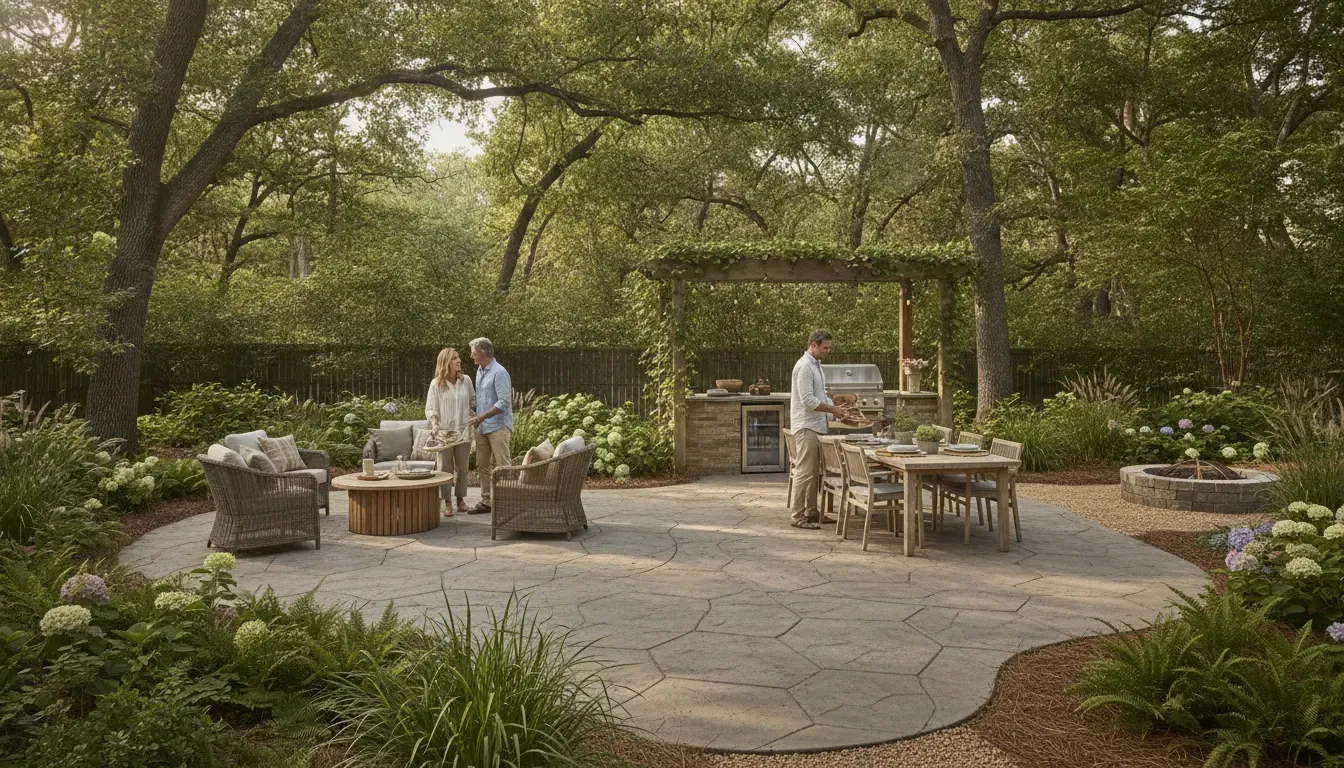
For an outdoor kitchen, leave room for the everyday actions that make the space useful: opening doors, serving food, moving between the grill and table, and cleaning after a gathering. The surface should connect the kitchen to the rest of the patio without creating a narrow pinch point. Browse the outdoor kitchen gallery for examples of how cooking, seating, and circulation can share one backyard environment.
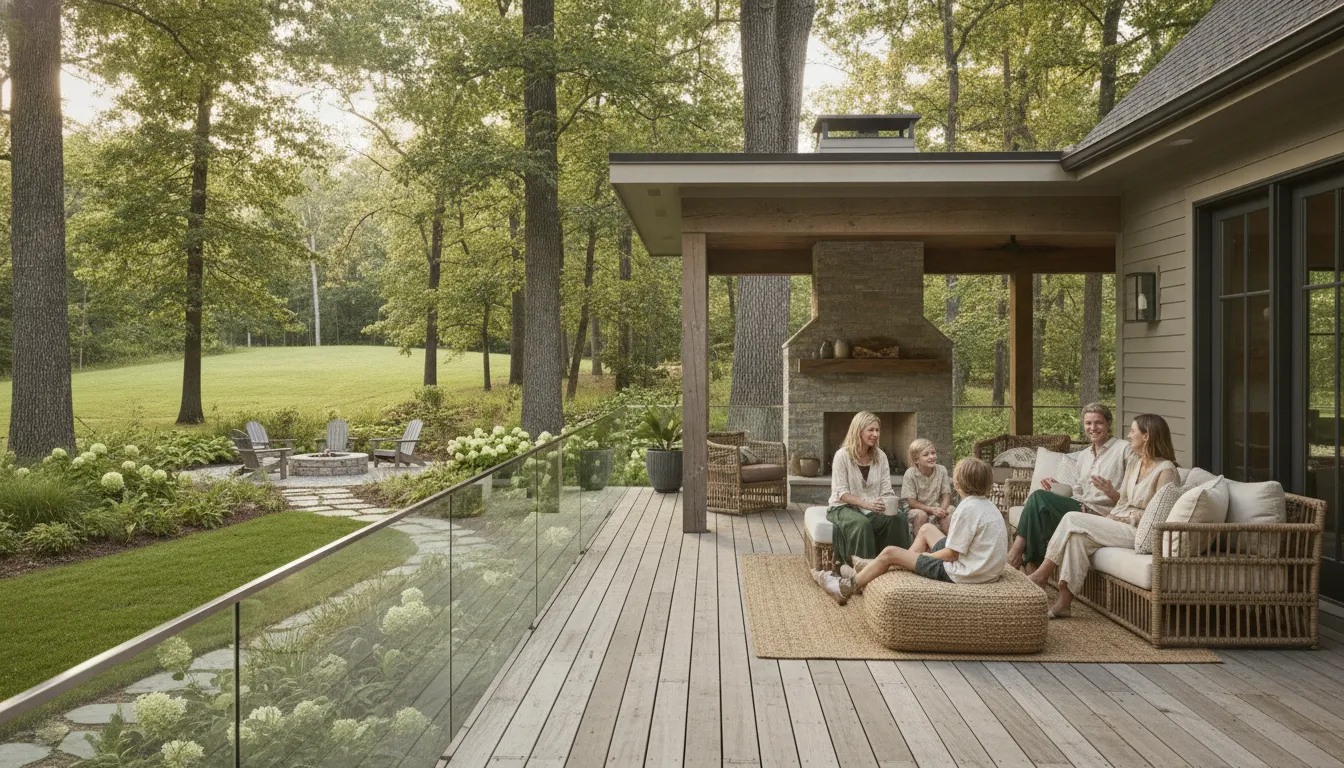
When a patio is part of a deck, porch, pergola, or covered area, the junction deserves special attention. Finished heights, drainage, steps, posts, and roof runoff should be coordinated before installation. The decks, porches, and pergolas gallery offers a starting point for imagining those connected spaces. The final details should still be based on the home’s measurements and the specific site.
Learn More about planning a connected patio and outdoor living environment
What Maintenance Do Concrete Pavers Need?
Concrete paver maintenance is usually straightforward, but it is not zero-maintenance. Keep the surface free of leaves and soil, rinse away ordinary debris, and address stains before they spread. Watch joints and edges as the seasons change. Early attention to a small area is usually more manageable than waiting until settlement or water movement affects a larger section.
- Sweep leaves, mulch, and dirt from the surface and joints.
- Rinse the patio when ordinary dust or pollen builds up.
- Use a suitable, targeted cleaning method for food, grease, or organic stains.
- Keep planting beds and mulch from washing onto the surface.
- Check for low spots, spreading edges, or joint material that has been displaced.
- Trim plants so roots and aggressive growth do not crowd the patio edge.
- Ask the installer before applying a sealer, especially when the finish, color, or drainage approach is specialized.
One benefit of a paver system is localized repair. If an area settles or a utility needs access, the affected units may be removable and reusable. That does not mean every repair is simple or invisible. The cause still needs to be addressed, replacement units may weather differently, and the surrounding base or drainage may need correction. A good service plan looks below the symptom.
What Should You Ask Before Choosing a Paver Installer?
Choose an installer who can explain the complete system, not just show a material sample. A clear conversation should cover the site’s soil and slope, the proposed drainage approach, the base and jointing methods, transitions to existing structures, and the plan for future service. The goal is confidence in the process before construction begins.
- How will you evaluate the site? Ask how the team will review slope, soil, runoff, structures, access, and finished elevations.
- What is included below the pavers? The proposal should explain preparation, base work, setting material, joints, and edge restraint in understandable language.
- How will water leave the patio? Ask where roof and surface runoff will go during a heavy Carolina storm.
- How will the design connect to the house? Review steps, doors, porches, decks, planting beds, kitchens, fire features, and walkways together.
- Who coordinates the project? A single point of contact can make design, construction, delivery, and service questions easier to manage.
- What should maintenance look like? Ask what routine care is expected and how localized repairs are handled if the site changes.
Fun Outdoor Living approaches paver projects as part of a larger backyard environment. The company provides design and construction services across the Carolinas, with showroom locations in Charlotte/Pineville, Matthews, Cornelius, Rock Hill, and Winston-Salem. For a project that combines a patio with cooking, gathering, shade, or wellness features, that integrated perspective can simplify decisions.
Learn More about a free consultation and design appointment
Frequently Asked Questions
Are concrete pavers a good choice for a Carolina patio?
Concrete pavers can be a good choice when the project accounts for soil, grading, drainage, intended use, and foundation preparation. They provide design flexibility and can allow localized removal and repair. They are not a substitute for a site-specific installation plan.
Can concrete pavers help with patio drainage?
Concrete pavers can support a drainage plan, while permeable paver systems are designed to move water through prepared layers. Standard pavers still need proper grading and runoff management. Soil, slope, and the surrounding property determine which approach fits.
Do concrete pavers settle over time?
They can settle when the soil, base, drainage, or edge restraint is not properly prepared, or when site conditions change. Localized correction may be possible, but the underlying cause should be addressed before units are reset.
How do you maintain a concrete paver patio?
Sweep and rinse the surface, treat stains appropriately, keep mulch and soil from washing onto it, and watch joints, edges, and low spots. Ask the installer before sealing because the right treatment depends on the finish and site.
Can a paver patio include an outdoor kitchen or fire pit?
Yes. Plan circulation, clearances, utilities, finished heights, drainage, and service access together before finalizing the paver pattern. A design-build consultation can coordinate those elements before construction begins.
Concrete pavers are one part of a successful patio. When the material, foundation, water management, and daily routine all receive attention, the finished space can feel natural to use and easier to care for. Start with the way you want the backyard to work, then choose the paver system that supports that life.