The classic image of a backyard pool often includes a sprawling lawn and wide-open space, but that’s not the reality for every home here in the Carolinas. The right choice often starts with the practical question of space. While a traditional pool requires a significant footprint for construction, decking, and equipment, a swim spa offers a compact, all-in-one solution. This makes it possible to enjoy the benefits of aquatic fitness and relaxation in smaller or more uniquely shaped yards. When considering the swim spa vs pool pros and cons, the simple factor of installation feasibility can make the decision much clearer, turning a dream of at-home wellness into an achievable reality.
Key Takeaways
- Choose based on your lifestyle, not just the season: A swim spa is designed for year-round wellness routines like fitness and therapy, while a traditional pool serves as a seasonal hub for large-group entertainment and recreation.
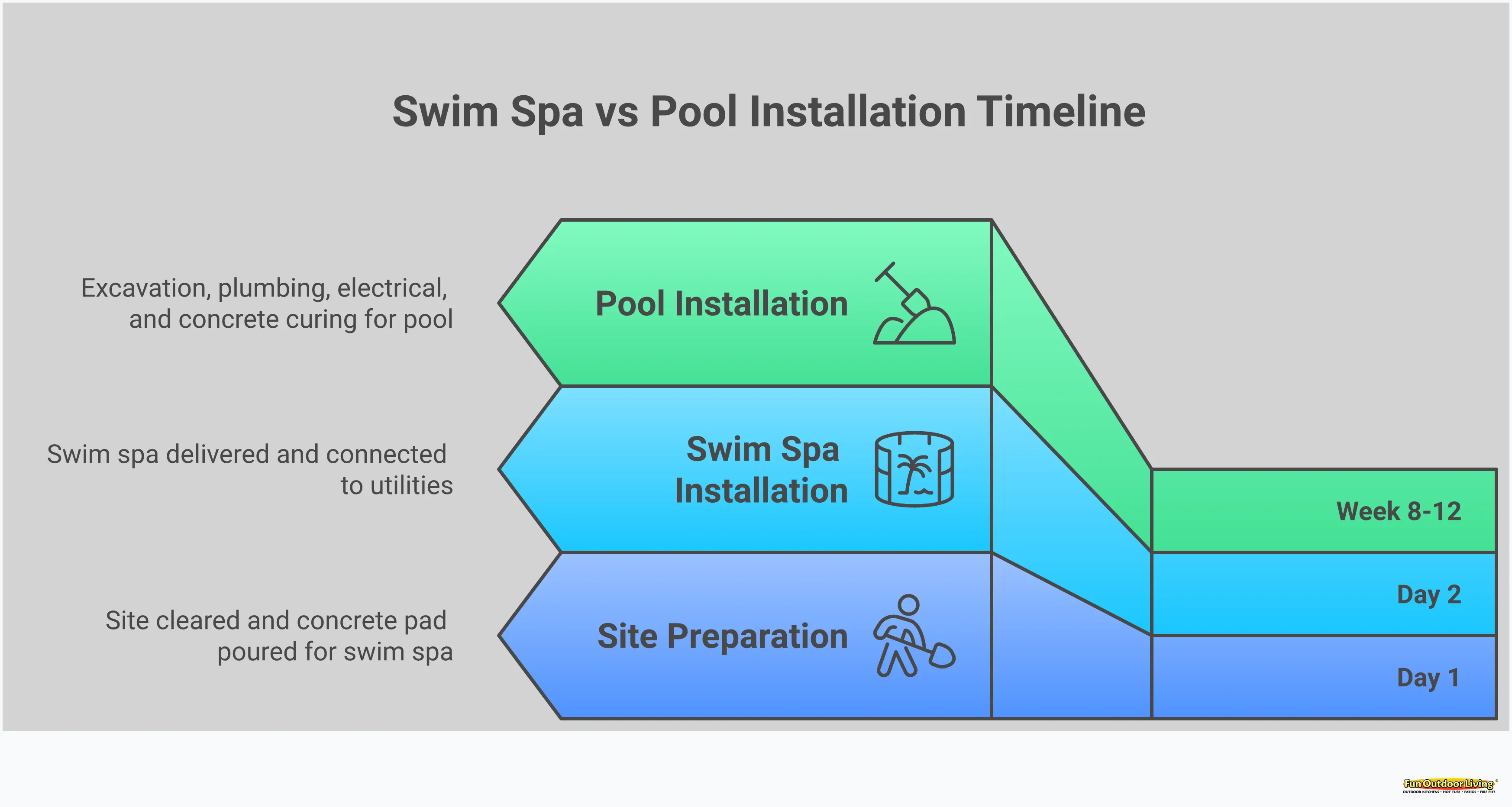
- Consider the impact on your backyard and timeline: A swim spa offers a flexible, compact solution that installs in days with minimal disruption, whereas a pool is a permanent landscape transformation requiring significant space and a months-long construction process.
- Look at the total cost of ownership: A swim spa is more energy-efficient and requires less water and fewer chemicals, making its long-term upkeep more manageable and affordable for daily, year-round use.
Swim Spa vs. Pool: What’s the Real Difference?
Choosing between a swim spa and a traditional pool isn’t really about which one is better. It’s about how you want your backyard to fit into your daily life. Both create wonderful opportunities for wellness and family time, but they support those moments in very different ways. A traditional pool is expansive and social, built for long summer afternoons, kids’ parties, and leisurely floating. It’s the classic centerpiece of backyard entertainment.
A swim spa is more personal and versatile. It’s a compact, all-in-one system designed for year-round fitness, hydrotherapy, and relaxation. Think of it as your personal wellness hub, ready for a morning workout, an after-work soak, or a fun splash with the kids, no matter the season. In our experience helping Carolina homeowners, the right choice becomes clear once you think about your daily routine. Do you envision big weekend gatherings or a quiet, consistent wellness practice? The answer will guide you to the solution that truly feels right for your home.
How a swim spa works
A swim spa is a clever blend of a compact pool and a therapeutic hot tub. Its main feature is a powerful jet system that creates a steady current of water. This allows you to swim in place continuously, getting a great cardiovascular workout without needing the length of a traditional pool. You can adjust the current’s speed to match your fitness level, from a gentle breaststroke to a challenging freestyle swim. Many models, like our Endless Pools® Fitness Systems, also include separate seating areas with hydrotherapy jets, so you can enjoy a relaxing massage after your workout.
How a traditional pool works
A traditional in-ground pool is designed around open water and freedom of movement. It’s a large, dedicated space for recreational swimming, family games, and entertaining groups of people. Unlike a swim spa, a pool doesn’t come with a built-in current for stationary swimming, though separate jet systems can sometimes be added. Its larger volume of water takes more time and energy to heat, which is why most pools in the Carolinas are used primarily during the warmer months. The experience is less about focused exercise and more about classic, seasonal fun and social gatherings.
Key differences in design and experience
The most significant difference comes down to three things: space, seasonality, and purpose. A swim spa has a much smaller footprint, typically 12 to 19 feet long, allowing it to fit into smaller backyards where a pool wouldn’t be possible. Because it’s fully insulated and has an integrated heating system, a swim spa is designed for comfortable use all year long. A pool, on the other hand, requires a large, dedicated area and is mostly a seasonal pleasure. Finally, their core purpose differs. A swim spa is a wellness tool for fitness and therapy, while a pool is a recreational feature for entertainment.
Why Homeowners Choose a Swim Spa
For many homeowners in the Carolinas, the decision isn’t just about adding water to the backyard. It’s about creating a space for wellness, connection, and daily enjoyment. While a traditional pool has its place, we’ve seen a growing number of families choose a swim spa because it aligns more closely with their everyday lives. A swim spa offers a unique combination of fitness, relaxation, and year-round fun in a single, efficient system.
Instead of a feature that’s only used for a few months, a swim spa becomes a consistent part of a daily routine. It’s where you can start the day with a low-impact workout, unwind after work with a warm hydro-massage, or spend time with the kids on a cool autumn evening. This versatility is the main reason so many are rethinking what a backyard water feature can be. It’s less about hosting the occasional party and more about improving your quality of life, day in and day out.
Fits in almost any backyard
One of the most practical advantages of a swim spa is its size. A traditional pool often requires a large, open yard, which isn’t a reality for every home. Most Endless Pools® Fitness Systems measure between 12 and 19 feet long, allowing them to fit comfortably in smaller backyards, side yards, or even on a reinforced deck. This compact footprint means you don’t have to sacrifice your entire outdoor space. For many homeowners, this is the detail that makes an at-home aquatic lifestyle possible, turning a previously unused corner of the yard into a hub for health and relaxation.
Use it year-round, in any weather
Here in the Carolinas, a traditional pool season is often limited to just a few warm months. A swim spa, however, is designed for all-season use. With excellent insulation and an efficient heating system, you can maintain the perfect water temperature whether it’s a humid day in July or a crisp morning in November. This transforms your investment from a seasonal luxury into a year-round wellness tool. Imagine swimming against a gentle current as the leaves change color or enjoying a therapeutic soak on a cool spring evening. This ability to use it anytime makes it a far more integrated part of your daily life.
Combines fitness, therapy, and fun
A swim spa is much more than a small pool. It’s a multifunctional system that serves several needs at once. The powerful current allows for stationary swimming, rowing, and aquatic exercises, providing a fantastic low-impact workout. At the other end, dedicated hydrotherapy seats with powerful jets offer a true hot tub experience, perfect for soothing sore muscles and relieving stress. And for families, it’s a safe and contained space for kids to play. This blend of a gym, a spa, and a recreational pool makes it an incredibly efficient use of backyard space and budget.
Simpler daily and weekly maintenance
The thought of pool maintenance can be daunting for busy homeowners. Because a swim spa holds significantly less water than a traditional pool, its upkeep is much simpler and more affordable. Balancing the water chemistry is a more manageable task, and the advanced filtration systems keep the water clean with less effort. This means you spend more time enjoying the water and less time working on it. For homeowners who value their time, the reduced maintenance commitment is a significant benefit that makes ownership feel easy and rewarding.
Installs quickly with less disruption
Installing a traditional in-ground pool is a major construction project that can take months and leave your backyard in disarray. A swim spa installation is remarkably different. As a self-contained vessel, it’s typically placed on a prepared concrete pad and can be set up and ready to use in a matter of days, not months. This streamlined process means far less disruption to your home and your life. You can start enjoying the benefits of your new swim spa almost immediately, without the prolonged noise, mess, and stress of a major excavation.
What Are the Trade-Offs of a Swim Spa?
A swim spa offers incredible versatility, but making a confident choice means understanding what it’s designed for and what it isn’t. In our experience, homeowners feel best about their decision when they’ve considered these points honestly from the start. It’s not about finding a perfect product, but about finding the perfect fit for your daily life and your vision for your backyard.
Thinking through how you’ll host gatherings, what your budget looks like, and your specific fitness goals will bring clarity. The right choice depends entirely on what you value most. A swim spa is a specialized tool for wellness and family fun, and its design reflects that focus. Let’s look at a few practical considerations to help you decide if it aligns with your priorities.
Designed for smaller groups, not large parties
A swim spa is built for focused activity and smaller, more intimate gatherings. It’s the perfect spot for your kids to play, for you to enjoy a therapeutic soak, or to exercise against the current. However, if your vision includes hosting large neighborhood pool parties with a dozen kids splashing around at once, a traditional pool is better suited for that. Its open, expansive space is designed to accommodate bigger crowds. Think of a swim spa as a functional wellness zone, while a pool serves as a broad social hub.
How the upfront investment compares
Typically, an above-ground swim spa requires a smaller initial investment than a fully excavated in-ground pool. The construction for a traditional pool is simply more complex, involving extensive digging, plumbing, and finishing work. This makes a swim spa an accessible option for many families who want the benefits of water at home. The cost difference narrows if you choose to install the swim spa in-ground, as that process requires similar site preparation. We offer flexible financing options to help homeowners plan for the investment that best fits their home and budget.
A different experience for lap swimmers
The experience of swimming in a swim spa is different from doing laps in a traditional pool. The powerful current in an Endless Pools® Fitness System creates constant resistance, allowing you to swim in place for a continuous and challenging workout. It’s incredibly effective for training and building endurance. However, competitive swimmers who need to practice turns and feel the glide across a long distance may prefer the open water of a full-length pool. The choice comes down to your personal training style and what feels most natural for your fitness routine.
Understanding the aesthetic options
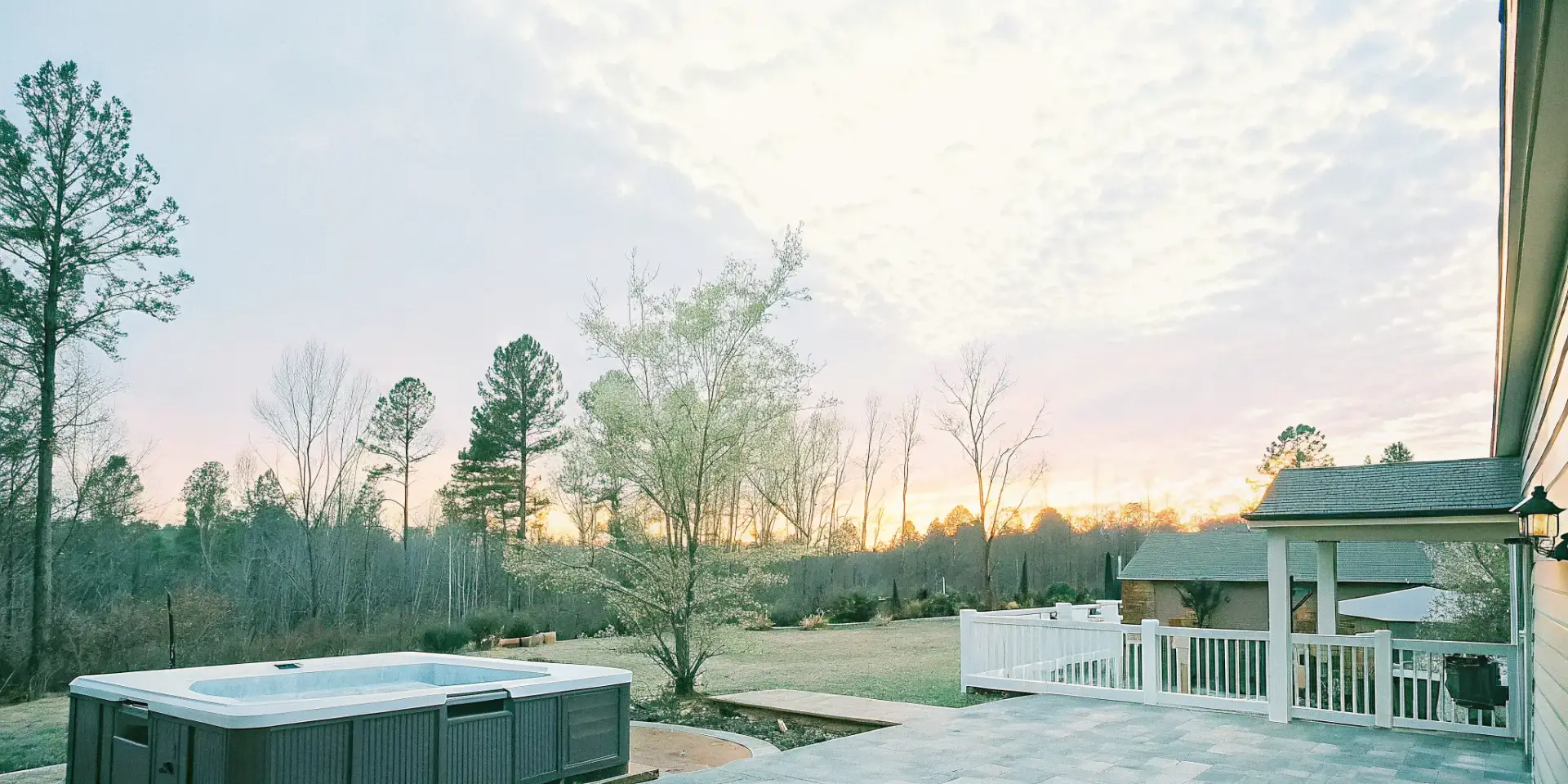
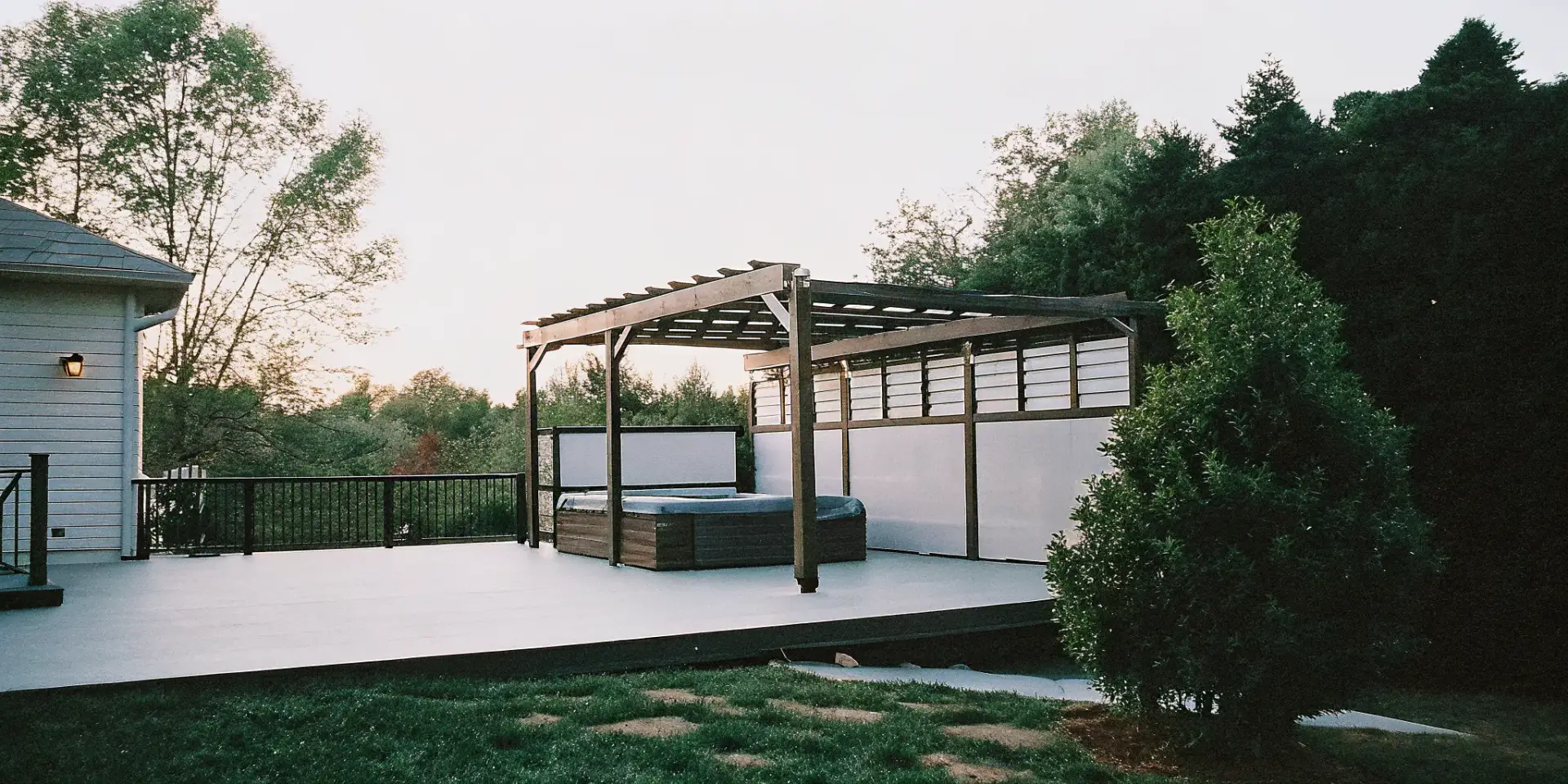
A standalone, above-ground swim spa can sometimes feel like a large appliance placed in the yard rather than an integrated feature. We understand that aesthetics are just as important as function. Because we manage the entire design and construction process, we can make a swim spa a beautiful, seamless part of your backyard. By building a custom deck around it, setting it into a stone patio, or placing it under a pergola, we transform it into a true centerpiece. It becomes a cohesive part of your outdoor living space, not just an addition to it.
When Is a Traditional Pool the Right Choice?
A traditional in-ground pool holds a classic appeal for a reason. It’s an anchor for summer memories and a beautiful centerpiece for a backyard. While a swim spa offers incredible versatility, there are times when the scale and feel of a conventional pool are simply the better fit for a homeowner’s vision. The right choice depends less on which is better and more on how you imagine your life unfolding around it. For some families, especially here in the Carolinas, the wide-open water of a pool is exactly what a backyard needs.
It’s a commitment to a certain kind of outdoor lifestyle, one centered on large gatherings, open-ended recreation, and the timeless look of a custom-designed waterscape. Deciding on a pool is often part of a larger plan to transform an entire property into a destination for family and friends. It’s less about a single feature and more about creating an environment. When that is the goal, the permanence and presence of a traditional pool are hard to match.
The benefits of a classic backyard pool
A traditional pool is built for community. Its expansive size is perfect for hosting neighborhood parties, big family reunions, and lazy summer afternoons with a crowd of kids. If your vision includes floating rafts, poolside lounging, and games of Marco Polo, a pool delivers that experience without compromise. It creates a distinct social zone, often becoming the heart of the home from May through September. For homeowners who entertain often and have a large, active family, the sheer space a pool provides is its greatest strength, creating a resort-like feel right at home.
The realities of pool construction and ownership
Building a pool is a significant construction project that reshapes your entire backyard. Unlike a self-contained swim spa, an in-ground pool involves major excavation, extensive hardscaping like paver patios, and a longer installation timeline. The investment reflects this scale, often starting around fifty thousand dollars and increasing with size and custom features. In our experience, homeowners who choose a pool are planning a complete landscape transformation. It’s a permanent decision that defines the flow and function of your outdoor space for decades to come, so it’s important to go in with a clear, long-term vision.
Common myths about pool maintenance
Many people assume a larger pool automatically means more difficult maintenance, but modern systems have simplified the process. Automated systems for chlorination and chemical balancing can handle much of the daily work, which is a key difference from the more manual water care of many spas. However, the trade-off is volume. A pool requires significantly more water and chemicals to stay balanced, and the energy costs to run a large pump and heater are higher. It’s not necessarily harder, but it is a larger-scale commitment in terms of resources and seasonal care.
A Realistic Look at the Costs
Pricing for any backyard project is about more than just the product; it’s about the entire process from design to daily use. A traditional pool and a swim spa have very different cost structures, both upfront and over the long term. Understanding these differences helps homeowners make a decision that feels right for their budget and their lifestyle, without any surprises down the road.
In our experience, the most confident homeowners are the ones who look at the total cost of ownership, not just the initial price tag. This includes installation, energy use, water, and ongoing care. Let’s break down what that looks like for both options.
The initial investment: Installation and setup
A traditional pool project involves significant construction. The costs include excavation, plumbing, electrical work, decking, and required safety fencing. These elements often make the total installation cost for a pool higher than that of a swim spa. Because a swim spa has a much smaller footprint, typically 12 to 19 feet long, it requires less site preparation. It can be placed on a concrete pad, often with simpler electrical and permitting needs. This streamlined process means the path from delivery to your first swim is usually faster and less disruptive to your yard.
Long-term costs: Energy, water, and care
This is where the differences become most clear over time. A traditional pool holds tens of thousands of gallons of water, while a swim spa holds a fraction of that. This means you’ll spend less on water to fill it and fewer chemicals to treat it. The daily operating costs are also lower. Because a swim spa is smaller and better insulated, it requires less energy to heat and maintain its temperature. These savings on water, chemicals, and electricity add up, making the swim spa a more cost-effective choice for year-round use.
How energy efficiency compares
A swim spa is designed for efficiency from the ground up. Its smaller surface area and thick, insulated cover dramatically reduce heat loss, which is the biggest driver of energy consumption. A traditional pool, on the other hand, is constantly exposed to the air, losing heat and water to evaporation. While pool covers help, they can’t match the thermal retention of a high-quality spa shell and cover. For homeowners here in the Carolinas who want to enjoy the water in the cooler months, a swim spa’s efficiency makes that a realistic and affordable option.
Understanding permits and site preparation
Every project starts with a solid foundation, and the requirements for pools and swim spas are quite different. Building an in-ground pool is a major construction project that almost always requires extensive permitting, site surveys, and compliance with local zoning laws for things like fencing. A swim spa installation is typically much simpler. While a permit may still be needed for the electrical work and concrete pad, the process is generally faster and less complex. We can help you understand the specific requirements for your property during a free home consultation.
Which Is Right for Your Lifestyle?
The best choice between a swim spa and a pool isn’t about which one is better overall. It’s about which one is better for you. The decision comes down to your property, your daily routines, and what you want your time at home to feel like. By thinking through how you plan to use the water, you can find the solution that fits naturally into your life.
How much space does your backyard have?
The physical size of your yard is often the first consideration. A traditional pool requires significant space for the pool itself, the surrounding deck, and the necessary equipment. This often means a major construction project that can dominate a backyard.
In contrast, a swim spa is a self-contained unit with a much smaller footprint. Because they are so compact, they can be installed in smaller yards, on existing patios, or even indoors, offering flexibility that pools can’t match. Unlike pools, which demand a large, open area, a swim spa can be tucked into a corner, making it an ideal choice for homeowners who want aquatic fitness without sacrificing their entire outdoor space. Our swim spa gallery shows just how well they fit into various Carolina backyards.
How do you plan to use it every day?
Think about the rhythm of your daily life. A swim spa is designed for intentional use. It invites a routine, whether it’s a morning workout against the resistance current, a quiet hydrotherapy session after work, or a focused way to teach your kids to swim. It’s an experience you schedule into your day, available year-round.
A traditional pool, on the other hand, encourages more spontaneous leisure. It’s the centerpiece for relaxing on a hot afternoon or for kids to splash around in for hours. The use is less structured and more seasonal. The right choice depends on whether you’re seeking a consistent wellness tool or a seasonal hub for recreation and relaxation.
Is your goal fitness, family fun, or entertaining?
Your primary goal will point you in the right direction. If your main objective is fitness, aquatic exercise, or hydrotherapy, a swim spa is purpose-built for the job. The Endless Pools® Fitness Systems we offer provide a powerful current for swimming in place, along with features for resistance training and recovery.
If you envision hosting large summer parties with lots of guests, a traditional pool is better suited for entertaining big groups. For families, the choice is more nuanced. A pool offers wide-open space for games, while a swim spa provides a more controlled environment for year-round fun and swimming practice with a smaller group. Seeing real-world projects can help you visualize how each option transforms a space for different activities.
Matching the experience to your daily routine
Ultimately, choosing between a swim spa and a pool is about aligning the product with your lifestyle. A swim spa integrates wellness into your daily routine, offering a private, year-round space for fitness and recovery. It’s a deliberate addition to your day, much like a home gym.
A traditional pool shapes your leisure time, especially during warmer months. It becomes the social heart of your home, a place for connection, play, and relaxation. It defines a season of outdoor living. There is no wrong answer, only the one that feels right for your home and family. If you’re still exploring what makes sense for your space, a free home consultation can provide the clarity you need to make a confident decision.
Understanding the Maintenance Commitment
Both a swim spa and a pool require a commitment to care, but the rhythm of that care is quite different. One isn’t necessarily “easier” than the other; it’s about which routine feels more manageable and fits better into your life. Understanding the daily, seasonal, and long-term tasks helps you choose with confidence, ensuring your backyard retreat remains a source of joy, not a list of chores. In our experience helping Carolina homeowners, matching the maintenance style to your lifestyle is one of the most important parts of the decision.
What daily and weekly care looks like
The day-to-day upkeep of a swim spa is generally more contained. Because it has a smaller surface area and a quality cover, you’ll spend less time skimming leaves and debris. The primary tasks involve testing the water a few times a week and wiping down the waterline. High-quality systems like Endless Pools® Fitness Systems have advanced filtration that handles much of the cleaning for you, keeping the routine simple.
A traditional pool, by contrast, requires more frequent physical maintenance. Daily skimming is often necessary, especially in the Carolinas with our beautiful trees. You’ll also need to empty skimmer baskets regularly and keep an eye on the pump and filter. While these tasks aren’t difficult, they are a consistent part of pool ownership throughout the swimming season.
How seasonal needs differ
Here is where the two experiences diverge significantly. A pool has distinct seasons of use, which means you have the larger tasks of opening it in the spring and winterizing it in the fall. Closing a pool involves lowering the water level, balancing chemicals for dormancy, and securing a heavy cover. It’s a process that marks the end of the swimming season.
A swim spa is designed for year-round enjoyment. Thanks to excellent insulation and efficient heating, you can use it comfortably in January as well as July. There’s no opening or closing process. Your maintenance routine remains consistent all year, making it a predictable and seamless part of your wellness habit. This continuous access is often a deciding factor for homeowners who want fitness and relaxation on demand.
Managing water chemistry
Maintaining clean, safe water is essential for both. With a swim spa’s smaller body of water, chemical adjustments are done manually and have a quick effect. It takes a little practice, but most owners find a simple rhythm. To make it easier, we offer a free water analysis at all our showrooms; just bring in a sample, and we’ll give you clear, simple guidance.
A pool’s larger volume is more stable, meaning it’s less susceptible to sudden changes. However, it requires a much larger quantity of chemicals to make adjustments. While automated chemical systems are available for pools, they add to the overall cost. For many, the choice comes down to managing smaller, manual adjustments versus handling larger volumes of chemicals.
Long-term service and equipment care
Over the years, the structural differences become more apparent. A common long-term cost for a pool is replacing the vinyl liner, which is typically needed every 10 to 15 years. Concrete pools may need resurfacing over a similar timeline. These are significant projects that require planning and investment.
A swim spa’s acrylic shell, on the other hand, is built to last a lifetime and is often backed by a long warranty. While components like pumps and heaters will eventually need attention, the vessel itself is incredibly durable. Knowing you have a dedicated local service team to handle any repairs provides peace of mind and protects your investment for years to come, without the worry of a major liner replacement down the road.
Making a Confident Decision
Choosing between a swim spa and a traditional pool is less about which one is better and more about which one fits into your daily life. Both can be wonderful additions to a home, but they serve different purposes and come with different realities of ownership. The right choice depends entirely on your goals, your property, and how you envision spending your time outdoors.
For homeowners here in the Carolinas, the decision often comes down to a few key questions. How do you plan to use the water every day? Is your priority focused fitness and therapy, or large-group entertainment? How much time are you willing to commit to maintenance, and what does your timeline look like? Answering these honestly is the first step toward making a choice you’ll be happy with for years to come. We’ve helped hundreds of families think through these details, and our goal is to provide clarity, not pressure. By looking at your budget, your space, and your lifestyle, the best path forward usually becomes clear.
Define your budget and ideal timeline
The financial and time commitments for a swim spa and a pool are fundamentally different. A traditional in-ground pool is a major construction project. Installation costs can range from fifty thousand to well over one hundred thousand dollars, depending on the size, materials, and complexity of your site. The process itself often takes several months from the first dig to the final fill, involving multiple crews and significant disruption to your yard.
A swim spa, on the other hand, arrives as a self-contained unit. While the initial investment is still significant, it’s generally more predictable and less than a custom pool. The timeline is also much shorter. Once the site is prepared with a concrete pad and proper electrical, installation can be completed in a single day. This means you can go from decision to enjoyment in a matter of weeks, not an entire season. Understanding these differences helps set realistic expectations, and flexible financing options can make either choice more accessible.
Assess your backyard’s potential
Before you can decide what to put in your yard, it’s important to understand the space you have. A traditional pool requires a substantial amount of level ground, not just for the pool itself but also for the surrounding patio, fencing, and equipment. This can easily consume a large portion of a typical suburban backyard.
This is where a swim spa offers incredible flexibility. Most models are between 12 and 19 feet long, occupying a much smaller footprint. This compact size allows you to install one in spaces where a pool would be impossible, like a small side yard, a reinforced deck, or even an enclosed patio for four-season use. Because we design and build locally, we can help you visualize how each option would fit with your property lines and existing landscape. A free home consultation can help you see your backyard’s true potential.
Consider long-term value and enjoyment
The best backyard investment is the one you use most often. While a large pool is perfect for hot summer days, its use in the Carolinas is typically limited to a few months a year. Opening and closing a pool is a seasonal chore, and the ongoing maintenance can be demanding.
A swim spa is designed for year-round enjoyment. Its insulated shell and efficient heating system mean you can swim, exercise, or relax in any weather, from a cool spring morning to a crisp autumn evening. This accessibility transforms it from a seasonal feature into a daily wellness routine. In our experience, this consistent use is what homeowners value most over time. A swim spa can also be a desirable feature for future homebuyers, as it offers the benefits of a pool with simpler care and a smaller footprint.
How to choose what’s best for your family
Ultimately, choosing between a swim spa and a pool comes down to your family’s unique needs. The right decision starts with an honest conversation about how you truly want to live in your outdoor space.
If your vision includes hosting large pool parties, with kids splashing and diving all summer long, a traditional pool might be the better fit. It’s built for recreation on a larger scale. However, if your goal is daily fitness, hydrotherapy for aches and pains, and a relaxing space for your immediate family to connect year-round, a swim spa is likely the more practical and valuable choice. It’s less about entertaining the neighborhood and more about enhancing your personal well-being. There is no wrong answer, only the one that’s right for you.
Related Articles
Frequently Asked Questions
Can you actually get a good swim workout in a swim spa? Yes, absolutely. The experience is different from swimming laps in a pool, but it’s incredibly effective for fitness. Instead of covering distance, you swim in place against a strong, adjustable current. This provides constant resistance, which is excellent for building endurance and strength without the need to turn at a wall. It allows for a continuous, uninterrupted workout tailored to your exact fitness level.
Is a swim spa just a big hot tub? That’s a common question, but they are two very different things. A swim spa is a hybrid system. It has a large, open area with powerful jets that create a river-like current for swimming and exercise. It also has separate, dedicated seats with hydrotherapy jets, just like a traditional hot tub. This dual-purpose design allows you to get a full-body workout and then relax with a therapeutic massage, all in the same vessel.
How much yard space do I really need for a swim spa? You need much less space than you might think. Most swim spa models are between 12 and 19 feet long and about 8 feet wide. They are self-contained and typically installed on a simple concrete pad, so you don’t need the extensive room for excavation and decking that a traditional pool requires. This compact footprint makes them a great fit for smaller backyards or for homeowners who don’t want to give up their entire lawn.
What are the real energy costs of running a swim spa year-round? While every home is different, a swim spa is significantly more energy-efficient than a traditional pool, especially for year-round use. This is because it holds much less water and is fully insulated, from the shell to the high-quality cover that traps heat. Keeping a swim spa warm through the cooler Carolina months is far more affordable than trying to heat a large, exposed pool, making it a practical choice for daily wellness.
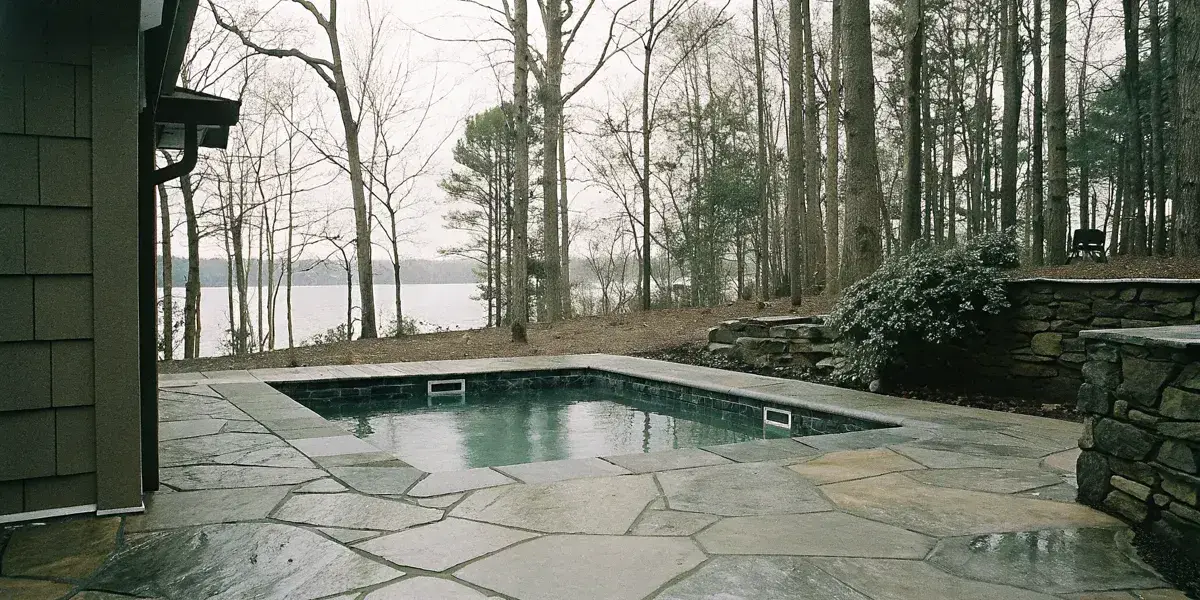
Can a swim spa be installed to look like a built-in pool? It certainly can. While a standard installation places the swim spa on a concrete slab, we specialize in creating custom designs that integrate it seamlessly into your backyard. By building a multi-level deck around it, setting it into a stone patio, or adding custom steps and landscaping, we can create the beautiful, permanent look of a traditional in-ground pool with all the benefits of a swim spa.