Building a patio that lasts in the Carolinas requires a specific kind of expertise. Our region’s clay soil and heavy seasonal rains mean that a beautiful surface is only as good as the unseen work beneath it. A generic online calculator can’t account for these local realities, which is why the hardscape patio installation cost can vary so much. A project’s success depends on proper site preparation, expert grading, and thoughtful drainage solutions. Because we design and build locally, we plan with these challenges in mind. Our experience shapes every recommendation we make—not trends or shortcuts, just what works right here.
Key Takeaways
- Focus on the Foundation, Not Just the Finish: The true cost and long-term quality of your patio are determined by the unseen work below the surface. A reliable budget accounts for proper site preparation, a deep base, and smart drainage—the key elements that prevent future problems.
- Choose Materials for Longevity, Not Just Looks: The best material choice balances upfront cost with long-term durability and maintenance. Understanding the trade-offs between options like pavers and stamped concrete helps you select a surface that fits your lifestyle and avoids costly repairs down the road.
- Select a Partner, Not Just a Price Tag: The lowest bid can often lead to the highest long-term cost due to shortcuts in materials or installation. A trustworthy installer provides a transparent quote that details every step and stands behind their work with a portfolio of local projects.
Breaking Down the Cost of a Hardscape Patio
When homeowners start thinking about a new patio, the first question is almost always about cost. It’s a practical place to start, and understanding the budget helps shape the entire project. A patio’s price isn’t arbitrary—it’s a direct reflection of a few key choices you’ll make about materials, size, and design. Think of it less as a single price tag and more as a range that you have a great deal of control over. It’s about matching your vision for daily life outdoors with an investment that makes sense for your home.
In our experience building backyards across the Carolinas, most quality hardscape projects fall into a broad range, but the final number depends entirely on how you plan to use the space. A simple, elegant area for morning coffee will naturally have a different budget than an expansive, multi-level patio designed for a full outdoor kitchen and large family gatherings. The goal isn’t to find the cheapest option, but to understand the trade-offs so you can invest confidently in a space that will serve your family for years to come. We believe transparency is the first step in making a decision you’ll feel good about long after the work is done.
How material and size affect your budget
The two biggest factors that determine the cost of your patio are its overall size and the materials you choose. A larger footprint requires more materials and more labor, which directly impacts the budget. But the most significant variable is often the cost per square foot of the material itself. For example, standard concrete pavers are a durable and attractive option that fits comfortably within many budgets.
If you opt for premium natural stone like flagstone or travertine, the material cost can be significantly higher, but it offers a unique, timeless look that’s hard to replicate. The key is to balance the aesthetic you want with a budget that feels right. We can help you explore different outdoor pavers and materials to see how different choices would look and feel in your space.
The key factors that shape the final price
Beyond size and materials, several other elements shape the final cost. The complexity of the design plays a major role; a simple square patio is more straightforward to install than one with intricate curves, multiple levels, or built-in features like seating walls and fire pits. Your property’s existing conditions are also important. A flat, clear yard requires less prep work than a sloped or uneven site that needs significant grading and excavation to ensure proper drainage.
Finally, access to the backyard can influence labor costs. If our team and equipment can easily get to the work area, the process is more efficient. These details are why an on-site consultation is so important. It allows us to see the space firsthand and provide a quote that accurately reflects the specific needs of your project.
What Really Determines Your Patio’s Cost?
Pricing a new patio isn’t arbitrary—it’s a direct reflection of a few key decisions you’ll make about your space. The final cost is shaped by the size of the patio, the materials you choose, the complexity of the design, and the unique conditions of your property. Understanding these factors is the first step toward creating a budget that aligns with your vision and ensures your investment lasts for years to come. Because we design and build locally, we believe in explaining why costs change, not just what the numbers are. When homeowners understand the trade-offs, decisions become easier and far more confident.
A simple price-per-square-foot quote rarely tells the whole story. It can’t account for a yard that slopes, soil that needs extra preparation, or a design that requires intricate, time-consuming cuts. These details are what separate a patio that looks good on day one from one that performs beautifully for decades. In our experience, the most successful projects happen when homeowners feel fully informed about how each choice impacts the final outcome. Our goal isn’t to rush you to a decision; it’s to provide the clarity you need to make the right one for your home and family.
Size and layout
The overall square footage of your patio is the foundation of any cost estimate. A larger patio requires more materials, more site preparation, and more labor, which naturally increases the price. While hardscaping projects can range widely, many homeowners in the Carolinas spend around $9,000 on average. But size isn’t the only factor; the layout matters, too. A simple rectangular or square design is the most straightforward to install. Intricate curves, multiple levels, or complex patterns require more precise cuts and additional labor, which will be reflected in the final cost. You can see a variety of patio designs in our gallery to get a feel for how layout impacts the overall look.
Your choice of materials
The materials you select are one of the most significant factors in your patio’s budget. The cost for hardscaping materials can range from $5 to over $50 per square foot, depending on what you choose. For example, basic concrete pavers are often the most budget-friendly option, while premium natural stone like flagstone or travertine sits at the higher end of the price spectrum. In our experience, the best choice isn’t just about the initial price. It’s about balancing aesthetics, durability, and long-term maintenance. We can walk you through the options during a free home consultation to find the right fit for your home and lifestyle.
Custom features and design complexity
A patio is often much more than just a flat surface. Features like built-in seating walls, retaining walls, steps, or an integrated outdoor fire pit add function and beauty, but they also add to the project’s complexity and cost. A design with many intricate cuts and custom shapes requires more time and skill from the installation crew than a simple layout. This is why a generic price-per-square-foot quote can be misleading. A trustworthy estimate always accounts for the specific details of your design, ensuring there are no surprises down the road. The more customized the space, the more labor is involved in bringing it to life.
Your backyard’s current condition
The state of your yard before we begin work plays a crucial role in the overall cost. A flat, level, and easily accessible site is the ideal starting point. However, many backyards in the Carolinas have slopes, drainage issues, or difficult soil conditions. Addressing these challenges is essential for a long-lasting patio. For instance, a sloped yard may require a retaining wall, while poor drainage might call for an underground system to manage water flow. As one contractor noted, “difficult ground conditions… can greatly increase the cost because more work and materials are needed for a strong base.” Our in-house construction teams assess these factors upfront to ensure your patio’s foundation is built correctly from day one.
Labor and local expertise
The quality of your patio is directly tied to the skill of the people who build it. Professional hardscape contractors typically charge between $50 to $100 per hour, and this investment in expertise is what ensures your patio won’t sink, shift, or crack over time. Proper installation involves far more than just laying stones; it requires precise excavation, expert base preparation, and careful compaction. Because our crews work exclusively for us, we have full control over the quality of the installation. They understand the local soil, weather patterns, and building codes here in the Carolinas, ensuring every project we build is designed to last. Our before and after projects show what a difference professional craftsmanship makes.
Comparing Patio Materials: A Look at Cost and Longevity
The material you choose for your patio floor does more than just set the visual tone—it determines how you’ll care for it, how it feels underfoot, and how well it holds up to Carolina weather over the years. While it’s easy to focus on the initial look, the best decision comes from understanding the balance between upfront cost, durability, and long-term maintenance.
In our experience building patios across the region, we’ve seen how different materials perform over time. The right choice isn’t about what’s most expensive or trendy; it’s about what best fits your lifestyle, your home’s architecture, and your expectations for the years ahead. Let’s walk through the most common options we work with.
Pavers vs. stamped concrete
This is one of the most common comparisons homeowners make. Stamped concrete can be attractive initially because it can mimic the look of stone or brick for a lower upfront cost. However, it’s essentially a single large slab. If it cracks—which can happen with ground shifts or freeze-thaw cycles—repairs are often difficult and noticeable.
Concrete pavers, on the other hand, are individual units interlocked together. While the installation is more involved, their durability is exceptional. If a paver ever cracks or gets stained, we can simply replace that single unit. This repairability gives paver patios a significant advantage for long-term peace of mind and sustained beauty.
The timeless appeal of natural stone
If you want a high-end, completely natural look, stone is unmatched. Materials like flagstone, slate, and limestone offer rich textures and unique, organic shapes that can’t be replicated. Each stone is different, ensuring your patio is truly one-of-a-kind and feels deeply connected to the surrounding landscape.
While natural stone is a premium investment, its longevity is measured in decades, not years. It ages gracefully, developing a beautiful patina over time. For homeowners who prioritize authentic character and a timeless feel, the value of a natural stone patio extends far beyond its initial cost. You can see how it elevates a space in our project gallery.
Brick and permeable pavers
Brick offers a classic, traditional look that complements many Carolina homes. It’s known for its durability and rich, warm color that holds steady for years. Beyond its timeless aesthetic, brick can be installed as a permeable surface.
Permeable pavers are designed with small gaps between them, which are filled with a special aggregate. This allows rainwater to filter through the surface and into the ground below, rather than running off into your yard or toward your home’s foundation. In a region where we see heavy downpours, this is a smart, functional choice that helps with reducing runoff.
Thinking beyond the initial price tag
When you’re budgeting for a new patio, it’s important to consider the total cost of ownership. The price of the material itself is just one piece. The final investment includes installation expenses and the long-term care needed to preserve its appearance and function over time.
A less expensive material might require more frequent sealing or be more susceptible to damage, leading to higher costs down the road. A proper foundation, for example, is critical to preventing sinking and shifting, but it’s an area where some contractors cut corners. We believe in explaining these trade-offs so you can make a confident decision. A free consultation can help clarify these costs for your specific space.
What’s Included in a Patio Quote (And What Might Not Be)
When you receive a quote for a new patio, it’s much more than a price tag—it’s a plan. Understanding what goes into that plan helps you compare your options with confidence and ensures there are no surprises down the road. A detailed quote reflects a contractor’s thoroughness. It shows they’ve considered the unique aspects of your property, from soil conditions to how water moves across your yard.
In our experience, the most successful projects begin with a clear, shared understanding of every step. We believe in walking you through the process, explaining why each component matters for the long-term enjoyment and durability of your space. Because we manage everything from the initial paver patio design to the final installation, your quote is a complete picture of the project. It’s a simpler, more accountable way to bring your vision to life.
Excavation and site preparation
A beautiful patio is only as strong as the ground it rests on. Before the first paver is laid, the site needs to be properly prepared. This is the critical, unseen work that prevents your patio from sinking, shifting, or developing uneven spots over time. A comprehensive quote will always account for this foundational step.
Site preparation involves more than just digging. It includes carefully removing the topsoil, grading the area to ensure water flows away from your home, and compacting the sub-base to create a stable, unyielding surface. Here in the Carolinas, soil can vary from dense clay to sandy loam, and an experienced team knows how to prepare the ground for a lasting installation. This is the work that ensures your investment looks and performs beautifully for decades.
Permits, drainage, and site management
Beyond the physical materials, a professional patio installation involves important logistical details that protect you and your home. Your quote should cover the management of any necessary local permits, ensuring your new patio is built to code and fully compliant with municipal regulations. This is a detail you shouldn’t have to worry about; a good partner handles it for you.
Equally important is a plan for drainage. We’ve seen how heavy Carolina rains can cause problems for poorly planned hardscapes. Proper drainage isn’t an add-on; it’s essential for preventing water from pooling near your foundation or eroding the patio’s base. A thoughtful quote will include solutions tailored to your yard’s specific needs, directing water away from critical areas and preserving the integrity of your entire outdoor space.
The foundation: Base materials and sealants
Beneath the visible surface of your patio lies a multi-layered foundation designed for stability and longevity. Your quote will detail the costs for these essential base materials. This typically includes a thick layer of compacted aggregate, which provides a solid footing and allows for drainage, followed by a layer of sand that creates a perfectly level bed for setting the pavers.
These layers work together to distribute weight evenly and prevent the pavers from moving. The quote will also include the polymeric sand used to fill the joints, which hardens to lock the pavers in place and inhibit weed growth. For some projects, a sealant may be recommended as a final step to protect the pavers from stains and weathering, making long-term care much simpler.
Removal of old patios or decks
If your project involves replacing an existing structure, like an old concrete slab or a worn-out wooden deck, the cost of demolition and removal is a key consideration. This is often listed as a separate line item in a quote, as the work required can vary significantly depending on the size and material of the old structure.
It’s important to clarify this upfront with any potential installer. A truly seamless project accounts for this from the start, so you aren’t left trying to find a separate crew to handle the tear-out. By integrating demolition into the overall plan, we can create a clean slate for your new patio and manage the entire transformation from start to finish. You can see how we handle these kinds of projects in our before and after gallery.
Preparing Your Yard for a New Patio
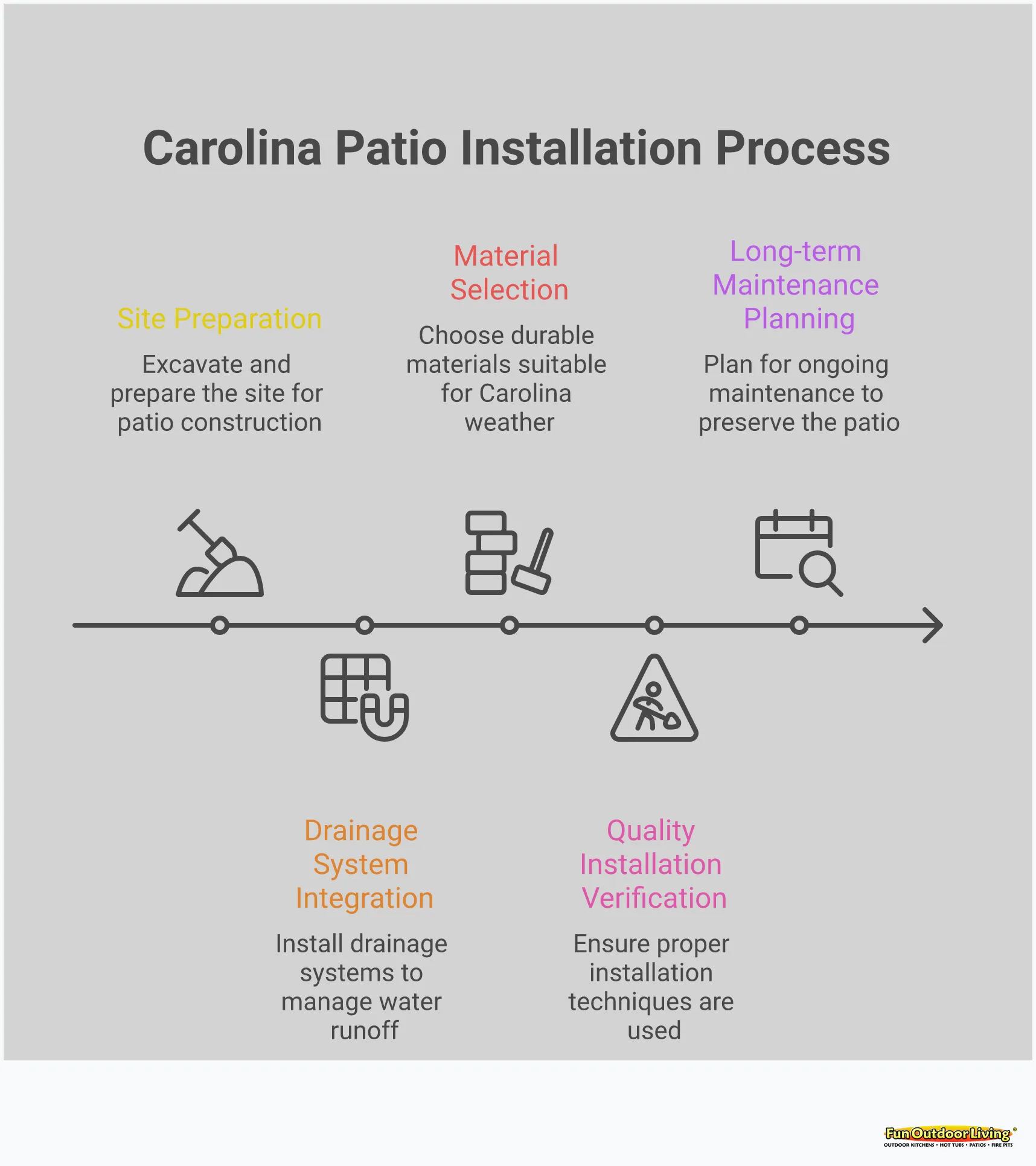
Before the first paver is laid, the success of your new patio is decided by the quality of the preparation. A beautiful design is only as good as the foundation it’s built on. In our experience, taking the time to properly prepare the site prevents nearly all of the common issues homeowners face down the road. It’s about ensuring your investment not only looks great on day one but feels solid and performs beautifully for decades.
This stage involves more than just clearing a space. It’s a thoughtful process of working with your yard’s natural state to create a stable, resilient base. We look at everything from soil composition to how water moves across your property. This careful planning is what separates a professionally built patio from one that might look good for a season but quickly develops problems. It’s the invisible work that makes all the difference in how you enjoy your outdoor space long-term.
Assessing your space
The first step is to understand the canvas we’re working with. Every backyard has its own character—its slopes, its sunny spots, and its existing features. We begin by assessing how your new patio will integrate with your home and landscape. This means looking at the grade of the land, identifying underground utility lines, and considering how you plan to live in the space. Will it be a quiet spot for morning coffee or the central hub for family gatherings?
Proper ground preparation is essential for a stable, level surface that lasts. This almost always involves some level of excavation to remove topsoil and create a solid base. We then level the area, ensuring the foundation is perfectly compacted. This foundational work is what prevents pavers from shifting or sinking over time, giving you a patio that feels secure underfoot year after year. It’s a critical step that we manage carefully to set the stage for a flawless paver installation.
Evaluating soil and water flow
Here in the Carolinas, managing water is one of the most important parts of any hardscape project. Our clay-heavy soil and occasional downpours mean that without a proper plan, water can become a patio’s worst enemy. Ignoring drainage can lead to pooling water, which can undermine the patio’s foundation, encourage moss growth, and even create issues for your home’s foundation.
That’s why we spend so much time evaluating how water moves across your property. A well-designed patio should have a subtle, almost unnoticeable slope that directs rainwater away from your house and into a safe drainage area. We’ve seen firsthand what happens when this step is overlooked. By planning for water flow from the very beginning, we ensure your patio remains a dry, comfortable, and stable extension of your home, no matter the weather.
Planning for crew and equipment access
A detail that’s easy to overlook is how our team and equipment will get to the project site. The path from the street to your backyard is a key part of the project plan. We need to consider fences, established garden beds, septic systems, and other obstacles that might be in the way. Clear and easy access allows the project to run more efficiently, which can have a direct impact on the timeline and overall cost.
During our initial home consultation, we’ll walk the property with you to map out the best route. If access is tight, it’s not a dealbreaker—it just means we need to plan for it. We might use smaller equipment or create a temporary path to protect your lawn. By addressing this upfront, we avoid surprises and ensure the installation process is as smooth and undisruptive as possible for you and your neighbors.
Common Budgeting Mistakes We Help Homeowners Avoid
A successful patio project is about more than just the final price—it’s about long-term value and peace of mind. Over the years, we’ve seen how a few common oversights can turn a dream backyard into a source of frustration. These aren’t failures on the homeowner’s part; they’re simply the result of not knowing what to look for when planning a significant investment in your home. It’s easy to focus on the materials you can see and touch, but the real durability of a patio comes from the careful work done beneath the surface.
The most reliable budgets are built on understanding the entire process, from ground preparation to how the space will be cared for years from now. An experienced partner helps you see the full picture, ensuring there are no surprises down the road. Our goal is to help you make a confident decision by explaining the trade-offs and focusing on what truly creates a lasting, beautiful outdoor space for your home. We believe an informed homeowner is an empowered one, ready to create a backyard that serves their family for decades.
Overlooking the importance of the foundation
What you don’t see is often the most critical part of your patio. The long-term stability of your investment depends entirely on the preparation done before the first paver is laid. A proper foundation involves careful excavation, grading, and compaction of a multi-layered base designed to handle water and weight. Skimping on this step to save money upfront almost always leads to shifting, sinking, or cracking surfaces later on. In our experience, a patio that fails does so from the bottom up. That’s why we focus so heavily on creating a solid base that can withstand Carolina weather and soil conditions.
Focusing only on the lowest bid
It’s natural to compare quotes, but the lowest number rarely tells the whole story. A significantly lower bid often indicates that compromises are being made, whether in the depth of the foundation, the quality of the materials, the experience of the crew, or the inclusion of proper drainage. These shortcuts can lead to costly repairs that far exceed the initial savings. When you review a proposal, it’s important to understand exactly what’s included. We believe in transparent pricing that covers every step needed to build beautiful, durable patios that last a lifetime.
Forgetting about long-term care
A well-built patio should be a low-maintenance feature, but not a no-maintenance one. The materials you choose and the quality of the installation directly impact how much upkeep will be required over time. For example, using high-quality jointing sand and sealants protects against weeds and erosion, preserving the look and integrity of the surface for years. We design and build with the entire lifecycle in mind, helping you understand the simple routines that will keep your patio looking its best. This foresight ensures your outdoor space remains a source of enjoyment, not a list of chores.
Ignoring how water moves through your yard
Every backyard has a natural drainage pattern, and a new patio can significantly alter it. Without proper planning, a patio can act like a dam, causing water to pool against your home’s foundation or create soggy areas in your lawn. This is one of the most critical and frequently overlooked aspects of hardscape design. We always assess how water moves across a property before we begin. By incorporating the right slope and, when needed, drainage solutions like permeable pavers, we ensure your new patio works in harmony with your landscape, protecting both your home and your investment.
How to Choose the Right Patio Installer
Choosing the right installer is just as important as selecting the perfect pavers. This decision is about finding a long-term partner for your home—someone who understands that a patio is more than a surface. It’s the foundation for future gatherings, quiet mornings, and lasting memories. A great installer brings not only technical skill but also a commitment to building something that will stand the test of time, especially here in the Carolinas where weather can be demanding.
The right team will guide you through the process with clarity, ensuring the final result matches your vision and fits seamlessly into your daily life. It’s a process built on trust, clear communication, and shared expectations. When you find an installer who listens, explains the process without pressure, and has a proven track record of local work, you can feel confident in your investment. In our experience, the best projects happen when the homeowner feels informed and supported from the first conversation to the final walkthrough. This isn’t just about construction; it’s about creating a space you’ll love for years to come.
What to look for in a quote
A quote should be more than just a final number; it should be a clear plan. While getting a few estimates is a wise step, the goal is to find the most thorough and transparent proposal, not just the lowest price. A detailed quote demonstrates that the installer has carefully considered every aspect of your project, from the specific conditions of your yard to the exact materials you’ve chosen. It should break down the costs for site preparation, base materials, pavers, labor, and any necessary permits. Be cautious of any quote that offers a simple price per square foot without an on-site evaluation—it often signals a lack of experience and can lead to surprise costs later. A professional will want to get a clear picture of your space before ever putting a number on paper.
Verifying experience and past work
Building a patio that lasts requires real craftsmanship. It’s a process that involves understanding soil compaction, proper drainage to handle Carolina storms, and the precise techniques for laying a level, stable surface. The best way to verify an installer’s skill is to see their work for yourself. Ask to see a portfolio of completed projects, paying close attention to details like clean lines, even spacing, and complex patterns. Because we design and build locally, we know what it takes to create paver patios that endure our region’s specific challenges. An experienced installer will be proud to share their past projects and connect you with previous clients. This isn’t just about proving they can do the job; it’s about showing you they do it well, time and time again.
Comparing apples to apples
When you have multiple quotes in hand, it’s tempting to let the bottom line make the decision. However, the lowest bid often comes with hidden trade-offs. To make a true comparison, look closely at the details. Are all installers proposing the same depth for the gravel base? A shallower base might save money upfront but can lead to shifting and sinking pavers down the road. Are they using the same quality and thickness of paver? Do their quotes include sealing the patio, or is that an extra charge? A quality installation focuses on longevity, and that starts with a solid foundation and premium materials. The goal is to find the best long-term value, not just the cheapest initial price.
Asking about timelines and warranties
Clear communication is the hallmark of a professional installer. They should be able to provide a realistic project timeline and explain how they’ll handle potential delays, like bad weather. Just as important is understanding the warranties that protect your investment. Typically, there are two: a manufacturer’s warranty that covers the integrity of the pavers themselves, and a workmanship warranty from the installer. The workmanship warranty is a direct reflection of the installer’s confidence in their own process. A strong guarantee shows they stand behind their construction methods and are committed to your long-term satisfaction, ensuring your new outdoor space remains a source of enjoyment, not stress.
Making a Confident Decision About Your Patio
Choosing to build a new patio is about more than just adding square footage; it’s about creating a space for connection, relaxation, and daily enjoyment. A well-designed patio becomes the foundation of your outdoor life. But a confident decision requires clarity on a few practical details, from budgeting to long-term care. Because we manage every step of the process, from design to installation, we can help you understand the entire picture. Our role isn’t to rush you into a decision, but to provide the information you need to make the right one for your home and family.
Financing your project
Understanding the investment is the first step toward feeling confident in your decision. For most homeowners in the Carolinas, a professional hardscape patio installation is a significant home improvement. The final cost depends on size, materials, and site complexity. We believe in transparency, which is why we provide detailed quotes that explain every line item. To make your project more accessible, we also offer flexible financing options, allowing you to create the backyard you want now while managing payments over time. This approach lets you focus on the long-term value and enjoyment of your space, rather than just the initial cost.
When is the best time to build?
While a patio can be enjoyed year-round, the best time to build one is often in the fall or early spring. Planning your project during the off-season allows more time for thoughtful design and material selection before the busy summer rush begins. In our experience, homeowners who start the conversation early feel more prepared and less hurried. It also helps secure a spot on the installation schedule. By thinking ahead, you ensure your new patio is ready for you to enjoy the moment the best weather arrives, without the stress of a last-minute timeline.
The reality of long-term ownership
A beautiful patio is an investment in your home’s value and your quality of life. Like any valuable asset, it requires some care to keep it looking its best. We design our patios with durable, high-quality pavers and materials to minimize maintenance, but it’s wise to plan for occasional cleaning and upkeep. Setting aside a small amount each year for sealing or joint maintenance ensures your space remains safe, beautiful, and ready for gatherings for decades. This simple foresight is the key to protecting your investment and enjoying the peace of mind that comes with a well-built, well-cared-for outdoor living area.
Related Articles
Frequently Asked Questions
Why is a simple price-per-square-foot quote often misleading for a patio project? A simple square-foot price can’t account for the unique conditions of your property. It overlooks critical factors like the slope of your yard, soil quality, and how easily our crew can access the site. These details directly impact the amount of site preparation needed for a stable, long-lasting patio. A thorough, on-site consultation allows us to provide a complete quote that covers the entire scope of work, ensuring there are no surprises.
How much maintenance does a paver patio actually require? A well-built paver patio is designed to be low-maintenance, but not zero-maintenance. The most important work is done during installation with a proper foundation and high-quality jointing sand to minimize weeds. For homeowners, long-term care usually involves simple seasonal cleaning with a broom or hose to keep the surface clear of debris. This small amount of upkeep is all that’s needed to protect your investment and keep the space looking its best for years.
What is the most common mistake homeowners make when planning a new patio? The most common oversight we see is focusing on the visible materials while underestimating the importance of the foundation beneath them. A patio’s longevity is determined by the unseen work—the excavation, grading, and compaction of the base. Choosing a cheaper bid that cuts corners on this step almost always leads to future problems like sinking, shifting, or uneven surfaces. A solid foundation is the single most important part of your investment.
How long does the entire process take, from the first meeting to the finished patio? The timeline for a patio project depends on its size, complexity, and local permitting requirements. The design and material selection phase can take a week or two, depending on how quickly you make decisions. Once the plan is set, permitting can sometimes add a few weeks. The actual construction for a standard-sized patio is often completed within one to two weeks, weather permitting. We provide a clear timeline upfront so you know exactly what to expect.
Is a paver patio a better long-term investment than stamped concrete? While stamped concrete can have a lower initial cost, we find that pavers offer better long-term value and peace of mind. Concrete is a single, rigid slab, and if it cracks, the repair is often visible and difficult to blend. Pavers are individual, interlocking units. If one ever becomes stained or damaged, we can simply replace that single piece, restoring the patio to its original look. This repairability makes pavers a more resilient and sustainable choice over the decades.