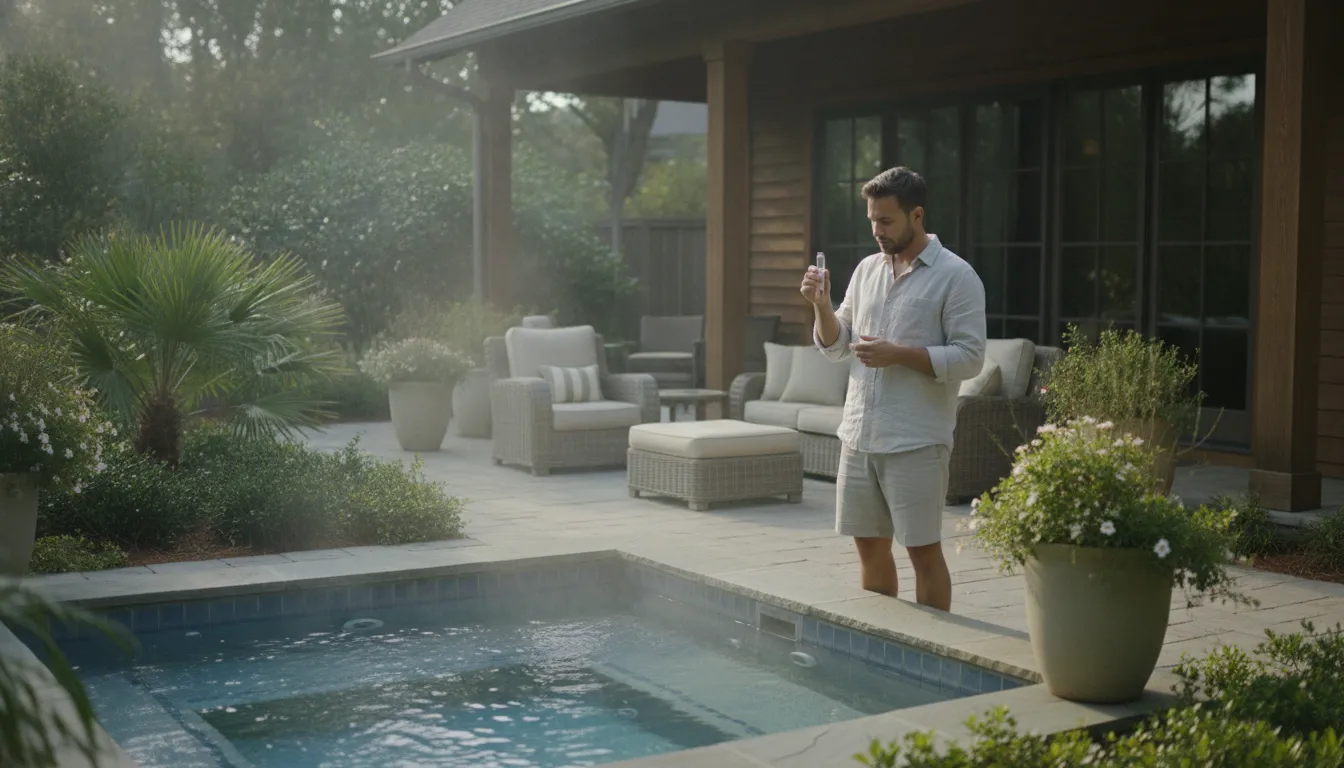
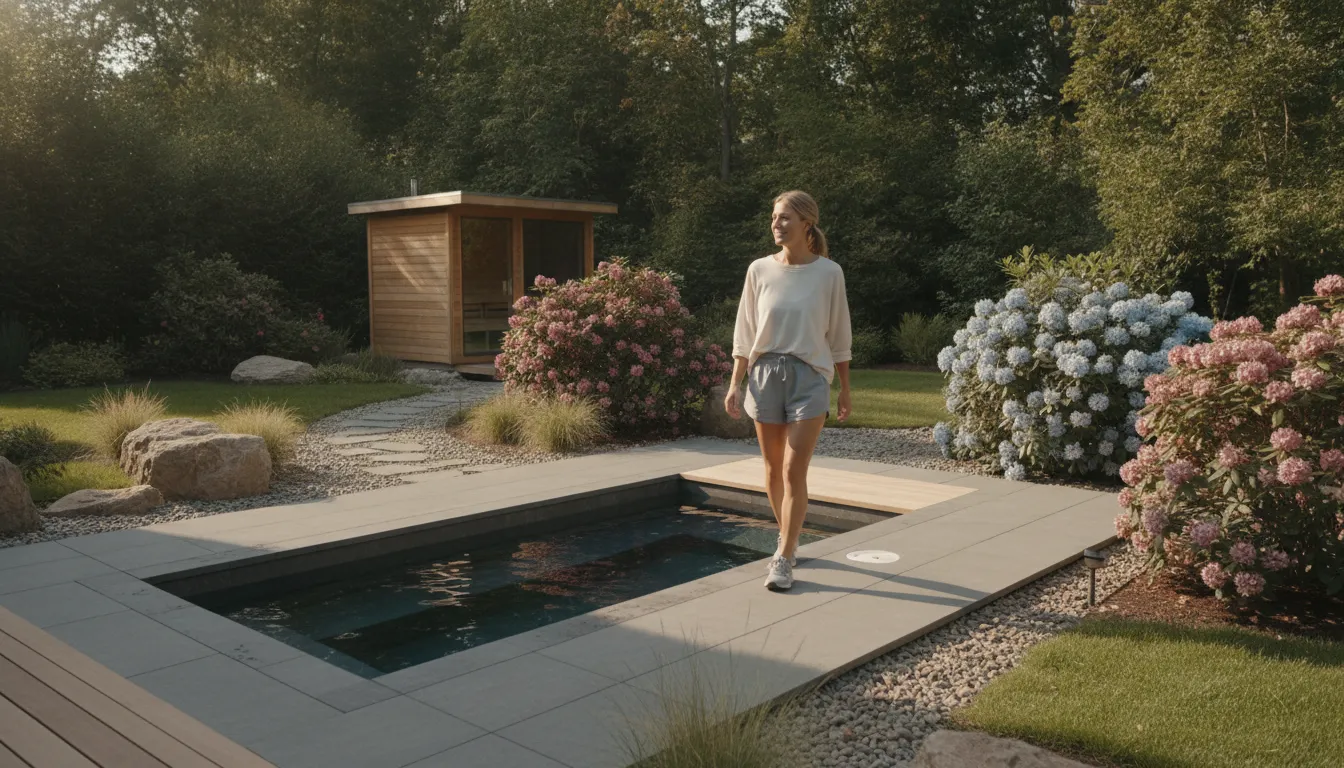
Placing a multi-ton spa on soft backyard soil will eventually crack its acrylic shell. Planning the site carefully protects your investment and prepares your home for a lifetime of daily relaxation.
Successful hot tub installation preparation needs choosing a flat, level site, pouring a solid foundation, and arranging proper electrical service. Homeowners must select a spot with clear delivery access. You then need to install a reinforced concrete pad at least four inches thick to support the heavy weight of a filled spa. A licensed electrician must install a dedicated 220-volt to 240-volt electrical circuit. This setup needs a GFCI disconnect box at least five feet from the water. Finally, you must check local Carolina building codes for safety fence and drainage rules. Completing these physical preparation steps before your scheduled delivery day prevents costly backyard delays and ensures your new spa is safe to use.
Schedule a free home consultation to assess your hot tub site
Knowing where to begin with these setup steps can feel tough for many Carolina homeowners. In our experience, your first decision should be which spot to choose. Finding the perfect area for daily use and easy access sets up everything that follows.
Choose the Right Spot for Your Hot Tub
Finding the perfect place for your new spa is more than just measuring space. It shapes how often you use it and how much you enjoy it. A good site makes your daily routine feel smooth, while a poor choice can leave your spa unused. You must balance the view, wind, and daily path to the water before you begin any work.
Proximity to your home
Think about how you will walk to the spa on a cold winter night. If the hot tub sits too far from your back door, you may avoid using it. We recommend keeping the tub within fifteen to twenty feet of your home. This short path makes a quick soak easy to enjoy. It also simplifies your plumbing and electrical runs during site setup.
You also need to think about how you will use the space. Some people want a quiet zone for recovery and peaceful mornings. Others want to host friends and family. You can look at our hot tub gallery to see how other local owners place their spas. Matching the layout to your lifestyle is the key to enjoying your spa for years.
Sun, shade, and privacy
Your spa should feel like a private retreat. Check the view from your neighbors’ windows and yard. You can block these sightlines with high plants, wood fences, or custom shade structures. If you want year round use, look into hot tub pergola planning to find ways to add privacy and shade. A smart shelter protects you from the summer sun while keeping the space open.
Wind is another key factor for Carolina yards. Cold winter winds can sweep heat right off the water and make your neck cold. Placing your spa near a wall or solid fence can block the wind. Make sure to choose a spot that catches the sun when you want it, but offers shade during the hot afternoons.
Ground level and utility access
You must place your hot tub on flat, level ground that can handle the load. A full spa can weigh several thousand pounds once you add water and people. Placing this massive weight on weak or soft soil can cause the spa to sink or crack. Experts check the soil bearing capacity to ensure the ground is stable enough. If the soil shifts under the load, it can ruin your spa shell.
Finally, keep water and power nearby. You will need a water source to fill and top off the tub. You also need a direct path to your home electrical panel. We will help you assess these needs when we first visit your home. Planning these details early keeps your project on track.
Hot Tub Foundation Options
Choosing the right base is a key step in your hot tub installation preparation. A solid base keeps the spa level and prevents damage. You must choose a surface that can support the full weight of the spa once it is filled. This choice affects the long-term safety of your backyard space.
Structural weight limits
Hot tubs are heavy even when they are empty. A standard spa weighs about 500 to 1,000 pounds before you add water. Once you fill the tub, the total weight can rise fast to 3,000 to 5,000 pounds. Some larger spas can even weigh between 4,000 and 8,000 pounds with water and people inside.
Because of this load, you need a surface that can support at least 100 pounds per square foot. Standard dirt or grass yards cannot hold this weight and will sink.
Any shallow base design must account for both dead loads and live loads. Load studies from Union College research show how these forces act on soil. The dead load is the dry weight of the hot tub. The live load is the weight of the water and the people who use the spa.
If your base cannot support these loads, the ground will shift over time. This shifting can crack the shell and void your warranty.
Types of base materials
You have several options when choosing a base. A concrete slab is the best choice for most backyards. It offers the most stable and flat surface. Other common options include gravel bases and plastic spa pads.
Each material has distinct trade-offs for price and effort. The table below compares the main options for your yard.
| Foundation | Best for | Pros | Cons | Watch out |
|---|---|---|---|---|
| Concrete Pad | Long-term use | Strong and flat | High setup cost | Must cure for one week |
| Paver Base | Patios and paths | Looks clean and neat | Blocks can shift | Needs flat soil |
| Deck Support | Decks and porches | Close to the house | Needs extra framing | Must check weight load |
| Gravel Pad | Fast setups | Drains water well | Hard to keep flat | Needs crushed stone |
For most homes, a concrete pad is the best choice because it handles the weight best. You should pour a 4-inch reinforced concrete pad that extends at least 6 inches beyond the spa footprint.
This gives you a flat, clean surface that will not settle or crack under pressure. It also makes it easy to keep the ground around the spa clean.
Deck support and safety
Putting a hot tub on a deck requires extra planning. You cannot place a heavy spa on a standard deck without adding support. Most home decks are only built to hold 30 to 40 pounds per square foot.
You must work with a skilled builder to strengthen the frame before the tub arrives. They will add extra posts and joists to handle the weight.
You should also think about the materials you use for the deck. You can read our guide on deck support for hot tubs to learn more about options. Composite and wood decks both require strong footings beneath the frame.
Placing a spa on a weak deck is dangerous. Proper structural prep protects your home and your guests.
Does Your Electrical Panel Have Enough Capacity for a Hot Tub?
Getting your backyard ready for a spa needs proper planning. While site selection and a strong base are key steps, electrical readiness is a critical part of your hot tub installation preparation. Standard household outlets cannot support the power needs of a full-size outdoor spa. Most of these units need a dedicated 220-volt or 240-volt electrical circuit to run the heater and jets. Planning this step early prevents delays during your hot tub installation timeline.
Dedicated circuit requirements
A full-size spa needs a dedicated line to deliver steady power. This circuit must run straight from your home service panel to a local shut-off box near the spa. Depending on the size of your heater and pumps, the line will need a 40-amp to 60-amp breaker. If the line is too small, the breaker will trip when you turn on the jets. Running a new high-voltage line is not a DIY task.
Your electrician will often need to install these key parts:
- A dedicated two-pole breaker in your main home electrical panel.
- A weather-proof outdoor GFCI disconnect box near the spa.
- Heavy-gauge copper wiring rated for outdoor use inside protective conduit.
This electrical work must be done by a licensed electrician to keep your home safe. It also makes sure that the setup meets all local building codes. You should budget about $500 to $1,500 for this electrical work apart from the cost of the spa. The exact price depends on how far your panel is from the spa site. At Fun Outdoor Living, we manage this licensed electrical work for you to make the job simple.
Electrical panel capacity
Before adding a heavy load, you must check your home electrical panel. The panel must have enough open space to fit a new double-pole breaker. It must also have enough room to support the new demand. Many older homes have 100-amp panels that may already be near their limits. If your panel is full, you may need a sub-panel or a full service upgrade.
An expert can help you find out if your current panel can handle the extra load. During your site feasibility check, our team can look at your setup. We can help you decide if you need a sub-panel or if your main panel has enough space. Checking this early makes sure you have a smooth install without any power issues.
GFCI disconnect placement and safety
Safety is the most vital part of any wet spot. National codes require a Ground Fault Circuit Interrupter, or GFCI, for all spa setups. This special breaker shuts off power at once if it finds a current leak. The GFCI disconnect box must be mounted within sight of the spa. But it must be placed at least 5 feet away from the water edge so you cannot touch it while in the spa.
Local safety codes also apply to public and semi-public spa setups in the Carolinas. For example, North Carolina rules under the NC Administrative Code govern spa water safety, drainage, and circulation systems. While these rules target public sites, following high safety standards protects every home project too. Our expert team makes sure that every step of your layout is safe, legal, and built to last.
Plan for Delivery Access and Gate Clearance
Getting your yard ready is a key part of your hot tub installation preparation. Structural safety involves soil bearing factors, as shown in research from Union College. But delivery day is mostly about practical space and path prep. Our team at Fun Outdoor Living will help you look at these details. We plan your delivery route during our initial site visit, so you do not have to worry.
Measuring the delivery path
The route from the street to your yard is the most important path to check before delivery day. Spas are big and heavy. Our crew needs a clear, wide path to move them safely. Knowing your path helps us set a realistic hot tub installation timeline for your project.
Most spas are moved on their side using a special wheeled cart. This means a spa that is eight feet wide will need at least eight feet of overhead clearance as it travels down your path. This also means the path only needs to be about three feet wide. But you must look out for roof eaves, gutters, and low tree limbs that could block the cart. If the path has sharp turns, make sure there is enough room to pivot the long spa without getting stuck.
Steps for a smooth delivery
To ensure a smooth delivery on the big day, follow this sequence of key steps:
- First, measure the width of your gates and doorways. Compare these to the size of the crated spa to make sure it will fit.
- Next, clear the path from the street or gate to the foundation pad. Remove tree branches, steps, or narrow pinch points, noting how a spa tilted on its side will turn corners.
- Then, check the overhead path for low-hanging branches or roofs. This matters if you put your spa under a balcony or do some hot tub pergola planning.
- After that, work with our team to schedule the delivery crew. For hard spots, we can even get a crane lift to place the spa safely.
- Finally, leave 18 to 24 inches of clear space around the service panels. This is required for future upkeep and to access the service hatch.
Long term service clearance
Once the spa is in place, you still need room to work around it. This space is vital. Leaving enough room is not just for delivery day, but for future service too. You will need a gap of 18 to 24 inches on all sides of the cabinet. This ensures our team can reach the pumps and heater when doing routine care.
Do You Need Permits for a Hot Tub in the Carolinas?
Preparing your yard for a new spa means looking at local rules and soil needs. You must think about where the water goes. Proper hot tub installation preparation keeps your home safe and dry. It is not wise to let hundreds of gallons of water drain onto open grass or near your home’s foundation.
Safe Spa Drainage Planning
When you drain your spa for cleaning, you must direct the water away from slopes and foundations. Sloped yards can channel runoff toward your home or a neighbor’s property, which can cause wet soil and basement leaks. Instead, direct the drain line toward a proper runoff area or storm sewer system. This step is a vital part of your hot tub installation timeline because it prevents land damage before delivery day.
Carolina Spa Safety Codes
Both North and South Carolina have strict safety rules for spas and hot tubs. In North Carolina, the state’s administrative code has clear design rules for safe water flow. Under NC Admin Code 15A NCAC 18A .2532, any spa drain must be unblockable to prevent suction accidents. If a single unblockable drain is not used, the system must have at least two outlets joined by a T-pipe to keep water flowing safely.
The state code also mandates proper water filtration and clean flow. Your spa setup should have at least one surface skimmer for every 100 square feet of water surface area. The inlets and outlets must produce an even circulation of water. This steady flow is needed to maintain a uniform disinfectant level across the entire spa so your water stays clean.
Building Permits and Fencing
Local towns in the Carolinas have their own rules for hot tub set up. Cities like Charlotte, Matthews, and Winston-Salem often ask for a building permit before you begin. You will also need to check local codes if you live near Lake Norman in Cornelius or across the state line in Rock Hill. Most of these towns need a barrier or fence around the yard. These fences must have self-closing gates to block young kids from getting in without a parent.
Checking municipal codes can feel tough, but you do not have to do it alone. With over 4,000 installations completed, our team knows local rules inside and out. We can help you navigate local permit rules and select the right spot for your build. View our hot tub gallery to see how we build safe, beautiful setups. Reach out to us for a free site check before you start your project.
How Much Does Hot Tub Installation Preparation Cost?
Getting a new spa is fun, but you must plan for the work beforehand. The total cost of hot tub installation preparation depends on what your yard needs before delivery. You should budget for a strong base, wiring work, and local building permits. Knowing these fees early helps you plan for the setup.
Backyard foundation options
Every spa needs a flat, strong base that can support a heavy load. Standard rules show that you must plan for both empty and filled weight on a shallow foundation. Builders use math from Union College structural engineering guidelines to ensure your base can hold this weight. A full spa can weigh several thousand pounds, so a weak base will crack.
A flat concrete pad is the best choice for most yards. Pouring a pad that is four inches thick costs about five to ten dollars per square foot. Paver bases are a popular choice, but they need expert grading to prevent shifting. Shifting can cause stress on the spa shell and lead to leaks or cracks over time. Simple stone dust bases are cheaper but may not last as long.
Electrical service panel upgrades
Most full-size spas need their own 240-volt circuit. This setup must use a special safety switch placed near the water. Hiring a licensed electrician to run this line usually costs $500 to $1,500. The final price depends on how far your spa sits from the main panel. If the wire run is long, the cost of supplies will rise.
If your home panel is full, you may need a new subpanel. Adding a subpanel can add a few hundred dollars to your project costs. You may also need small site-prep materials like PVC pipes and metal straps to hold the wires in place. Always get a clear cost quote before you start any wiring work.
Delivery, permits, and planning
Standard delivery is often free, but hard yards need extra tools. If a crane is needed to lift the tub over a fence or house, expect to pay more. Crane rentals can add several hundred dollars to your setup bill. You must also check local rules for safety fences and self-closing gates to secure the area.
Local permits and town inspection fees can add $50 to $200. This site preparation is the main driver of your overall hot tub installation timeline. Because every yard has unique challenges, a free home consultation will give you an exact price. In the next section, we answer common questions to help you total these costs.
Request your free home consultation to start your hot tub installation preparation
Frequently Asked Questions
Can I put a hot tub on grass or dirt?
No, you should never place a hot tub right on grass or bare dirt. A standard hot tub is very heavy, often weighing from 500 to 1,000 pounds when empty. When you fill it with water and guests, the total weight can reach several thousand pounds. The ground will sink and shift, which can crack the spa shell. You must use a solid base like concrete.
How thick does a hot tub concrete pad need to be?
Your concrete pad must be at least four inches thick to support the spa safely. It is best to use strong reinforced concrete that extends at least six inches past the spa footprint. Since a full hot tub can weigh several tons, a thin pad can crack and make the tub tilt. A level base keeps the frame from bending.
Do I need a permit to install a hot tub in North Carolina?
Yes, you often need a permit to install a hot tub in North Carolina. Local codes require safety fences or locked covers to keep children safe. State rules also govern plumbing safety, such as drains that cannot block under North Carolina law. You should check with your local town or county office before you start the work.
How big does my gate need to be for hot tub delivery?
Your gate should be at least three to four feet wide to let the delivery crew pass. You must measure the width and height of your new hot tub first. Then, compare those numbers to the space along your side yard and path. Make sure to clear away any low tree limbs, steps, or lights that block the way.
Ready to start your Carolina hot tub installation?
Putting off your backyard site prep can delay your hot tub setup by weeks, keeping you from using your new home spa on schedule. Checking your ground slope, electrical needs, and access path today ensures your delivery and setup go smoothly without any costly or painful delays. Working with our local, in-house team makes the whole process simple since we handle everything from site design to the final hookup.
Ready to begin your backyard setup? You can schedule a free home consultation today to assess your site for a hot tub install and plan your backyard layout. Our expert local team will help you prepare your space so your new spa fits well and runs great from day one.