Choosing an outdoor kitchen contractor Charlotte NC homeowners can trust is not just about finding someone who can install a grill. It is about choosing a team that understands how your backyard will be used, how water moves across the site. How gas and electrical work should be coordinated, and how every decision affects the way the space feels years from now.
View our outdoor kitchen gallery or book a free home consultation when you are ready to talk through your space.
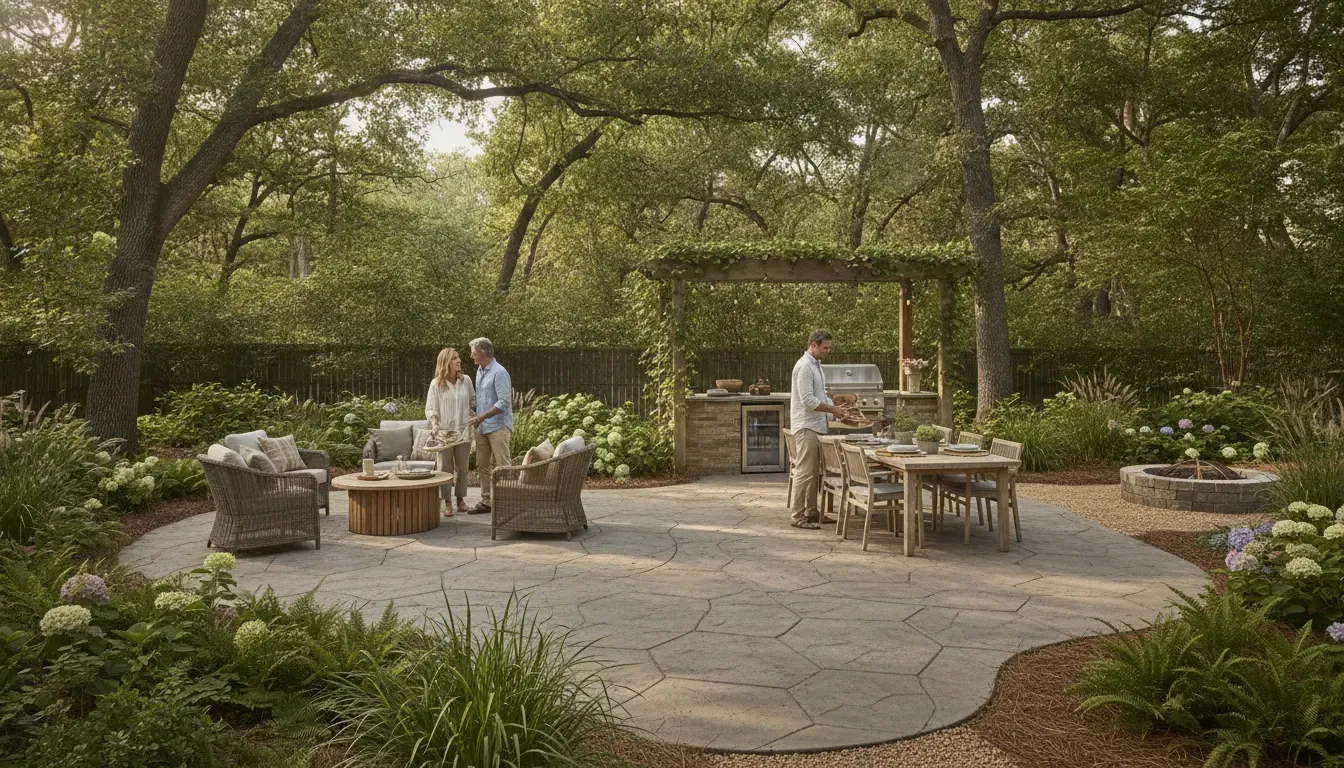
For homeowners in Charlotte, Matthews, and around Lake Norman, an outdoor kitchen often becomes the center of weekend meals, quiet evenings, and easy gatherings. The right plan makes those moments feel natural. The wrong plan creates handoffs, delays, drainage issues, and questions about who is responsible when something needs attention.
This guide gives you a practical way to evaluate builders before you commit. It focuses on the questions that protect your home, your investment, and the everyday experience you are hoping to create.
Outdoor Kitchen Contractor Charlotte NC: Start With Accountability
The first question is not only, “Can this company build an outdoor kitchen?” A better question is. “Who is accountable for the whole project?” Outdoor kitchens sit at the intersection of design, construction, utilities, appliances, drainage, finish materials, and long-term service. When those responsibilities are split across disconnected trades, the homeowner often becomes the project manager by default.
That can feel fine at the beginning, when the drawings look exciting and the appliance list is still simple. The risk appears later. A cabinet layout may not leave enough space for a gas line. A counter overhang may conflict with seating. A drainage plan may work on paper but send water toward the wrong part of the patio. One trade may be waiting on another, while no one clearly owns the schedule.
In our experience, the best outdoor kitchen projects begin with one clear point of responsibility. Homeowners should know who is designing the space, who is coordinating utilities, who is checking site conditions. Who is pulling permits when needed, and who will answer the phone after installation. That clarity matters more than a polished rendering alone.
Why this matters in Charlotte-area backyards
Charlotte homes vary widely. Some yards slope toward wooded areas. Some patios sit close to the house. Some neighborhoods have HOA requirements or access limits. Matthews, Lake Norman, and surrounding communities can also bring different site and permitting realities. A builder who understands those local conditions can plan with fewer surprises.
Fun Outdoor Living’s in-house design/build model is built around that kind of accountability. Outdoor kitchens are planned, fabricated, and installed through coordinated teams instead of leaving homeowners to manage several unrelated parties. That does not remove every variable from a custom project, but it does make responsibility much clearer.
What should you ask before choosing a builder?
Before you compare proposals, ask questions that reveal how the project will actually be handled. A low number on a proposal may not include the planning, coordination, or service support you will need later. A clear answer is often more valuable than a fast answer.
- Who designs the full outdoor living space? Ask whether the builder is only placing cabinets and appliances or considering traffic flow. Seating, shade, lighting, views, and how the kitchen connects to the rest of the backyard.
- Who handles gas, electrical, and plumbing coordination? Outdoor kitchens often involve utility work. You should know whether those details are managed by one team or handed off to separate trades.
- Who determines whether permits are needed? Many projects involving gas, electrical, plumbing, structural changes, or covered features may require permits. Requirements vary by municipality and scope, so avoid anyone who gives a casual answer without reviewing the project.
- How is drainage planned? Ask how the kitchen base, patio slope, counter placement, and surrounding surfaces will handle heavy rain.
- What materials are built for outdoor use? Cabinets, counters, appliances, fasteners, and finishes should be selected for heat, humidity, pollen, rain, and freeze-thaw changes.
- What happens if something needs service? Ask who stands behind the work after installation and whether the same company can help with future adjustments.
- How will timeline changes be communicated? Custom work can be affected by permitting, site access, weather, and material availability. The issue is not whether variables exist. The issue is how clearly they are managed.
These questions help you move past surface-level sales language. You are looking for evidence of process, accountability, and local experience.
Materials matter more in Charlotte weather
Outdoor kitchen materials need to look good on day one and remain reliable through years of use. In the Charlotte area, that means planning for heat, humidity, summer storms, pollen, and occasional winter temperature swings. Materials that work indoors, or in a mild showroom setting, may not perform the same way outside.
Start with the kitchen structure. Outdoor-rated cabinetry and framing should be chosen for exposure, cleaning, and long-term stability. Countertops should be selected for durability, maintenance expectations, and how they feel in direct sun. Stainless appliances should be built for outdoor use, not simply placed outdoors because they fit the opening.
There are trade-offs. Some stone surfaces have a warmer, more natural look but need more care. Some cabinet systems are easier to clean but have a more modern appearance. A larger grill can be useful for frequent entertaining, but it may change ventilation, counter space, and the way guests move through the area.
Think about routines, not just specifications
The right material choices should support how you actually live. If you cook outside several nights a week, cleaning and storage become more important. If you entertain large groups, counter space and traffic flow matter. If your kitchen is near a pool or spa, surfaces need to handle wet feet, towels, and frequent movement.
This is where a consultative design process helps. Instead of starting with a list of products, a strong team starts with use. How often will you cook? Who gathers there? Do you need refrigeration outside? Will the kitchen be covered? What does maintenance need to feel like for you to use the space often?
If you are still early in budgeting, it may help to read our guide to outdoor kitchen cost in Charlotte, NC. Cost is easier to understand when you can see which decisions change scope and long-term value.
How will the plan handle drainage and site conditions?
Drainage is one of the least glamorous parts of an outdoor kitchen, but it is one of the most important. Water moves across every backyard. A good plan respects that movement before cabinets, counters, and appliances are installed.
Ask how the builder evaluates slope, patio pitch, downspouts, nearby planting beds, and water flow during heavy rain. Ask whether the kitchen base will trap moisture or allow the area to dry properly. Ask how the design changes if the kitchen sits under a roof, near the house, beside a pool, or at the edge of an existing patio.
Small details can make a large difference. A counter that directs water toward a seating area will be frustrating. A cabinet base placed in a low spot can collect moisture. A grill island that blocks natural flow across a patio can create puddling. None of these issues feel dramatic during design, but they affect daily use.
Site access also shapes the build
Charlotte-area neighborhoods often have fences, slopes, narrow side yards, mature landscaping, or HOA limitations. Those conditions influence how materials arrive, how crews work, and how long certain phases may take. A thoughtful builder will discuss these realities before the schedule is set.
Good planning does not mean every project is simple. It means the team is looking for problems while they are still easy to solve. That is the difference between a backyard that feels settled and one that feels patched together.
In-house design/build versus separate trades
Outdoor kitchens require more coordination than many homeowners expect. The design must work visually, but it also has to work structurally and mechanically. That is why the team structure matters. A fragmented approach can succeed when every trade communicates well, but it leaves more room for handoff problems.
An in-house design/build approach reduces that risk by keeping the major decisions under one coordinated process. The homeowner still has choices to make, but those choices are guided through a clearer system.
| Project area | Separate trades | In-house design/build team |
|---|---|---|
| Design responsibility | Design may be separate from installation. | Design is shaped by how the space will actually be built. |
| Utility coordination | Gas, electric, and plumbing may require extra homeowner coordination. | Utility needs are considered earlier in the planning process. |
| Permitting | Responsibility can be unclear if several parties are involved. | The team can identify permitting needs based on scope and location. |
| Schedule accountability | Delays can be blamed on another trade. | One coordinated team owns communication and next steps. |
| Warranty and service | Homeowners may need to determine which trade is responsible. | Accountability is easier to understand after installation. |
| Homeowner experience | The homeowner may become the coordinator. | The homeowner has a clearer point of contact. |
This is the reason Fun Outdoor Living emphasizes integrated planning. For a homeowner, the benefit is not just convenience. It is confidence that the person designing the kitchen understands how it will be built, serviced, and used over time.
If you want to compare this article with broader backyard planning, read our guide to choosing an outdoor living contractor in Charlotte.
Permits, utilities, and timelines should be discussed early
Permits are not the most exciting part of an outdoor kitchen conversation, but they can shape the project. Gas, electrical, plumbing, structural work, roof structures, and certain site changes may trigger permit requirements. The exact answer depends on the scope of work and the local jurisdiction.
A responsible builder will not treat permits as an afterthought. They will explain what may be required, what information is needed, and how permitting could affect the schedule. That conversation should happen before the homeowner is emotionally attached to a timeline.
Utilities deserve the same level of care. A grill, refrigerator, sink, lighting, outlets, heaters, or entertainment features all create practical questions. Where will lines run? What access is available? Is the panel capacity sufficient? Will the layout still make sense after those requirements are considered?
Timelines need context
Be cautious with timeline promises that sound too simple. A custom outdoor kitchen may be affected by design revisions, permitting, fabrication, weather, site access. Utility work, inspections, and whether the kitchen is part of a larger patio, deck, or outdoor living project. A clear process matters more than a generic number.
Ask how updates are shared. Ask what happens if a permit takes longer than expected. Ask whether materials are ordered before or after final approval. These questions are not pessimistic. They help you understand how the team manages real-world work.
How to compare proposals without focusing only on price
Price matters. Homeowners deserve clear information about what they are buying. The mistake is comparing proposals only by the final number without comparing what is included.
One proposal may include design, fabrication, utility coordination, and site planning. Another may only include a basic grill island, with several items listed as allowances or exclusions. One may use outdoor-rated materials throughout. Another may rely on products that look similar but have different long-term maintenance needs.
When you compare proposals, look for the following details:
- Specific materials for cabinets, counters, appliances, and finishes.
- Clear explanation of utility responsibilities.
- Permit assumptions and who manages them.
- Drainage and site preparation notes.
- Warranty and service expectations.
- What is excluded, estimated, or dependent on site conditions.
A strong proposal should reduce uncertainty. It should help you understand why costs change and what decisions matter most. If the proposal is vague, ask for clarification before you sign. If the explanation feels rushed, that may tell you something about the communication you can expect during the build.
When homeowners understand the trade-offs, decisions become easier and far more confident. That is the goal. Not pressure. Clarity.
Frequently asked questions
What should I ask an outdoor kitchen contractor before hiring?
Ask who handles design, permits, gas, electrical, drainage, cabinet construction, appliance placement, warranty service, and timeline coordination. You want to know who is accountable for the whole project, not just one phase.
Do outdoor kitchens need permits in Charlotte NC?
Some outdoor kitchens may need permits, especially when gas, electrical, plumbing, structural work, or covered features are involved. Requirements vary by municipality and project scope, so the builder should review your specific plan.
What materials work best for outdoor kitchens in North Carolina?
Outdoor-rated cabinetry, durable counters, stainless appliances built for exterior use, proper framing, and drainage-aware details tend to perform best. The right choice depends on exposure, cleaning expectations, style, and how often you plan to use the space.
How long does it take to build an outdoor kitchen?
Timelines depend on design complexity, permitting, utility work, material availability, weather, site access, and whether the kitchen is part of a larger outdoor living project. A responsible team will explain the variables instead of promising a one-size-fits-all timeline.
Ready to plan your Charlotte outdoor kitchen?
If you are comparing builders, you do not have to have every answer yet. That is part of the process. Bring your questions, your concerns, and the way you want your backyard to feel. Our role is to help you understand what makes sense for your home.
Fun Outdoor Living brings design, fabrication, installation, and long-term accountability together through one local team. When you are ready, view the outdoor kitchen gallery and book a free home consultation to talk through your next step.