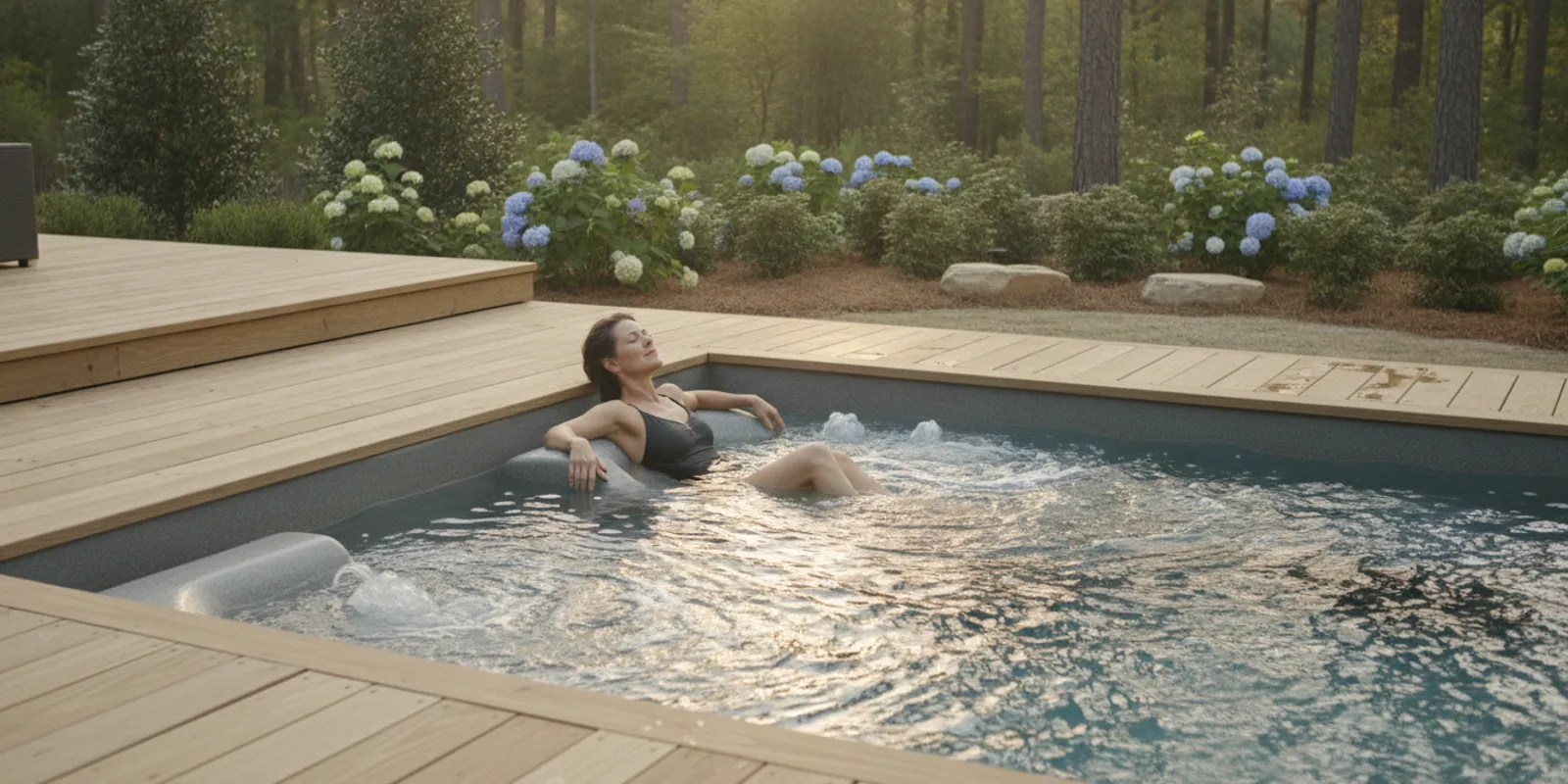
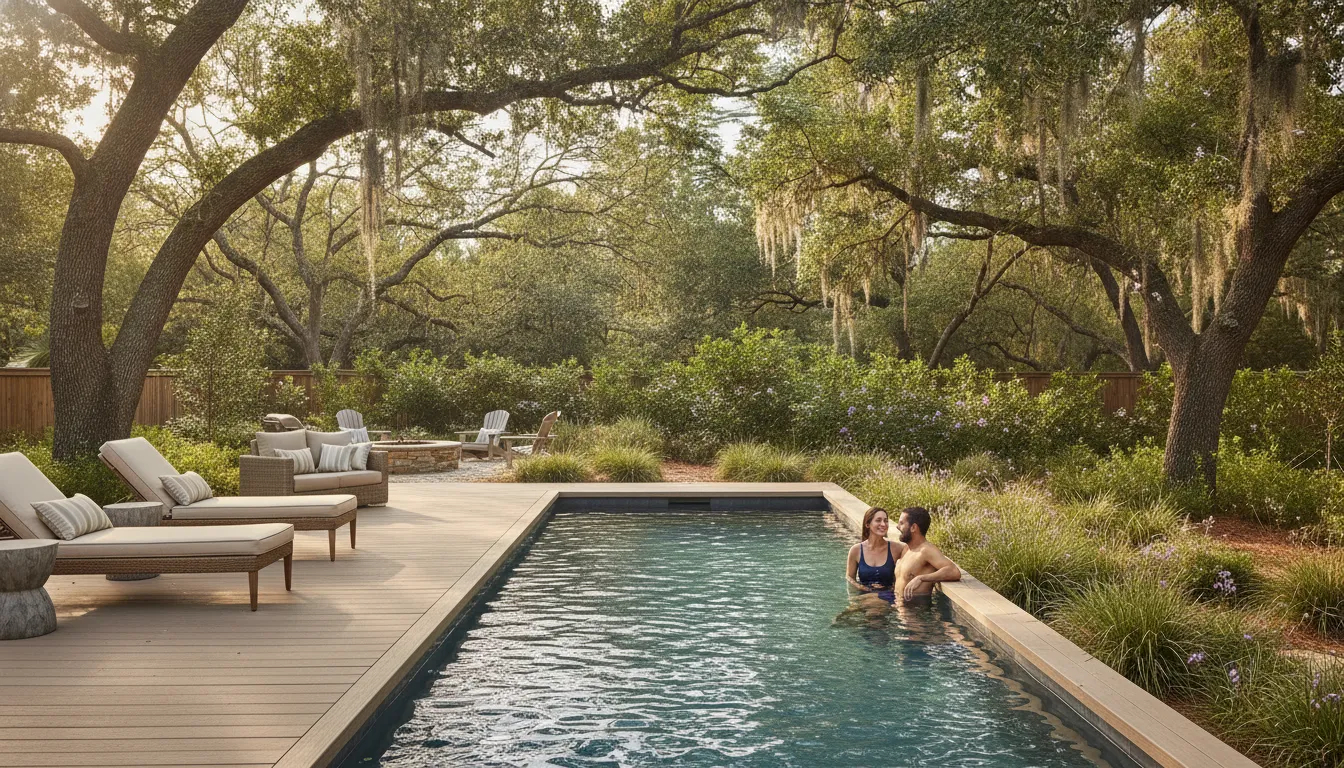
The best swim spas for hydrotherapy are not defined by a single jet count or a particular brand. The right fit depends on how you plan to use the seats, where the water reaches your body, how the jets feel, and how easily you can enter and maintain the spa. A careful, hands-on comparison can help you focus on comfort and routine rather than a long list of specifications.
What does hydrotherapy mean in a swim spa?
In a swim spa, hydrotherapy generally means relaxing or moving in warm water while water jets create a targeted massage sensation. It is a personal comfort feature, not a medical treatment. People may use a spa to unwind, add a warm-water ritual to the day, or enjoy gentle movement in the water. Experiences vary, so it is worth trying the seat and jet combination before deciding that a model is right for you.
Some swim spas give more space to swimming or exercise, while others include dedicated seats and jets. Models and configurations differ. Start with your priorities: Will you mainly sit and relax? Do you want room to stretch or move? Will more than one person use the spa at once? Will you use it for both exercise and relaxation? Those answers shape which features deserve the closest attention.
Think of “best” as best for your intended use, available space, and comfort preferences. A model with a long list of features may not be a better choice if its seating positions do not feel good to you or if the layout makes routine entry awkward.
Which features should you compare first?
Use the following comparison as a starting point. It is not a scorecard that automatically identifies a winner. Instead, it helps you turn product specifications into practical questions about how a swim spa could fit your household.
| Feature | What to examine | Why it matters to your choice |
|---|---|---|
| Seat layout | Seat shapes, heights, legroom, and how many usable positions there are | Comfort depends on how your body fits each seat, not the seat count alone. |
| Water depth | Water level at each seat and how it relates to your height | Depth changes where the water reaches you and how supported you feel. |
| Jet placement | Locations, directions, and the feel of the jets from each position | Targeting and intensity are personal; a demo lets you judge the sensation. |
| Exercise current | Whether the model has a current system, and how it affects the seating zone | Exercise features may influence layout and how you will divide the spa between activities. |
| Entry and exit | Steps, handholds, clear deck space, and the approach to the access panel | A comfortable routine includes getting in, getting out, and reaching service areas. |
| Care and support | Water-care routine, service access, and who can help with questions or repairs | Regular care and support are part of owning and using the spa over time. |
How should you evaluate seats and water depth?
Seat names and diagrams are useful for narrowing choices, but they cannot show exactly how a seat will feel to you. Sit in each available position during a wet test if possible. Notice whether you can settle into the seat naturally, whether you feel supported, and whether your legs have room to rest. If you are comparing with another person, try the same positions and talk through what feels different.
Water depth works together with seat shape. It determines how much of your body is under water in a given position. A deeper seat may feel different from a shallower perch, and one model may have several seating heights. Check where the water reaches when you are sitting normally. Avoid assuming that a photograph or a stated overall spa depth tells the whole story: the contour of the seat and your own height change the experience.
Ask to compare seats with different positions rather than choosing based only on the most prominent lounge or captain’s chair. Look for a place where you can remain comfortable for the length of a normal visit. Think about how you will shift positions, whether you want to face another person, and whether the seating layout suits a quiet solo soak as well as shared use.
Bring a short list of the body areas or seating positions you are trying to evaluate. Keep the conversation about comfort and preference, not promised outcomes. If a health condition affects your use of warm water or jets, consult a qualified healthcare professional for personal guidance before use.
What should you look for in jet placement and feel?
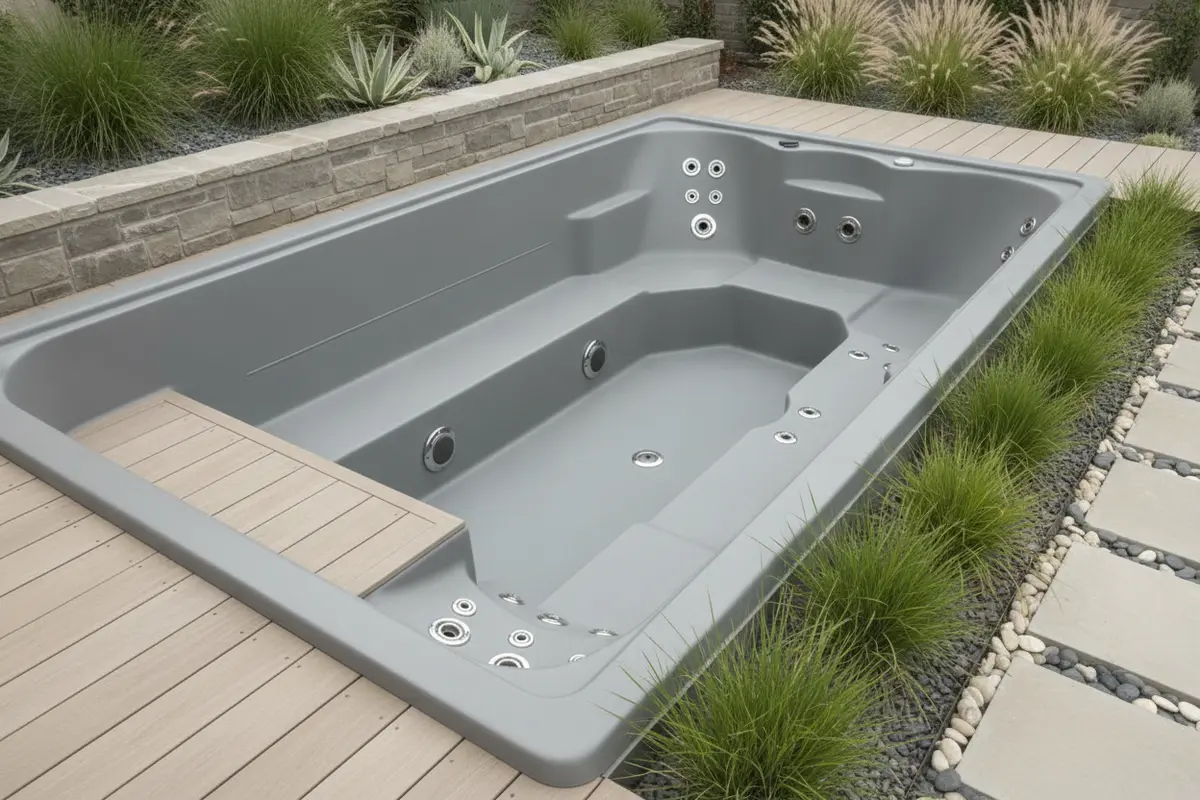
Jet count by itself is a poor shortcut for choosing a hydrotherapy setup. Where the jets are placed, how they feel from the seat, and whether you can adjust your position all matter. During a demonstration, try each seating location and notice whether the water flow feels comfortable to you. Ask whether the jet experience or water flow can be adjusted, and what controls are available on the model you are considering.
Look at the relationship between the jets and the seat. A jet may be visible in a product image but still feel different once you are sitting in the water. Try moving slightly forward or back and see how the sensation changes. If the spa is intended for two or more regular users, compare reactions: the same jet placement may feel pleasant to one person and too intense or poorly aligned for another.
Also consider how you will use the swim area alongside the seats. In a combination model, the exercise current, swim lane, steps, and therapy seats share one footprint. Ask how the components are arranged and whether a person can relax in a seat while another uses the exercise area. Do not infer that every configuration supports every activity equally well.
Does an exercise current matter for hydrotherapy?
It matters when you want one spa to serve both movement and relaxation. Some swim spas are designed around a current for swimming or exercise; some layouts also provide dedicated seating. The current system does not automatically make the hydrotherapy seats more comfortable. Treat these as two distinct questions: Does the swimming or exercise experience suit you, and do the seats and jets suit your preferred relaxation routine?
Compare models by trying the functions that matter to you. If movement is a priority, ask for a demonstration of the current and how a swimmer positions themselves. If warm-water seating is the priority, spend time in each seat and assess its water depth and jets. For a household that expects to use both, consider how often each activity will happen and whether the layout makes it practical to switch between them.
Fun Outdoor Living offers swim spa size information and options from 12-foot, 15-foot, 17-foot, and 20-foot sizes. These pages can help you start considering footprint and configuration. Confirm the current details and available options with the showroom before you make a decision.
How do you compare access and the surrounding space?
A spa can feel inviting once you are in it, but the path to and from the water is part of everyday use. Consider how you will approach the spa, where you will leave a towel, and whether the steps and surrounding surface work for your household. Check that the proposed location leaves room to open the access panel and perform routine care. Plan for the complete installation area, not only the waterline footprint.
Entry features should be assessed in context. Ask what steps or handholds are part of the model and what may need to be planned outside it. Think about the route from the house, lighting for evening use, and the surface around the spa when wet. These are practical design questions, not details to leave until delivery.
Measure the intended location and note obstacles such as gates, landscaping, overhead features, and access routes for delivery. A larger swim spa might offer more room for multiple activities, but it also needs a suitable site and access plan. Fun Outdoor Living’s design consultation can help homeowners discuss layout and planning for an outdoor living project.
What questions should you ask about ongoing care?
Hydrotherapy is an experience you may want to repeat, so include routine ownership in your comparison. Ask what water-care steps are recommended for the model, what supplies or monitoring the routine involves, and where to get help if a question comes up. Water-care products and systems vary, so follow the specific manufacturer guidance for the model you select.
- What routine water testing and balancing should I expect?
- Which parts of the spa need regular cleaning or inspection?
- Where are the equipment and service access points?
- Who can I contact for service questions or repairs?
- What should I confirm about delivery, site preparation, and installation?
For general public-health information about recreational water, you can consult the Centers for Disease Control and Prevention. For the selected spa, rely on its owner materials and the manufacturer’s instructions for operation and water care. Fun Outdoor Living also describes its service support and free water analysis on its website.
Support is not a substitute for choosing a layout you enjoy, but it belongs in the decision. Compare what guidance is available after purchase and how you would get help with routine care. A swim spa is a long-term addition to the home, so it is sensible to understand both the pleasant parts of use and the tasks that keep it ready.
How can you make a hands-on comparison useful?
A showroom visit is most useful when you arrive with a plan. Make a simple scorecard for the features that matter most, and use the same criteria for each model. You might rate seat comfort, water depth, jet feel, exercise-current experience, entry, and footprint on a personal scale. The numbers are not objective product ratings; they are a way to remember your own impressions after seeing more than one option.
- Set your priorities. Decide whether relaxation, exercise, shared use, or a blend comes first.
- List the people and activities. Note who expects to use the spa and what each person wants to try.
- Try the actual positions. Sit in the seats and test the jets instead of relying on feature names.
- Ask about the layout. Confirm how seating, exercise space, entry, and service access work together.
- Review the site. Bring measurements and ask what needs to be planned around the spa.
- Confirm care and support. Understand the maintenance routine and where to get model-specific help.
Keep notes in plain language: “seat feels supportive,” “water reaches shoulders,” or “entry feels awkward.” That is more useful than copying a specification sheet without recording what it means to you. Ask for a second look if different household members have different preferences.
Fun Outdoor Living’s Endless Pools swim spa information is one place to review available product options. Where available, arrange a hands-on evaluation before narrowing your choice. Ask the showroom what type of demonstration or wet test can be arranged and which models are available to experience.
How do you narrow the shortlist to models worth trying?
Once you know what matters, create a shortlist instead of comparing every feature on every model. Start with the activities you expect to use most. If two people want warm-water seating while another household member wants exercise space, write down those needs separately. Then compare which models make room for those uses without asking you to compromise on a feature that matters every day.
Footprint is one practical filter. Measure the space you have available, including the route a unit would need to reach its final location. Record the intended position of steps, the side with equipment access, and nearby doors or paths. If your outdoor area is still being planned, discuss the spa as one piece of the layout rather than treating it as an item to fit in later. A 17-foot swim spa example or a 20-foot size example can help you think through scale, but the exact dimensions and requirements should be confirmed for the model under consideration.
Make a short list of non-negotiables and preferences. For instance, you might require a seat that feels comfortable, while treating a particular number of seats as a preference. This distinction keeps a striking specification from outweighing a feature you will notice every time you use the spa. Review available Endless Pools options for an initial look at the product range, then confirm current configurations with the team.
Finally, decide what evidence you need before moving forward. That may mean sitting in multiple seats, trying a current, checking measurements, or asking how access and routine maintenance will work. Keep a note of anything that still needs confirmation. A good comparison does not require you to choose immediately; it gives you a clear set of questions and a reasoned way to decide when the answers are in.
When should you consider a different setup?
A swim spa may be a compelling fit when you want exercise space and a warm-water seating area in one installation. But if hydrotherapy seating is your only priority, compare whether a dedicated hot tub better matches your desired layout. If swimming and exercise are central, pay close attention to the swim area and current rather than focusing only on massage seats. Your best choice is the one that aligns with how you expect to use the space week after week.
Also consider a combination wellness area if you are planning more than one kind of routine. Fun Outdoor Living describes contrast therapy concepts that pair hot and cold experiences. That is a separate planning decision from choosing a swim spa for hydrotherapy; it may involve additional space and equipment. Start by confirming your primary use, then explore additions only if they support a routine you genuinely want.
Avoid making a decision from a single feature, a product photograph, or an assumed health outcome. Compare the physical experience, the site plan, and the practical ownership questions together. If you are uncertain, revisit the models and discuss the trade-offs with a showroom consultant.
Discuss your swim spa layout with a design consultant
Frequently Asked Questions
Can a swim spa provide hydrotherapy and exercise?
Some swim spa configurations combine seating and jets with an area for swimming or exercise. The balance varies by model, so try both the seating and exercise features and confirm that the layout suits your priorities.
Is a higher jet count a reliable way to choose?
No. Jet count alone does not tell you how a seat will feel or whether the jet placement suits you. Compare the seat positions and water flow in person, and consider comfort and adjustability along with the specifications.
How do I know whether the seats fit me?
Try sitting in each available position during a demonstration or wet test. Check seat depth, legroom, support, water level, and how the jets feel. Your own experience is more informative than a seat label or photograph.
Should I ask a healthcare professional before using a swim spa?
If you have a health condition or a concern about warm-water use, consult a qualified healthcare professional for guidance specific to you. A swim spa is not a medical treatment, and product information cannot replace personal medical advice.
By comparing how the seats, water depth, jets, exercise area, access, and care fit your real routine, you can choose a swim spa with confidence in the experience it is designed to provide.