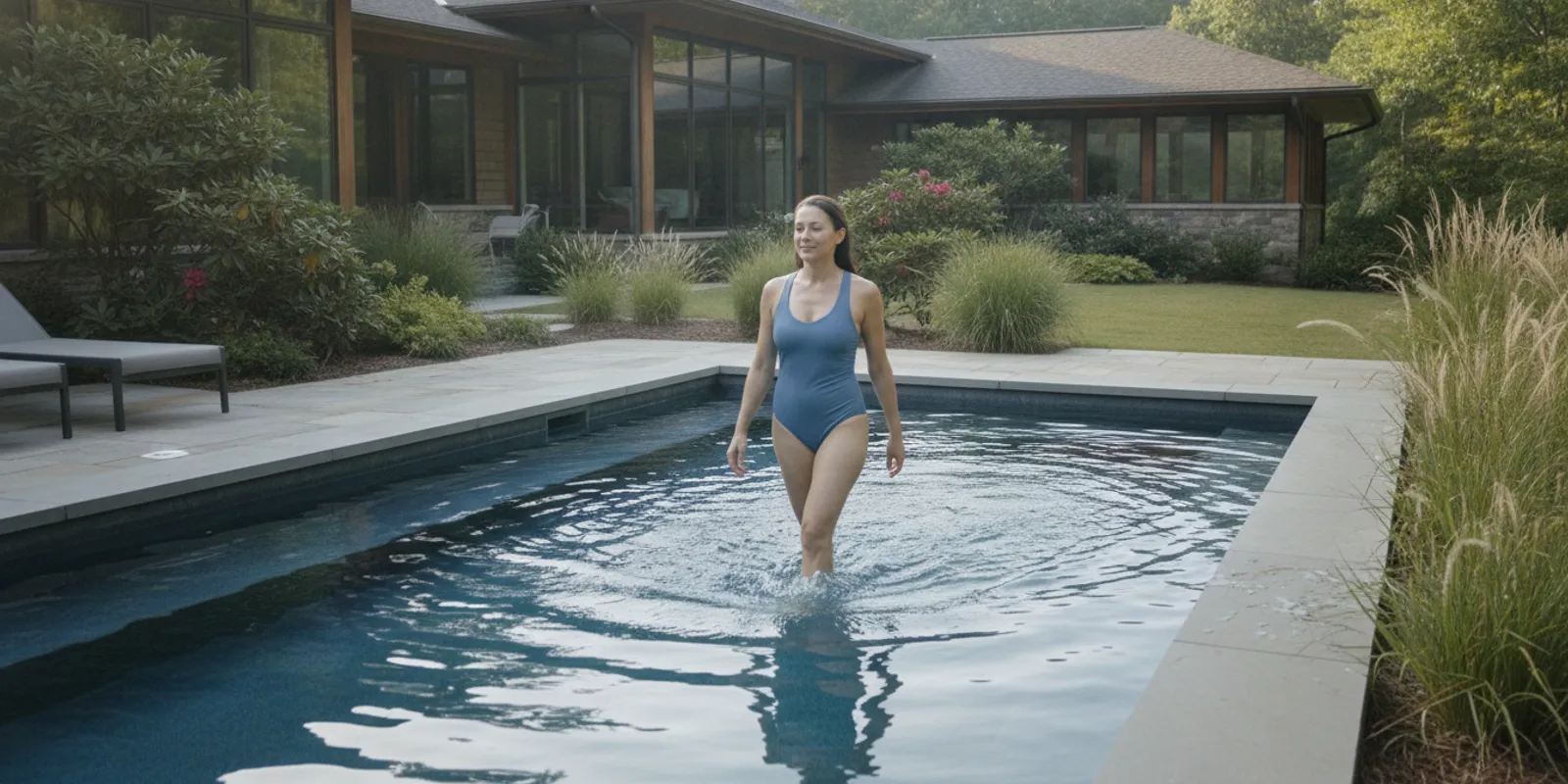
A swim spa gives you a place to move against water resistance without needing a full-size pool. If you are exploring aquatic weight loss exercises in swim spa sessions, focus first on regular movement you can comfortably repeat. Walking, gentle intervals, resistance exercises, and mobility work can make a session varied and approachable. Exercise may support a broader weight-management plan, but no particular workout or product guarantees weight loss. Start at a pace that feels manageable and ask a health professional for guidance if you have a medical concern or are unsure what activity is appropriate.
Why Choose Water Exercise for a Home Workout?
Water changes the feel of movement. It creates resistance as you push or pull through it, while buoyancy changes how your body feels supported. That can make a water-based session a useful alternative for people who prefer low-impact movement or want more variety than walking on land. It does not make every exercise easy or suitable for everyone, and water exercise still requires attention to effort, balance, and fatigue.
A review of aquatic exercise describes activities such as walking in different directions, stretching, and conditioning exercises performed in water. It offers context for the variety of movement possible, not a promise of weight loss from a swim-spa workout. Read the research on aquatic exercise.
A swim spa can offer a compact setting for walking or swimming against a current, along with room for exercises that do not require a long lane. Endless Pools Fitness Systems include models and features intended for aquatic fitness; specific current systems and dimensions vary by model. Review swim spa sizes and compare swim spa series to understand the options before planning a routine.
Aquatic Weight Loss Exercises in Swim Spa: How Do You Start?
Begin with a simple plan, not an all-out challenge. If you are new to exercise, have been inactive, or have a health condition, check with a qualified health professional before beginning. Follow the spa owner’s instructions for safe use, especially for current settings, water depth, entry and exit, and any exercise accessories. Keep a stable handhold nearby if you need one, and do not exercise alone if your health or balance makes that unsafe.
For an initial session, spend a few minutes getting comfortable with the water and finding a pace where you can maintain control. Then try 10 to 15 minutes of easy movement, with rests whenever needed. If that feels comfortable during and after the session, gradually add time or a small amount of effort in later workouts. There is no need to increase duration, current, and exercise difficulty all at once.
- Choose one goal for the session. For example, focus on steady walking, a few resistance movements, or comfortable mobility.
- Start with an easy warm-up. Move gently before increasing your pace.
- Change one variable at a time. Add a few minutes or slightly more effort, not several new demands at once.
- Use recovery days. Rest or choose an easier session if you feel unusually tired or sore.
- Stop if you feel unwell. Leave the water carefully if you feel dizzy, faint, unusually short of breath, or experience pain.
Water can make effort feel different from a land workout. Use a perceived-effort check: at a comfortable level, you should be able to speak in short sentences. If you cannot catch your breath, slow down or rest. This is a practical self-check, not a substitute for personal medical advice.
Before each workout, decide what a successful session means today. It could be finishing ten easy minutes, practicing a steady position against a gentle current, or completing a few controlled arm movements. That small decision helps prevent the common trap of turning every session into a test. If your energy is lower than expected, shorten the plan rather than trying to match a previous workout. If you feel strong, still increase only one element at a time so you can tell how your body responds.
What Swim Spa Exercises Can You Try?
These examples are starting points, not a prescription. Choose movements that feel stable and comfortable in your specific spa. Keep motions controlled rather than forcing range or speed, and use a handrail or other suitable support if needed. If your spa has a current, begin at a low setting and adjust only when you can maintain good control.
1. Water walking in place
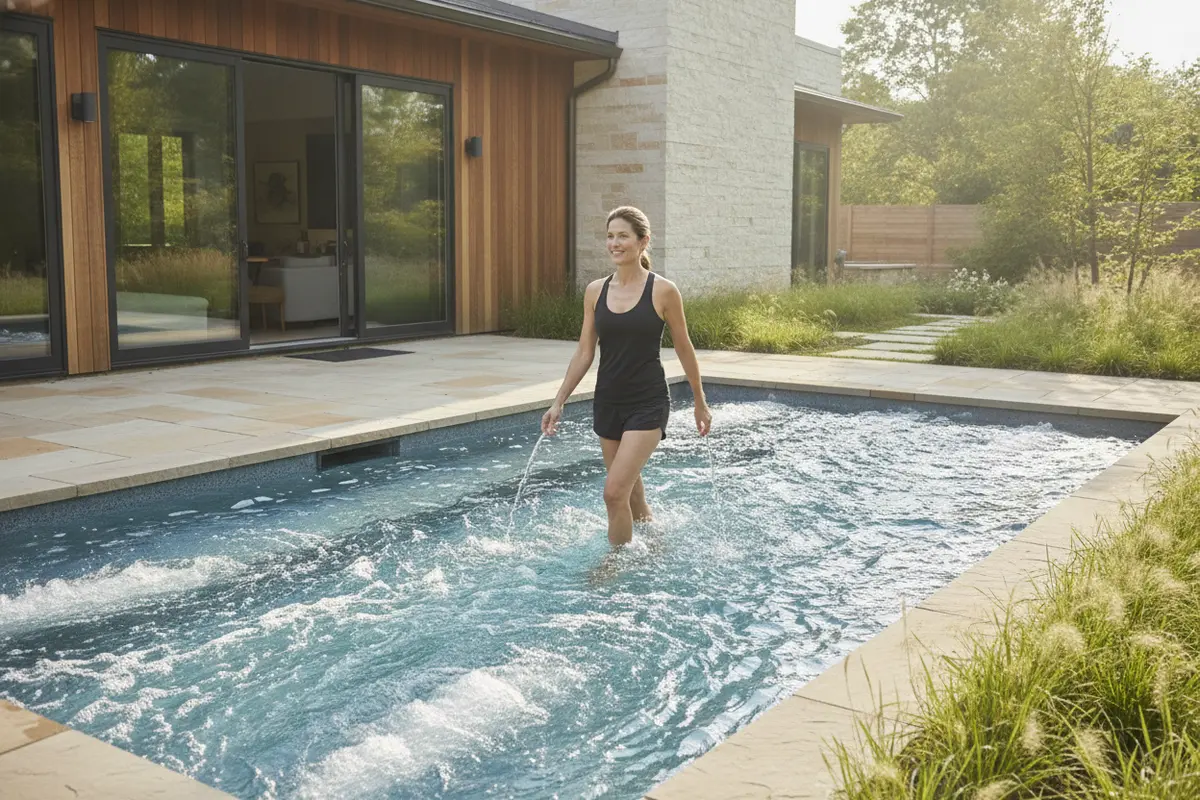
Stand upright with your feet under you and walk in place, lifting each foot comfortably. Let your arms swing naturally. In a current, begin facing the flow at an easy setting and find a position where you can keep a steady stance. Try short bouts of one to three minutes, followed by easy recovery. You can also walk sideways or backward only if your footing and balance remain secure. Avoid sudden turns or exaggerated steps.
Make the movement more useful by choosing a clear focus for each bout. For example, keep your steps small and even in one round, then pay attention to a relaxed arm swing in the next. If the current pushes you out of position, reduce it or move to a calmer area rather than leaning hard against the flow. If you are sharing the spa, allow enough space to move without crossing another person’s path.
2. Gentle current intervals
Once steady walking feels familiar, alternate a short, purposeful effort with an easier interval. For example, walk briskly for 30 seconds, then recover at an easy pace for 60 to 90 seconds. Repeat a few times, and stop the faster intervals if you lose posture or control. The faster portion should feel like a moderate challenge, not a sprint. Adjust the current, your position, or your pace to keep the work manageable.
Intervals do not have to mean high intensity. You can create a modest contrast by walking slightly faster for a brief period and then returning to an easy pace. A beginner could try two or three such rounds after warming up, while a person who already exercises may choose a few more only if that remains comfortable. Keep the recovery longer than the brisk effort at first. The purpose is to practice changing pace while staying in control, not to reach a particular number of rounds.
3. Water-based arm presses
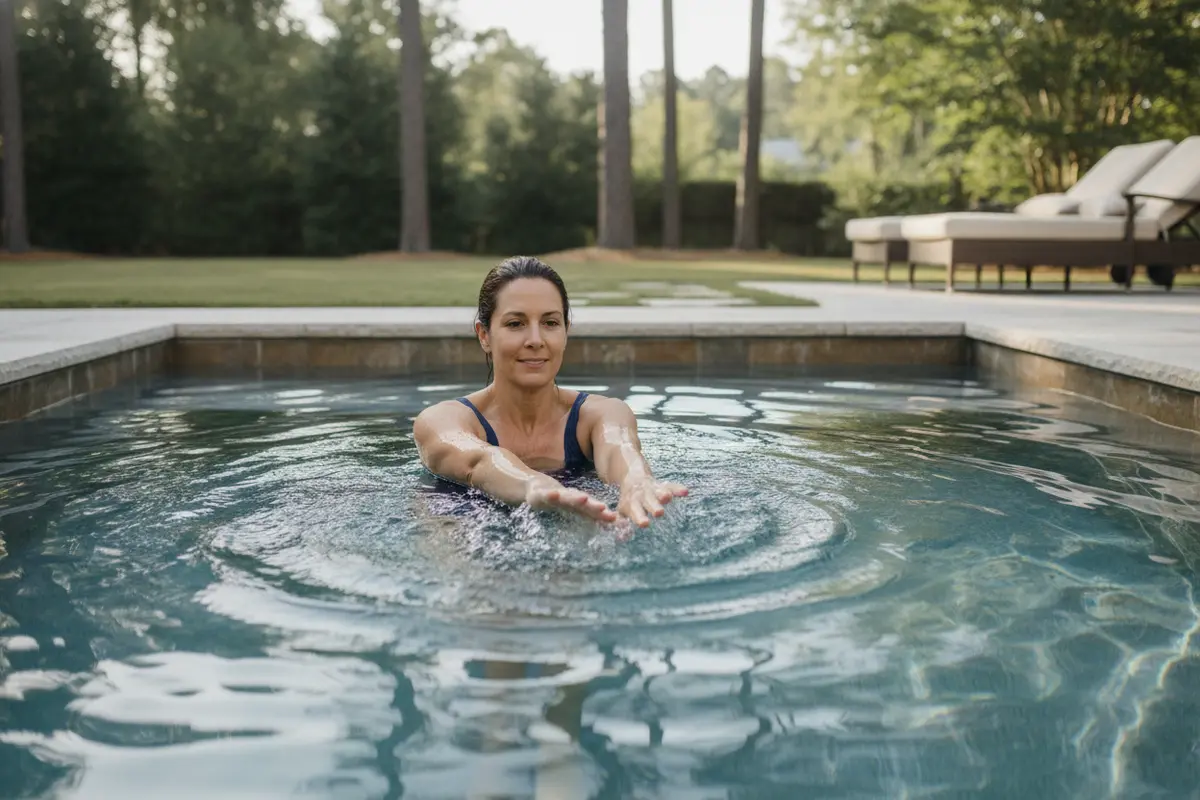
Stand with a comfortable stance and arms in the water. Slowly press your hands forward, then draw them back toward your body. You can also press down through the water with open palms, then return gently. Move with control and keep shoulders relaxed. Begin with a small number of repetitions, such as six to ten, and pause if your shoulders or joints feel uncomfortable. The water itself provides resistance; extra weights are not necessary for a beginner session.
Change the direction of the press rather than rushing through repetitions. For example, do a few forward presses, rest, and then try a few gentle downward presses if they feel comfortable. Keep your ribs and torso steady, and avoid shrugging your shoulders toward your ears. If the water movement becomes splashy or you need to jerk your arms, slow down and make the range smaller. Smooth movement is a better guide than trying to count a large set.
4. Supported knee lifts
Hold a stable edge or rail if available. Lift one knee only as high as feels comfortable, lower it with control, then change sides. Keep your torso steady rather than leaning back. Try a small set on each side, with rests between sets. This movement can add variety to walking, but skip it if it challenges your balance or causes discomfort.
5. Mobility and easy cooldown
Finish with gentle shoulder rolls, relaxed arm reaches, and easy steps in place. Keep the range comfortable and avoid bouncing or forcing a stretch. Slow down gradually rather than stopping abruptly after a demanding interval. A few minutes of easy movement gives you time to notice how you feel before getting out.
Aquatic Weight Loss Exercises in Swim Spa: How Can You Build a Weekly Plan?
A routine is easier to keep when it fits your schedule and energy. Begin with a couple of short sessions each week if you are new to structured exercise. Add another session or modestly extend one workout only after the current routine feels comfortable. You can mix water walking, resistance movements, and mobility instead of repeating a demanding interval workout every time.
Use this sample as a flexible framework. The time ranges are examples, not requirements. Shorten or lengthen them to suit your experience and any professional guidance you have received.
| Workout stage | Example activity | Effort and adjustment |
|---|---|---|
| Warm-up | Easy walking and relaxed arm movement for 3-5 minutes | Stay comfortable; use a low current or no current |
| Steady movement | Water walking for 5-10 minutes | Choose a pace you can maintain with control |
| Strength and balance variety | Arm presses or supported knee lifts for a few short sets | Rest as needed; use a stable support where appropriate |
| Optional intervals | Several brief brisk walks with longer easy recoveries | Skip this stage if you are new, tired, or not ready |
| Cooldown | Gentle walking and comfortable mobility for 3-5 minutes | Ease off gradually and check how you feel |
Explore swim spa options for your routine
Keep a simple log of the date, session length, movements, current setting if applicable, and how you felt afterward. The goal is to notice patterns, not to judge a single workout. If you routinely finish exhausted, feel persistent soreness, or find yourself avoiding the next session, reduce the effort or time. If the workout feels easy and recovery is good for a while, increase one element gradually.
One practical way to organize a week is to give each workout a different emphasis. A steady-movement day can focus on comfortable walking and a longer cooldown. A mixed day can pair walking with arm presses and supported knee lifts. An optional interval day can use just a few brisk-and-easy rounds, or become another steady walk if you are tired. Leave space between harder sessions when you need it, and do not treat the calendar as a reason to exercise through illness, unusual fatigue, or pain.
Consistency means finding a repeatable level of activity, not pushing through warning signs. A home swim spa can remove some barriers to getting into the water, but it cannot replace a balanced approach to food, sleep, daily activity, or professional support when needed. Weight change varies from person to person and depends on many factors beyond exercise.
How Do Current, Space, and Equipment Affect Exercise?
Current strength, swim area, and water depth can shape which movements feel practical. A stronger flow may suit experienced swimmers or interval work, while gentle walking and mobility may call for a lower setting. A swim spa intended for fitness may offer adjustable current features, but configurations differ across models. Check model details rather than assuming every spa works the same way.
When evaluating options, consider who will use the spa, whether you want to swim as well as walk, how many people may share it, and the space available for delivery and access. For broader product context, explore the Endless Pools SwimCross systems page and compare the available swim spa series. Model names, dimensions, and current features should be confirmed against the current product information before you plan a routine.
It can help to test your intended movement against the available space before settling on a model. Consider where you would stand for water walking, whether a current can be adjusted to a comfortable level, and whether there is room to enter and exit safely. If you plan to use the spa for both swimming and standing exercises, think about who else will use it and how those activities will fit together. Dimensions and current design vary, so use product details and a conversation with a knowledgeable retailer to check suitability rather than relying on a generic workout description.
Accessories may help with particular training styles, but they are not essential to a basic walking and mobility routine. If you are considering a tether, review the product information and instructions for the specific accessory and spa. A swim tether is designed for tethered swimming, not as a substitute for stable footing or safe supervision. Ask whether an accessory suits your intended use before adding it to your plan.
What Safety Habits Belong in Every Session?
Use the spa according to its operating manual and keep the deck and entry area clear. Take care getting in and out, and do not jump into a swim spa. Avoid exercising when you are impaired, unwell, or too fatigued to move safely. Drink water as appropriate and take breaks. Do not use a phone or other distraction in a way that takes your attention away from footing and surroundings.
Temperature matters. A spa’s intended temperature may not be appropriate for vigorous exercise or every individual. Check the manufacturer’s guidance for exercise use and water temperature, and ask a health professional if you are unsure. Do not assume that a hot-water soak and an exercise session have the same safe conditions. If you experience dizziness, faintness, chest discomfort, unusual shortness of breath, or significant pain, stop and seek appropriate help.
Consider supervision when children or inexperienced users are present, and follow all safety instructions for the equipment. Keep the cover fully removed and secured as directed during use, then replace it when the spa is not in use. If you are returning after an injury, surgery, or a long period without activity, get individualized guidance instead of treating a sample workout as a rehabilitation plan.
Plan the practical details before you get in. Keep a towel and drinking water within reach, clear the path to the spa, and know how to adjust or stop the current.
Use appropriate swimwear and add equipment only when the spa maker says it is suitable. Wet surfaces, changing water movement, and fatigue can make simple tasks less steady, so leave enough time to exit calmly.
How Can You Make the Routine Easier to Maintain?
Make the first step small. Pick a regular time, prepare a towel and water nearby, and decide on a short session before you get in. On low-energy days, a few minutes of easy walking or mobility can be a reasonable alternative to skipping movement entirely, provided you feel well enough and it is appropriate for you. You can also make the session more enjoyable with a playlist outside the water or a simple checklist of movements.
Use variety without making every workout complicated. One day can center on steady walking; another can include gentle arm presses and supported knee lifts; a third can be an easy recovery session. If you share the swim spa, agree on a safe current setting and give each person room. If you want to build a swimming routine, the current and pool dimensions matter, so compare the available swim spa sizes and systems before choosing equipment.
It may help to define progress with behaviors you control: completing planned sessions, maintaining good form, or recovering comfortably. Weight is only one possible measure and can fluctuate for reasons unrelated to a particular workout. Avoid setting a target based on a promise or a calorie estimate that assumes every person responds the same way.
For a closer look at model differences, visit the swim spa comparison page. A product conversation can also help you assess fit, current options, and installation considerations for your home. Fun Outdoor Living offers Endless Pools Fitness Systems and serves homeowners in North and South Carolina through its regional showrooms.
Ask our team about swim spa options
Frequently Asked Questions
Can swim spa exercises cause weight loss?
Exercise can be one part of a broader approach to weight management, but results vary and cannot be guaranteed by a particular swim spa routine. Food choices, overall activity, health, sleep, and other factors also matter. For individualized goals, speak with a qualified health professional.
How long should a beginner exercise in a swim spa?
There is no single correct duration for everyone. A beginner might start with a short, easy session and build gradually if it feels comfortable during and afterward. Take breaks, pay attention to symptoms, and ask a health professional for advice if you have health concerns.
What is a simple swim spa exercise for a beginner?
Easy water walking is a straightforward place to start. Walk in place at a comfortable pace, use a low current or no current, and keep a stable stance. Add other movements only when you feel secure and can follow your spa’s instructions.
Do I need a strong current to exercise in a swim spa?
No. Water walking, gentle mobility, and controlled resistance movements can be done without a strong current. The right setting depends on your comfort, the spa model, and the exercise. Start low and adjust only when you can maintain control.
Can I use this workout plan if I have an injury or health condition?
This sample plan is general information, not medical or rehabilitation advice. Ask your clinician or physical therapist whether water exercise is appropriate for you and which movements or limits to follow, especially during recovery from an injury or procedure.
A swim spa can make water-based movement convenient at home, but the best routine is the one you can do safely and consistently. Begin simply, adjust gradually, and seek professional guidance when your health or goals call for it.