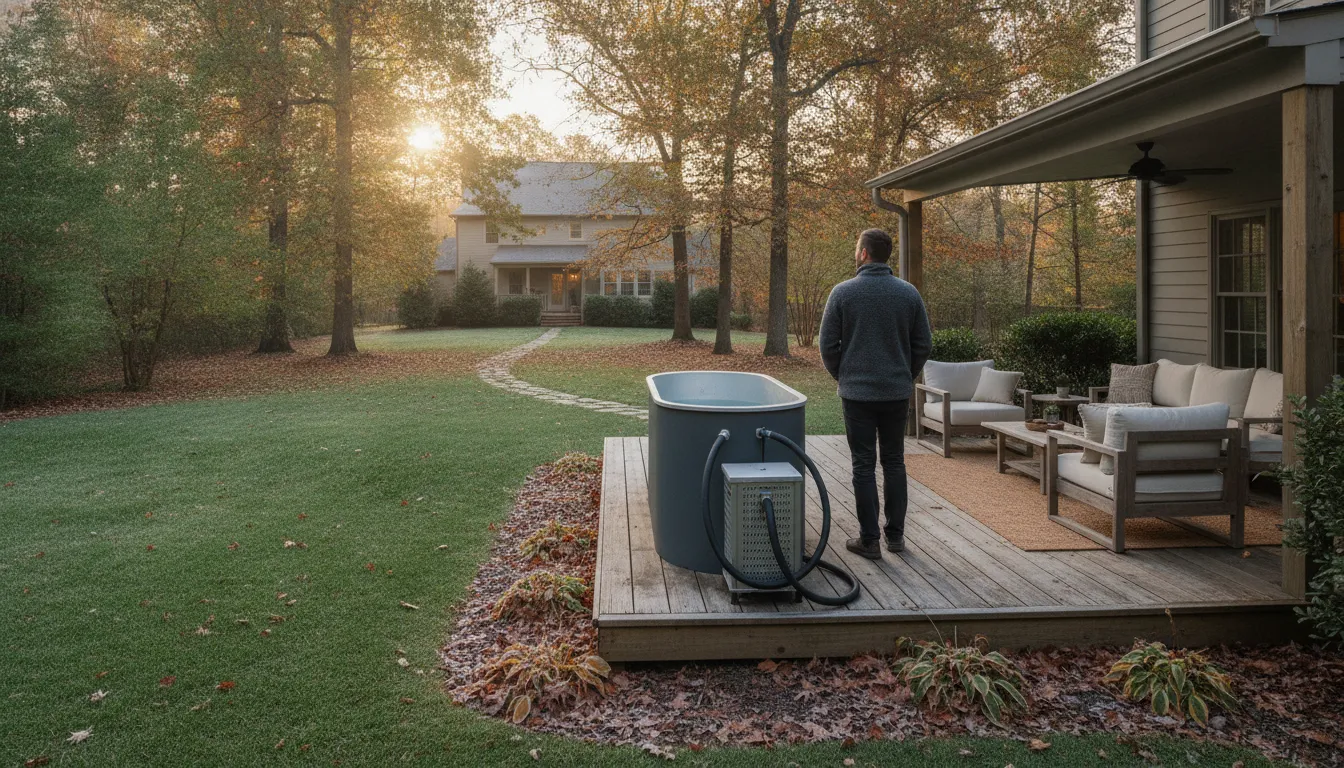
A Carolina cold snap can turn a relaxing backyard routine into an equipment concern. Especially when a chiller-based plunge sits outdoors and temperatures vary from one neighborhood to the next. The question is not simply whether the water feels cold. It is whether the system’s water path, pump, chiller, and connected lines are protected for the conditions around your home.
Learn more about Vigor cold plunge systems
Cold plunge freeze protection starts with identifying the components exposed to freezing temperatures, then following the exact manufacturer manual for that model. Do not assume every chiller-based unit should be drained, left running, unplugged, or treated the same way.
General preparation can help, but model-specific instructions must come from the exact manual or a qualified service professional. Before changing water levels, power, circulation, placement, or covers, confirm what the manufacturer permits and what could affect safe operation or warranty coverage. That distinction makes it easier to understand what actually needs protection when cold weather arrives.
What Does Cold Plunge Freeze Protection Actually Protect?
Cold plunge freeze protection is mainly about protecting the water path and the equipment that keeps it moving and cold. The open body of water is easy to see. But water that remains in connected components can create a different risk when temperatures fall and a system is idle. A competitor guide identifies lines, the pump, and the chiller as components that may freeze and crack in subfreezing weather. Treat that as useful context, not a universal procedure for every model.
For a chiller-based system, the parts that deserve attention typically include:
- Water lines: Tubing and connections can retain water outside the main vessel. Their exposure, insulation, and ability to drain depend on the system design and installation.
- Pump: The pump moves water through the system. If it loses power, stops circulating, or holds trapped water during freezing conditions, it may need inspection before normal use resumes.
- Chiller: The chiller is part of the water circuit, so its cold-weather limits and shutdown requirements must come from the model documentation. Do not assume that a self-chilling label explains freeze protection.
- Filtration: Filters and their housings are part of routine flow and water care. They should be included in the owner’s equipment review, but cleaning or draining them should follow the manufacturer’s instructions.
Fun Outdoor Living sells Vigor cold plunge systems, but the available product information does not establish one winterization sequence for every chiller-based unit. That distinction matters. A cover, insulation, or continued circulation may be relevant to some setups, while another model may have different requirements or limits.
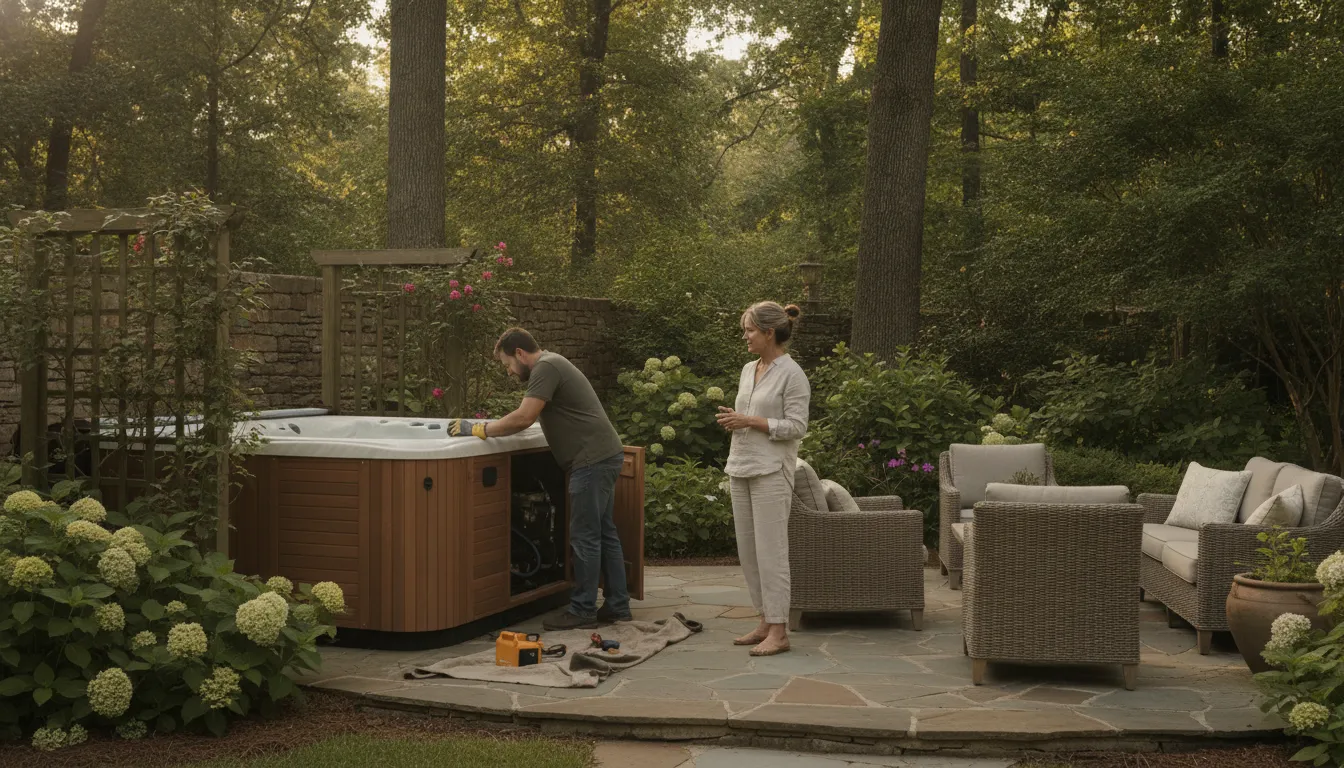
For safe equipment checks, warning signs, and guidance on when to request qualified help, review the cold plunge pump maintenance guide. When the weather, power status, or equipment condition falls outside the manual, pause rather than improvising. The exact product manual or a qualified technician should determine what happens next.
How Should Carolina Owners Assess Freeze Risk?
Freeze planning starts with the location, not a single temperature number. Carolina weather varies between communities and from one cold snap to the next. So an exposed plunge in Winston-Salem may face different conditions than a unit beside a protected wall in Charlotte or Rock Hill. Treat the forecast as a prompt to review your setup and manual, not as permission to apply a universal winterization rule.
Start with outdoor exposure
Look at how much wind, shade, and precipitation reach the vessel and its equipment. A roof or partial enclosure may reduce exposure, but it does not automatically make a chiller-based system suitable for every winter condition. Pay particular attention to the lines, pump, and chiller, since water remaining in those components may be vulnerable if the system idles during subfreezing weather. The risk profile also changes if the equipment sits away from the home, where it may be harder to monitor or protect during an outage.
Consider shelter and power continuity
A sheltered location can be easier to inspect and may limit direct exposure, but shelter is only one planning factor. Ask whether the unit can maintain its intended operating state during the forecasted conditions. Whether the electrical supply is dependable, and what the manual says to do if power is interrupted. Do not assume that continuous circulation, an insulated cover, or a backup power source is an approved substitute for the manufacturer’s instructions.
Check the model’s rated ambient conditions
Outdoor winter suitability depends on the specific equipment design and its rated ambient operating conditions. Some systems are designed with freeze protection, while others may require a different procedure when temperatures approach or fall below freezing. Find that information in the exact product documentation. If the rating, shutdown guidance, or restart instructions are unclear, pause before changing settings or adding heat, and ask the manufacturer or a qualified technician.
For broader Carolina guidance on temperature, placement, water care, and service considerations, see this cold plunge placement and service guide. It can help frame the decision, but your product manual controls the model-specific procedure.
What Does the Manufacturer Manual Need to Confirm?
A cold plunge freeze protection plan should begin with the exact manual for the model, not a generic winterization checklist. Manufacturer instructions control because chiller systems differ in their water paths, controls, ratings, and approved service methods. The available customer guidance does not establish a universal procedure for Vigor or any other chiller-based unit.
- Drainage method: Confirm whether the manual calls for draining the basin, opening a specific drain, removing filters, or using another approved method. General advice to empty water lines does not tell you how a particular plunge should be drained. Do not improvise connections, compressed air, or partial drain-down steps.
- Water remaining in lines: Look for the manual’s instructions about hoses, plumbing, filtration chambers, pump cavities, and other low points where water may remain. The lines, pump, and chiller can be more vulnerable than the visible basin in subfreezing conditions. But only the manufacturer can identify the protected and unprotected parts of your system.
- Pump and chiller status: Confirm whether the equipment should remain powered, circulate, enter a freeze-protection mode, or be shut down under the stated conditions. Do not assume that circulation, heat, or an automatic setting is available or appropriate for your model.
- Cover and enclosure limits: Check whether the cover, cabinet, shelter, ventilation, or outdoor placement has temperature, moisture, clearance, or weather limitations. A cover may reduce exposure, but it is not proof that the equipment is rated for freezing temperatures.
- Power interruption guidance: Find the approved response to an outage, tripped breaker, alarm, or loss of circulation. Do not add temporary heat or antifreeze unless the manufacturer specifically approves that product and method for the system.
- Restart steps: Confirm the required inspection, water level, filter condition, priming, power sequence, and error-check process before restarting. If the manual is silent, pause and ask the manufacturer or a qualified technician rather than testing an improvised sequence.
- Warranty implications: Check whether unauthorized modifications, chemicals, heating devices, or incorrect drain-down procedures could affect warranty coverage. Keep the manual, model number, photos, and service records together.
- Service escalation: Escalate when instructions are missing, the unit has been exposed to freezing conditions, or you see leaks, cracking, alarms, or abnormal operation. Fun Outdoor Living’s cold plunge pump maintenance guidance can help frame routine checks, but it does not replace the exact manufacturer procedure.
For cold plunge freeze protection, the manual controls. If it does not answer the situation clearly, do not improvise antifreeze, heat, or drain-down steps. Request model-specific guidance before taking action.
Placement, Drainage, and Cover Planning
Placement affects more than convenience. Before a cold snap, look at the plunge, chiller, lines, power source, cover, and the path water would take if the system needs service or drainage. A covered location may reduce direct exposure, but it does not automatically mean the equipment is rated for subfreezing ambient conditions. Confirm the model’s requirements in the exact product manual.
Drainage is a planning question, not a universal instruction. General freeze-preparation guidance recommends emptying water lines that can safely be emptied, but a chiller-based cold plunge may have model-specific components and procedures. Do not assume that opening a drain, disconnecting a hose, or adding a product to the water is appropriate. The cold plunge placement and drainage guide can help you think through utilities, access, and recovery space before installation.
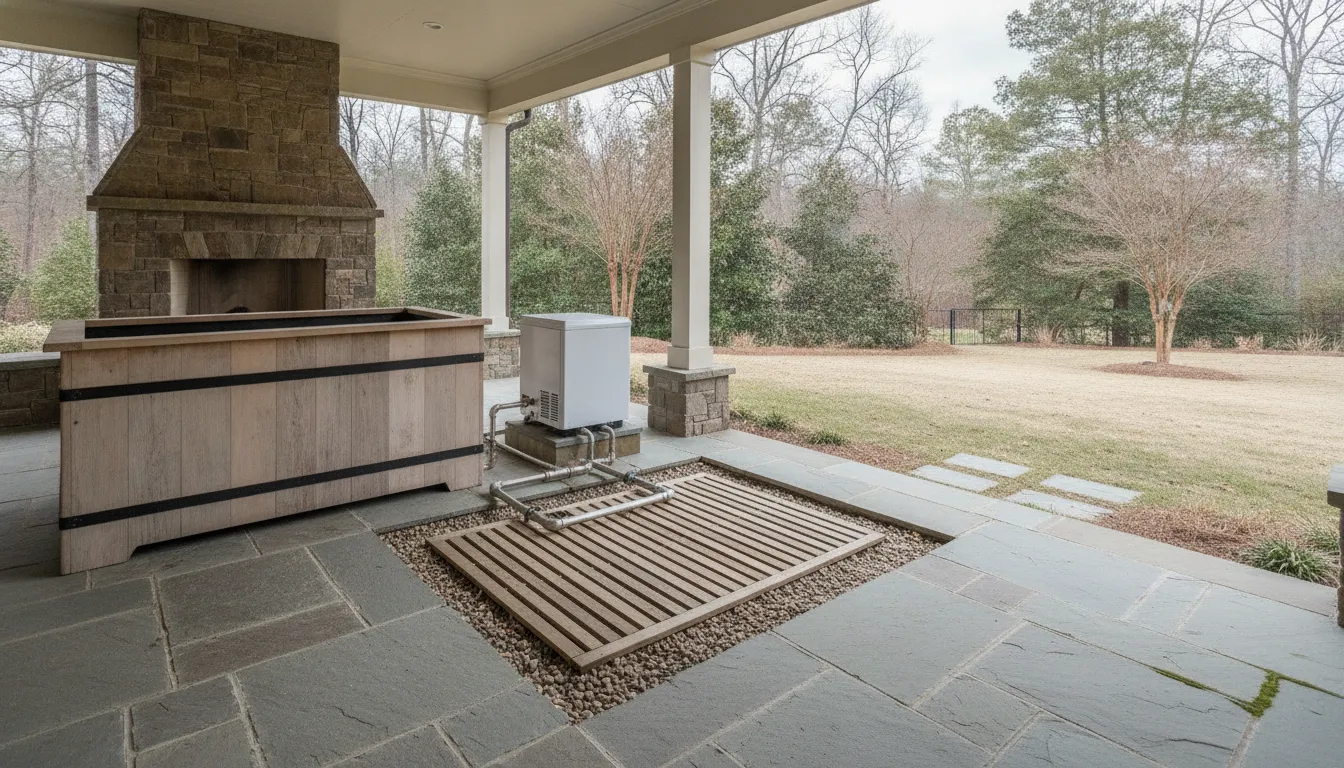
A cover can limit debris and slow heat exchange, while shelter can reduce wind and precipitation. Neither feature replaces the manufacturer’s directions for power interruptions, circulation, drainage, or restart. Treat freeze preparation as advance planning, not a one-size-fits-all equipment procedure. What can be safely addressed depends on the model, installation, and actual weather exposure.
| Planning condition | Sheltered | Exposed | Extended outage |
|---|---|---|---|
| What to review | Ventilation, roof runoff, access, and clearance around the equipment. | Wind, precipitation, shade, drainage route, and ambient exposure. | Manual instructions for loss of power, remaining water, equipment status, and restart. |
| What not to assume | Covering the unit proves freeze-safe operation. | Outdoor placement is safe because Carolina winters vary. | A generic drain-down or extension setup protects every model. |
For regional context, review the cold plunge placement and service guide, then ask the manufacturer or a qualified technician to resolve any model-specific uncertainty before making changes.
When Should You Call for Cold Plunge Service?
Call for qualified service when a cold snap, equipment problem, or unclear instruction creates a question the product manual does not answer. A technician can inspect the system and help separate routine maintenance from model-specific winterization. That distinction matters because the correct response may depend on the chiller, pump, plumbing layout, and the manufacturer’s requirements.
Before a forecasted cold snap
Consider a planned review before unusually cold weather, especially if the plunge is outdoors, exposed to wind, or connected to a space that may lose power. Carolina conditions vary between communities, so do not rely on a regional assumption that every unit will be safe or every cold event will require the same response. Ask the technician to review the exact manual, equipment rating, placement, and any manufacturer-approved protection measures.
When the system stops, alarms, or leaks
Request service after a power interruption, chiller failure, unexplained alarm, loss of circulation, or other change in normal operation. Visible water around connections, the pump, or chiller also warrants attention. Do not open components, add unapproved antifreeze, apply improvised heat, or restart equipment simply to see whether it recovers. Those choices can complicate diagnosis or increase damage.
Owners can review general warning signs in cold plunge pump maintenance, but that guidance is not a substitute for a model-specific inspection. If the system may have frozen, leave it off until the manufacturer or a qualified technician explains the inspection and restart process. A visible thaw does not confirm that internal lines, fittings, the pump, or chiller are undamaged.
Inspection, maintenance, or winterization?
Inspection looks for damage or unsafe conditions. Maintenance addresses ordinary care and performance checks. Winterization is a model-specific process that may involve drainage, power, circulation, or storage decisions. Fun Outdoor Living offers local cold plunge service for qualified guidance, diagnostics, and repairs where appropriate, without promising that every unit follows the same procedure or that service is available on a particular schedule.
What Should Cold Plunge Freeze Protection Include During a Carolina Cold Snap?
When a cold snap is approaching, slow down before changing how your plunge operates. Carolina weather varies between regions and properties, so there is no single temperature threshold or shutdown routine that fits every chiller-based system. The safest approach is a short, manufacturer-first review.
- Check the forecast and the exact manual. Look at the expected conditions for your property, then find the model-specific instructions for freeze protection, power interruptions, drainage, and restarting. Confirm whether the equipment is designed for the conditions you expect. If the manual is silent, do not fill in the gaps with advice meant for another unit.
- Do not improvise heat or antifreeze. A space heater, heat cable, warm water, or automotive antifreeze may create electrical, water-quality, equipment, or warranty problems when used incorrectly. General freeze-preparation advice is not a universal cold plunge procedure. Use only a protection method the manufacturer explicitly approves for your model.
- Protect access and drainage areas. Keep the equipment, shutoff points, pathways, and any approved drainage route accessible. Remove leaves, snow, or other obstructions that could hide a leak or prevent water from moving away safely. Do not disconnect, drain, cover, or relocate components unless the manual gives that instruction.
- Document alarms and changes. Before conditions worsen, note the normal display, water level, and equipment status. Photograph or record error codes, unusual sounds, visible leaks, or a loss of circulation. This gives the manufacturer or technician useful information without requiring you to diagnose the fault yourself.
- Escalate unanswered questions. If the forecast, a power interruption, or an alarm creates a situation the manual does not address, contact the manufacturer or a qualified local service professional. Ask for model-specific guidance before taking irreversible action. Freeze protection is ultimately a planning decision tied to the equipment, its placement, and the actual weather exposure.
How Does Freeze Protection Fit Year-Round Cold Plunge Care?
Freeze protection is easier to manage when it is part of ordinary ownership rather than a once-a-year reaction to a forecast. Carolina weather varies from one home and town to the next. So a homeowner in Charlotte may face a different exposure pattern than someone in Winston-Salem or Rock Hill. The goal is to notice changes early and keep the equipment’s care history clear.
Between cold snaps, continue the routine checks described in the article on cold plunge pump maintenance. Confirm that filtration and circulation are behaving normally, watch for unusual sounds or visible leaks, and keep water care on schedule. These practices do not replace a freeze plan, but they make it easier to recognize when a cold-weather problem may involve more than water temperature.
Placement also remains part of the year-round picture. A sheltered area, practical drainage, and access to the equipment can make inspection easier. But they do not establish that a particular chiller or plumbing arrangement is safe in subfreezing conditions. For a new installation or a change in location, review contrast therapy planning alongside the exact product documentation.
Keep the owner manual, installation details, water-care notes, alarm messages, and service records together. Before a forecasted freeze, use those records to identify what has changed and confirm the manufacturer’s instructions for your model. The available guidance for Vigor cold plunge systems does not provide a universal winterization sequence, so do not assume that a procedure for another unit applies. If the manual does not answer a situation, ask a qualified technician before changing drainage, power, circulation, or chiller settings.
Request local cold plunge service guidance
Frequently Asked Questions
Can a cold plunge freeze?
Yes. In subfreezing weather, water can remain in vulnerable lines, the pump, or the chiller even when the main vessel does not appear frozen. Those components may be damaged if the system idles in freezing conditions. Review the equipment rating and the exact manufacturer instructions before cold weather arrives. The equipment risk is a reason to use model-specific guidance, not a reason to copy a procedure from another unit.
Should I drain my cold plunge before a freeze?
Not automatically. Drainage may be appropriate for some systems, while others have specific requirements for water remaining in the vessel, lines, pump, or chiller. Use the exact manual for your model, and ask the manufacturer or a qualified local technician if the instructions do not address your setup. Do not assume that a general recommendation to empty water lines applies to every cold plunge.
What should I do if the chiller loses power?
Follow the manual’s power-interruption and restart instructions, and document alarms, unusual sounds, temperature changes, or visible leaks. Do not improvise with heat, antifreeze, bypasses, or a forced restart unless the manufacturer specifically directs you to do so. If the manual does not explain the situation, disconnecting or restarting equipment may create additional risk, so contact the manufacturer or qualified service provider.
Is outdoor placement safe for a cold plunge in Carolina?
Outdoor placement can be suitable only when the specific equipment is rated for the site’s ambient conditions and has an appropriate freeze-protection design. Carolina weather varies between locations and cold snaps, so sheltered placement alone is not a guarantee. Confirm the model’s outdoor, power, drainage, cover, and temperature requirements before installation.
When should I call a qualified technician?
Ask for help before an expected freeze if the manual is unclear. After a power or chiller failure, or whenever you notice a leak, alarm, cracked fitting, or other abnormal condition. A technician can inspect the system without guessing at model-specific winterization steps. Fun Outdoor Living provides diagnostics and repairs for represented systems, but service should follow the manufacturer’s requirements.
Ready to Talk Through Cold Plunge Freeze Protection?
Model-specific guidance can help you protect your equipment without relying on a one-size-fits-all winterization step. Fun Outdoor Living can help you review the manufacturer’s recommendations and identify the right questions for your cold plunge, home, and local conditions.