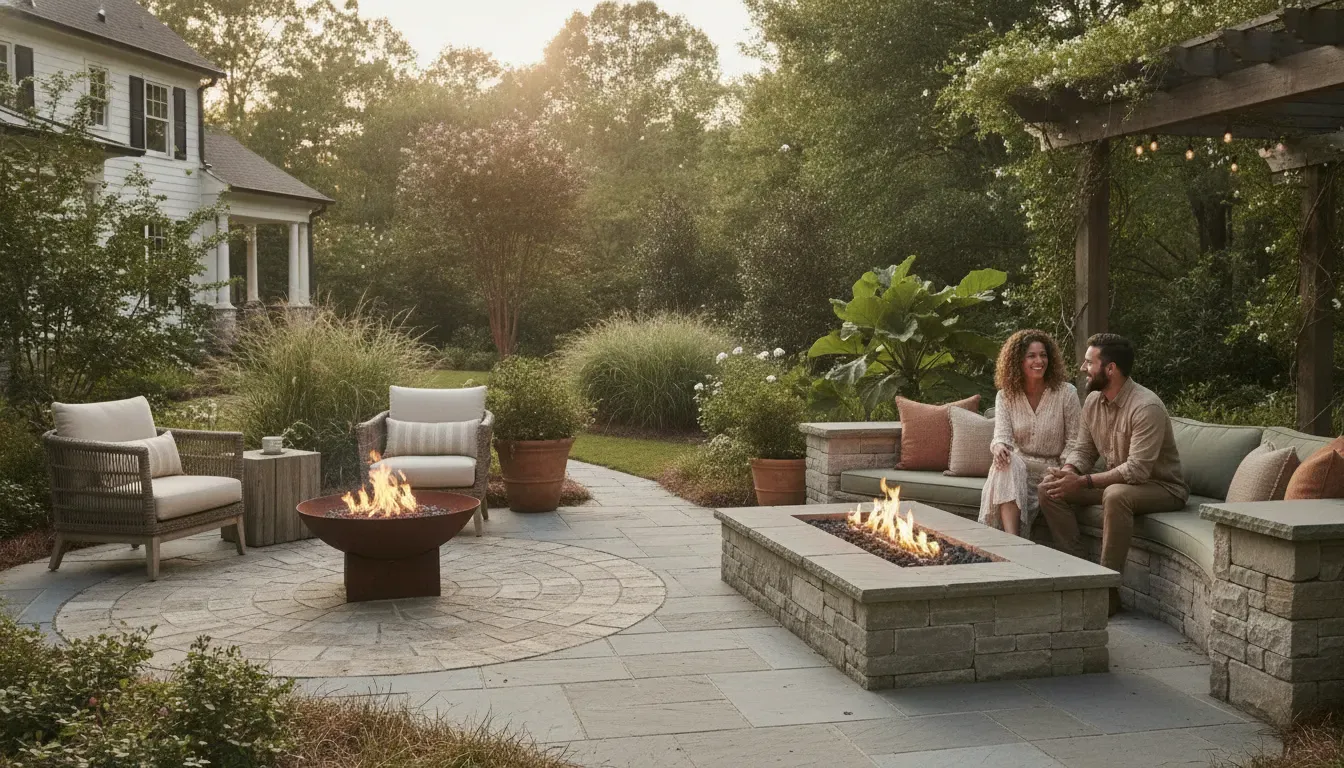
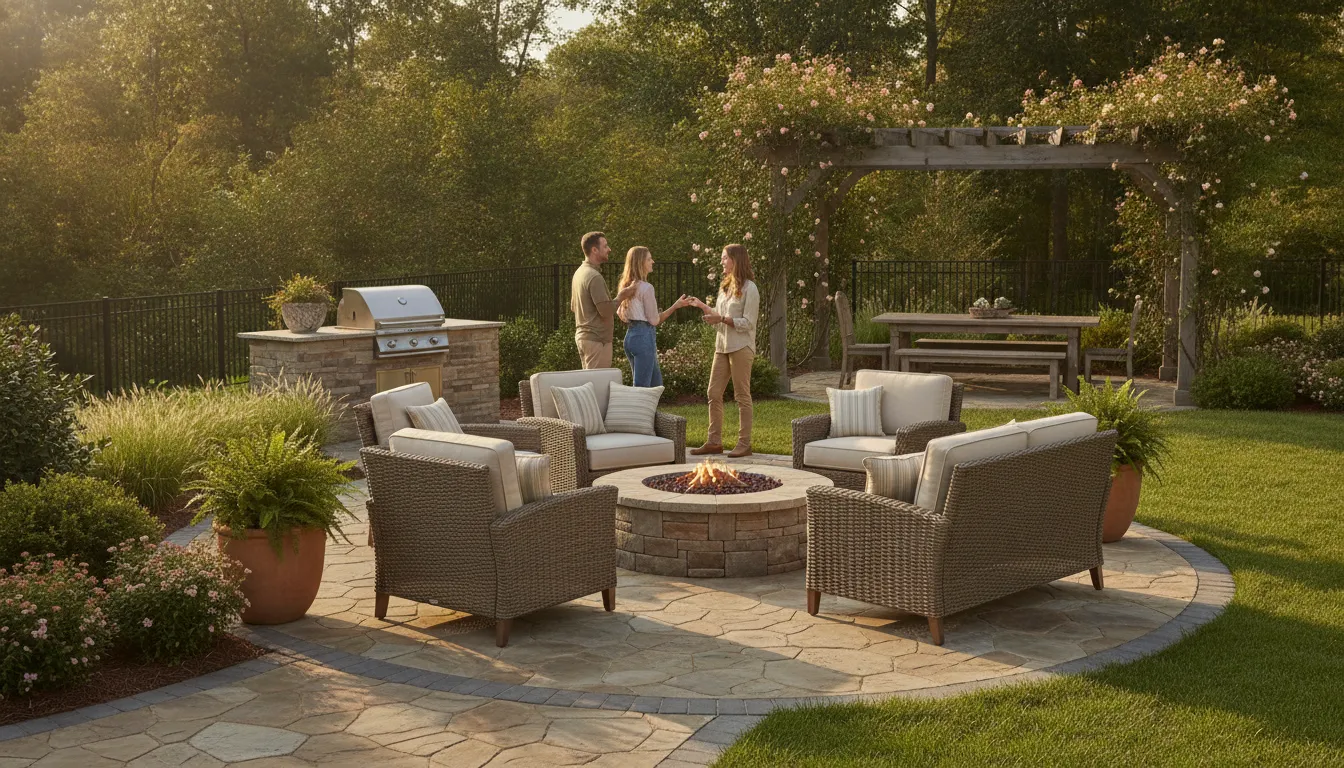
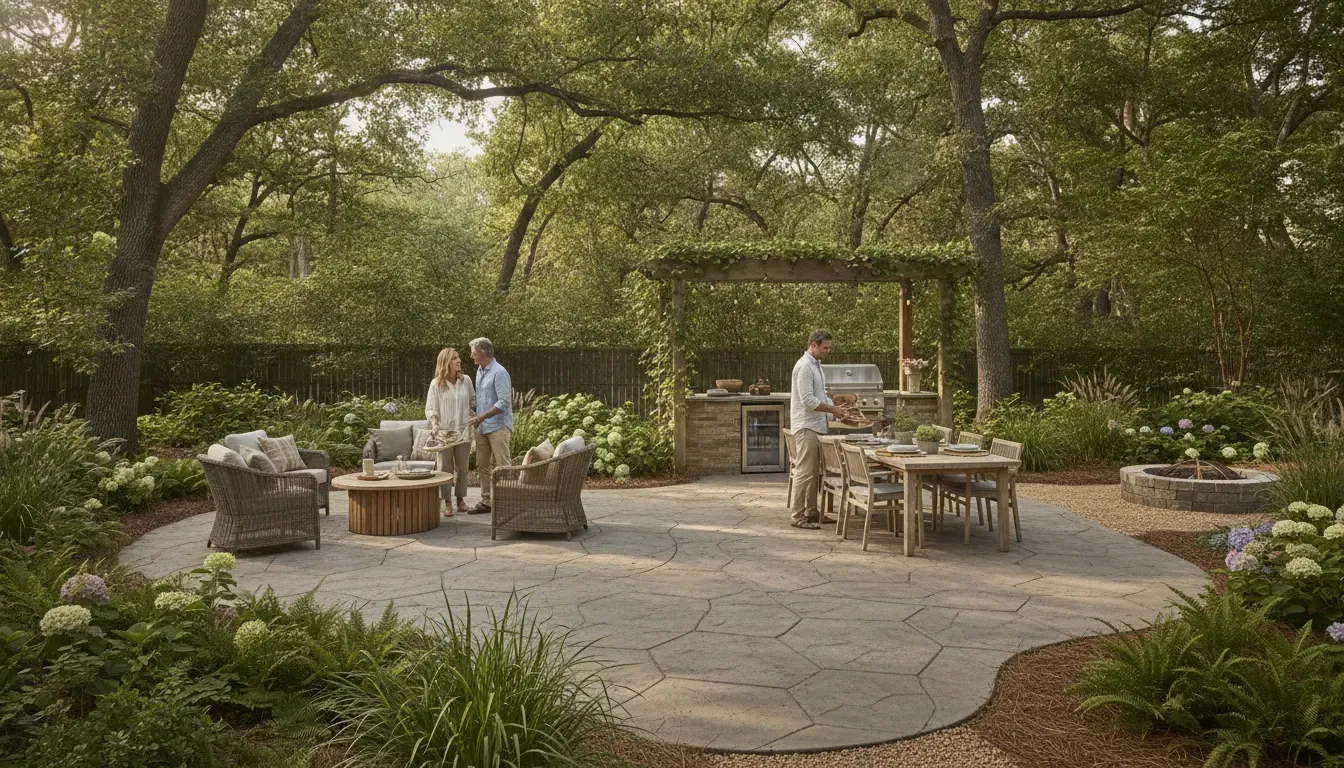
When homeowners search for fire pits for sale, they may be picturing a ready-to-use fire bowl, a portable wood-burning model, or a built-in feature planned around the patio. Those options can create the same basic ritual, gathering outside as the air cools, but they do not create the same ownership experience.
The right choice depends less on which fire pit looks best in a product photo and more on how you want to use your backyard. A movable unit can be a practical starting point for a flexible space. A professionally planned custom fire feature can become a permanent part of a patio, seating area, or larger outdoor living environment. This guide explains the trade-offs for homeowners across Charlotte, Matthews, Cornelius, Lake Norman, Rock Hill, Winston-Salem, and nearby Carolina communities.
What Does “Fire Pits for Sale” Usually Mean?
Fire pits for sale usually refers to ready-to-buy products that can be selected from an available assortment and placed in an existing outdoor area. Some are portable bowls or tables. Others are prefabricated units that look more substantial but still arrive as a finished product. They may use wood, propane, or natural gas, depending on the model and how the installation is planned.
That category is broad. A small portable fire bowl and a built-in gas fire table are both sold products, but they differ in permanence, utility needs, placement, and service requirements. Before comparing prices, compare the kind of ownership each product creates.
- Portable fire pits: Easy to reposition and useful when you want flexibility.
- Prefabricated fire tables: A more finished look that can anchor conversation without a full hardscape redesign.
- Built-in fire features: Planned around the patio, seating, utilities, materials, and the way people move through the backyard.
- Custom outdoor fireplaces: A larger architectural feature with vertical presence, but a different footprint and design purpose than a low fire pit.
Fun Outdoor Living’s fire-features collection shows several product categories, including Breeo Smokeless Firepits, Bull Outdoor Fire Pits and Tables, Fire Pit Art, HPC Fire Inspired Fire Pits, and Mallin Fire Tables. Availability and model selection can change, so confirm the current options and the installation requirements for the product you are considering.
How Do Ready-to-Buy Fire Pits Compare With Custom Installation?
A ready-to-buy fire pit is selected first and then placed into the yard. Custom installation starts with the yard, the home, and the intended routine, then selects or builds a fire feature that fits. Neither approach is automatically better. They simply solve different problems.
| Decision factor | Ready-to-buy fire pit | Custom-installed fire feature |
|---|---|---|
| Permanence | Often movable or replaceable as your needs change. | Designed as a lasting part of the patio or landscape. |
| Placement | Must work within the space already available. | Planned around circulation, seating, sightlines, drainage, and clearances. |
| Appearance | Limited to the sizes, finishes, and shapes offered by the model. | Can coordinate with pavers, masonry, retaining walls, outdoor kitchens, and the home’s architecture. |
| Utilities | May use wood or propane, or may need a professional gas connection. | Utilities and access are considered as part of the design and installation plan. |
| Maintenance | Owner manages covers, movement, fuel, cleaning, and storage. | Owner still manages routine care, while the installation and service plan can be designed around the feature. |
| Best fit | Flexible entertaining, a first step, rental-friendly needs, or a space that may change. | A long-term backyard plan where the fire feature should feel built in rather than added on. |
The practical question is not simply, “Which fire pit costs less today?” It is, “Which option will still feel right after we have used the backyard for several seasons?” A product that is easy to move may be exactly what a family needs. A permanent design may be more satisfying when the patio, seating, and fire feature are meant to work together every week.
Which Fire Pit Option Fits Your Carolina Backyard?
Start with the experience you want to create. A portable fire pit can support spontaneous evenings, seasonal rearranging, or a backyard that serves several purposes. A custom feature can make the fire the organizing point of the space, especially when the patio is being built or renovated at the same time.
Think through these questions before you choose:
- Will the fire feature stay in one location for most of the year?
- Do you want people seated around the fire, beside it, or facing it from a larger patio?
- Will the same space also include a grill, outdoor kitchen, hot tub, pergola, or dining area?
- Does the current surface drain well after heavy Carolina rain?
- Would moving the unit for mowing, storm preparation, or seasonal storage become frustrating?
- Do you want to keep the view open, or would a raised feature help define the room?
A portable product is often sensible when the yard is still evolving. It can let you test a location and learn how your household uses the space. A custom installation makes more sense when the surrounding patio, walls, utilities, and seating are already part of a coordinated plan.
For visual examples, browse Fun Outdoor Living’s outdoor fire gallery. It includes fire tables, fire pits, and outdoor fireplaces in different shapes and finishes. Use the gallery to identify the kind of setting you like, then evaluate whether that setting requires a movable product or a construction plan.
What Should Carolina Homeowners Check Before Installation?
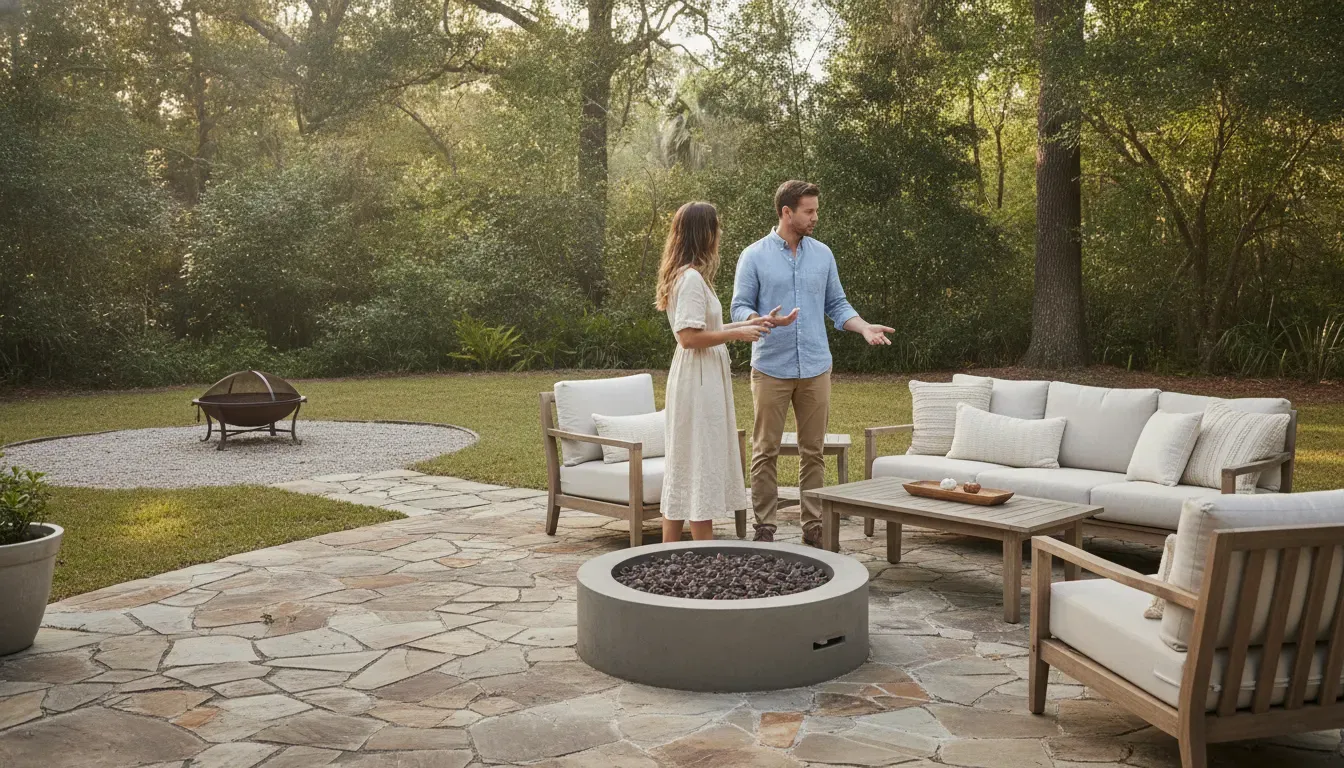
Carolina backyards need a plan that accounts for moisture, seasonal debris, heavy rain, and the way outdoor spaces are used throughout the year. A fire pit should not be treated as an isolated object. Its base, surrounding surface, furniture layout, fuel source, and access for maintenance all affect how comfortable and dependable the finished space will feel.
Surface and drainage
Set the feature on a stable, appropriate surface and think about where water will go after a storm. A low area that holds water can create problems for the fire feature, furniture, and surrounding hardscape. If the fire pit will sit on a new patio, coordinate the feature with the paver pattern, edge restraints, slope, and access points. Fun Outdoor Living’s outdoor paver work is a useful starting point for homeowners considering a larger patio plan.
Clearances and local review
Every model has its own installation instructions and clearance requirements. A gas feature may also involve utility work, ventilation details, or permits that should be reviewed before construction. Wood-burning fires can involve a different set of open-burning rules. North Carolina homeowners should check the current guidance from the North Carolina Forest Service and the North Carolina Division of Air Quality, then confirm local requirements with the applicable city, county, or fire official.
Rules are not identical in every Carolina community, and a web search is not a substitute for a project-specific review. Ask who is responsible for confirming permits, utility coordination, and required clearances before work begins.
Future backyard use
Leave room for the things you may add later. A fire pit placed too close to a future outdoor kitchen can limit circulation. A unit placed in the center of a patio may look attractive but compete with dining, play, or a path to the house. A design-build consultation can help resolve those conflicts before materials are ordered.
How Do Fuel Choices Affect Ownership?
Fuel changes the rhythm of using and caring for a fire pit. Wood creates a traditional fire experience and can be appealing when tending the fire is part of the evening. Gas and propane can provide a simpler start-up routine, particularly when homeowners want a quick transition from dinner to conversation.
- Wood: Requires a supply of dry firewood, ash management, and attention while the fire is burning and cooling.
- Propane: Can offer flexibility where a permanent gas connection is not practical, but tanks need storage and replacement planning.
- Natural gas: Can support a convenient permanent feature when the property and local utility conditions allow it, but the connection must be planned and installed correctly.
Fuel should follow the way you plan to use the space. If the main ritual is gathering around a crackling fire on weekends, wood may be part of the appeal. If the main goal is a dependable feature for weeknight dinners, a gas or propane option may better match the routine. The decision also affects placement, storage, utility work, and how the feature integrates with the rest of the backyard.
For homeowners who want the deeper technical comparison, the existing custom gas fire pit guide covers gas-feature planning in more detail. This article stays focused on the earlier buying decision: whether a ready-to-buy product or a permanent installation is the better starting point.
Learn More: Plan Your Fire Feature With a Free Consultation
What Does Maintenance Look Like After the Fire Pit Is Installed?
The easiest fire pit to own is the one whose care fits your actual routine. Every option needs some attention. The difference is where that attention happens and whether the feature can be moved, covered, inspected, and serviced without disrupting the rest of the yard.
For a ready-to-buy unit, maintenance often includes cleaning ash or debris, protecting the finish with a cover, checking hardware, storing or securing fuel, and moving the unit when the patio needs to be used differently. A portable unit can be convenient, but convenience depends on having a safe, dry place to store it and a stable location when it is in use.
A custom feature still needs routine cleaning and inspection. Its advantage is that the surrounding design can make those tasks easier to plan. Access panels, fuel shutoffs, drainage, seating, and hardscape transitions can be considered before installation. If the feature becomes part of a larger backyard project, the homeowner can also establish who will handle service questions after the build is complete.
Ask these ownership questions before choosing among fire pits for sale:
- Who will clean the burner area, bowl, stone, or tabletop?
- How will rainwater and leaves be kept from collecting where they should not?
- Where will wood, propane tanks, covers, and accessories be stored?
- Can a technician reach the components without removing a large portion of the patio?
- Who will answer questions if the feature needs repair or the design changes later?
Fun Outdoor Living supports outdoor-living projects with design, construction, and service resources. Homeowners can review the service request page when evaluating what long-term support should look like from a local provider.
When Is a Custom Fire Feature Worth Planning?
Custom installation is worth considering when the fire feature needs to solve more than one problem. It may need to define a seating room, connect a patio to the house, coordinate with an outdoor kitchen, work around a slope, or fit a specific sightline. In those cases, buying a product first can create compromises that become expensive to correct later.
A custom plan may be the better fit when:
- You are already building or renovating a patio, deck, pergola, or outdoor kitchen.
- The yard has drainage, grade, access, or circulation issues that a standard placement does not solve.
- You want the fire feature to match existing pavers, stone, brick, or architectural details.
- You expect to use the backyard regularly and want a permanent gathering point.
- You prefer one accountable team for design, construction, installation, and follow-up service.
That does not mean every homeowner needs a large masonry project. Custom planning can also mean selecting a manufactured fire table, then coordinating its base, fuel connection, surrounding pavers, seating, and safety clearances so the finished result feels intentional. The scope should match the property and the routine, not an abstract idea of what a luxury backyard should be.
Fun Outdoor Living is locally owned and operates showrooms in Charlotte/Pineville, Matthews, Cornelius, Rock Hill, and Winston-Salem. The team combines product guidance with in-house design, construction, and service. That integrated model is useful when the decision involves both a fire pit and the larger backyard around it.
Ready-to-Buy or Custom Installed: What Is the Best Next Step?
If you are still deciding, start by measuring the space and describing the evening you want to create. Bring those details to a showroom or consultation instead of beginning with a product name. A useful conversation should clarify where the feature belongs, how fuel will be handled, what the surrounding surface needs, and whether a movable unit will still work after the rest of the backyard evolves.
You can also compare a few products in person, review the current fire-feature assortment, and study completed work in the outdoor fire gallery. If the project includes construction or utility planning, ask for a clear explanation of what is included before work begins. The goal is not to make a fast decision. It is to make a decision that continues to feel practical after the first season.
Frequently Asked Questions
Are fire pits for sale better than a custom-installed fire pit?
Neither is automatically better. Ready-to-buy fire pits are useful when portability, quick selection, or a flexible backyard matters most. Custom installation is useful when the feature needs to coordinate with a patio, seating, utilities, drainage, and a long-term outdoor-living plan.
Does Fun Outdoor Living carry every fire pit model?
No provider carries every model. Fun Outdoor Living’s fire-features collection shows several available categories and brands, but model availability can change. Confirm the current assortment, installation requirements, and whether a selected product fits your site before purchasing.
Do I need a permit for a fire pit in North Carolina?
Requirements depend on the fuel source, project scope, local jurisdiction, and whether the fire is treated as open burning or part of a built installation. Check current North Carolina guidance and confirm local requirements with the city, county, fire official, or qualified installer before work begins.
What should I plan around a fire pit in a Carolina backyard?
Plan for a stable surface, drainage, clearances, seating, circulation, fuel storage, covers, seasonal debris, and access for service. If the fire pit is part of a larger patio or outdoor kitchen, plan all of those elements together rather than placing the fire feature last.
Can a custom fire feature use a manufactured fire pit or fire table?
Yes. Custom planning does not always mean fabricating every component. A manufactured fire pit or fire table can be coordinated with the surrounding pavers, walls, utilities, seating, and landscape so it functions as part of a cohesive outdoor room.