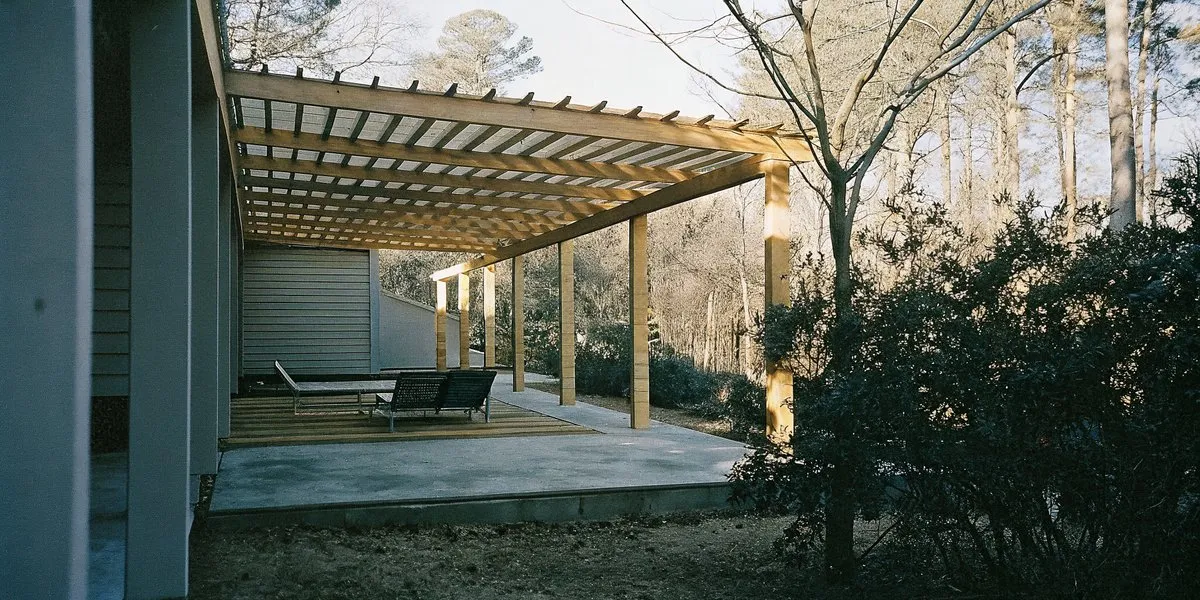
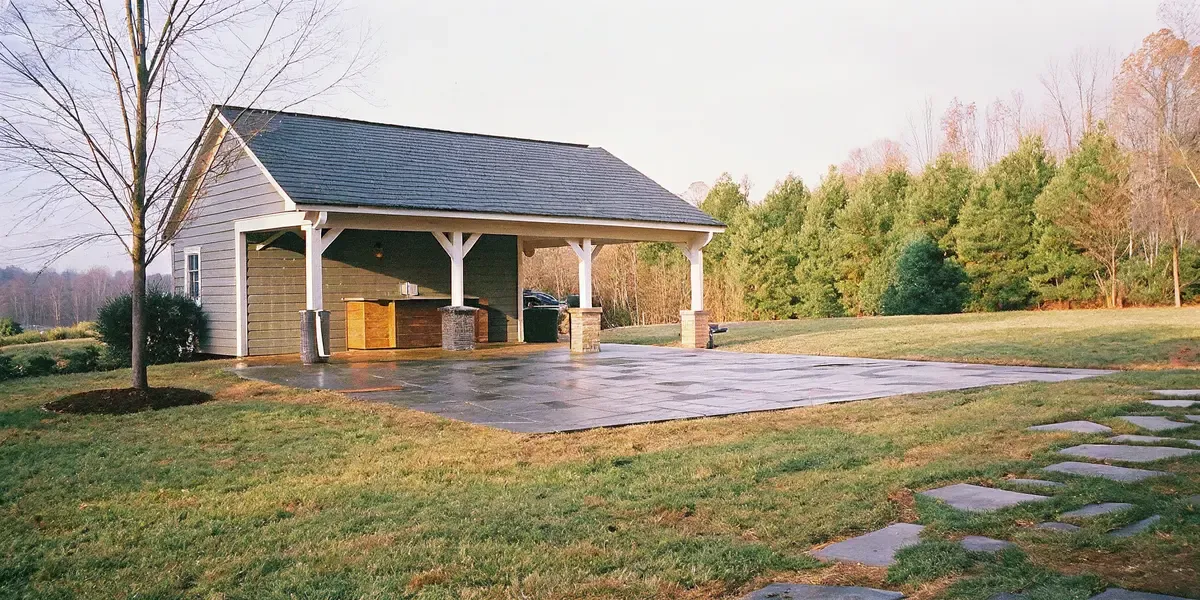
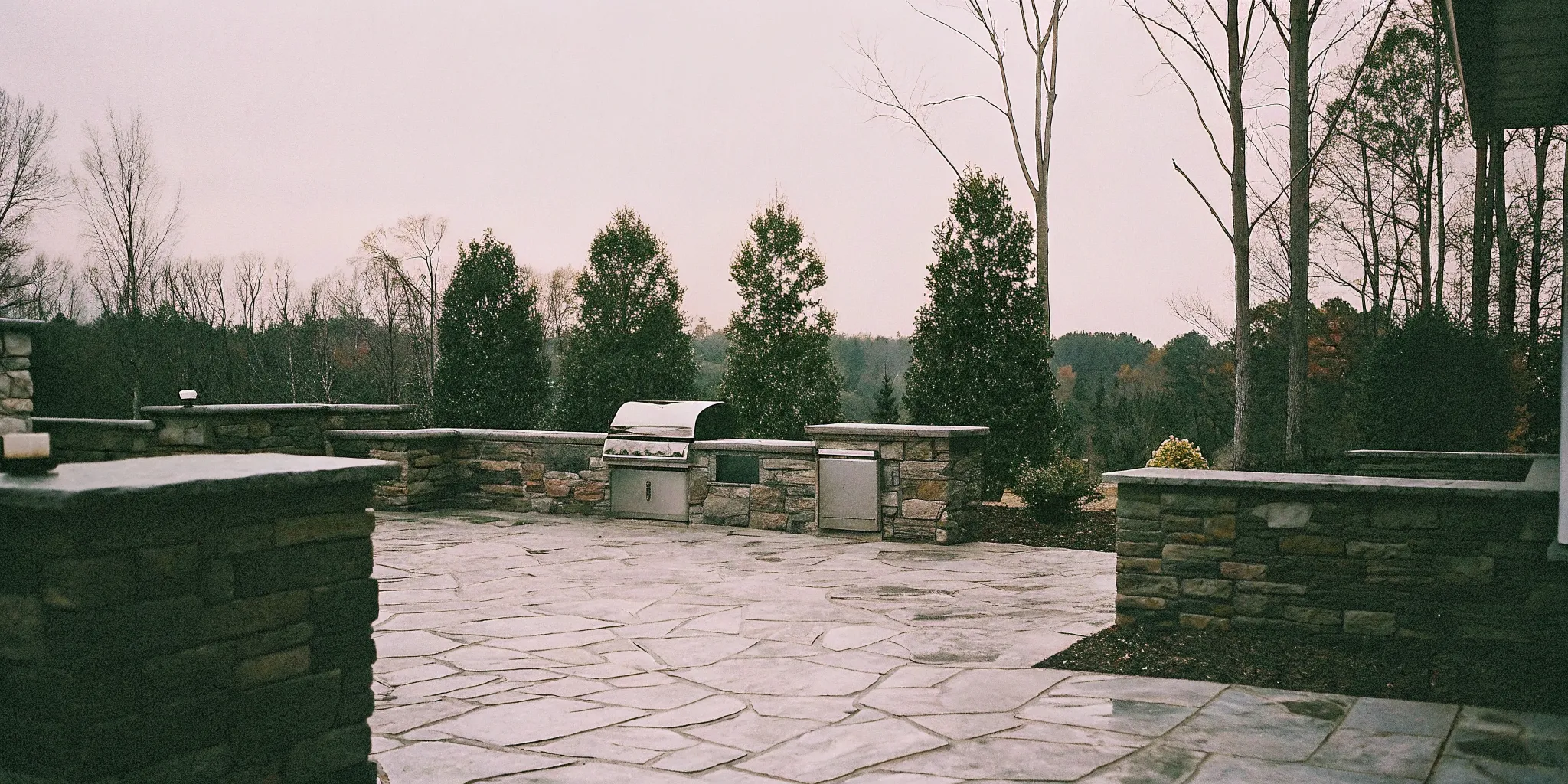
A roof keeps Carolina rain off the grill, but it can also trap smoke overhead. Good ventilation protects the space where family and friends gather comfortably.
Schedule a free home consultation
Outdoor kitchen ventilation for covered patios captures smoke, heat, grease, and odors near the grill, then directs them away from the gathering area. For covered porches and more enclosed pergolas, that often means an outdoor-rated hood, correctly planned ductwork, and enough replacement airflow. An open-sided structure may need a different setup, so the grill type, roof height, wall openings, wind, and local rules should guide the design. It also helps keep residue from settling across ceilings, counters, and nearby seating, making the kitchen more comfortable and easier to maintain. North Carolina state guidance generally requires makeup air when residential exhaust hoods exceed 400 CFM, with a listed 600 CFM exception.
The right plan is not simply the biggest fan available; it is a system matched to the cooking equipment and the structure around it. Outdoor kitchen ventilation for covered patios in the Carolinas starts with understanding those site-specific demands. Here’s how.
Outdoor kitchen ventilation for covered patios in the Carolinas
Outdoor kitchen ventilation for covered patios is the planned removal of smoke, heat, grease, and cooking odors from beneath a roof. An open yard lets those byproducts drift away. A covered patio, porch, or pergola can hold them near the grill, ceiling, and seating area.
Why a roof changes airflow
A roof blocks the upward path that hot air and smoke would normally follow. Side walls, screens, beams, and low ceilings can also shape airflow. Even a breezy site may have still pockets where smoke gathers around guests.
A hood and duct system captures cooking byproducts near their source and sends them away from the living space. This approach is more dependable than hoping a ceiling fan or cross breeze will clear the area. The CDC ventilation guidance explains why local exhaust is preferred for controlling smoke, hot air, odors, and other airborne material.
Carolina weather and outdoor comfort
Warm, humid Carolina days make trapped grill heat harder to ignore. Smoke drifting into a dining zone can also cut a gathering short. Good ventilation helps keep the cook area comfortable while directing grease-laden air away from nearby surfaces.
The structure matters as much as the grill. Ceiling height, roof shape, screens, nearby doors, and the route for a duct all affect the plan. Review these details while comparing covered patio ventilation planning, porches, and pergolas.
Materials also need attention in a humid setting. Grease and moisture can settle on ceilings, cabinets, lights, and finishes when airflow is poor. A well-placed exhaust path helps limit buildup, but it does not replace regular cleaning and care.
Early design decisions
Plan ventilation before the roof, grill island, and utilities are fixed. Early planning gives the design team room to place the hood and route the duct. It also helps prevent a discharge point from sending smoke toward windows, doors, or seating.
- Match the hood plan to the grill and other cooking appliances.
- Leave space for the hood, ductwork, fan, and safe discharge route.
- Coordinate electrical, gas, lighting, ceiling, and finish choices.
- Check local code needs before final plans and installation.
North Carolina rules may require makeup air for some high-capacity exhaust systems, so system sizing should not be an afterthought. An integrated design process can address the kitchen and its cover as one space. Homeowners can use the outdoor kitchen gallery to compare layouts before a design meeting.
Why covered patios trap smoke, heat, and odors
An open grill sends hot air, smoke, grease, and cooking odors upward. In an uncovered yard, that rising air can spread and drift away. A patio roof interrupts that path. Smoke may collect below the ceiling, move sideways, or roll back toward the cook and guests.
Less room for air to disperse
A roof is only one part of the airflow problem. Side walls, privacy panels, screens, and nearby doors can slow cross-breezes. Even a pergola cover can limit the open area above a grill. These features create pockets where warm, smoky air can linger.
The layout also changes as people use the patio. Open doors, ceiling fans, and shifting winds can push smoke toward seats or the house. That is why covered outdoor kitchen structure options should begin with the full structure, not just the cooking appliance.
Why natural airflow may fall short
Natural airflow is not steady or easy to control. A breeze may clear the space one day and send smoke under the roof the next. Screens can allow some air through, but they do not create a set path for heat and odors. Ceiling fans may move the problem instead of removing it.
Local exhaust offers a more direct approach because it captures air near the point where contaminants form. The CDC describes local exhaust ventilation as a way to capture hot air, fumes, vapors, and odors near their source. A hood and duct can then guide that air away from the covered living area.
The structure and cooking zone work together
Grill location, ceiling height, roof shape, and open sides all affect how smoke travels. A grill near a wall or under a low ceiling can create a different airflow pattern than one beside a wide opening. The right plan must account for both the appliance and the patio around it.
This is also why outdoor kitchen ventilation for covered patios should be planned before finishes and framing are set. Early planning leaves room for a hood, duct path, and safe discharge point. Reviewing properly ventilating covered outdoor kitchens during design can help prevent smoke and heat from becoming an ongoing comfort issue.
When does a covered outdoor kitchen need a vent hood?
A covered outdoor kitchen needs a vent hood when its roof or walls can trap smoke, heat, grease, or cooking odors. Open sides do not always give cooking fumes a clear path away from people and nearby surfaces. If smoke hangs beneath the roof during normal cooking, plan for source-capture ventilation.
Cooking equipment and use
A large, high-BTU grill creates a stronger case for a hood, especially when it often runs at high heat. Side burners add another source of heat and fumes. Smokers can also send steady smoke beneath a roof, even when they cook at lower temperatures.
Frequent use matters too. A grill used for weeknight meals and weekend gatherings creates more repeated exposure than one used a few times each season. Local exhaust is designed to catch fumes, hot air, and odors near their source, according to CDC guidance on local exhaust systems.
Roof height and nearby living areas
Low ceilings give smoke and heat less room to spread before they reach the roof. Semi-enclosed kitchens, screened porches, and patios with solid walls may also slow natural airflow. These layouts deserve a close ventilation review before the grill location is set.
Nearby dining tables, lounge seats, doors, and windows raise the stakes. A hood can help guide cooking exhaust away from guests and the home instead of letting it drift. Review covered patio airflow and structure planning while planning the roof, cooking zone, and seating layout together.
Professional review before installation
No single rule fits every covered outdoor kitchen. Hood needs depend on the appliance maker’s instructions, roof design, open area, duct route, and local requirements. Grill size alone cannot show whether a planned system will capture and discharge smoke well.
A qualified outdoor kitchen designer should review the complete space before construction begins. The review should cover hood placement, duct routing, fan capacity, clearances, and the discharge point. In North Carolina, some higher-capacity kitchen exhaust systems may also need makeup air under state residential guidance.
Professional review is most useful before the roof and utility lines are final. That timing lets the kitchen, structure, and ventilation work as one system. It also helps avoid a hood that looks suitable but cannot capture smoke from the chosen cooking equipment.
Grill placement, clearances, and airflow choices
Grill placement shapes how smoke, heat, and grease move through an outdoor room. The right layout also keeps cooks, guests, ceilings, and nearby finishes away from the busiest cooking zone. Start by comparing the structure above and around the grill, then check the appliance maker’s clearance rules.
Open edges and pergolas
An open-air edge often gives smoke the shortest path away from seating and the home. It lets wind carry heat out, but changing wind can also push smoke back toward guests. Keep the grill away from doors, windows, busy walkways, and materials that its maker does not approve nearby.
A pergola can support cross-ventilation when its sides stay open and the roof does not trap smoke. Place the cooking line where air can pass across it without blowing flames toward people. If the pergola has a solid roof or close-set louvers, plan it more like a covered patio.
| Planning choice | Airflow approach | Main planning concern |
|---|---|---|
| Open-air edge | Natural airflow | Wind direction and nearby openings |
| Covered patio | Outdoor-rated vent hood | Hood capture, duct route, and makeup air |
| Open-sided pergola | Cross-ventilation | Roof design and shifting wind |
| Screened porch | Site-specific mechanical exhaust | Smoke trapped by screens and roof |
Covered patios and source capture
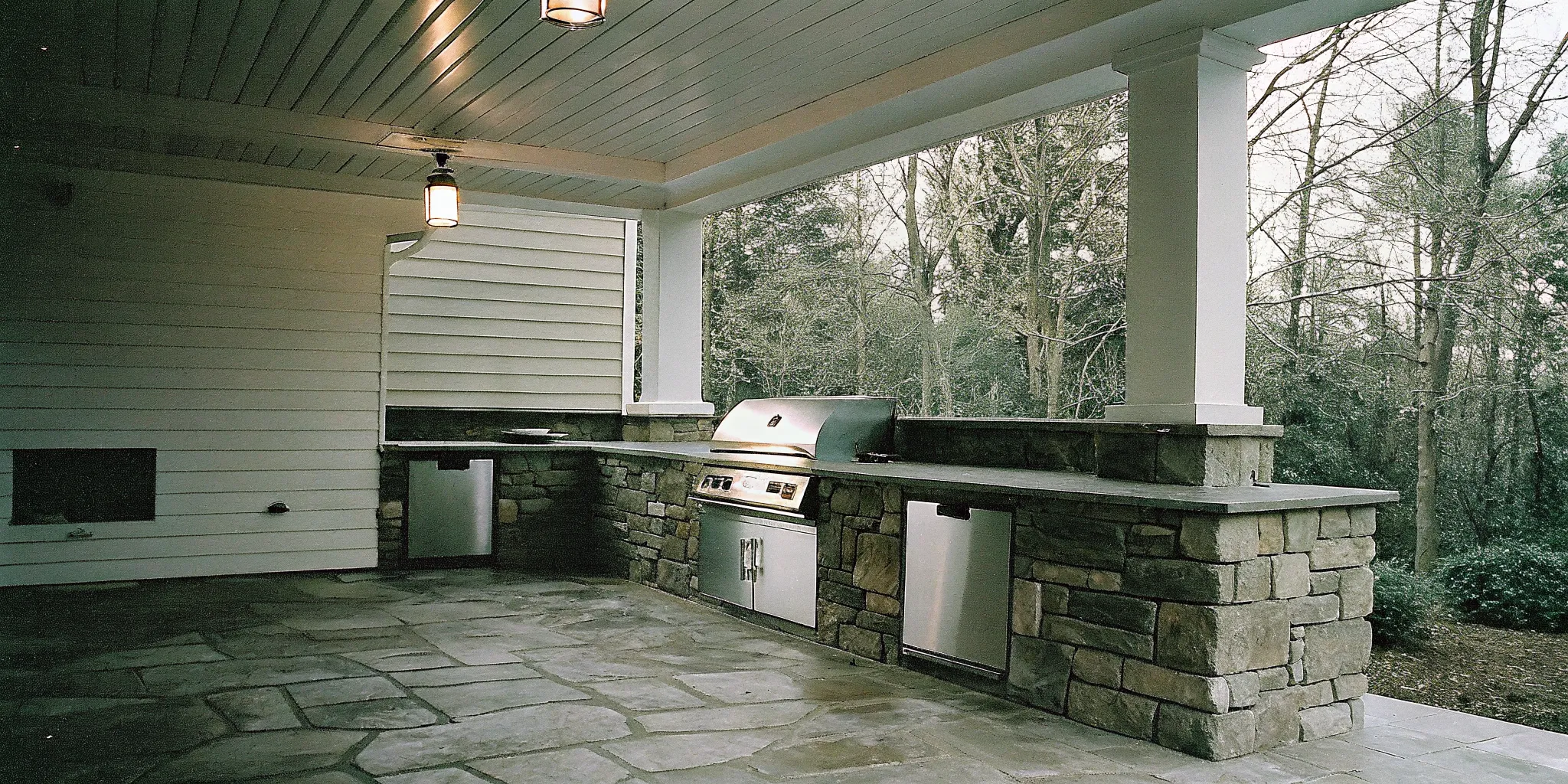
A covered patio needs a clear plan for catching smoke before it spreads beneath the roof. An outdoor-rated hood should match the grill, mounting setup, and safe duct path. The CDC explains how a hood can guide airflow and capture contaminants near their source.
In North Carolina, an exhaust hood rated above 400 CFM generally needs makeup air. That air must be planned with the exhaust system, rather than added after construction. Review the state’s makeup air rule and listed exceptions with the project designer and local code official.
Screened porch limits
A screened porch may look open, yet its roof and mesh can slow smoke removal. Screens also collect grease, while smoke may drift toward doors, furniture, and guests. A ceiling fan can improve comfort, but it does not replace source capture above a grill.
Before placing a grill in this space, compare the structure with guidance on safe cooking under covered structures. Place seating outside the smoke path and confirm every required clearance. If safe exhaust, ducting, and makeup air cannot be built, move the grill to a more open location.
How Fun Outdoor Living designs ventilation into covered kitchens
Outdoor kitchen ventilation for covered patios works best when it shapes the full plan from the start. Fun Outdoor Living brings the kitchen, cover, utilities, and exhaust path into one in-house design/build process. Homeowners get one team to guide the project, without the third-party runaround.
A whole-space design process
A hood cannot fix poor grill placement or a blocked exhaust route on its own. The CDC guide to local exhaust systems explains that these systems capture smoke, hot air, and odors near their source. That principle guides decisions about the cooking zone and covered structure.
Each plan starts with how the family wants to cook, host, and move through the space. A free home consultation also lets the team review the existing patio, home, and likely utility routes before design work moves ahead.
- Consultation and site review: The team learns how the space will be used, then checks the patio, nearby walls, rooflines, wind exposure, and utilities.
- Grill and appliance placement: Designers place the grill and other hot appliances where a hood can capture smoke without disrupting seating or main walkways.
- Covered structure planning: The roof, porch, or pergola plan develops with the kitchen. This helps prevent beams, ceilings, and finishes from blocking the vent route.
- Ventilation path: The team maps the hood, duct, fan, and outdoor discharge as one system. It also reviews airflow and any make-up air needs.
- Material selection: Designers choose outdoor-rated appliances and durable surfaces suited to heat, grease, weather, and the look of the full backyard.
- Final build and review: The in-house team coordinates construction, appliance placement, and ventilation installation. It then reviews the finished cooking zone and operating path.
Fewer handoffs during the build
Ventilation touches several parts of a covered kitchen, from framing and roof work to appliance clearances and power. Keeping those choices within one design/build team reduces gaps between a kitchen installer, structure crew, and ventilation provider. It also gives homeowners one point of contact as plans become a finished space.
Local planning support
Homeowners can visit showrooms in Charlotte/Pineville, Matthews, Cornelius, Rock Hill, or Winston-Salem to discuss layout ideas and cooking goals. They can also review the outdoor kitchen gallery before a consultation. The result is a covered kitchen planned around safe airflow, practical use, and the wider backyard design.
Can you put an outdoor kitchen under a covered patio?
Yes, you can put an outdoor kitchen under a covered patio if the whole space is planned around safe cooking. The roof, grill, hood, duct path, and seating layout must work together. Plan outdoor kitchen ventilation for covered patios before construction starts, not after smoke becomes a problem.
Roof and cooking-zone planning
Start by checking the roof height and the grill maker’s required clearances on every side. A taller roof may create more open space, but height alone will not control smoke. Use noncombustible materials around heat-producing appliances. Then verify that the chosen grill, hood, and nearby finishes can share the planned layout.
Keep the cooking line away from low beams, ceilings, and surfaces that could trap heat. The hood should sit where it can catch smoke as it rises. A CDC ventilation guide explains that local exhaust works by capturing contaminants near their source. That same principle helps keep a covered seating area clearer.
A clear venting path
Map the venting path from the hood to a safe outdoor discharge point. Duct runs should avoid sharp turns and needless distance where the structure allows. Do not direct exhaust toward guests, doors, windows, or another covered zone. Place the fan and discharge point with service access in mind.
Air entering the space matters as much as smoke leaving it. In North Carolina, hoods above 400 CFM usually need makeup air, with an exception for certain appliance setups. The state makeup-air guidance also calls for required systems to run with the exhaust. A designer should review local code and the final appliance details.
Guest comfort around the kitchen
Position dining and lounge areas outside the grill’s main smoke path. Cross breezes can shift that path, so study how air moves through the patio. Let the hood capture smoke before ceiling fans spread it across the room. Keep enough open space around the cook so guests can gather without crowding hot surfaces.
Treat the roof, kitchen, and seating plan as one design rather than separate projects. Fun Outdoor Living’s guide to planning ventilation under a covered patio can help frame those early choices. Reviewing them before construction makes it easier to preserve both cooking function and guest comfort.
Outdoor kitchen ventilation mistakes to avoid
Planning the grill after the roof
Adding a grill after the patio roof is built can leave no clear route for the hood, duct, fan, and discharge. Those parts must work as one system. Plan outdoor kitchen ventilation for covered patios while setting the cooking zone, roof framing, utilities, and seating layout.
Do not treat a screened porch like an open patio. Screens, walls, and nearby doors change how smoke moves and where it can collect. Use the structure type, grill choice, and intended cooking style to guide the design. Our guide to covered outdoor kitchen ventilation guide can help frame that early discussion.
Poor capture and airflow
An undersized hood may move air without catching smoke at the grill. The CDC ventilation guide explains that a hood should guide airflow to capture contaminants at their source. Match the hood and fan to the appliance, opening, mounting position, and duct route.
- A hood that does not cover the cooking area can let heat and smoke roll past its edges.
- A long or restricted duct route can make the full system harder to plan and service.
- A blocked air path can keep replacement air from reaching the cooking area.
- A discharge point near doors or seating can send smoke back toward guests.
Do not overlook makeup air when choosing a high-capacity hood. North Carolina rules address makeup air for certain residential kitchen exhaust systems above 400 CFM. The threshold can differ when all home appliances meet listed exceptions. Review the state makeup air requirements with the project designer before equipment is ordered.
Wind, seating, and design gaps
Ignoring wind is another common mistake. A breeze can push smoke away from the hood before capture or carry discharged air back under the roof. Review common wind direction, nearby walls, roof shape, and the planned outlet location before fixing the grill position.
Keep seats, dining tables, and main walkways outside the likely smoke path. This matters even when the hood is sized well, since guests should not sit between the grill and fresh air. Also leave safe room for cooks to work without crowding passing guests.
Skipping professional design often creates conflicts between ventilation, framing, lighting, gas, and electrical plans. An integrated plan can set the grill, hood, duct, outlet, and seating together. It also gives the team a chance to check local rules, appliance instructions, and service access before construction begins.
Frequently Asked Questions
Is a range hood necessary for an outdoor kitchen?
A range hood is usually appropriate when an outdoor kitchen sits beneath a solid roof or within a semi-enclosed space. The hood captures smoke, heat, grease, and odors before they spread under the cover. Open-sided layouts may rely more on natural airflow, but the grill, roof, walls, wind, and manufacturer instructions should guide the final decision.
How do you vent an outdoor kitchen on a covered porch?
Place an outdoor-rated hood above the cooking area, then connect it to a properly planned duct, fan, and safe outdoor discharge point. The CDC guide to local exhaust systems identifies hoods, ducts, air cleaners, and fans as core system parts. A designer should also account for replacement airflow, appliance clearances, roof framing, and local code.
What is the best type of ventilation for a covered patio?
For a covered patio with a grill, source-capture ventilation is often the most dependable choice. A correctly sized outdoor-rated hood catches cooking exhaust near the grill and directs it outside through ductwork. Ceiling fans, screens, and open sides can support comfort, but they may also move smoke toward guests. The best system depends on the appliance, enclosure, wind, roof height, and duct route.
Does an outdoor kitchen hood in North Carolina require makeup air?
It may. Under North Carolina residential guidance, exhaust hoods above 400 CFM generally require makeup air. A listed exception raises the threshold to 600 CFM when all appliances in the house meet specified conditions. Required makeup air must operate with the exhaust system. Confirm the current rule, appliance details, and permit requirements with the project designer and local code official.
Ready to Plan a Safer Covered Outdoor Kitchen?
Waiting to address ventilation can leave smoke, heat, and cooking odors trapped where family and guests should feel comfortable during meals in every season. It may also force costly layout changes after the grill, roof, cabinets, and utilities are already in place.
Starting during early design gives your ventilation plan time to guide grill placement, hood selection, clearances, airflow, and the build schedule before construction begins.
Bring your ideas, questions, and project goals to a team that plans the kitchen and covered structure as one connected space. Book a free home consultation to start planning a comfortable covered outdoor kitchen for your North or South Carolina home.