A North Carolina fire pit patio should handle summer storms as gracefully as Saturday gatherings. That balance begins below the pavers, not around the flames. The visible layout comes later.
A paver patio with fire pit NC plan works best when layout, seating zones, drainage, base, and fuel choice form one design. Before choosing a round or square fire feature, decide how people will gather, where smoke or gas service fits, and how guests will move. In Carolina weather, a durable patio needs site-specific grading and a prepared base that can manage runoff through wet seasons. The North Carolina Department of Environmental Quality explains that permeable pavement filters water through an underlying aggregate reservoir, showing why drainage deserves early attention. A thoughtful plan also protects the pavers from direct heat and leaves room for comfortable seating, so the finished space feels easy to use.
The right plan is not about adding a fire pit after choosing pavers. It starts with the evenings you want to spend outside, the people you will host, and the weather your patio must handle. Paver patio with fire pit NC planning starts with how you will use the space. Here’s how.
Paver patio with fire pit NC planning starts with how you will use the space
A strong patio plan starts with real life, not a shape picked from a photo. Think about an ordinary week first. Will the patio hold quiet coffee mornings, family dinners, or weekend gatherings? Those answers guide the layout before paver colors or fire pit finishes enter the conversation.
This approach has a practical basis. NC State Extension describes landscape design as a purposeful arrangement of outdoor space that supports enjoyment while limiting cost and environmental harm. For a paver patio with fire pit NC homeowners can enjoy for years, each zone needs a clear job.
Everyday routines and hosting plans
Start with the number of people who will use the patio most days. Then picture the larger group you host during birthdays, holidays, or cool fall evenings. A fire pit can be the main gathering point, but it should not crowd the dining table or force guests to squeeze past seated people.
List the activities that matter before a design meeting. A short list keeps the plan grounded:
- Dining close to the house for easy trips from the kitchen
- Lounge seating with a clear view of the fire feature
- Open walking paths between doors, steps, and yard access
- Room for guests to move without crossing the cooking area
- A comfortable spot for everyday use, not just special events
Connections between outdoor zones
Look beyond the fire pit itself. A hot tub may need a calm route from the house and space nearby for towels. An outdoor kitchen works best when serving paths stay clear of the fire seating. If both are future goals, planning their locations now can keep the yard from feeling pieced together later.
The same thought applies to traffic flow. Watch how people leave the house, reach the yard, and move around furniture. Keep the main route simple. A wide open path feels more natural than a narrow gap between a dining chair and the edge of a fire pit zone.
Comfort that lasts beyond the first season
Long-term comfort is more than the number of seats. Think about sun, shade, smoke direction, evening use, and how your family may use the space later. The best plan can support a quiet weekday and a busy gathering without constant furniture moves.
Materials and shapes come after these choices. They should serve the plan, not lead it. If you want a layout shaped around your home and routines, explore a custom NC paver patio design and start with a calm design conversation.
What patio layouts work best around a fire pit?
The best layout starts with how the patio will be used. A fire pit may be the focal point, but it should not block dining, grilling, or the path back to the house. NC State Extension describes landscape design as a planned arrangement of outdoor space for enjoyment and lower impact. That principle is useful when planning a balanced patio layout.
Circular and square gathering areas
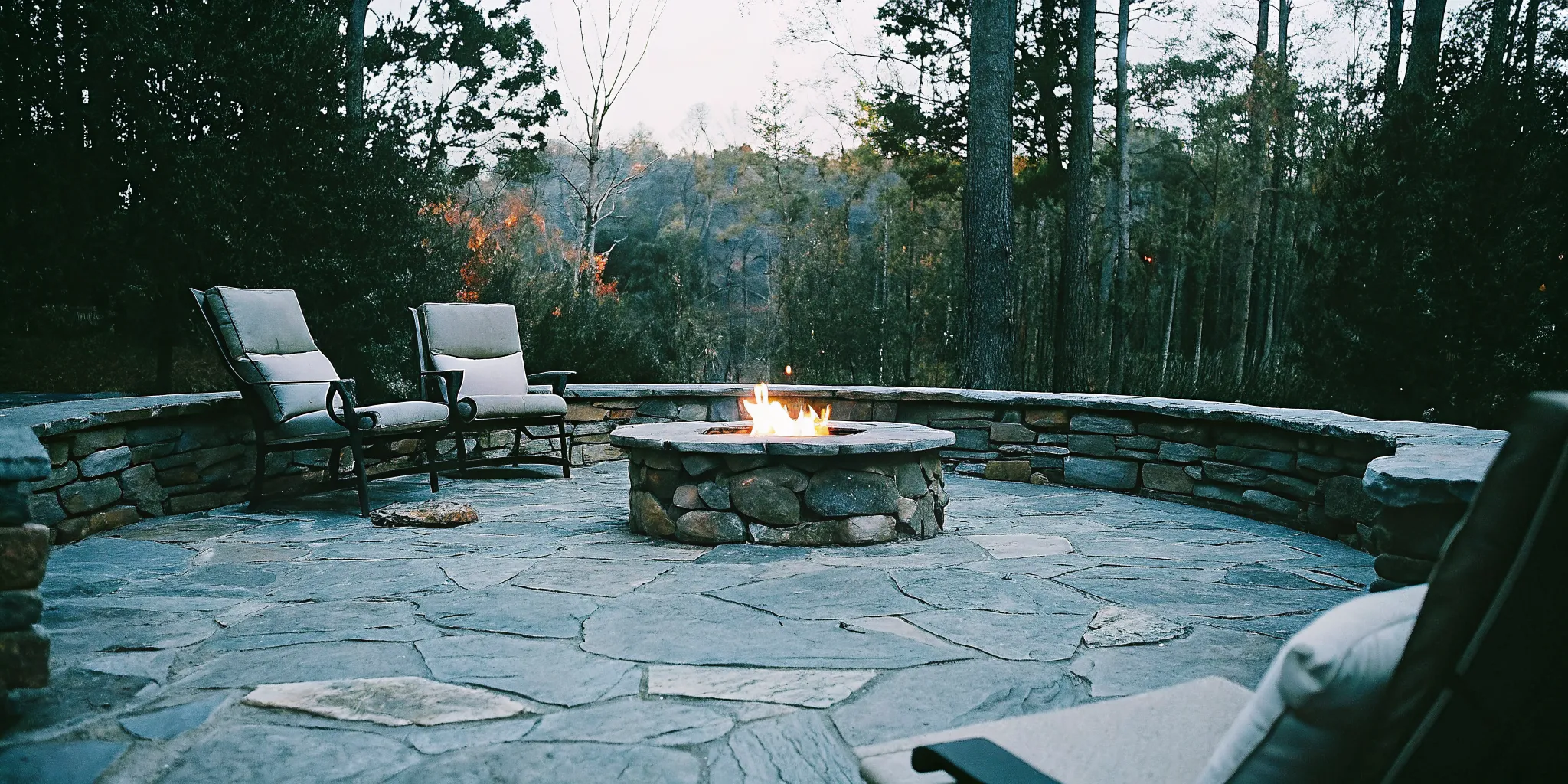
A circular layout creates a natural conversation area around a round fire pit. Chairs can face the flame while leaving an open gap for entry. A curved seat wall can frame part of the circle without closing it off. This layout works well when the fire feature is the main reason for building the patio.
A square or rectangular layout feels more structured. It pairs well with straight paver patterns, a square fire feature, and clean seat-wall lines. It can also fit a dining zone more easily than a full circle. During custom NC paver patio design, the shape should respond to the yard rather than force a preset plan.
Linear and multi-zone plans
A linear plan places the fire pit along one edge of the patio. This keeps the middle open for movement and gives the flame a clear role in the wider space. It can work well beside a long seat wall or at the far end of a paver run. The result feels connected without making every activity revolve around the fire.
For a larger paver patio with fire pit in NC, a multi-zone layout often gives the most flexibility. The fire area can sit near a dining table, grill station, or lounge group. Each zone should feel related, but each one needs enough room to work on its own.
- Use a change in paver pattern to mark the fire gathering area.
- Place a seat wall where it defines an edge without blocking the main route.
- Keep loose chairs easy to move when the guest list changes.
- Leave the central path open between the house and the yard.
Clear routes and well-placed seat walls
Safe movement matters as much as the patio shape. Guests should have a clear way to enter, sit, and leave without stepping through the main seating group. Avoid putting a seat wall across the natural path from the house. Also plan where chairs will move when people stand up or gather nearby.
A custom fire feature should anchor the space, not consume it. Place fixed walls where they guide the layout and support conversation. Then use open edges and movable chairs to keep the patio flexible. A thoughtful outdoor living design-build process can account for the site’s grade, drainage, and daily traffic before installation begins.
Base prep and drainage matter more in Carolina weather
A paver patio with fire pit in NC has to do more than look polished on installation day. Carolina rain, summer heat, clay-heavy soil, and freeze-thaw swings can expose weak prep over time. Water needs a planned route away from the patio, fire feature, and nearby structures. That route begins below the visible pavers.
A site plan before excavation
Good base prep starts with the yard, not a standard recipe. We look at the existing grade, low spots, roof runoff, nearby planting beds, and the path water takes after rain. NC State Extension places a base plan and site survey at the start of its landscape design process. That order matters because each yard handles water differently.
Excavation creates room for a stable base and lets the crew correct soft or uneven areas before pavers go down. The aggregate base is placed in layers and compacted so the finished surface has firm support. The patio also needs a planned slope that sends runoff toward a safe outlet. It should not direct water toward the house or let water collect around the fire pit.
Clay soil adds another site-specific concern. Water may linger where the ground drains slowly, while summer heat can dry the upper soil. A well-planned base helps the paver field stay even through those changes. The goal is a patio that remains comfortable for everyday use, not a surface that needs early repairs.
Support at the surface and edges
Edge restraint is easy to overlook because it is not the focal point. It helps keep the outside course of pavers in place as the patio sees foot traffic and changing weather. Joint material, edge restraint, and a compacted base work as one system. Skipping one part can leave room for shifting, gaps, or uneven spots later.
The layout also affects drainage. A fire pit area, seating wall, walkway, and patio border can change how water moves through the yard. A thoughtful custom NC paver patio design accounts for those pieces before construction begins. That is more useful than fixing a puddle after the patio is complete.
When permeable pavers make sense
Some properties benefit from a permeable pavement option. North Carolina DEQ explains that these systems capture stormwater through openings in the surface. Water then filters through an underlying aggregate reservoir. This can help manage runoff without treating the patio as a sealed slab.
Permeable does not mean one-size-fits-all. DEQ notes that the reservoir may let water enter the soil below. If the soil is not suited to infiltration, the system can hold water and release it to a surface route. For Carolina yards with clay soil, that distinction is important. Drainage planning should match the site, the patio layout, and the fire feature from the start.
Is gas or wood better for a paver patio fire pit?
Neither fuel type is right for every backyard. Gas suits homeowners who want a quick start and a simple shutdown after dinner. Wood suits people who enjoy tending a fire and want the sound and feel of burning logs.
Fuel choice at a glance
Your choice should match how you plan to use the patio. A gas feature may fit frequent weeknight gatherings because there is no wood pile or ash cleanup. A wood-burning feature may fit longer weekend evenings when building the fire is part of the experience.
. . . . . . . . . . . . . . . . . . . . . . . .| Planning point | Gas fire pit | Wood-burning fire pit |
|---|---|---|
| Daily use | Fast start and controlled shutdown | Requires fire building and tending |
| Heat and atmosphere | Steady flame with less smoke | Log fire with smoke, sparks, and shifting heat |
| Cleanup | Low routine cleanup | Ash removal and wood storage |
| Site planning | Fuel route and shutoff location | Safe wood storage and ember control |
| Paver protection | Heat-rated fire feature and proper base | Heat-rated liner or insert and proper base |
Planning the patio around the flame
Fuel choice affects the patio plan before installation begins. NC State Extension says landscape design starts with a base plan and a site survey. For gas, that early plan should cover the fuel route and shutoff location. For wood, it should cover storage, smoke direction, and spark control.
Do not treat the fire pit as a loose accessory placed after the pavers go down. The feature needs a stable base and materials rated for the expected heat. A custom NC paver patio design can account for circulation, seating distance, drainage, and the fire feature together.
Codes, placement, and lifestyle fit
Local rules and site limits should guide the final placement. Before work starts, confirm the rules for your address and the chosen appliance. Also check the maker’s instructions for clearances, fuel setup, and approved materials. Nearby structures, plants, furniture, and foot traffic all matter.
For a paver patio with fire pit in NC, start with your habits. Choose gas if easy operation and light cleanup matter most. Choose wood if tending a traditional fire is part of the appeal. The outdoor living design-build process should test that preference against the site plan before materials are selected.
Choose pavers and fire features that can handle real use
A paver patio with fire pit in NC should feel easy to use on a cool evening. The material plan needs to work for dinners, wet shoes, hot cookware, and ash cleanup. Start with the whole setting, not a single sample board. NC State Extension describes landscape design as a purposeful process that can increase enjoyment while limiting cost and environmental harm.
Pavers for daily life
Choose patio pavers for the way the space will be used. A textured surface can add grip near steps and cooking zones. It also brings a natural look to a large paved area. A smoother finish may be easier to sweep after meals, but it still needs safe footing when damp.
Color deserves the same care. Mid-tone blends tend to make dust, leaf litter, and the marks of daily use less obvious. Very dark pavers can make a sunny seating area feel warmer underfoot. Light pavers may show soot sooner around a wood-burning feature. A custom NC paver patio design should weigh these trade-offs before installation starts.
Protection around the flame
Do not treat the fire pit as patio furniture if it will stay in one spot. For a built-in feature, plan a fire-rated insert or burner system with the surrounding materials. The insert helps separate the flame zone from the finish pavers. Coping gives the top edge a finished surface and can make cleanup simpler.
For a wood-burning feature, add a spark screen that fits the opening. For a portable fire pit, use the protective mat or heat barrier called for by its maker. Check its placement and condition before lighting a fire. Keep the pit stable, and do not assume ordinary patio pavers can take direct heat without protection.
- Use materials suited to the chosen wood-burning or gas feature.
- Match coping color and texture to nearby pavers without hiding the fire zone.
- Confirm the right insert, screen, or protective mat before the first fire.
Details that support a finished look
Polymeric sand helps create a neat joint pattern when it is part of the approved paver system. That detail matters around curved borders and seating areas. It does not replace the right base, edge restraint, or drainage plan. North Carolina DEQ explains that permeable pavement can filter stormwater through an aggregate reservoir, so drainage choices should be made early.
Integrated fire features tend to age more gracefully because the patio, coping, joints, and flame area are planned together. Afterthought installations often force awkward gaps or added protection in visible places. A coordinated plan keeps service access in mind while giving the gathering area a settled, intentional feel.
Lighting, landscaping, and circulation finish the plan
A coordinated base plan
A paver patio with fire pit NC plan should start beyond the edge of the pavers. The fire feature, walkways, steps, planting beds, and gathering areas all affect how the yard works. Outdoor kitchens and hot tubs need clear places in that same layout. This early view helps the finished space feel connected instead of pieced together.
NC State Extension describes landscape design as the conscious arrangement of outdoor space for enjoyment, cost control, and lower environmental impact. Its process begins with a base plan and site survey. That makes the first design meeting the right time to review slopes, doors, views, and daily routes.
Lighting and movement after dark
Lighting should support the way people move through the yard. Path lights can guide the route from the house to the patio. Step lights can mark changes in height, while soft light near seating can help guests settle around the fire. The goal is not brightness everywhere. It is a clear path and a comfortable setting.
The midpoint is also the right time to review the full outdoor living design-build process. A coordinated plan lets one integrated Fun Outdoor Living team align the pavers, custom fire feature, lighting, and wider backyard design. This approach reduces late changes when features meet at the patio edge.
- Place walkways where people will carry food, drinks, and towels.
- Mark steps and paver transitions before finalizing the lighting layout.
- Leave comfortable routes between the fire pit, outdoor kitchen, and hot tub.
- Keep planting beds from crowding the main route or closing key views.
Planting, transitions, and nearby zones
Planting should frame the patio without taking over the circulation plan. Beds can soften hard edges and help connect the patio to the rest of the yard. Walkway widths, steps, and transitions also need to make sense from each door. They should lead guests naturally toward the fire pit and other gathering zones.
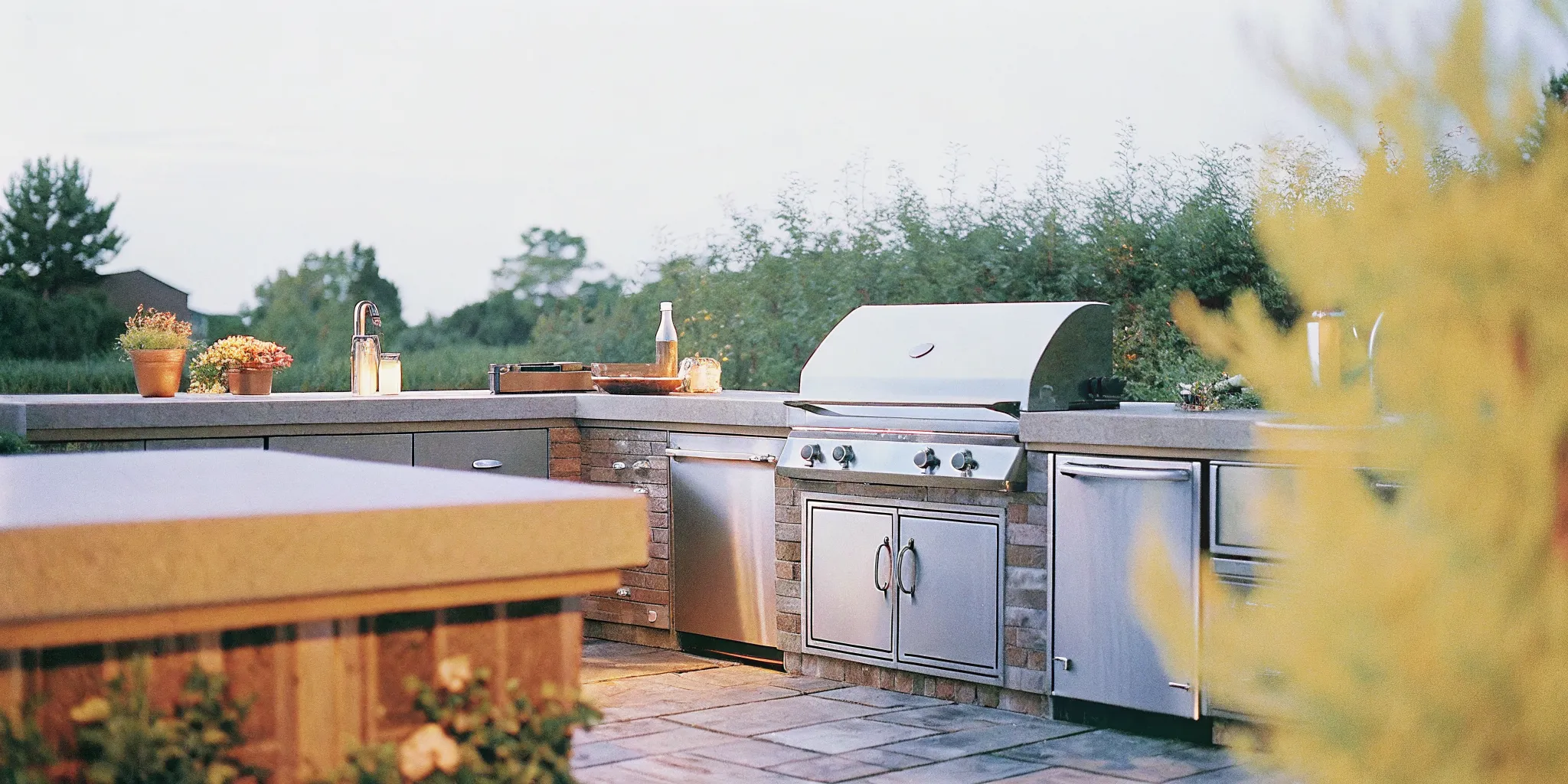
An outdoor kitchen adds another pattern of movement. Guests may gather near the cooking area, while others move between seating and the house. A hot tub creates a different route, often with towels and wet feet in the mix. Planning those paths early helps the patio serve more than one use without creating pinch points.
Start with the full yard, then refine the patio details. Fun Outdoor Living can coordinate the hardscape and surrounding zones under one plan. Its custom NC paver patio design approach helps align materials, walkways, and transitions with the fire feature. The result is a backyard layout built around how the space will be used.
How to plan a paver patio with a fire pit before you build
Site plan first
A paver patio with fire pit NC project should start with how your family will use the space. Think about quiet evenings, larger gatherings, food service, and clear walking paths. NC State Extension recommends starting landscape design with a base plan and site survey before listing activities and uses. Its landscape design guide offers a useful framework for early planning.
A written plan helps keep the fire feature connected to the full backyard layout. It also gives your design team a clear way to compare materials, seating, lighting, and site needs.
Layout and feature decisions
Define the purpose. Decide whether the patio is mainly for close family time, larger gatherings, or both. Note if you want dining, lounge seating, or an outdoor kitchen nearby.
Measure the activity zones. Mark the fire pit, chairs, tables, doors, steps, and main walking routes. Leave room for easy movement so the space feels open when guests arrive.
Study water flow and utilities. Review slope, low spots, downspouts, and likely routes for gas or electric lines. NC DEQ explains that permeable pavement can filter water through an aggregate reservoir. Your site’s soil and grade should guide the drainage plan.
Choose the fire type. Compare wood-burning and gas options based on your routine, desired upkeep, and site conditions. Ask which clearances, fuel routes, and shutoffs belong in the design.
Select the pavers. Look for a durable surface that fits the home’s style and the Carolina climate. Compare color, texture, edge details, and the pattern around the fire feature.
Place lighting and furnishings. Plan lighting for steps, paths, seating edges, and serving areas. Sketch furniture sizes before you build so chairs do not crowd the fire pit or block traffic.
Check the full plan. Review drainage, base prep, utilities, access, and the fire feature as one system. Ask your local jurisdiction which permits and code checks may apply before work begins.
Professional review before ground breaks
A final review can catch conflicts that are easy to miss on a sketch. A local design team can shape the patio around site conditions, safety needs, and the way you want to host.
Bring your measurements, inspiration photos, and feature list to the conversation. The outdoor living design-build process can help turn those details into a coordinated plan before construction starts.
Frequently Asked Questions
How much does a paver patio with a fire pit cost in NC?
Cost depends on patio size, paver choice, drainage work, seating, lighting, and the fire pit type. One 2025 cost guide places many paver patio and fire pit projects between $6,000 and $22,000. A site-specific design and estimate will be more useful for a North Carolina home.
Do I need a permit for a fire pit and paver patio in NC?
Permit and approval needs depend on the property, local rules, fire pit fuel, utility work, and any added structures. Before construction, confirm the plan with the local permitting office and fire authority. Homeowners with an HOA should also review neighborhood requirements before choosing the fire pit location or final patio layout.
Can I put a fire pit directly on a paver patio?
A fire pit can be integrated into a paver patio, but the flame area needs materials selected for heat exposure. Ordinary patio pavers should not serve as the firebox. The design should separate the fire feature from nearby seating, walking paths, structures, and landscaping. Final placement depends on the site and the chosen fuel type.
Is a gas or wood-burning fire pit better for a paver patio?
Gas fire pits offer quick starts, steady heat, and less ash cleanup. Wood-burning fire pits provide a traditional flame and may suit homeowners who enjoy tending a fire. The better choice depends on local rules, utility access, smoke considerations, maintenance preferences, and how the patio will be used for everyday evenings or larger gatherings.
How should drainage be planned for a paver patio with a fire pit?
Drainage planning starts with the site’s slope, soil, runoff patterns, and nearby structures. The patio should move water away from gathering areas and protect the base from settling. In some settings, permeable pavement can capture stormwater and filter it through an aggregate reservoir, as explained by the North Carolina Department of Environmental Quality.
Ready to plan a fire pit patio built for NC?
Waiting can turn a promising backyard project into costly rework if drainage, base prep, seating, and fire pit placement are addressed too late. Starting now gives you time to compare practical layouts, choose gas or wood, and shape gathering zones around your space and priorities. A site-specific plan helps your patio support everyday use while accounting for Carolina weather and the way you want to host family and friends.
Ready to take the next step? Schedule a consultation to discuss a durable paver patio, a well-placed fire feature, and the design choices that fit your backyard. Our team can help you turn broad ideas into a clear project direction before small planning gaps become expensive construction problems.