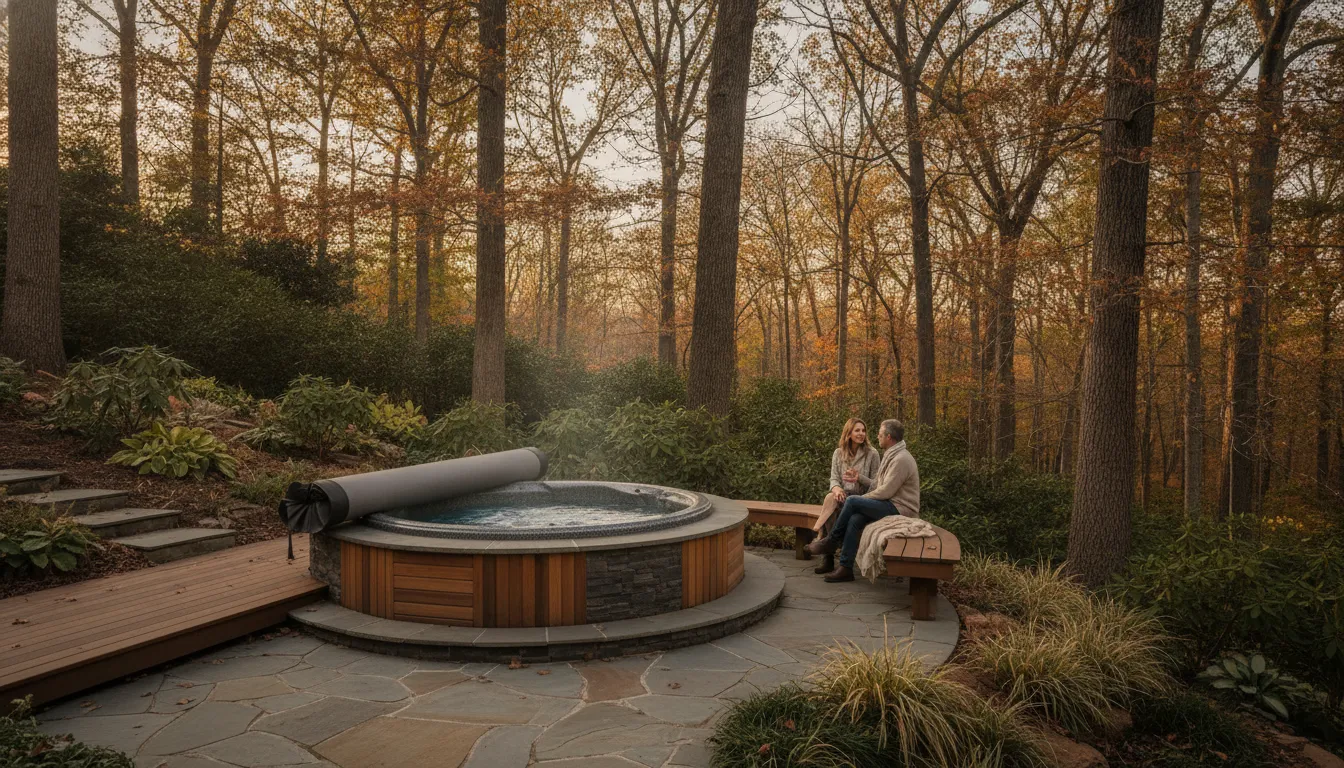
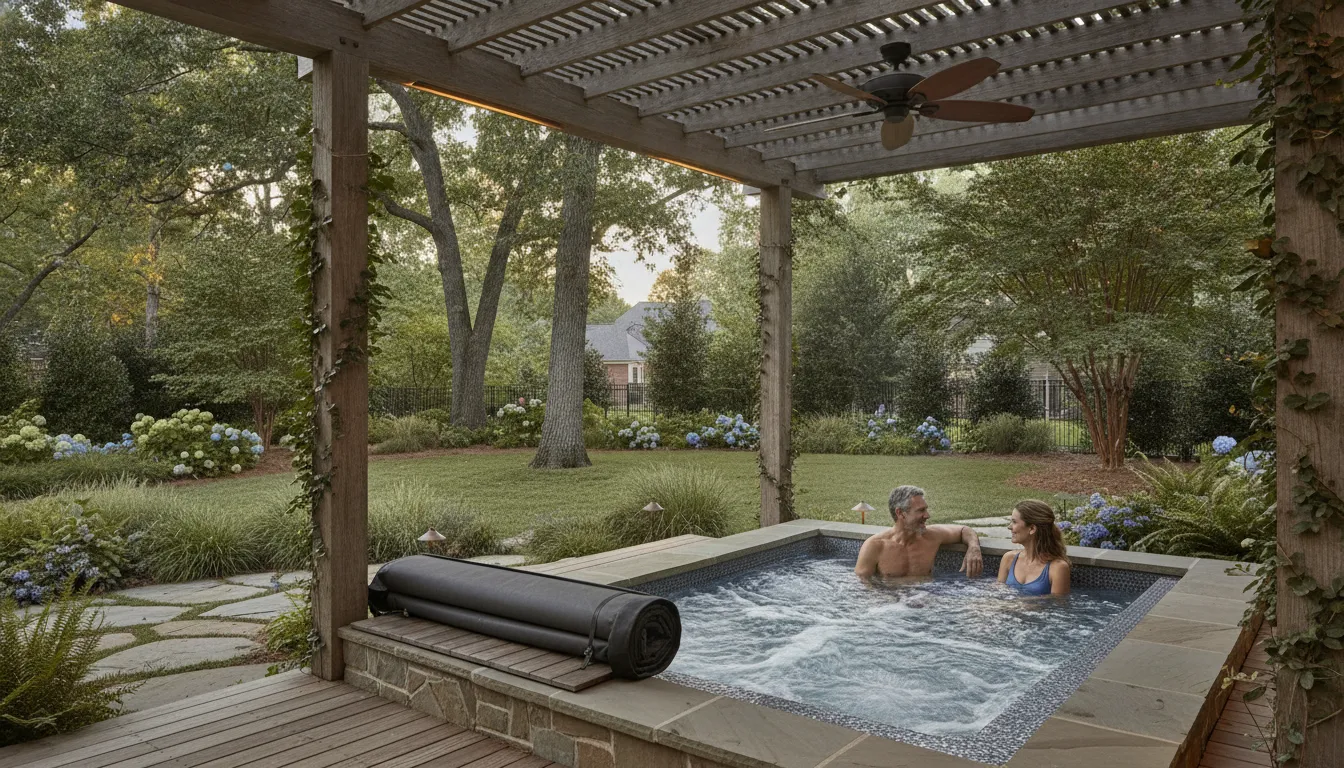
Hot tub energy use North Carolina homeowners see does not stay the same every month. The heater works harder when outdoor temperatures fall, wind pulls heat from the cabinet and cover, and the spa has to recover after a long soak with the cover open. In summer, the surrounding air may be warmer, but humidity, storms, water care, and frequent use still influence the total.
Explore the Fun Outdoor Living hot tub gallery to see how different spas can fit into a Carolina backyard, then use the seasonal guidance below to ask better ownership questions.
That is why there is no single honest answer to this question: How much energy does a hot tub use in North Carolina? Your result depends on the model, insulation, cover, set temperature, soak schedule, placement, weather, water-care routine, and local electric rate. A homeowner in the mountains may have a different winter pattern from one near the coast. Two neighbors with the same spa can see different usage because one soaks every evening and the other uses it twice a week.
How Hot Tub Energy Use North Carolina Changes Through the Year
Energy use follows heat movement. A spa loses heat through its water surface, cover, shell, cabinet, plumbing area, and equipment compartment. The heater then runs long enough to bring the water back to the selected temperature. The larger the temperature difference between the water and the surrounding air, the more important insulation, cover fit, wind protection, and usage habits become.
North Carolina also is not one uniform climate. The National Oceanic and Atmospheric Administration’s North Carolina climate overview describes meaningful differences related to elevation and geography. A home in the western mountains can experience colder winter nights than a Piedmont or coastal property. It is more useful to plan around the actual conditions at your home than to assume that “North Carolina weather” means one predictable load.
The U.S. Department of Energy’s analysis of portable electric spa energy performance identifies insulation, covers, and sealing as important ways to limit heat loss. Its discussion is helpful because it explains the mechanism: the cover limits conductive heat transfer and also reduces convection and evaporative cooling above the water. Those principles apply when you are comparing ownership details, even though your exact monthly consumption will depend on your spa and routine.
| Season | What commonly changes | Energy-use focus |
|---|---|---|
| Winter. | Colder air, wind, occasional freezes, and longer recovery after the cover is opened. | Heat retention, a sound cover, freeze protection, and sensible set-point changes. |
| Spring. | Variable temperatures, pollen, rain, and more debris around the cover and filters. | Cover condition, filter flow, water care, and avoiding unnecessary open-air heat loss. |
| Summer. | Warmer air, high humidity, storms, and potentially more social use. | Shade, cover timing, set temperature, evaporation, and use of pumps or features. |
| Fall. | Cooler nights, shorter days, leaves, and a gradual return to frequent soaking. | Debris control, cover sealing, wind exposure, and preparing for colder nights. |
The calendar is a starting point, not a bill forecast. A covered, sheltered spa with a well-fitting cover may use less energy than an exposed spa in a milder month. A long party with the cover open can create more recovery work than several short, covered soaks.
Winter: The Season of Heat Retention
Winter is usually the clearest time to notice the effect of outdoor conditions on hot tub energy use. When the air is cold, the spa has to replace heat lost through the water surface and surrounding structure. Wind can make that loss more noticeable by moving colder air across the cover, cabinet, and exposed plumbing areas. Opening the cover for a soak also creates a sharp opportunity for heat and moisture to escape.
A dependable cover is the first winter check. It should fit the spa closely, drain properly, and remain supportive rather than waterlogged. A damaged hinge, compressed foam core, torn vapor barrier, or gap around the edge can reduce its performance. If you are unsure whether a cover is still doing its job, review the guidance on hot tub replacement covers and ask which option matches the exact model.
Winter is also a poor time to turn the spa completely off without understanding the freeze-protection instructions. Water remains in the shell, plumbing, heater, and pumps. If a power interruption or equipment problem occurs during a freeze, the risk is not only lower comfort but also damage. Follow the manufacturer’s directions for your spa and ask your service team what to do before a forecasted hard freeze or extended outage.
That does not mean the set temperature must stay unchanged for every homeowner. If you will be away for several days, an approved economy or vacation setting may reduce heating demand, but the correct procedure depends on the model, weather, and time away. A modest adjustment that follows the manual is different from repeatedly draining, restarting, or making an unplanned change that creates a longer recovery period.
Placement matters most when winter wind reaches the spa directly. A covered patio, fence, or landscape layer can reduce exposure when it is designed with safe access and adequate airflow. Do not box the equipment into a damp corner or block the cover from opening. The goal is a comfortable path from the house, a dry and secure cover, and service access when the heater or pump needs attention.
Spring: Variable Weather and Flow Efficiency
Spring can look inexpensive on a monthly energy chart because the air is often moderate, but it is a demanding transition season for ownership. North Carolina spring weather can move from cool nights to warm afternoons quickly. Pollen, leaves, rain, and wind also arrive at the same time that many households begin using the spa more often.
Debris does not automatically make the heater use more energy, but neglected debris can affect the system around it. A dirty filter can restrict flow and make water care more difficult. A cover covered in pollen or rainwater can become heavier and less convenient to use, which may lead to longer periods with the spa open. A damaged seal or poorly stored cover can also undermine heat retention.
Use spring as a reset:
- Inspect the cover for cracks, sagging, waterlogging, torn seams, and gaps around the edge.
- Rinse the cover and clean it according to the manufacturer’s instructions.
- Check and clean the filters on the schedule recommended for your spa and usage.
- Make sure roof runoff, irrigation, and standing water are not directed at the equipment or cover.
- Confirm that the set temperature still matches the way your household is using the spa.
Regular care supports energy efficiency indirectly because it keeps the spa operating as designed and prevents small ownership problems from becoming larger service issues. Fun Outdoor Living’s hot tub maintenance schedule is a useful companion for organizing recurring checks. Always use the manufacturer’s instructions as the final authority for chemicals, filters, drain intervals, and equipment settings.
Summer: Warmer Air Does Not Mean “No Energy Use.”
Summer usually reduces the temperature difference between hot water and outdoor air. The heater may have less recovery work than it does on a cold winter night. Summer use can still change the total. The spa may be used more often, the cover may stay open while guests are outside, and pumps, lights, jets, or other features may run during longer sessions.
Hot, humid weather also changes the comfort decision. Some homeowners lower the set temperature slightly when they expect frequent summer use. Others keep a consistent temperature so the spa is ready for a short evening soak. Either choice can be reasonable if it follows the model’s operating guidance and still supports safe water care. Avoid making a large change simply because a general online number says it will save energy; the recovery period and actual usage pattern matter.
Shade can make the setting more pleasant and may protect the cover and cabinet from constant sun exposure. A covered patio or pergola should still allow the cover to open fully and leave the required service clearance. Keep the spa covered when it is not in use, even on a hot day. An open water surface loses heat through evaporation and also collects more airborne debris.
Summer storms create another practical issue. Lightning, power interruptions, windblown branches, and heavy rain can affect how you use the spa. Follow the manufacturer’s safety instructions and local electrical requirements. Do not improvise with extension cords or bypass a disconnect. The hot tub installation requirements guide can help you identify the planning questions to raise with a qualified electrician and installer.
Water care is part of the summer energy conversation because frequent use and warm conditions can change the maintenance routine. Testing, filter care, and appropriate drain-and-refill timing help keep the system ready without turning the heater and pumps into a substitute for neglected water care. If you are unsure what the water is telling you, Fun Outdoor Living’s hot tub water tester guide offers a starting point for questions to ask.
Fall: Preparing for Cooler Nights and More Debris
Fall is often when energy use begins to rise again. Evening temperatures drop, daylight shortens, and many households return to longer, more frequent soaks. The water may be comfortable when you enter, but the heater has more work to do after the cover has been open in cool air.
Leaves are the obvious fall issue, but the cover is the energy issue to watch. A cover that is difficult to lift, covered with wet debris, or not secured against wind is more likely to be left open or handled roughly. Clear leaves before they accumulate, keep the cover closed between uses, and make sure the lifting system does not force the cover against a wall or railing.
Fall is also a good time to decide whether your placement still works. If the path from the back door becomes dark or slippery, the spa may be used less conveniently, and an open cover may remain unattended while someone looks for a light or towel. Good lighting, drainage, a dry walking surface, and a clear cover-resting location support the simple behavior that saves the most heat: close the spa promptly after use.
Before winter arrives, ask about service access, the equipment panel, and the procedure for a long outage. Fun Outdoor Living’s hot tub FAQ can help you prepare questions about covers, water care, electrical planning, and ownership support.
The Biggest Energy Variables Are Not the Calendar
Seasonal patterns are useful, but five variables usually explain more about one household’s energy use than the name of the month.
| Variable | Why it matters | What to compare or track |
|---|---|---|
| Set temperature | A higher water-to-air temperature difference generally means more heat must be replaced. | Choose a comfortable setting and note whether changes create longer recovery times. |
| Cover fit and condition | The cover is the barrier over the largest heat-loss surface when the spa is closed. | Fit, seal, foam condition, weight, and whether it is closed promptly. |
| Insulation and cabinet design | Shell, floor, cabinet, and equipment-area insulation affect how quickly heat leaves the spa. | Model-specific construction details and documented performance information. |
| Exposure and wind | Direct wind and poor placement can increase heat loss and make the cover harder to use. | Wind direction, shade, shelter, drainage, and service clearance. |
| Use and recovery | Long sessions, frequent cover opening, and powered features create more recovery work. | Soak length, number of users, cover-open time, pumps, jets, and lights. |
Manufacturer comparisons are most useful when they describe the exact model and test conditions. Be cautious with a generic “low operating cost” claim that does not state the water temperature, ambient temperature, cover, usage, or electric rate behind it.
How to Estimate Your Hot Tub’s Actual Energy Pattern
Published estimates can help compare models, but your electric bill is the best evidence for your home after the spa is installed. You do not need to guess from the number of jets. Instead, establish a simple baseline and record the conditions around it.
- Find the correct circuit or meter information. Ask your electrician or utility how the spa is measured. Do not open electrical equipment or work inside a panel yourself.
- Record the starting date and set temperature. Note whether the spa is in an exposed, covered, or sheltered location.
- Track usage for at least a week. Record session length, number of users, cover-open time, and whether jets, lights, or other features were used.
- Note unusual weather. Write down cold snaps, strong wind, heavy rain, heat, or a power interruption.
- Compare like periods. A winter week with daily evening soaks is not a fair comparison with a summer week when the spa was used once.
- Apply your actual electric rate. If you have a reliable kWh reading, multiply it by the applicable rate and account for any fixed charges or tiered pricing separately.
This approach will not predict every future bill, but it will show which behaviors and weather conditions affect your own home. If you are choosing a model, ask the dealer for model-specific performance information and the assumptions behind it. If you are evaluating an existing spa, ask a qualified service professional to investigate unusually long heating cycles or a cover that no longer fits.
Practical Ways to Manage Energy Without Giving Up Comfort.
Efficient ownership is mostly a series of small, repeatable habits rather than a single dramatic change:
- Close and secure the cover as soon as the soak is finished.
- Keep the cover clean, dry, and supported according to the manufacturer’s care instructions.
- Choose a location that balances shelter, drainage, shade, access, and service clearance.
- Use a reasonable set temperature rather than repeatedly making large adjustments.
- Follow the approved vacation or economy procedure when you will be away.
- Keep filters and water chemistry within the manufacturer’s recommended routine.
- Ask about insulation, cover sealing, and model-specific energy information before buying.
- Have electrical, foundation, and freeze-protection questions answered by the right qualified professionals.
Do not sacrifice safety or equipment protection for a hoped-for reduction in energy use. A spa that is shut down incorrectly before a freeze, placed on an unsuitable base, or operated with a damaged cover can create repair costs and inconvenience that outweigh a small short-term saving.
Frequently Asked Questions
Does a hot tub use more energy in winter in North Carolina?
It often can, because colder outdoor air and wind increase the temperature difference between the water and its surroundings. The actual change depends on the spa’s insulation, cover, placement, set temperature, usage, and the conditions at your location. Mountain and Piedmont homes may experience different winter demands from coastal homes.
Should I lower my hot tub temperature in summer?
You can ask whether a modest seasonal adjustment fits your model and routine, but there is no universal setting that is best for every household. Consider how often you use the spa, how long it takes to recover, and the manufacturer’s approved operating modes. Keep water care and safe operation as priorities.
Does leaving the cover open use more electricity?
It can increase heat loss, especially when the surrounding air is cooler, windy, or dry. The open time, water temperature, weather, and spa design all matter. Closing and securing a properly fitted cover promptly is one of the simplest ways to limit unnecessary heat loss.
Can a new cover reduce hot tub energy use?
A properly fitted replacement cover can improve the barrier over the water when an old cover is damaged, sagging, waterlogged, or poorly sealed. It is not a guaranteed bill reduction because usage and weather still matter, but cover condition is an important part of the energy picture. Match the cover to the exact spa and follow the manufacturer’s care instructions.
Is it cheaper to turn a hot tub off between uses?
Not necessarily. Turning a spa off may reduce standby heating in some situations, but reheating a large volume of water can take time and may not fit your routine. It can also create freeze risk if water remains in the plumbing during cold weather. Ask the manufacturer or service team whether an economy or vacation mode is appropriate for the length of time you will be away.
How can I compare hot tubs for energy use?
Compare the exact model’s insulation approach, cover construction and fit, sealing, controls, water volume, operating modes, and available performance information. Ask what assumptions support any energy estimate. Then consider the practical factors that determine whether you will keep the cover closed, maintain the filters, and use the spa in the way the estimate assumes.
Plan for a Comfortable Carolina Year
The most useful way to think about hot tub energy use in North Carolina is not as one annual number. Think in patterns: cold nights increase the value of heat retention, spring debris makes cover and filter care important, summer habits affect open time and recovery, and fall preparation makes winter ownership easier. The right model, cover, placement, and maintenance routine can make those changes more predictable.
When you are ready to connect those questions to your backyard, schedule a free home consultation with Fun Outdoor Living. Bring your site measurements, preferred soaking routine, utility questions, and the season that concerns you most. You can also visit the hot tub gallery to compare the experience before making a decision.