
=== BODY ===
A beautiful Carolina sunset should not force you inside your home. A custom outdoor lighting plan makes your patio, hot tub area, and outdoor kitchen come alive after dark while keeping every step safe and every moment relaxing.
Schedule your free home consultation and let our team design an outdoor lighting system for your Charlotte home.
Understanding Outdoor Lighting Design Charlotte: Task, Ambient, and Accent
Three layers form the foundation of any professional outdoor lighting design in Charlotte. Task lighting delivers focused brightness for cooking and stairs. Ambient lighting creates a soft background glow using careful control of both illuminance. The light falling on a surface , and luminance , the light reflected off a surface. As detailed in North Carolina energy research. Accent lighting highlights trees, water features, or stone walls to add depth and drama. Together these layers turn your yard into an inviting evening space.
| Lighting Type | Purpose | Best For | Fixture Examples |
|---|---|---|---|
| Task Lighting | Focused brightness for specific activities | Grill prep, food counters, stairways | Under-hood lights, gooseneck lamps, step lights |
| Ambient Lighting | Soft background glow for comfort and safety | Dining areas, seating zones, pathways | String lights, rail strips, well lights |
| Accent Lighting | Highlight features and add depth | Trees, water features, fire pits | Uplights, bullet lights, spotlights |
A smart backyard layout is only as good as the light that guides you through it. When the sun sets, your patio and deck should transform into warm, inviting spaces for dining, relaxing, and gathering with friends. Achieving this transition requires balancing safety and comfort by blending different fixtures into a cohesive plan.
Balancing Light Falling and Light Reflected
To plan a deck or patio layout well, you need to understand a key rule of light science. A successful plan focuses on both illuminance and luminance. According to North Carolina energy guidelines, illuminance is the amount of light that falls onto a surface like a walkway or table. Luminance is the light that emits or reflects from that surface. If you only focus on light falling down, you risk creating harsh glare. By paying attention to reflected light, you can bounce soft glows off wood decks, stone pavers, and brick walls to keep the mood calm.
Task Lighting for Prep and Safety
Certain zones in your backyard need focused light so you can perform specific tasks safely. Cooking and food prep areas require direct light to work safely after dark. High-output lights should point directly down onto your grill, side burners, and prep counters. For walkways and deck stairs, low-voltage step lights built into the risers offer excellent safety. They cast light directly onto the treads without shining into your eyes as you walk up and down.
Ambient Glow for Dining and Seating
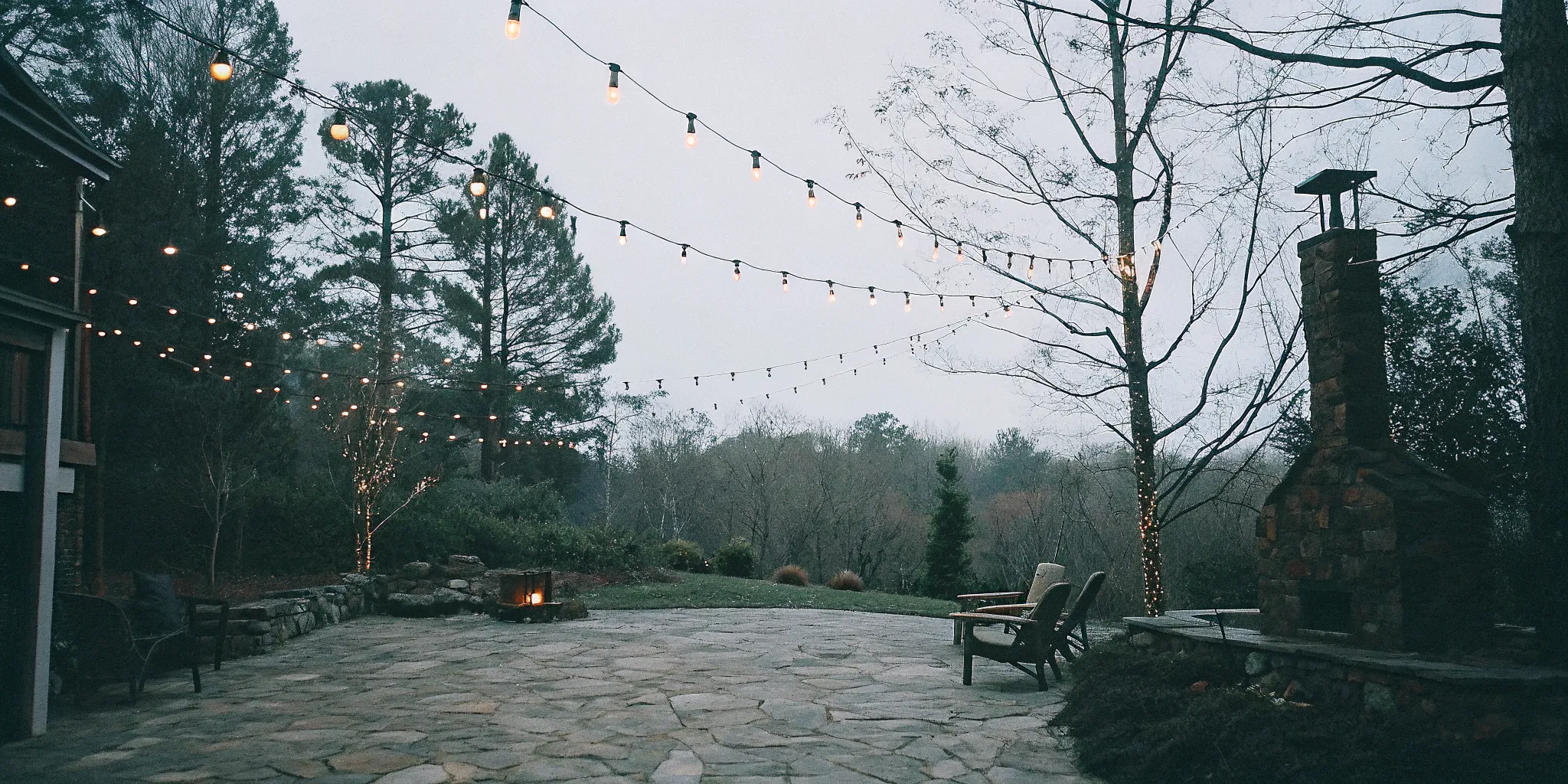
In contrast to busy work zones, social spaces like dining tables and fire pits need a soft touch. Overhead string lights draped under a pergola create a classic, festive mood. For the deck perimeter, we often hide low-profile fixture strips under the top railing. This casts a gentle wash of light down the posts and floorboards. This layout keeps the center of your seating area relaxed and cozy while defining the edges of your outdoor living room.
How to Light Your Hot Tub and Spa Area for Safety and Ambiance
The best approach for lighting a hot tub area uses low-voltage indirect fixtures placed around the perimeter. Avoiding bright overhead glare on the water surface keeps the space calming while underwater LED lights in Hot Spring Spas provide both safety illumination and customizable mood colors. Pathway lighting between the house, changing area, and spa ensures safe footing during evening soaks.
Soft Ambient Glow
To make your spa area feel like a quiet retreat, avoid bright overhead spotlights. Strong direct beams can cause harsh glare on the water, which disrupts your relaxation. Instead, use soft indirect lights around the spa zone. Low-voltage LED fixtures tucked into nearby plantings or under steps work best. These lights focus on the ground, offering enough light to see while keeping the atmosphere calm. When selecting light levels. Professional designers focus on both illuminance , the light falling on a walk path , and luminance , the light reflected back to your eyes. According to lighting design guidelines from the North Carolina Department of Environmental Quality, balancing these two factors prevents eye strain and reduces dark shadows.
Underwater LED Options
Modern spa systems, such as Hot Spring Spas, come with built-in underwater LED lights. These systems let you change the water color to match your mood, from cool blues for quiet recovery to warm tones for family time. Underwater lights are also a key safety feature, showing the exact depth of the water and the location of the steps. We recommend setting these lights to a low warm setting during evening soaks. This keeps the water visible without making the rest of your backyard feel too dark.
Perimeter Accent Lighting and Pathway Safety
Defining the outer edge of your spa zone helps separate the tub area from the rest of your yard. If you have a deck, a pergola, or privacy screens around your tub, you can install small accent lights along the base or posts. Downward-facing step lights are highly useful for wood decks or paver patios. They cast a gentle pool of light right where you step, which prevents slips when your feet are wet. Stringing low-wattage bulbs high above the spa can add a warm festive feel without casting harsh shadows below.
- Use low-voltage path lights to mark the route from the house to the spa
- Install step lights directly into deck risers for wet-foot safety
- Place accent lights behind plantings or low walls to avoid direct glare
- Add dimmer controls to adjust brightness as the evening progresses
Contrast Therapy Area Lighting
If you pair your hot tub with a cold plunge or sauna for contrast therapy, clear lighting between these stations is vital. Moving from hot water to a cold bath requires safe footpaths as your body adjusts to the temperature shift. Use low-profile pathway lights to connect each wellness zone. These fixtures should sit low to the ground to illuminate wet stones or deck boards. This setup keeps the transitions safe and makes your entire backyard wellness space look cohesive and inviting.
Outdoor Kitchen and Grill Island Lighting Design
An outdoor kitchen needs three zones of light: focused task lighting directly over the grill and prep surfaces. Ambient under-counter strips for dining transitions, and accent lights that highlight the stone or masonry work. Premium grills from Bull and Lynx often include built-in interior lights, while ceramic grills like Big Green Egg require dedicated overhead fixtures. Dimmer switches let you shift seamlessly from cooking mode to dinner mode.
Focused Task Lights for Prep and Cooking
Your primary goal when placing grill lights is safe and accurate food preparation. Standard landscape lights do not give off enough illumination to safely check meat temperature or chop vegetables at night. For the best cooking experience, we suggest installing directional under-hood grill lights or strong gooseneck task lights directly above your cooking surface. These fixtures focus light exactly where you are working so you can see your food clearly without casting shadows on the grill grate.
This design focus aligns with key government lighting guides. According to the North Carolina Department of Environmental Quality, good lighting design must balance both illuminance , the amount of light falling onto a surface , and luminance , the light reflected back. Keeping this balance on your countertops prevents eye strain and makes evening prep work much easier.
Under-Counter and Island Accent Lights
Once the cooking is done, you want the bright task lights turned off so you can enjoy a quiet dinner. This is where under-counter strip lighting and island accent lights become useful. Installing low-voltage LED strip lights beneath the overhang of your stone countertops or grill island bar top casts a soft downward glow. This under-counter setup highlights the rich texture of your masonry while providing subtle path lighting for your guests.
When you work with an experienced builder to plan your outdoor kitchen, you can wire these different areas to separate switches or dimmers. This lets you control the mood easily. Dimmer switches allow you to turn down the bright prep lights and raise the warm low-level under-counter lights to create a relaxed resort-style dining environment.
Special Considerations for Premium Grills
If your backyard kitchen features high-end appliances like Bull or Lynx grills, or a Big Green Egg, your lighting plan must account for their unique designs. Many modern Bull and Lynx gas grills come with built-in interior halogen or LED lights that illuminate the grate from inside when the lid is open. For ceramic kamado grills like the Big Green Egg, which do not have internal lights. A dedicated overhead light on a nearby wall or pergola structure is the most reliable way to light the deep interior cooking chamber.
Pathway, Accent, and Fire Feature Lighting Ideas
Well-planned pathway lighting uses low-profile LED fixtures positioned along walkway edges to illuminate the ground without glare. Accent uplighting highlights trees and landscape features by casting light upward from durable brass or copper fixtures. Fire features from gas fire pits to stone fireplaces double as natural light sources, producing a warm flickering glow that electric bulbs cannot replicate. Underground utility mapping is essential before any installation begins.
Safe Pathway and Step Lighting
Walkway lights keep your family and guests safe. Path lights should point down to show the ground without blinding your eyes. Low-profile LED fixtures work best along walkways, garden borders, and steps. Placing fixtures behind sidewalks or at the edge of pavement keeps paths clear. This setup also matches Charlotte public right-of-way rules, which require lights to stand clear of pedestrian or vehicle traffic paths. For steps, we build tiny lights right into the risers to show each tread clearly.
Accent and Uplighting for Landscape Features
Accent lights bring your trees and plants to life at night. We use uplighting to highlight the textured trunk of a palmetto or the wide canopy of a mature oak. This style shines light up from the ground to create deep shadows and dramatic shapes. To get the best look, we choose durable brass or copper fixtures that stand up to hot Carolina summers and wet winters. High-quality metals resist rust and seal out water, so your system lasts for years without failing.
Fire Features as Natural Light Sources
Gas fire pits and stone fireplaces do more than keep you warm. They also act as a natural centerpiece that gives off a soft flickering glow. This dancing light creates a cozy mood that electric bulbs cannot match. We often pair fire features with low-voltage landscape lighting to soften the transition from bright flame to dark yard. This smart layering makes your seating area feel private, warm, and inviting.
For homeowners planning a full design, combining deck and patio lighting with fire features creates a layered effect that extends the usable hours of your backyard well past sunset.
Safe Underground Planning
Planning is key before we dig or install any ground fixtures. Property lines and easement areas often contain hidden lines. Under local rules, owners are responsible for private items like sprinkler systems, invisible dog fences, PVC conduits, and water lines. Duke Energy or the City of Charlotte will not cover damage to these private lines in the public right-of-way as stated on the Charlotte Street Lighting portal. We map out all utilities first to keep your yard safe during the setup.
Professional Outdoor Lighting Design vs. DIY: What Charlotte Homeowners Should Know
DIY lighting kits from retail stores use plastic fixtures that rust quickly in Carolina humidity and create uneven glare. Professional outdoor lighting design in Charlotte uses full 3D planning to map every fixture placement before installation, ensuring balanced light distribution, no neighbor glare, and compliance with City of Charlotte street lighting standards. An in-house design-build team provides long-term support that no DIY solution can match.
The Limits of DIY Products
Most retail store lights do not last. They are made from thin plastic or light metal that rusts quickly in the humid Charlotte weather. These DIY options also lack the power to light your space well. They often create harsh glare or dim spots rather than a soft warm glow. If a fixture breaks or a bulb burns out, you usually have to replace the whole unit because you cannot buy single parts for them.
The Power of 3D Planning
An expert team does not guess where to put lights. We use 3D design tools to show you exactly how the light will fall on your deck, patio, or kitchen before we dig. This step lets us balance the space and avoid dark spots or bright hot zones. It also keeps your lights from shining into your neighbors’ windows or onto a public street. Our 3D plans make sure every light has a clear job.
Key advantages of professional planning include:
- Custom fixture placement tailored to your specific yard layout
- Transformer and wire sizing calculated for safety and performance
- Underground utility mapping before any digging begins
- Dimmer and zone controls for flexible mood adjustment
- Full integration with existing paver patios, decks, and landscaping
In-House Team Support
Working with our local in-house design and build team means you get support that lasts for years. We handle the entire project from the first sketch to the final switch. You do not have to worry about third-party workers or bad communication. Our showrooms in Charlotte, Pineville, Matthews, Cornelius, and Lake Norman let you see fixtures in person and talk with an expert. If your system ever needs service or a new bulb, our team is ready to help you maintain your backyard investment.
Schedule a free home consultation with our team to discuss your outdoor lighting project.
Frequently Asked Questions
What is the difference between illuminance and luminance in backyard lighting?
In backyard design, illuminance is the amount of light that falls onto a surface like a patio walkway. Luminance is the light that reflects back to your eyes from those surfaces. Proper planning balances both to prevent harsh glare. According to a North Carolina State Energy Report, managing this balance is key to creating a comfortable outdoor space.
Are there local rules for placing outdoor lights near Charlotte streets?
Yes, residential lighting must not interfere with public pathways. A safe outdoor lighting design in Charlotte should keep all private fixtures on your own property. According to the City of Charlotte, any lighting placed on public rights-of-way is not permitted if it blocks streets or sidewalks. Keeping lights on private soil prevents safety hazards and avoids city fines.
Do I need to check for buried utility lines before installing backyard lights?
Yes, finding buried utilities is a vital step before you dig. Private items like sprinkler lines, dog fences, and irrigation pipes are easily damaged during wire installation. The City of Charlotte notes that owners are responsible for these private items rather than utility companies. Working with a professional design team ensures these lines are mapped and protected before work starts.
What is the best way to light a hot tub area safely?
The best hot tub lighting uses low-voltage indirect fixtures. Avoid placing bright overhead lights directly above the water. Instead, use soft under-cap stone lights around the spa steps and subtle LED path lights. This design improves safety when you step in and out while keeping a relaxing ambiance. Adding dimmers lets you adjust the glow to match the mood of your evening soak.
Ready to Create Your Outdoor Lighting Design in Charlotte?
Leaving your backyard dark means you lose hours of relaxation on your patio, hot tub, or outdoor kitchen. Choosing an incomplete lighting setup often leads to harsh glare or unsafe dim pathways that keep you indoors. By planning your layout early with the right team, you can enjoy a beautifully lit space ready for evening guests right when construction wraps up.
Schedule a free home consultation with Fun Outdoor Living to design your custom backyard lighting system. Our team serves Charlotte and the surrounding Carolina region from five local showrooms.