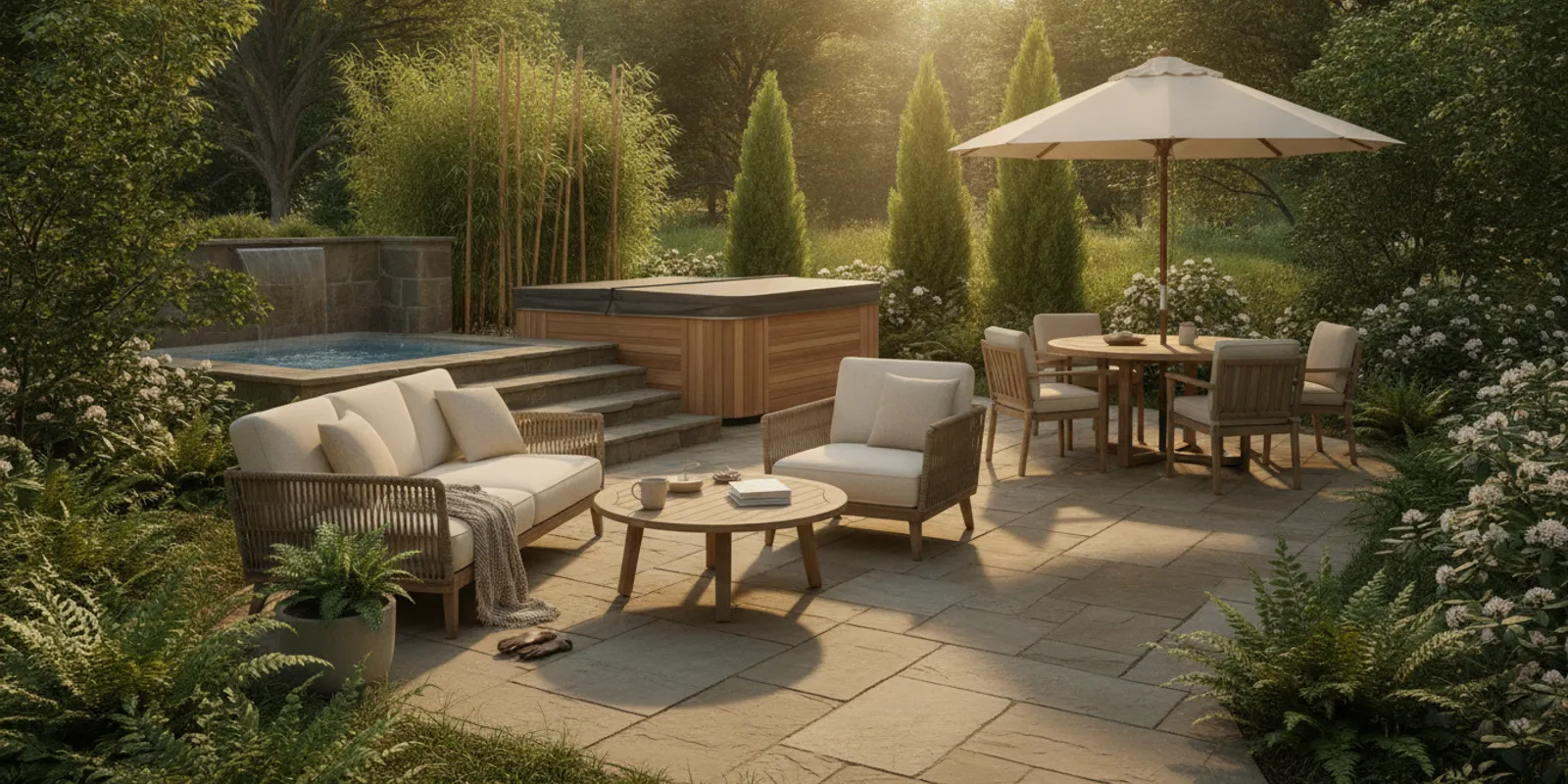
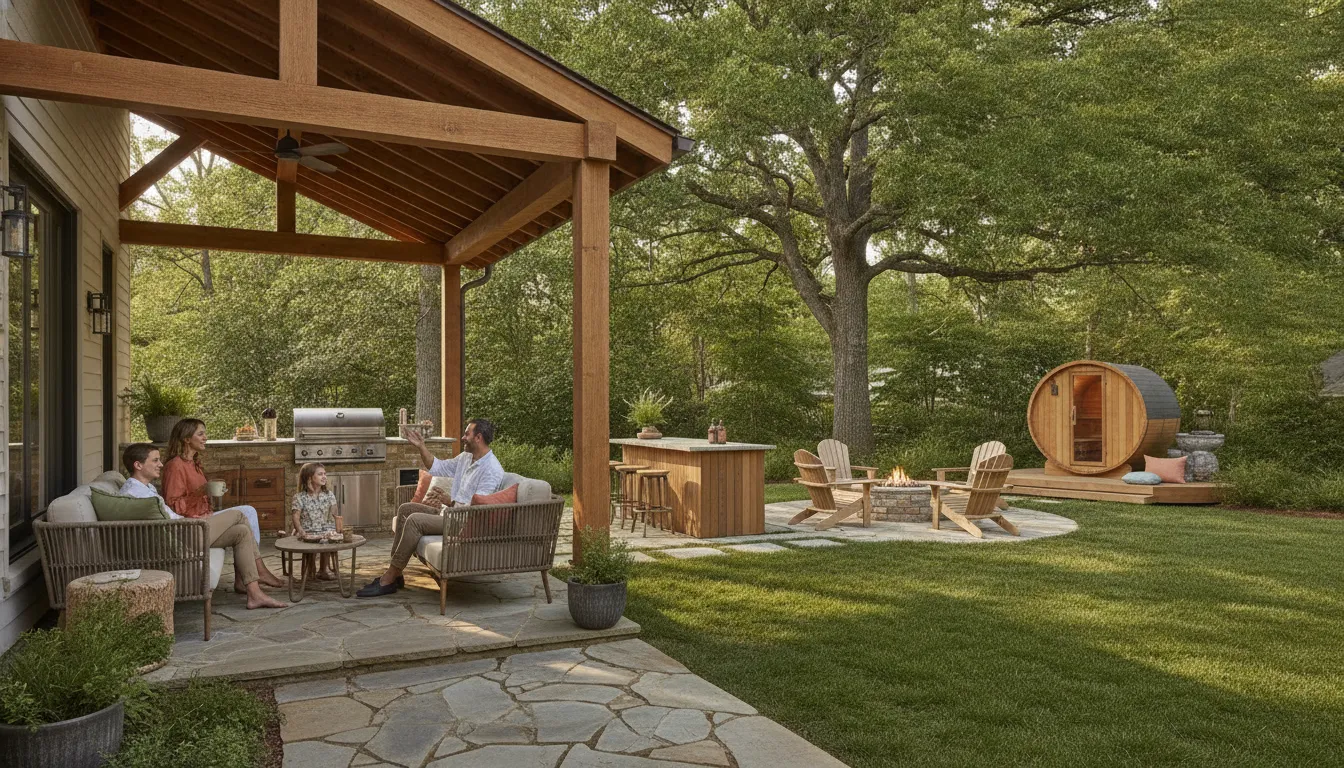
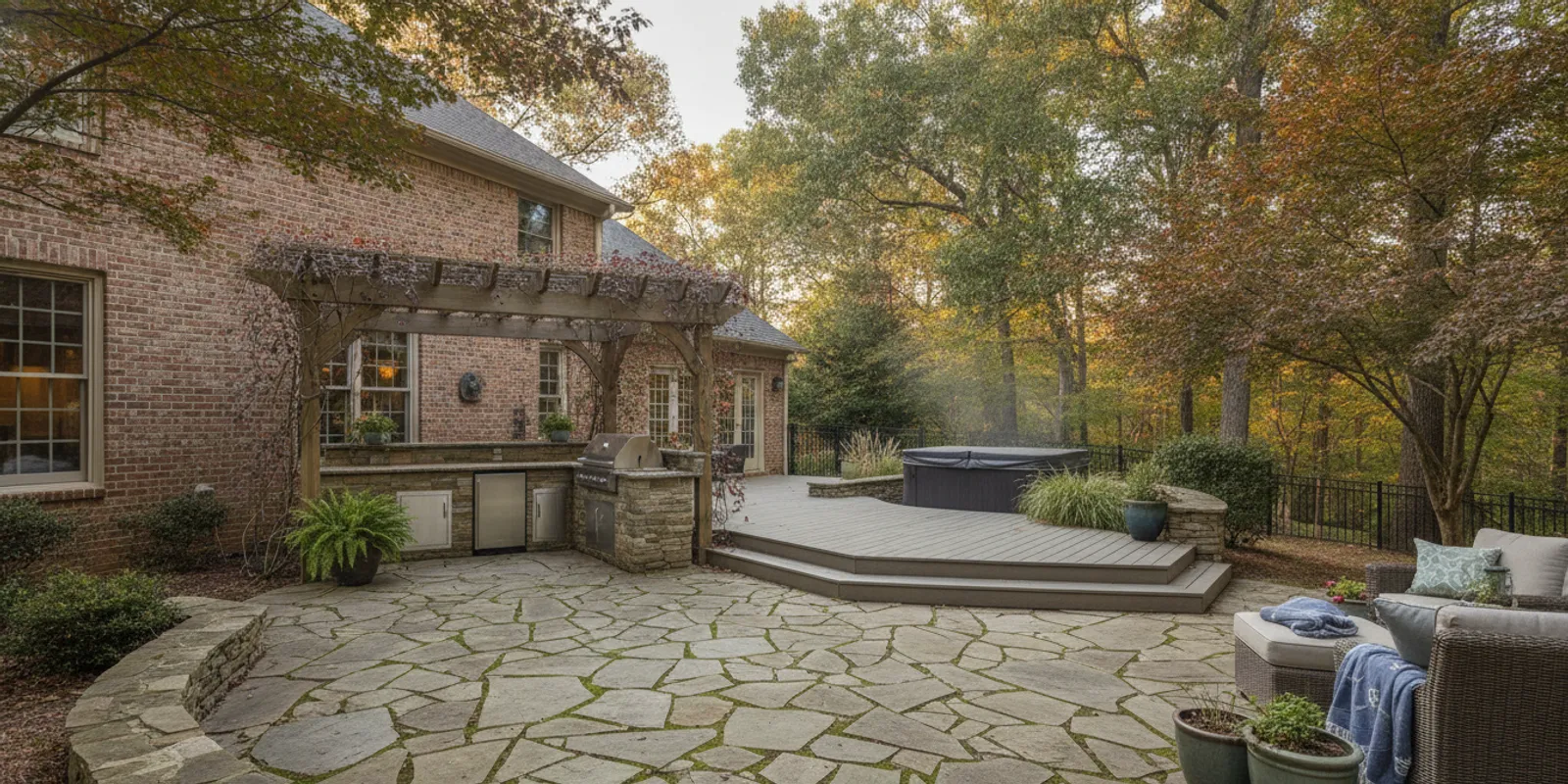
Choosing an outdoor living contractor Matthews NC homeowners can rely on means looking beyond a portfolio of attractive patios. A backyard project may bring together design, site preparation, construction, product installation, and ongoing care. The right partner should explain how those pieces fit, who is responsible at each stage, and what support remains after the final walkthrough.
Request help planning your outdoor living project
Use the questions below to compare contractors on the work that affects the whole project—not just the first feature you plan to build. Whether you are considering a deck, patio, pergola, outdoor kitchen, fire feature, or hot tub area, a clear process can help you make decisions with fewer surprises.
What Should an Outdoor Living Contractor Handle?
Start by defining what you expect the contractor to take responsibility for. A backyard can involve several connected decisions: where people will gather, how they will move through the space, what needs a foundation or utility connection, and how each feature will be maintained. Some companies focus on one part of this work. Others can coordinate design, construction, product selection, installation, and service.
Neither model is automatically right for every homeowner. A single-feature project may need a specialist. A multi-element transformation often benefits from a team that can discuss how the parts interact and clarify responsibility when the work crosses disciplines. Ask for a written scope that names the deliverables and the party responsible for each one.
- Design: Who develops the layout, and how will you review it before construction?
- Site planning: Who evaluates access, slopes, drainage, and the intended locations of structures or equipment?
- Construction: Which work is performed by the contractor’s own team, and which parts are assigned to other firms?
- Products: Who confirms that selected outdoor products suit the planned location and use?
- Closeout and care: Who explains operation, maintenance, and the process for requesting service?
Look for direct, consistent answers. If a contractor says a project is “turnkey,” ask what that means in the agreement. It should be clear whether the phrase includes design revisions, product delivery, installation, cleanup, and post-installation assistance—or only some of them.
It can help to translate a general promise into a simple responsibility map. For each major item, write down who proposes it, who approves it, who performs it, and who answers if something needs attention later. For example, if a spa is part of a new deck, ask who coordinates the location and delivery path, who confirms the supporting structure, and who explains the spa’s operation after installation. The purpose is not to demand that one company perform every specialized task. It is to prevent an important task from falling between providers.
How Can You Compare Design and Construction Coordination?
Good coordination starts before materials arrive. A plan should show how the pieces relate to one another, not simply list a patio, a pergola, and a cooking area as separate purchases. For example, the location of a dining table affects circulation. The position of a grill affects how the cook works and where smoke travels. A future spa may require a different access route and a suitable supporting surface.
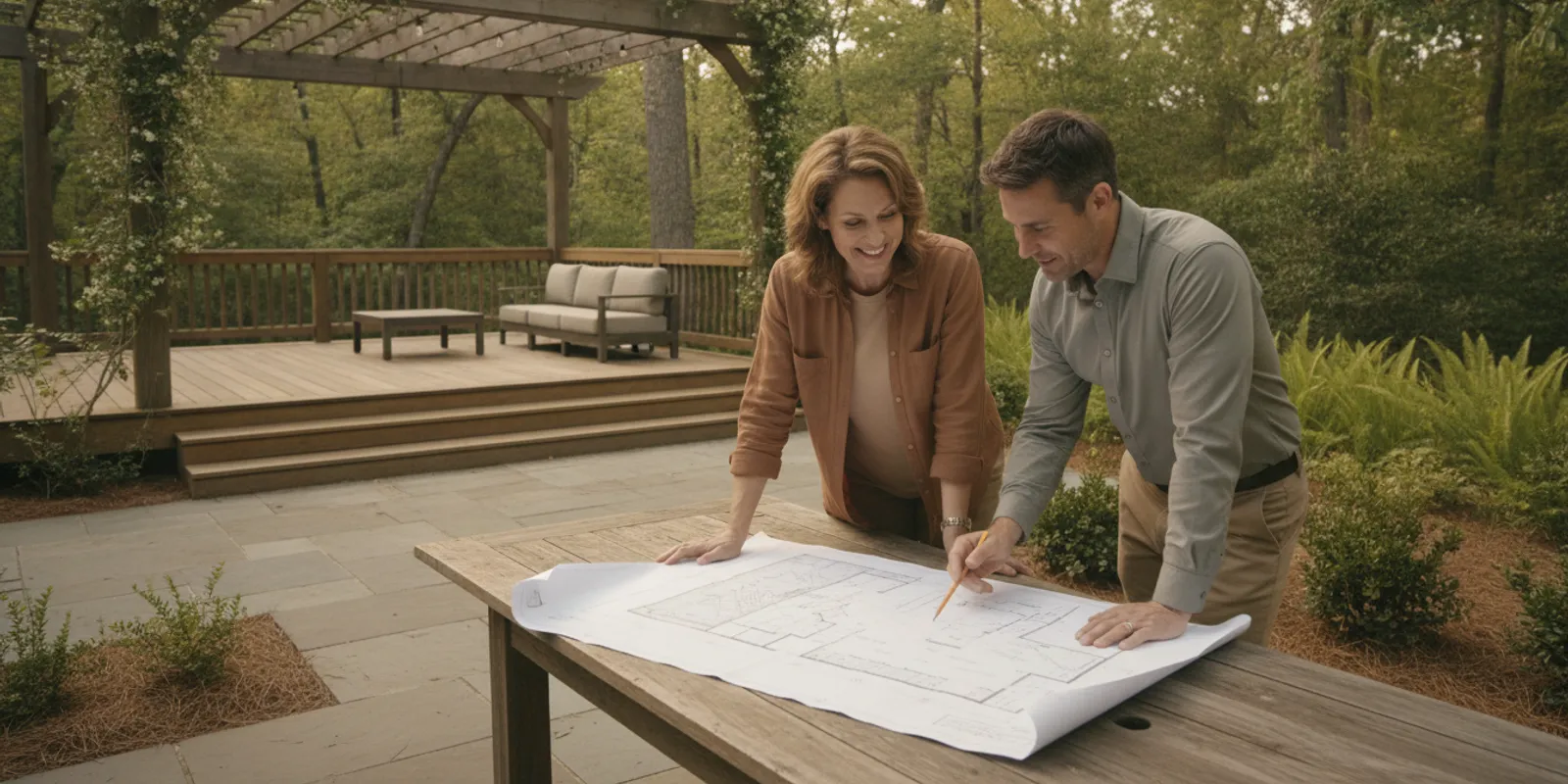
Ask how the contractor moves from your first conversation to a buildable plan. Will you see a drawing or 3D concept? Who confirms dimensions and site conditions? How are changes documented if you adjust the layout or finish? These questions help you understand when decisions need to be made and how they affect the scope.
In Matthews, look closely at how the proposed layout fits the actual yard. Consider the home’s doors and windows, existing trees, neighboring sightlines, sun and shade, and the path between the house and gathering areas. A contractor should invite those practical conversations rather than defaulting to a standard layout.
Ask the team to walk through a typical sequence, such as:
- Discuss how you expect to use the space and identify priorities.
- Review the property, access, and constraints that may affect the design.
- Develop and review a layout, including product and finish choices.
- Confirm the written scope, schedule assumptions, and points of contact.
- Coordinate construction, installation, and a final review of completed work.
This is a framework for asking questions, not a promise that every project follows an identical schedule. The contractor should explain what applies to your yard and what approvals or site checks need to happen before work begins. Ask when you will have a chance to pause and review the design before any irreversible work starts. A useful plan-review meeting should leave you able to point to the intended feature locations, understand how people will move between them, and identify what remains undecided.
If you are comparing a deck and shade structure, consider the questions raised in this guide to hiring composite deck builders and the practical planning issues in the pergola planning guide. These can help you prepare focused questions about scope and materials without treating a generic example as a plan for your property.
Which Questions Reveal Who Will Do the Work?
Coordination can become difficult when a homeowner has to manage several separate vendors without a clear lead. Ask who will be your day-to-day contact and who is accountable for coordinating the different trades. Find out whether the design team, construction crew, and product installers work for the same company, or whether some work is subcontracted.
Using subcontractors is common in construction; the important issue is whether roles and accountability are clear. Ask who will schedule each part, how questions are escalated, and who resolves an issue that touches more than one part of the project. If the contractor uses outside specialists, ask how their work is included in the overall scope and how you will know when each stage is ready for the next.
Fun Outdoor Living describes its model as combining design, sales, construction, and service with in-house employees. When comparing any provider, use that kind of claim as a starting point for specific questions: Which team members will be involved in your project? What work do they handle directly? Who is the single point of contact? The answers matter more than a broad label. You can also review the company’s team information to understand who to contact with questions.
Request a realistic communication plan, not just a promise to keep you updated. Ask how often you can expect a progress update, which channel the team will use, and whom to contact if a decision is time-sensitive. If you work during the day, for example, agree on whether approvals can be handled by email or require a scheduled call. Confirm how the contractor will document a decision made in a conversation so the plan, proposal, and field team stay aligned.
Also ask who can approve a change on the contractor’s side. A crew member may be able to explain a site condition, but you should know who can confirm its effect on scope, cost, or schedule. A clear escalation path helps avoid informal decisions that later become disagreements about what was authorized.
What Should You Check in a Proposal?
Compare proposals line by line rather than choosing only by the bottom-line total. The documents may differ in design detail, included preparation, materials, product models, installation responsibilities, and closeout. If something is not clear, ask the contractor to explain it in writing before you make a decision.
| Proposal area | What to compare | Question to ask |
|---|---|---|
| Scope | Included work, exclusions, and who performs each task | Which parts of the project are not included in this proposal? |
| Design | Drawings, dimensions, revisions, and approval points | What will I review before construction starts? |
| Materials and products | Specific selections, finish details, and installation boundaries | Are these named products and finishes included, or are they allowances? |
| Site preparation | Access, removal, grading, drainage, or other site work as applicable | What site conditions could change this scope? |
| Schedule | Sequence, decision deadlines, and how updates are shared | Who contacts me if a milestone needs to move? |
| Closeout and service | Walkthrough, operation guidance, warranty information, and service contact | Who should I contact after installation if I have a question? |
Ask how changes are handled once work is underway. A clear process should explain how you receive the change details and any cost or timing effect before approving it. Keep a copy of the final scope, product selections, and approved changes so everyone is working from the same information.
Also ask what the proposal assumes about site conditions. A contractor cannot always know every hidden or inaccessible condition before work begins. Rather than expecting a guarantee against every surprise, ask what conditions could alter the work and how the team will discuss them with you.
Before comparing totals, check that each quote describes a similar finished result. One proposal may include demolition and disposal, while another may leave those tasks to you. A product allowance is not the same as a named model and finish. A drawing may be conceptual rather than dimensioned for construction. Write down each difference, then ask each contractor to clarify whether it can be included, excluded, or priced separately. This is a more useful comparison than treating the lowest initial number as the complete cost.
Finally, read the payment schedule and decision deadlines alongside the work sequence. Confirm what each payment milestone represents and whether it depends on delivery, completed work, or another stated event. Ask how a delay in product selection or a site discovery changes the schedule. Written terms cannot remove every uncertainty, but they can make assumptions and next steps visible.
How Do Product and Site Expertise Affect the Plan?
When a backyard includes a hot tub, swim spa, sauna, or outdoor kitchen, product expertise should connect to the construction plan. Ask how the proposed location affects access, delivery, clearances, supporting surfaces, utilities, and future maintenance. A product conversation that happens separately from site planning may leave practical questions unanswered.
For instance, a spa location should be considered in relation to the route used to bring it into the yard, the surface that supports it, and the path you will use in different weather. An outdoor kitchen plan should consider the way people gather and move around the cooking area. A pergola or covered porch should be designed around how you want shade and shelter to work with the house and the rest of the yard.
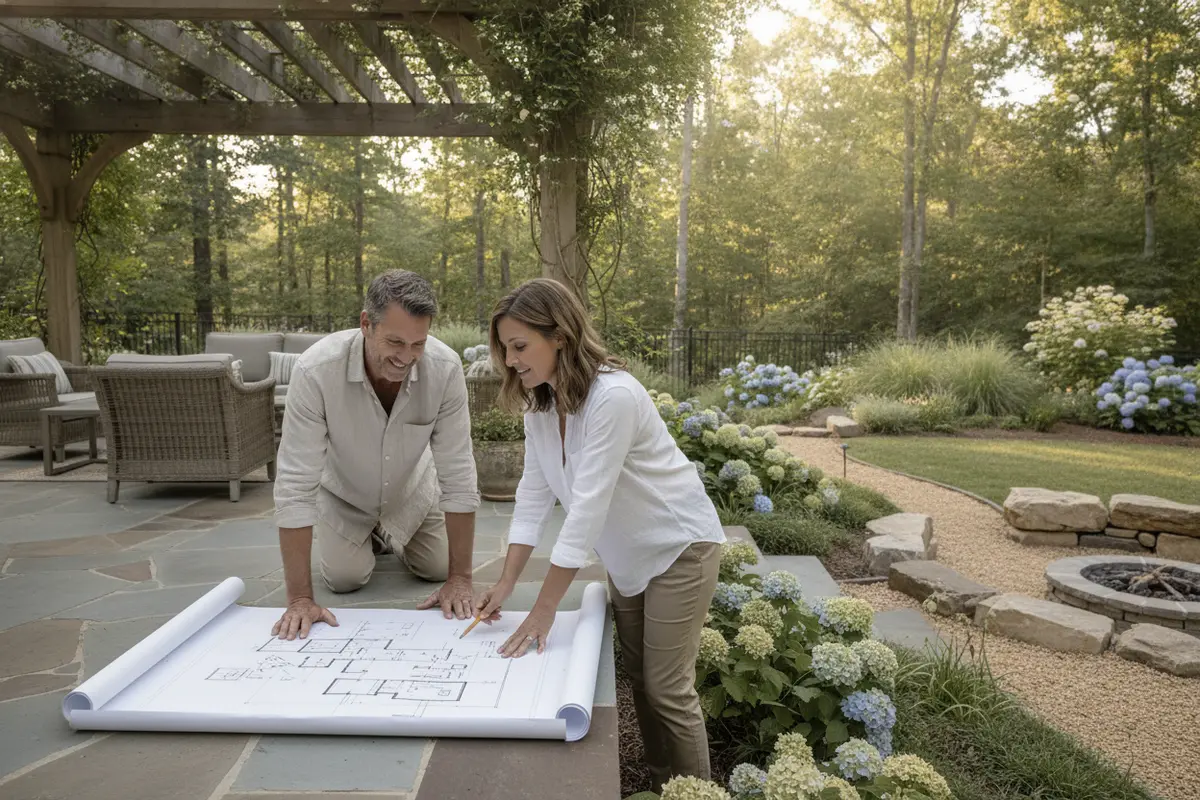
Ask to see examples of projects that included features similar to yours. Look for evidence that the contractor thought about the connections between features, not only the individual finishes. You can browse this hot tub deck framing overview to identify coordination topics to raise when a spa and deck are planned together. Examples are useful for discussing preferences, but they do not substitute for a site-specific assessment.
If a spa or wellness feature is part of the plan, ask the contractor to explain how it will fit the space and what installation coordination is included. The Vigor Cold Plunge product information offers one example of a product conversation to connect with questions about location, use, and installation. Product details can help you identify preferences, but a product page does not replace a site-specific plan.
It is reasonable to ask what the contractor needs to verify before confirming a location. Depending on the feature, that may include measurements, access width, the surface or structure, utility planning, or manufacturer installation requirements. Ask which items are confirmed and which are still assumptions. If the project combines features, request that they be shown together on the layout so a cooking area, seating zone, path, and equipment access do not compete for the same space.
How Can You Evaluate Service After Installation?
A completed project is not the end of the relationship if it includes equipment or features that need care. Before signing, ask what support is available after installation, where to get operating guidance, and how to request help if a question comes up. Clarify which service is provided by the contractor and which is handled by the product manufacturer or another provider.
For a hot tub, for example, ask who can explain water care and where to go for ongoing maintenance help. Fun Outdoor Living provides information about its service and maintenance support. If a project includes other equipment, ask about the service path for each item instead of assuming one contact covers everything.
Check how warranties and service responsibilities are described. Ask for the applicable documents and a plain-language explanation of whom to contact for different concerns. Avoid relying only on a verbal assurance such as “we take care of everything.” A clear aftercare plan identifies the right contact and next step.
At the final walkthrough, test the handoff. Ask the contractor to show you how equipment starts and stops, where operating instructions are kept, and what routine care you are expected to handle. Make a short list of any open items, who owns each one, and when you should expect an update. If a warranty depends on registration or specific care, ask where those instructions are documented. The goal is to leave with practical information, not simply a finished-looking space.
What Local Details Should Matthews Homeowners Discuss?
Every property has its own conditions, so ask the contractor to assess the actual site rather than making assumptions from a photograph. Discuss access to the backyard, existing hardscaping, slopes, drainage patterns, mature landscaping, and where materials or equipment can be brought in. Ask whether any municipal approvals, utility checks, or other site-specific reviews may be needed, and who is responsible for confirming them. For work that may require a contractor license, check current requirements directly with the North Carolina Licensing Board for General Contractors rather than relying on a verbal summary.
It also helps to discuss how the yard changes through the day and across seasons. Where do you want morning sun or afternoon shade? Will the space be used for family meals, quiet time, entertaining, or wellness routines? Which features do you want now, and which might you add later? Those answers help the contractor plan circulation and avoid placing one feature where it makes a future improvement harder.
Before a site visit, gather a few useful details: a rough list of the features you want, a sense of the budget range you are prepared to discuss, photos of the yard, and any plans or records you already have. Mark the doors you use most, the areas you want to keep, and where equipment access might be possible. You do not need to solve the layout yourself. These details help the contractor ask better questions and distinguish your must-haves from options you may consider later.
Fun Outdoor Living serves homeowners through showrooms in the Charlotte/Pineville area, Matthews, Cornelius, Rock Hill, and Winston-Salem. Its company profile describes a single-source approach across design, construction, products, and service. When evaluating any contractor, make sure the first conversation leads to questions about your property—not only a presentation of products. You can learn more about the company and its approach before comparing it with other options.
How Can You Compare Contractors Fairly?
Use the same questions with each contractor and take notes while their answers are fresh. A compact scorecard can keep the comparison focused on fit and clarity, not just presentation style.
- Design process: Can the team explain how your goals become a reviewed plan?
- Coordination: Is there a clear lead for construction, installations, and decisions?
- Scope: Are inclusions, exclusions, assumptions, and change procedures written down?
- Product fit: Can the team connect product choices to location, access, and use?
- Communication: Do you know who will update you and how questions will be handled?
- Aftercare: Is there a named path for service, maintenance guidance, or warranty questions?
Notice not only what a contractor promises but how they explain tradeoffs. A thoughtful partner will ask about your priorities, point out decisions that affect the plan, and distinguish confirmed details from items that still need review. Be cautious if key answers remain verbal, the scope is difficult to compare, or you cannot tell who is accountable for the next step.
Use a practical interview process. First, ask each contractor to describe a project similar in complexity—not necessarily one that looks identical to your yard. Then ask what decisions had to be coordinated, what changed during the work, and how the homeowner was informed. You are listening for a specific process rather than a perfect-project story. Next, ask each contractor to walk through your own priorities in order: what can be designed now, what needs site verification, and what should wait until a later phase. Clear reasoning about tradeoffs can be more revealing than a polished presentation.
After the conversations, compare your notes under the same headings: design, scope, communication, product and site knowledge, and aftercare. Mark statements as written, confirmed verbally, or still unanswered. That simple distinction helps you see where to follow up before signing. If two proposals are close, a clear answer about accountability or a complete handoff process may matter more to you than a small difference in presentation.
Before committing, read the agreement carefully and make sure the written terms match what you discussed. Ask for clarification if the project scope, product choices, payment milestones, change process, or responsibility for coordination is unclear. A thorough conversation at this stage can help set realistic expectations on both sides.
Contact the team to discuss your backyard project
Frequently Asked Questions
What should I ask an outdoor living contractor before hiring?
Ask who designs and builds the project, who coordinates any separate specialists, what the proposal includes and excludes, how changes are approved, and who provides support after installation. Request clear written answers for important scope and responsibility questions.
Should one contractor handle every part of a backyard project?
Not necessarily. A specialist may be a good fit for a focused project. For a backyard with several connected features, compare whether one lead can coordinate the work or whether you are comfortable managing multiple providers. In either case, confirm who owns each task and how handoffs are managed.
How do I compare two outdoor living proposals?
Compare the scope, design detail, materials and products, site preparation assumptions, schedule communication, change process, and post-installation support. Ask each contractor to clarify exclusions and allowances so you are comparing similar work rather than totals that cover different things.
Why ask about service before construction begins?
Because equipment and outdoor features may require care, operating guidance, or warranty support after the build. Knowing the right contact and process in advance helps you understand what support is included and what you may need to arrange separately.
Choose a Partner Who Makes Responsibilities Clear
The strongest fit is not simply the contractor with the biggest portfolio or the longest feature list. Look for a team that listens to how you want to use your Matthews backyard, connects design choices to construction realities, explains who is doing each part, and gives you a clear path for support once the project is complete. With those answers in hand, you can compare partners with confidence and move toward a backyard that works as a whole.