A well-planned fire feature can change how you use a backyard in North Carolina. It gives family and guests a comfortable place to gather after dinner, extends patio season, and can become part of the landscape rather than an afterthought. The installation, however, involves more than choosing a bowl or fireplace style. Fuel, clearances, drainage, materials, local requirements, and the relationship to your patio or outdoor kitchen all deserve attention before construction begins.
Outdoor fire pit installation NC projects should begin with a site review and a clear choice between gas and wood-burning fuel. A professional installer can coordinate design, foundation work, gas connections when needed, materials, and code considerations so the finished feature is safe, durable, and suited to your home.
That planning process starts with the experience you want around the fire. Gas offers convenient control and a cleaner routine, while wood creates the familiar crackle, aroma, and ritual of a traditional fire. Understanding those trade-offs will make the rest of the design decisions much easier.
Gas vs. Wood-Burning Fire Pits: Which Is Right for Your NC Home?
In Fun Outdoor Living’s experience, the right fire feature depends less on a universal “best” fuel and more on how you plan to use the space. A gas fire pit or fireplace suits homeowners who want an easy, predictable gathering point. Wood-burning designs create a more traditional campfire ritual, with natural crackling and changing flames. Both can be thoughtfully integrated into a Carolina patio or backyard, but they ask different things of the homeowner.
| Consideration | Gas | Wood-burning |
|---|---|---|
| Daily use | Automated ignition and simple on/off control make it easy to enjoy a fire for a short evening or a planned gathering. | Requires building and tending the fire, so it works best when the ritual itself is part of the experience. |
| Atmosphere | Clean-burning flames provide a calm, consistent focal point without the smoke associated with burning logs. | Offers the familiar scent, sound, and movement of a traditional fire, including the crackle of burning wood. |
| Design flexibility | Burners can be configured in square, rectangular, circular, or linear layouts to fit the room and surrounding hardscape. | Typically centers on a more traditional fire-pit form, with the design shaped around safe wood storage and fire management. |
| Fuel options | Propane offers a flexible tank-based setup. Natural gas can provide a convenient permanent connection when a suitable line is available. | Uses seasoned firewood, which must be stored dry and replenished as it is consumed. |
| Maintenance | Generally involves keeping the burner area clear and having the system checked as recommended. A natural gas installation may require planning for the gas line. | Requires ash removal, regular cleaning, wood storage, and attention to sparks, smoke, and changing weather conditions. |
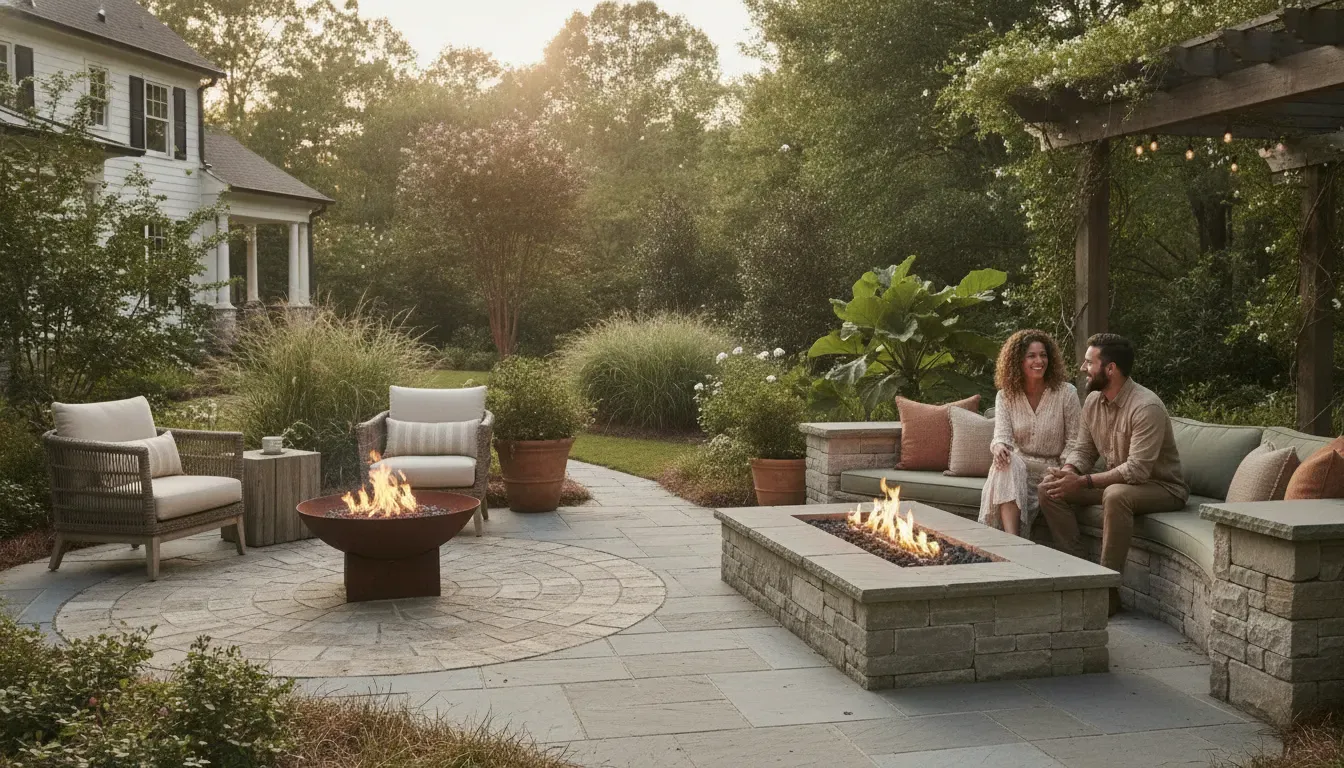
Gas is often the practical choice for homeowners who want reliable heat and ambiance without smoke, ash, or a long setup. Propane can be useful when running a permanent natural gas line is not practical. Natural gas may make sense for a frequently used feature when the property and local requirements support that connection. The final decision should account for gas-line planning, ventilation, clearances, and durable materials, not just the appearance of the burner.
Wood is a better fit when gathering around the fire is an intentional weekend or seasonal ritual. It brings a quality that manufactured flames cannot fully duplicate, but it also calls for more clearance, supervision, and upkeep. In either case, a professional plan helps match the fire feature to the patio, seating, structures, and local conditions. Explore the outdoor fire feature gallery to compare ideas before deciding which experience belongs in your NC home.
North Carolina Permits and Regulations for Outdoor Fire Features
Fire features create a natural gathering place, but the installation needs to fit the rules for your property and community. North Carolina regulations distinguish between an engineered gas fire feature and open burning, so the right path depends on the fuel, location, and design.
Know what North Carolina allows you to burn
North Carolina prohibits open burning of non-vegetative materials, including trash, plastic, metal, and construction materials. Those materials should never be used in a fire pit or fireplace. The state’s residential yard-waste exception is limited to natural vegetation from the property, and burning is permitted only between 8 a.m. and 6 p.m. (North Carolina Department of Environmental Quality guidance).
These state rules are only one layer of compliance. Following them does not guarantee compliance with city or county ordinances, temporary burn bans, or North Carolina Forest Service requirements. A design that is acceptable in one Carolina community may need a different review or approval in another.
Permits, fire code, and gas-line requirements
The North Carolina Fire Code addresses recreational fires and other open-flame activities, and permit requirements can vary by property and jurisdiction. Before construction begins, confirm whether the local fire department, building department, or planning office requires a permit for the fire feature, its foundation, or related site work.
Gas installations require additional care. Natural gas and propane lines should be designed and installed by certified, licensed professionals, with required permits and inspections handled through the appropriate authority. This includes more than connecting a burner. The team must account for the fuel source, shutoff access, ventilation, appliance specifications, and the route of the line to the fire feature.
Plan clearances before the first stone is placed
Placement affects both safety and whether the finished feature can be approved. A commonly recommended starting point is at least 10 feet from structures, although the applicable clearance can depend on the appliance, fuel, construction, overhead conditions, and local code. Trees, rooflines, fences, pergolas, decks, and neighboring properties should be considered during the site review, not after installation.
Fun Outdoor Living’s in-house design, construction, and service team coordinates permitting and code compliance as part of the project. That single-source process helps connect the design, fuel system, foundation, clearances, and inspections before the first fire is lit.
Choosing Materials for Your Fire Pit or Fireplace Installation
The material around a fire feature does more than set the style. It helps determine how the installation weathers Carolina humidity, seasonal temperature changes, and repeated heating and cooling. The right choice should complement your home and patio while remaining practical for long-term maintenance.
Stone, brick, and veneer options
Natural stone gives a fire pit or fireplace an organic appearance, with color and texture that settle naturally into a landscape. It can be used as a substantial surround or selected as a facing material over a properly built structure. Stacked stone veneer creates a similar layered look with a more controlled profile. Which can be useful when a fireplace needs to coordinate with an existing wall, patio, or outdoor kitchen.
Brick offers a more defined pattern and a familiar architectural character. It works well for traditional fireplaces and can echo brick on the home itself. Stucco is another option for fireplace finishes, particularly when a clean, simple surface fits the home’s exterior. Each finish still needs a fire-safe assembly and appropriate weather protection. A finish alone does not replace sound structural construction.
For fire pits, segmental systems and prefabricated kits can provide a straightforward path to a defined shape. The Southern Landscape Group, for example, identifies brick, stone, natural stone veneer, and segmental systems among its material options, and uses Belgard materials for many of its builds. A kit may suit a simple layout, while a custom masonry design allows the dimensions, seating relationship, cap, and surrounding hardscape to respond to the site.
When custom masonry makes sense
Custom masonry is the better fit when the fire feature needs to feel built into the backyard rather than placed on it. The design can account for unusual grades, an existing patio, a covered porch, or a larger fireplace structure. It also gives homeowners more control over proportions and the combination of stone, brick, and stucco finishes.
Fun Outdoor Living custom-builds fire features in-house at its Monroe, NC facility. That integrated process connects design and fabrication, supporting consistent workmanship and a more efficient turnaround than coordinating separate parties for each stage. The team can help match materials to the home’s architecture, the way the space will be used, and the level of upkeep the homeowner is comfortable with.
Before choosing a finish, look at examples in the outdoor fire feature gallery. Then discuss how the material will perform in your setting, including drainage, exposure, and freeze-thaw conditions. A thoughtful material plan is an important part of an custom outdoor living design build, especially when the fire feature is being coordinated with the rest of the backyard.
Placement and Site Preparation for Your Outdoor Fire Feature
The best fire feature feels naturally connected to the way you use your backyard. Before choosing finishes or burner styles, the installation plan should account for safety, drainage, wind, and the surfaces already around your home.
Start with clearance and sightlines
As a practical planning baseline, place a fire pit at least 10 feet from structures, trees, and property lines. That distance helps keep heat and sparks away from siding, roofs, branches, fences, and neighboring property. Local requirements can be more specific, so the final location should be reviewed against applicable codes and community rules.
Also consider how people will move around the feature. Leave comfortable room for chairs, walking paths, and access to the fuel shutoff or controls. A fireplace may need additional space in front of the opening. While a fire pit should be positioned so its flame and smoke do not sit directly beside the primary seating area.
Prepare the base and manage Carolina rain
A masonry fireplace needs a properly engineered concrete foundation that can support its weight without settling or cracking. The site should be evaluated before construction begins, especially where existing soil is clay-heavy. Clay can hold water and shift as moisture levels change, making base preparation and compaction important parts of a durable installation.
Drainage deserves equal attention in North Carolina, where heavy rain can quickly expose weak grading. Water should move away from the foundation rather than collect around the fire feature. Depending on the yard, preparation may include improved grading, a compacted aggregate base, drainage provisions, or a surface designed to shed water. These decisions protect the feature and the surrounding patio over time.
Coordinate the fire feature with existing surfaces
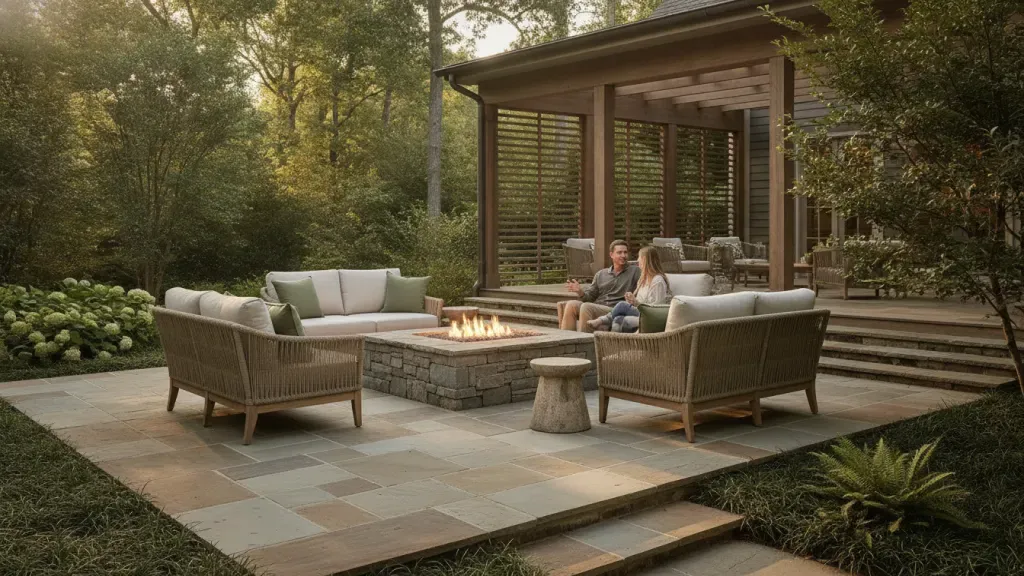
Fire pits can be integrated into paver patios, but the patio base must be planned around the shape, weight, and heat zone of the finished feature. Edges should remain stable, level, and easy to maintain. If the project connects to a deck or sits near a pergola. The design should account for combustible materials, overhead clearances, circulation, and the way heat and smoke will travel.
Wind patterns matter most for wood-burning features. Observe the direction smoke typically moves across the yard, then avoid placing the fire where prevailing winds carry smoke toward the house, covered seating, or a neighbor’s property. A carefully planned layout makes the finished space more comfortable on the evenings when you want to stay outside longer. For inspiration, explore these paver patio with fire pit design ideas before finalizing your site plan.
How Much Does Outdoor Fire Pit Installation Cost in NC?
The cost of outdoor fire pit installation in North Carolina depends on whether you choose a prefabricated system or a feature built specifically for your space. A prefabricated fire pit kit commonly falls between $1,500 and $9,000. A custom-built masonry fireplace generally starts around $8,000 and can exceed $20,000, depending on the design and materials. Fire pits typically cost less than full outdoor fireplaces because they require less structure, masonry, and vertical construction.
What is included in the installation cost?
The fire feature itself is only part of the project. Your quote may also account for the size and scale of the installation, the materials selected, labor, and the condition of the site. Natural stone, brick, stucco, and other finish materials each affect both the appearance and the final price. A larger fire pit or fireplace requires more material and may need a more substantial foundation.
Fuel type also matters. A gas fire pit may require a new gas line, connection work, and the appropriate controls. The cost of that work depends on the distance from the existing supply and the conditions on your property. A wood-burning feature may have different construction and placement requirements, including planning for smoke, airflow, and safe operation.
Why site preparation can change the budget
Uneven ground, drainage concerns, limited access, or an existing patio can add preparation work before installation begins. Integrating the fire feature into a new patio or larger outdoor room may also change the scope compared with placing a standalone kit on a prepared surface. These details are why a reliable price should be based on your property, intended use, design, and materials rather than a generic online estimate.
For a closer look at fireplace pricing and the choices that influence it, review the cost to build an outdoor fireplace. You can also browse the outdoor fire feature gallery to compare styles before requesting a custom quote.
Frequently Asked Questions
Do I need a permit for an outdoor fire pit in North Carolina?
Permit requirements depend on the fire feature, fuel source, property, and local jurisdiction. State rules do not replace city or county ordinances, burn bans, or other local requirements, so confirm the requirements with your municipality before construction. A professional installer can help identify questions involving the fire code, gas connections, and site plans. North Carolina also prohibits burning trash, construction materials, and other man-made, non-vegetative materials. North Carolina DEQ explains the open-burning rules.
Is natural gas or wood better for a backyard fire feature?
Natural gas is a practical choice when you want push-button ignition, predictable heat, and less ash or smoke cleanup. Wood provides the traditional crackle, aroma, and hands-on fire-building experience. Your decision should also account for available utility lines, ventilation, storage, prevailing wind, and how often you expect to use the feature. Propane can offer another option when natural gas is not available, but each fuel type requires its own installation approach.
How far should a fire pit be from my house?
Plan the location around structure clearance, overhead branches, furniture, wind direction, drainage, and the movement of people through the patio. One researched installation reference recommends a minimum 10-foot distance from structures, but the required clearance can vary by appliance, fuel, construction, and local code. Your installer should verify the manufacturer instructions and applicable fire requirements before finalizing the layout.
How much does outdoor fire pit installation cost in NC?
Cost depends on the size, materials, fuel source, foundation, gas-line work, access, and site preparation. As a broad planning reference, prefab outdoor fireplace kits may cost about $1,500 to $9,000, while custom masonry can reach $8,000 to $20,000 or more. Review the outdoor fireplace cost guide, then request a design-specific estimate rather than relying on a package price.
Every backyard is different. The right fire pit or fireplace depends on how you plan to use the space, what fuel makes sense for your home, and what style fits your landscape. Fun Outdoor Living’s in-house design-build team handles every step from the first site review through final installation, with custom fire features fabricated at their Monroe, NC facility.
Schedule Your Free Consultation
Bring your ideas, or start from scratch with a designer who has done this hundreds of times. Either way, the first conversation is about what you want, not what to buy.