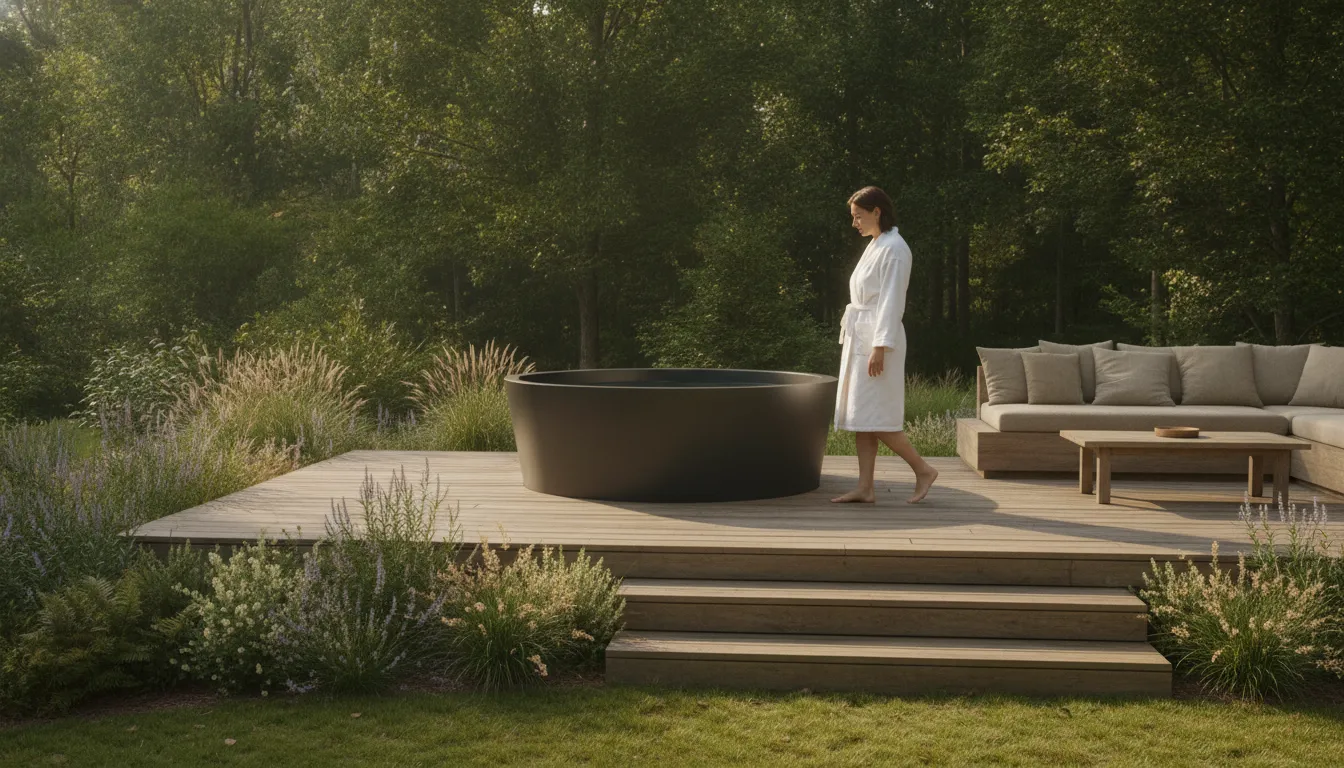
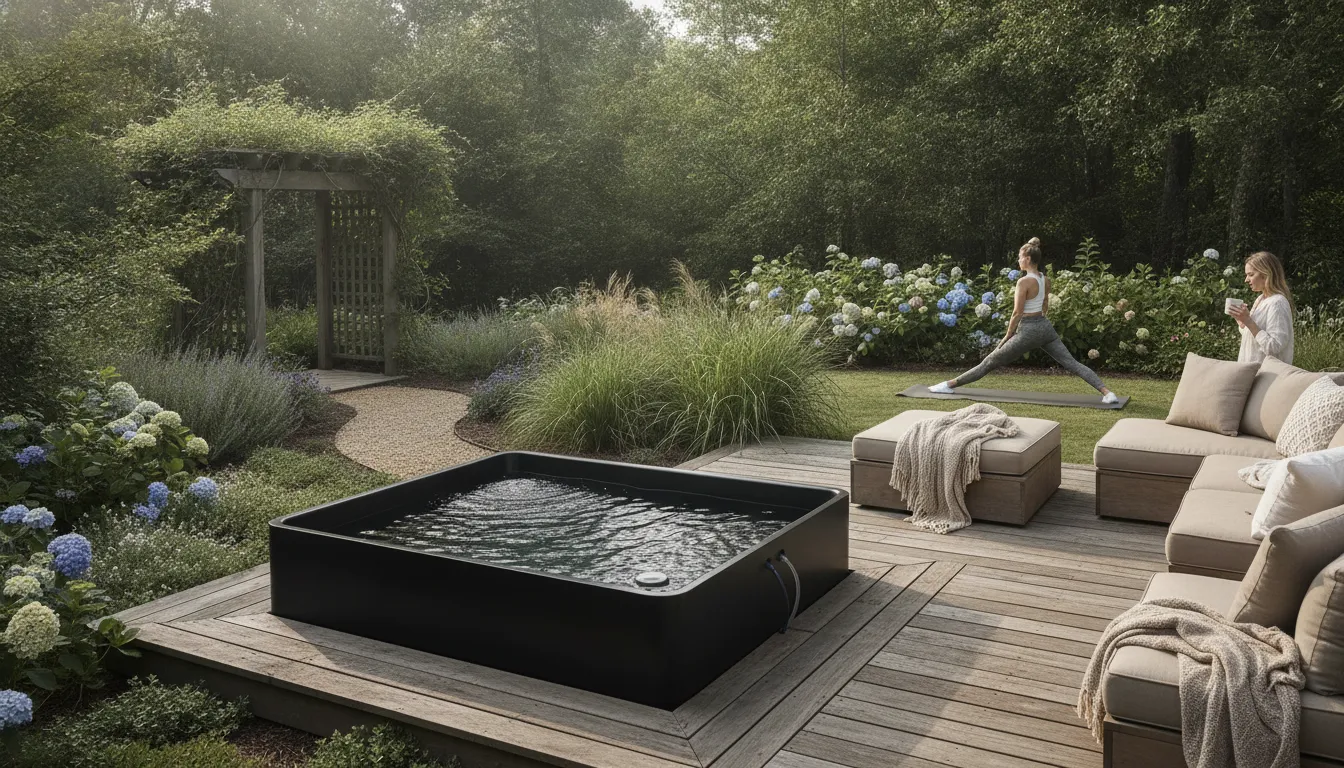
Cold plunging works best as a controlled part of a routine. It is not a test of how long you can tolerate discomfort. Water temperature, prior experience, how you feel that day, and how calmly you can rewarm afterward all matter.
For many beginners, how long to cold plunge starts with a brief exposure. Often around 30 to 60 seconds in moderately cold water. Increase gradually only as comfort and control improve. Fun Outdoor Living references 3 to 5 minutes as an example recovery protocol, but that is not a universal safe duration. Anyone with underlying health concerns should speak with a qualified healthcare professional before using a plunge.
The right routine is the one you can approach calmly, monitor honestly, and end promptly when your body gives you a reason to stop. Before choosing a target time, consider how temperature and experience change the demands of each session.
Learn More About Cold Plunge Options.
How Long Should You Stay in a Cold Plunge?
For a first session, think in seconds rather than minutes. A conservative starting point is about 30 to 60 seconds in moderately cold water. Consider one to two minutes as a gradual next step only if the experience remains controlled and comfortable. These ranges reflect common beginner guidance, not a guarantee that any particular duration is right for every person. Beginner guidance from cold-plunge educators similarly emphasizes short, manageable exposure before increasing time.
Fun Outdoor Living wellness content uses three to five minutes as an example protocol for recovery. That is a company example, not a universal safe duration or a target that every beginner should try. The right answer to how long to cold plunge depends on more than the clock. Water temperature, your previous experience, how calmly you can control your breathing, and how you feel during the session all matter.
Use a gradual approach:
- Start with 30 to 60 seconds and focus on steady breathing rather than toughness.
- Repeat short sessions before adding time. Increase only when the current duration feels controlled.
- Keep the session shorter when the water is colder, conditions change, or you are unusually tired.
- Leave immediately if you feel unwell, confused, excessively numb, dizzy, or unable to control your breathing.
There is no prize for staying in longer. Cold-water immersion can be beneficial or harmful depending on the circumstances, and published evidence for many claimed effects varies. A peer-reviewed review discusses risks including drowning, cardiac arrest, and hypothermia, while noting that some cold-water claims remain supported mainly by anecdotal evidence. Read the research review on cold-water immersion with that context in mind.
If you have an underlying health concern, ask a qualified healthcare professional about cold exposure before using a plunge. This article is general consumer education, not individualized medical advice. A sustainable routine should leave you feeling calm and able to warm up afterward, not depleted or pressured to prove your tolerance.
Why Does Cold Plunge Duration Depend on Temperature and Experience?
Temperature changes how demanding a cold plunge feels, so the same session length will not suit every person or every setup. A brief exposure in very cold water may feel more intense than a longer session in moderately cold water. Experience matters for the same reason: a beginner is still learning how their breathing, comfort, and exit signals respond to cold.
That does not make longer exposure a better goal. Research on cold-water immersion includes a wide range of temperatures, protocols, and outcomes. A 2025 systematic review examined immersion in water at or below 15C for at least 30 seconds. But that research design does not establish one universally safe duration for every homeowner. The authors evaluated varied outcomes, which is another reason to avoid treating a single protocol as a guarantee. Read the systematic review for the scope and limits of the evidence.
How should beginners adjust their starting point?
Start with a conservative exposure and let calm breathing and steady comfort guide progression. Search results commonly describe beginner starts ranging from 30 to 60 seconds or one to two minutes, followed by gradual adaptation. These are reference points from consumer-facing sources, not individualized medical instructions. If the water is colder, choose the shorter end of any suggested range. If you are new to cold exposure, the purpose of early sessions is to learn your response, not to test endurance.
- Consider the water: Colder water generally calls for a shorter, more cautious session.
- Consider your experience: New users should prioritize controlled breathing and an easy exit over adding time.
- Consider the conditions: Do not extend a session because a previous plunge felt manageable.
- Consider your response: Leave promptly if you feel unwell, confused, unusually numb, or unable to control your breathing.
For context, the Vigor Cold Plunge lists a default range of 39F to 50F, with Ice Assist available for lower temperatures. That range illustrates why product settings and session length should be considered together, rather than choosing a duration in isolation. Fun Outdoor Living’s cold plunge temperature guide covers temperature selection in more detail. This article keeps the focus on how long to cold plunge and how to acclimate conservatively.
Cold water can be helpful or harmful depending on the circumstances, and reviews identify serious risks including drowning, cardiac arrest, and hypothermia. Evidence for many claimed benefits also remains varied. If you have an underlying health concern, discuss cold exposure with a qualified healthcare professional before using a plunge. This is a safety-first starting point, not individualized medical advice.
What Should a Safe Cold Plunge Routine Look Like?
A repeatable routine makes cold exposure easier to approach without turning it into a test of endurance. The right answer to how long to cold plunge depends on the water temperature, your experience, and how your body responds that day. Use the clock as a limit, not a goal. Fun Outdoor Living content references three to five minutes as an example protocol, but that is not a universal safe duration for every person.
- Prepare your space first. Set out a towel, warm layers, and a comfortable place to sit while you rewarm. Keep your phone or a separate timer within reach so you do not need to estimate time while immersed. If you feel unwell before entering, postpone the session.
- Enter slowly and stay in control. Step in carefully rather than jumping or treating the plunge like a challenge. Keep your movements calm, especially during the first moments of cold exposure. A conservative starting point is more useful than trying to match someone else’s routine.
- Settle your breathing. Cold water can make the first breaths feel sharp or rushed. Focus on steady, controlled breathing before deciding whether to continue. If you cannot regain calm breathing, end the session instead of trying to push through it.
- Use the timer as a ceiling. Start with a short exposure and leave before discomfort becomes distress. Do not extend the session simply because a commonly cited number says you can. Cold-water immersion can carry real risks, including hypothermia and cardiovascular emergencies, and the evidence behind many wellness claims varies. This guide is general consumer education, not individualized medical advice. A review of cold-water immersion risks and evidence provides additional context.
- Exit at the first clear warning sign. Leave promptly if you feel faint, confused, unusually weak, numb, panicked, or otherwise unwell. You do not need to finish the planned time. If you have an underlying health concern, speak with a qualified healthcare professional before using a plunge.
- Rewarm gradually and calmly. Dry off, put on warm layers, and sit somewhere comfortable. Give yourself time to return to a normal temperature before driving, exercising, or moving into another demanding activity. Morning or evening can both work; choose the time that allows you to warm up without rushing.
A safe routine should feel controlled and sustainable. If you are comparing equipment for home use, local guidance can help you choose a setup that supports calm preparation, timing, and recovery rather than encouraging longer sessions.
When Should You Get Out of a Cold Plunge?
Get out as soon as the experience stops feeling controlled. A cold plunge should not become a test of toughness, and staying longer is not automatically better. Exit promptly if you feel faint, confused, unusually weak, panicked, or unable to regulate your breathing. Persistent or worsening pain, numbness, or an alarming change in how you feel is also a reason to stop.
Do not wait for a timer to tell you when to leave. If your breathing remains difficult after the initial cold shock, or you cannot settle into calm, steady breaths, end the session. Step out carefully, dry off, and begin warming up gradually. Never remain in the water because a protocol, app, or social post suggests a particular duration.
When should you ask a healthcare professional?
Cold-water immersion can be beneficial or harmful depending on the circumstances. Research reviews discuss serious risks, including drowning, cardiac arrest, and hypothermia, while also noting that evidence for many advertised cold-plunge claims varies. Read the research in context, rather than treating a wellness article as a diagnosis or prescription.
If you have an underlying health concern, take medication that may affect your response to cold. Or are unsure whether cold exposure is appropriate for you, speak with a qualified healthcare professional before using a plunge. This is especially important if you have experienced concerning symptoms during or after a session. A professional can help you decide whether cold exposure belongs in your routine and what precautions may be appropriate.
For everyone else, start conservatively and treat exit cues as useful information. A short, calm session that leaves you feeling well is more responsible than chasing a longer time in the water.
Sources: A review of cold-water immersion risks and evidence and Fun Outdoor Living’s cold-plunge guidance.
How Can a Cold Plunge Fit Into a Carolina Wellness Routine?
Cold exposure becomes easier to evaluate when it has a clear place in your normal life. A Charlotte homeowner may use a plunge after a training session, while someone in Matthews. Cornelius, Rock Hill, or Winston-Salem may prefer a short morning ritual before the household gets busy. The best timing is the one that gives you space to warm up and notice how you feel afterward.
Morning and evening both have practical trade-offs. A morning plunge may fit a consistent wake-up routine, while an evening plunge may be convenient after activity. If it leaves you alert when you want to sleep, move it earlier. If it makes you rush into work or family obligations, choose another time. Consistency does not mean using the plunge every day. It means making deliberate choices instead of reacting to a timer or social-media challenge.
A home system can also make the routine more predictable. Fun Outdoor Living’s Vigor Cold Plunge page describes a system with UV-C, ozone, and filtration and a capacity of about 65 gallons. Those features support ownership and water-care planning, but they do not determine how long an individual should stay in the water. Duration still belongs to the person’s experience, conditions, and response.
Homeowners who are comparing equipment can review the Vigor cold plunge details, explore contrast therapy, or read about sauna options if a hot-and-cold routine is part of the larger plan. Fun Outdoor Living supports Carolina homeowners through five regional showrooms and product consultation areas. Which can be useful when you want to see how a system may fit your space.
Keep the lifestyle question in view: will this routine make your day feel more deliberate, or does it add another performance metric? For many homeowners, the answer becomes clearer when the session is short, the exit is easy, and the next morning feels normal.
Cold Plunge Questions Homeowners Ask
| Routine factor | Conservative choice |
|---|---|
| New to cold exposure | Start with a brief session and focus on calm breathing. |
| Colder water | Choose less time rather than pushing through discomfort. |
| Warning signs | Exit promptly and rewarm gradually. |
Is one minute enough for a cold plunge?
For a beginner, one minute can be a reasonable session if you can breathe calmly, stay oriented, and feel well afterward. It is not necessary to extend the time simply because someone else recommends a longer protocol. Use one minute as a conservative ceiling, then evaluate your response before changing anything.
Should you use a colder setting to get more from the routine?
Not automatically. Fun Outdoor Living’s Vigor information lists a 39F to 50F default range, but a product’s available settings are not a personal prescription. If you are new to cold exposure, choose a manageable setting and change one variable at a time. Read the cold plunge selection guide for product context.
Can a sauna and cold plunge be part of the same routine?
Some homeowners are interested in contrast therapy, which pairs heat and cold. The right sequence, temperature, and duration depend on the person and the equipment. Treat each exposure separately, avoid turning the cycle into a contest, and ask a qualified healthcare professional when your health history makes cold exposure uncertain.
How do you know whether a cold plunge routine is working for you?
Look for practical signals: you can enter and exit calmly, recover without prolonged discomfort, and fit the routine into your day without disrupting sleep or responsibilities. A dramatic sensation is not the same as a useful result. If the routine repeatedly leaves you unwell, stop and reassess.
Learn More About Finding the Right Cold Plunge
Frequently Asked Questions
How long should I stay in a cold plunge?
Beginners should start conservatively, often with 30 to 60 seconds in moderately cold water, and only consider gradual changes if breathing and recovery remain controlled. There is no universally safe duration for every person.
Is a 1 minute cold plunge enough?
One minute can be enough for a beginner’s controlled session. The goal is not to stay in as long as possible. Leave earlier if you feel unwell, and focus on consistency rather than increasing the timer.
How long should a morning cold plunge be?
A morning plunge should be short enough that you can warm up calmly and continue your day normally. Start with a conservative duration, prepare dry clothing in advance, and move the routine earlier or shorten it if it affects sleep or daily responsibilities.
Is cold water immersion therapy safe?
Cold exposure is not risk-free. It can place stress on the body, and people with underlying health concerns should ask a qualified healthcare professional before starting. Exit promptly for dizziness, confusion, chest discomfort, uncontrolled shivering, or other concerning symptoms.
How cold does a cold plunge have to be?
It does not need to be as cold as possible. A manageable temperature allows you to practice calm breathing and controlled exits. Product ranges vary, and the right setting depends on experience, health, and recovery, not on copying another person’s routine.
Build a Cold Plunge Routine That Fits Your Home
The most useful cold plunge is one you can approach thoughtfully, use conservatively, and support with the right setup. Fun Outdoor Living helps Carolina homeowners compare cold plunge options, understand the surrounding wellness space, and plan for long-term ownership through local showroom guidance.