A stone outdoor fireplace can turn a Carolina backyard into a comfortable place to gather when the evenings cool down. The best designs balance the feeling you want, the way people will move through the yard, the character of your home, and the construction details that keep the feature safe and durable. This guide covers stone selection, placement, foundation and drainage, firebox and chimney planning, seating and cooking integration, local approval questions, and the project sequence to discuss before work begins.
Key Takeaways
- Start with how the space should feel and function. Decide whether the fireplace is an intimate retreat, the anchor for a larger outdoor room, or part of a cooking and entertaining zone before choosing its size.
- Choose materials and proportions that belong with the home. Stone color, texture, hearth height, chimney shape, cap, seating, and adjacent paving should read as one composition rather than a feature added afterward.
- Treat site work and safety as design decisions. A permanent masonry fireplace needs a properly engineered base, drainage plan, fire-rated components, appropriate ventilation, and project-specific review of clearances and approvals.
- Plan for Carolina weather and long-term ownership. Humidity, heavy rain, freeze-thaw swings, tree cover, prevailing wind, and the way the space will be maintained should influence the design from the start.
Why Add a Stone Fireplace to Your Backyard?
A stone fireplace does more than just provide warmth; it creates a magnetic focal point that transforms your backyard into a true outdoor living room. It’s the kind of feature that anchors your entire space, inviting you to slow down, gather with loved ones, and enjoy your home in a completely new way. From extending your patio season into the cooler months to adding significant value to your property, a custom stone fireplace is an investment in your lifestyle. It sets the stage for countless memories, turning an ordinary evening into something special.
Enjoy Natural Beauty That Lasts
There’s something inherently timeless about natural stone. Each piece has a unique texture and color, bringing an organic, earthy element to your backyard that manufactured materials just can’t replicate. Because natural stone is such a flexible material, it can be used to create a fireplace that complements almost any home design style, from rustic to modern. Beyond its beauty, stone is incredibly durable and built to withstand the Carolina weather, ensuring your fireplace remains a stunning centerpiece for years to come. It’s a feature that not only looks like it belongs in nature but will also stand the test of time. You can see how we integrate these beautiful structures in our fire features gallery.
Create a Gathering Spot for Every Season
Think of an outdoor fireplace as the heart of your backyard. It’s a natural gathering spot that draws people in, encouraging conversation and connection. The warm glow creates an irresistible ambiance, turning a simple evening into a memorable occasion. The main goal is to create a beautiful and useful outdoor space for entertaining guests, relaxing, and enjoying your backyard year-round. Imagine roasting marshmallows with your kids on a cool autumn night or sharing a bottle of wine with friends on a breezy spring evening. A fireplace extends your home’s living space, giving you a cozy and inviting destination for every season.
Increase Your Home’s Value
A beautiful outdoor fireplace isn’t just a personal luxury; it’s a smart investment in your property. Features that enhance outdoor living are highly desirable to potential buyers, and a well-crafted stone fireplace can significantly increase your home’s appeal and resale value. It’s a permanent upgrade that adds a touch of sophistication and comfort. A stone fireplace can make your home feel warmer and look nicer, signaling to buyers that the property has been well-cared-for and thoughtfully improved. When you invest in a feature that enhances your lifestyle and your home’s equity, you get to enjoy the benefits now and see the returns later.
Seamlessly Blend It with Your Outdoor Space
One of the best things about a stone fireplace is its versatility. It doesn’t have to be a standalone structure; it can be perfectly integrated with your existing landscape and architecture. These fireplaces can be built in various outdoor spots, from anchoring a paver patio to becoming part of a covered porch or pergola. Whether you envision a grand, towering chimney or a more subtle design built into a seating wall, we can help you create a look that feels like it was always meant to be there. Our design experts can help you visualize the possibilities and find the perfect way to blend this stunning feature into your backyard.
What Should You Decide Before Choosing a Stone Fireplace Design?
Begin with the moments you want the backyard to support. A fireplace might warm a pair of chairs after dinner, create a conversation area for a larger group, or connect an outdoor kitchen to a covered patio. Sketch the likely seating, walking routes, view from the house, and storage needs before choosing a height or finish. This simple planning step helps the fireplace feel like part of an outdoor room instead of an isolated object.
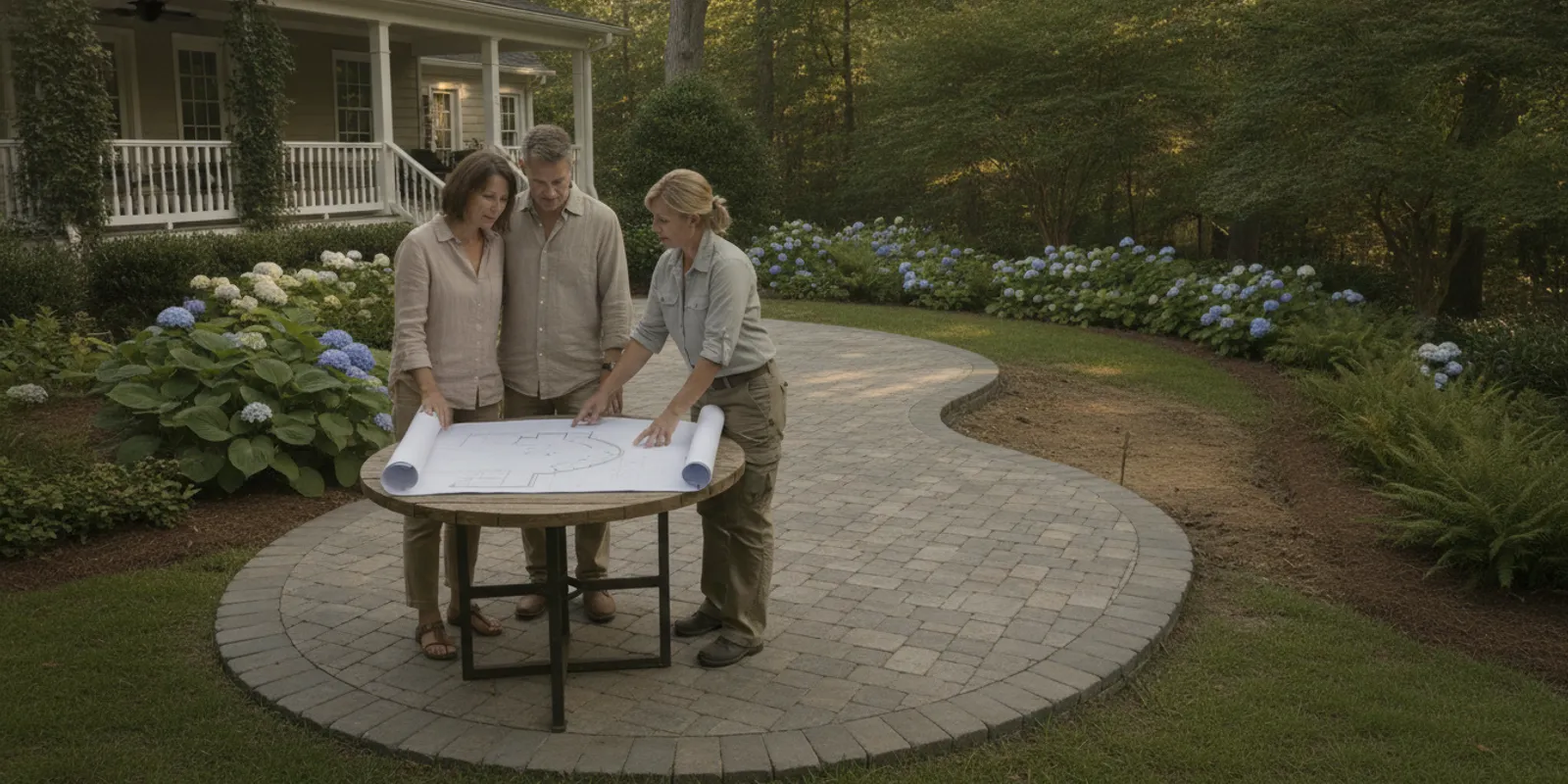
For homeowners in Charlotte, Matthews, Cornelius, Rock Hill, Winston-Salem, and nearby Carolina communities, the property itself should guide the conversation. A sloped yard, wooded edge, lake view, compact patio, HOA rule, or nearby structure can change the best location and construction sequence. A site review and 3D design can expose those constraints before materials are ordered.
Which Stone and Finish Work Best for an Outdoor Fireplace?
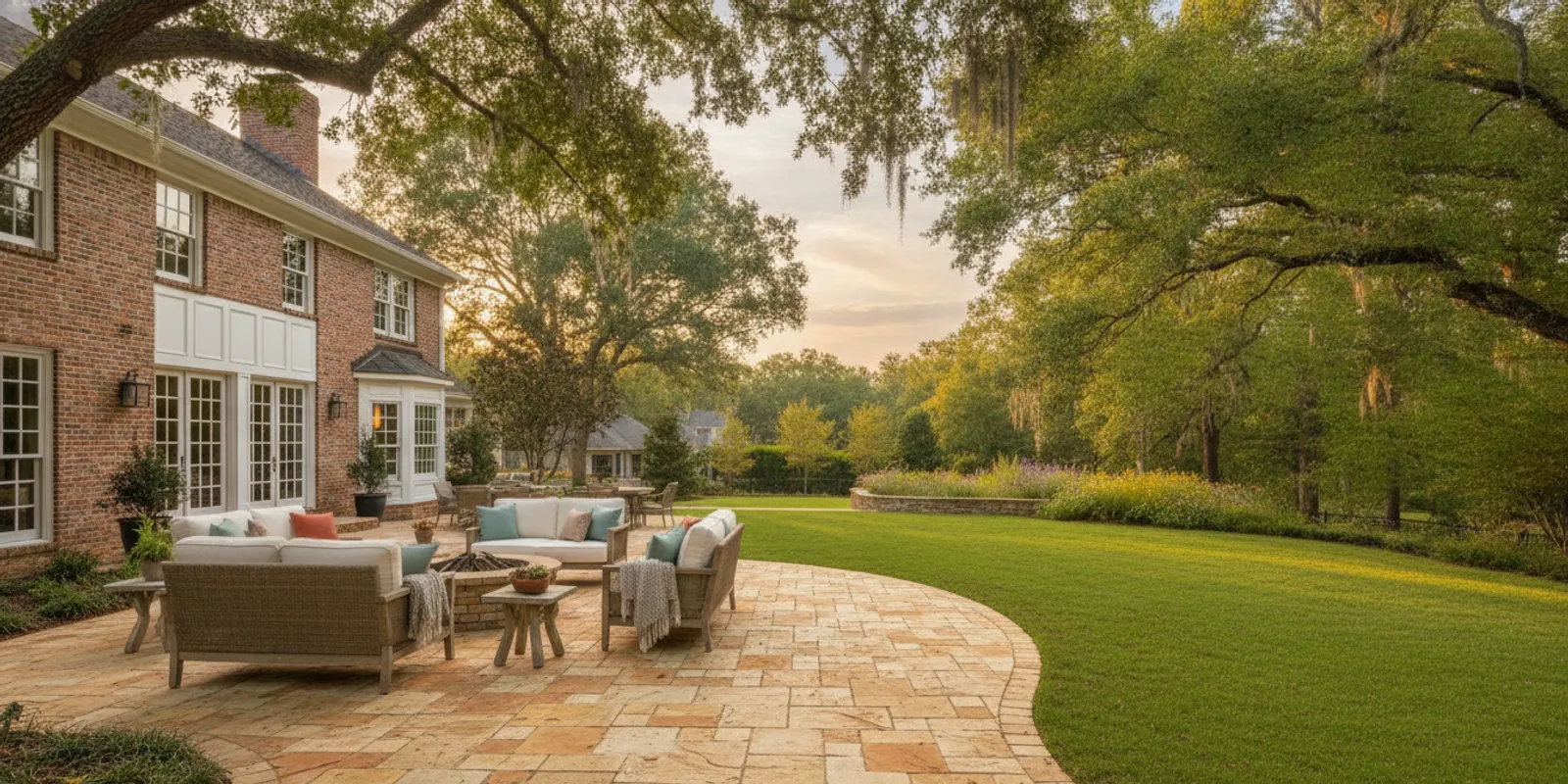
Natural stone, manufactured stone veneer, brick, and other masonry finishes can each create a different look. The decision is not only about color. Consider texture, scale, water exposure, how the finish transitions into the patio or retaining walls, and whether replacement material will be available later. A lighter, quieter finish can support a modern home, while fieldstone or a more varied profile can reinforce a natural landscape. The firebox and other heat-exposed components still require materials selected for that use; the decorative facing is not a substitute for a properly designed fire-rated assembly. Explore completed work in our outdoor fire gallery for ideas.
Bring samples together with the home’s brick, siding, trim, pavers, roofline, and landscape. The goal is a coordinated palette that remains comfortable to live with after the novelty of a new feature fades.
Where Should an Outdoor Fireplace Be Placed?
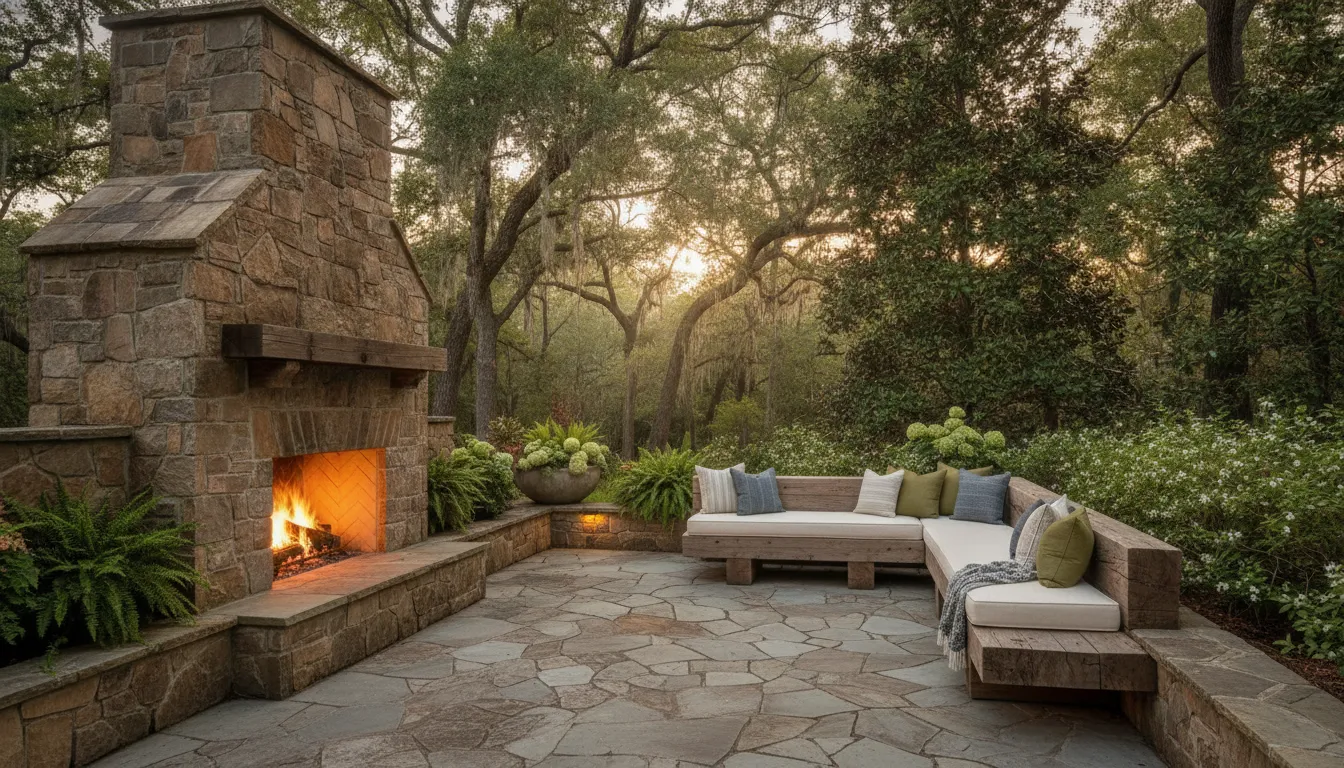
The best location balances views, circulation, wind, safety, and connection to the rest of the yard. Look from the rooms where you will use the fireplace, then walk the route guests will take from the house. Keep the fireplace from becoming a pinch point, and make sure seating does not block doors, paths, service access, or the working area of an outdoor kitchen. If the project includes new hardscape, review the relationship to the patio and paver surface before finalizing the footprint.
Prevailing wind matters because smoke and embers should not be directed toward people, doors, windows, neighboring property, or combustible landscaping. The right orientation is site-specific, especially in open or elevated yards. Plan a clear route, appropriate lighting, and a surface that remains comfortable to cross after rain.
What Foundation and Drainage Does a Stone Fireplace Need?
A permanent masonry fireplace is heavy, so the visible stone is only one part of the structural conversation. The base must be designed for the site, soil, slope, frost and moisture conditions, and the weight of the planned assembly. The project should also account for how water moves around the patio, hearth, chimney cap, and adjacent planting beds. Poor drainage can contribute to settlement, staining, moisture intrusion, and avoidable masonry deterioration.
Do not assume a shallow patio base is automatically adequate for a fireplace. A qualified design-build team should assess the site and specify the appropriate footing, reinforcement, masonry system, hearth, and drainage approach before construction begins.
How Do Ventilation, Clearances, and Local Approvals Affect the Design?
A fireplace needs a properly proportioned firebox, throat, chimney, flue, and cap so smoke is directed away from the seating area. The exact design depends on the fuel, dimensions, surrounding structures, roof or pergola, and manufacturer or engineering requirements. Clearances also depend on the specific assembly and local rules. Do not copy a clearance number from a different fireplace or assume that a decorative stone surface makes nearby combustible materials safe.
Permitting and inspection requirements vary by municipality, county, project location, fuel type, proximity to structures and lot lines, HOA rules, and the current adopted code. Before construction, confirm the requirements with the local authority having jurisdiction and any applicable HOA, and use a qualified installer who can coordinate the project documents and inspections. This is especially important across the Carolinas, where a rule that applies in one community may not apply in another.
How Can Seating, Cooking, and Lighting Make the Fireplace More Useful?
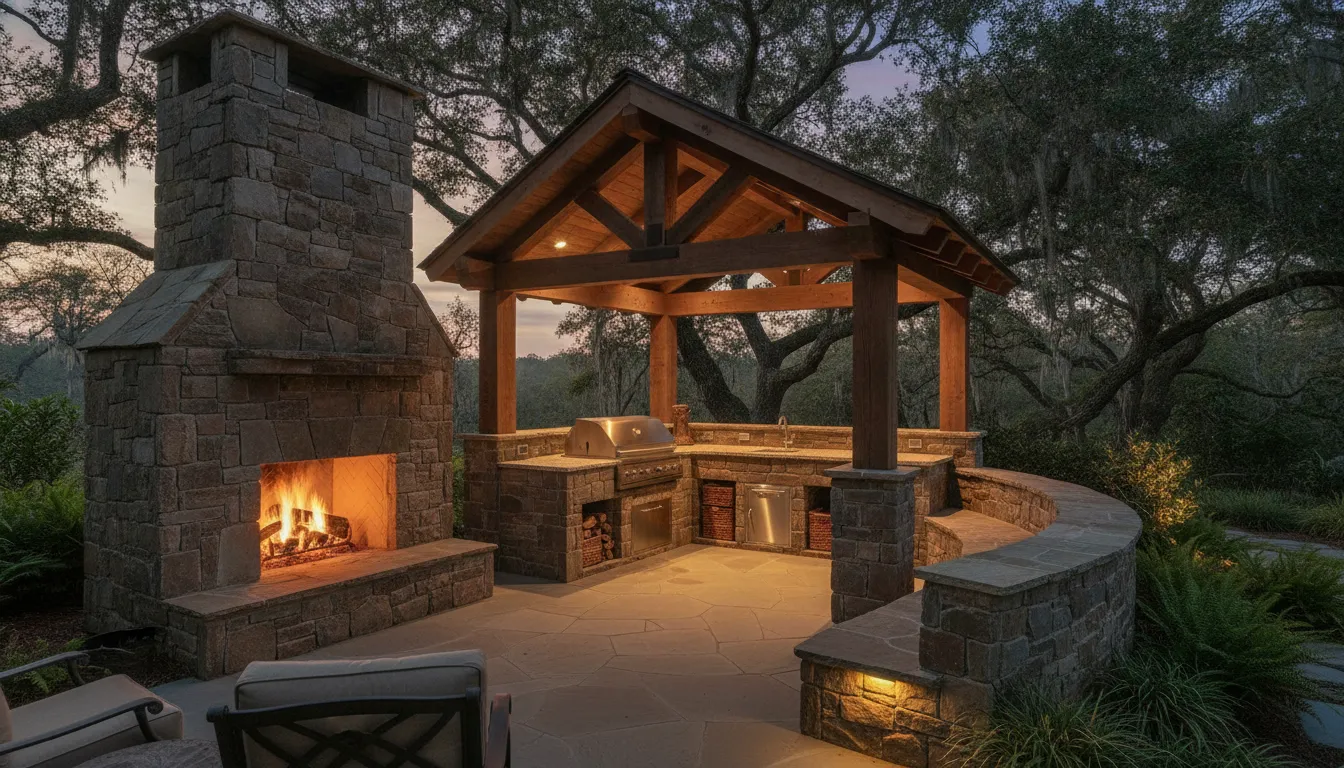
Treat the fireplace as the anchor of a larger outdoor room. A seat wall can define the gathering area, while movable chairs preserve flexibility for larger events. If you plan to add a grill, pizza oven, beverage station, or outdoor kitchen, map heat, smoke, fuel, utility, food-preparation, and service zones together instead of adding them after the masonry is complete. Integrated storage can keep firewood, cushions, and tools close without making the space look cluttered. See our outdoor kitchen gallery for examples of coordinated entertaining zones.
Low-voltage lighting can make the hearth, steps, paths, and seating easier to use after dark. Keep lighting subtle enough that it supports the fire rather than competing with it, and coordinate conduit and fixture locations before the stonework is finished.
How Should a Carolina Fireplace Be Protected Through the Seasons?
Carolina backyards see humidity, heavy rain, hot summers, cool evenings, and occasional freezing conditions. Use exterior-rated materials and details suited to the exposure. A well-designed cap should shed water, and surrounding grades and drainage should move runoff away from the structure. Covered placement can help, but a roof or pergola introduces its own clearance and ventilation questions, so it must be considered as part of the complete assembly.
After installation, keep the firebox and flue clear of ash and debris, watch for new cracks or water entry, and follow the maintenance guidance for the selected fuel system. Have a qualified professional inspect unfamiliar or concerning changes rather than continuing to use a fireplace with a suspected structural, flue, gas, or ventilation issue.
Keeping Your Fireplace Looking Its Best
A stone fireplace is a stunning, durable centerpiece for your backyard, but a little routine care will ensure it stays that way for years of cozy evenings. Keeping your fireplace in top shape isn’t complicated—it’s mostly about staying on top of small tasks that prevent bigger issues down the road. By creating a simple maintenance rhythm, you protect your investment and keep it ready for impromptu gatherings and quiet nights under the stars. Think of it as a simple way to show your beautiful outdoor feature some love so it can keep giving you that warm glow season after season.
Simple Steps for Regular Cleaning
The best way to maintain your fireplace’s beauty and function is with consistent, simple cleaning. After the fireplace has completely cooled, sweep out any ash and debris from the firebox. This prevents buildup that can affect airflow and become difficult to remove later. While you’re there, give the structure a quick once-over. Look for any new cracks in the stone or mortar and check that the chimney or flue is clear of obstructions like leaves or animal nests. Making this a regular habit after every few uses will keep your fireplace looking great and performing safely.
A Quick Checklist for Seasonal Maintenance
At the beginning and end of each outdoor season, it’s a good idea to give your fireplace a more thorough check-up. Start by giving the grate a good scrub with a wire brush to remove any soot or rust. If you use gas logs or lava rocks, make sure they are positioned correctly for proper function. This is also the perfect time to address any minor masonry repairs you may have noticed during your regular cleanings. A little attention now goes a long way in preserving the integrity of your beautiful stone fire feature.
When to Schedule a Professional Inspection
While you can handle most routine upkeep yourself, having a professional inspect your fireplace every few years is a smart move. An expert can spot subtle signs of structural wear or ventilation issues that might go unnoticed. This is especially important if you’re unsure about local building codes or if the fireplace was installed before you owned the home. A professional can ensure everything is up to standard, giving you complete peace of mind. At Fun Outdoor Living, our design and build process accounts for all these factors from day one, ensuring a safe and sound installation.
Protect Your Fireplace from the Weather
Your outdoor fireplace is built to withstand the elements, but a little extra protection can extend its life even further. After a deep cleaning, consider applying a quality masonry sealant to the stone and mortar. This creates an invisible barrier that repels water, preventing it from seeping into small crevices and causing cracks during freeze-thaw cycles. For even more protection, using a heavy-duty waterproof cover during the rainy off-season or long stretches of bad weather will keep your fireplace dry and ready for the next sunny day.
Tips for Long-Term Care
Long-term care really begins at the design stage. Choosing the right materials from the start has a huge impact on how much maintenance your fireplace will need over its lifetime. High-quality, dense stone and professional-grade mortar are less susceptible to weathering and wear. It’s also important to only burn seasoned, dry hardwood, which produces less creosote—a flammable substance that can build up in your chimney. By combining a smart initial design with quality construction, you set yourself up for a low-maintenance feature that brings you joy for decades.
Related Articles
- Outdoor Stone Fireplace: A Complete Planning Guide
- Natural Stone Outdoor Fireplace: A Complete Guide
- Outdoor Stone Fireplace with Chimney: A Complete Guide
Frequently Asked Questions
How much does a custom stone fireplace cost?
There is no standard price because each fireplace is shaped by the site, size, stone or masonry finish, foundation, fuel system, chimney, seating, cooking features, utilities, and required approvals. A design consultation is the best way to review the space and prepare a project-specific estimate rather than relying on a generic online range.
How long does it take to build an outdoor fireplace?
The schedule depends on the design, site preparation, foundation, material availability, weather, inspections, and whether the fireplace is coordinated with a patio, kitchen, pergola, or other construction. A design-build team can provide a more useful schedule after reviewing the property and the complete scope.
How far should an outdoor fireplace be from a house or property line?
There is no single clearance that applies to every outdoor fireplace. The required separation depends on the fireplace design, fuel, height, chimney, nearby construction, combustible materials, local code, and authority having jurisdiction. Confirm the current requirements with your municipality or county, any HOA, and the qualified installer before finalizing the site.
Does an outdoor stone fireplace need a permit in North Carolina or South Carolina?
It may. Requirements vary by location, project details, fuel, proximity to buildings or lot lines, and the rules adopted by the local authority having jurisdiction. Treat permitting as a project-specific question, not a universal yes-or-no assumption. A qualified local design-build team can help identify the approvals and inspections to confirm before construction.
What is the first step for planning a stone outdoor fireplace?
Start with a site and lifestyle conversation. Identify how you want to use the space, review views and circulation, check wind and drainage, compare the home’s materials, and discuss the likely firebox, chimney, seating, cooking, and cover requirements. Fun Outdoor Living can review the property and develop a design direction through a free consultation.