The biggest mistake homeowners make with backyard water features is comparing only the purchase price. In the Carolinas, excavation, installation, heating, maintenance, available space. And how many months you will actually use the feature can shape the real cost just as much as the equipment itself.
In a pool vs hot tub vs swim spa decision, a pool usually brings the highest installation and ongoing workload. A hot tub offers the most compact path to relaxation, and a swim spa balances exercise, hydrotherapy, and year-round use. The right value depends on whether your priority is entertaining, recovery, fitness, or making the most of a smaller backyard.
That balance matters for homeowners across North and South Carolina, where a long warm season can make a pool appealing. But mild winters also create opportunities for a spa you can use throughout the year. Before choosing, it helps to look past the sticker price and understand what drives ownership costs for each option.
Book a test soak in a swim spa to compare the options in person
What Really Drives the Cost of a Pool vs Hot Tub vs Swim Spa?
When comparing pool vs hot tub vs swim spa, the purchase price is only the first line of the decision. The better question is what each option asks of your property, budget, calendar, and family over several years.
A pool is a large, usually in-ground swimming area built into the landscape. It is a natural fit for active summer recreation and larger gatherings, but excavation, permitting, surrounding hardscape, equipment, and ongoing care can make the project substantial. A hot tub is a smaller, heated vessel designed primarily for seated soaking, hydrotherapy, and relaxation. It typically needs a properly prepared surface rather than a full excavation project.
A swim spa sits between those formats. It combines a swimming or exercise zone, often with a current to swim against, and a separate area for warm-water relaxation. Swim spas commonly range from 12 to 19 feet long, which can make them a practical alternative when a Carolina backyard cannot accommodate a full pool footprint.
1. Upfront installation and site work
Installation complexity is one of the clearest cost differences. An in-ground pool may require excavation, grading, permits, plumbing, electrical work, decking, fencing, and landscaping. One Triangle-area comparison notes that a typical in-ground pool can take up to 800 square feet, before considering the space needed around it for access and entertaining. A swim spa still requires a sound foundation, delivery planning, electrical service, and access for placement, but the project is generally more compact. A hot tub has the smallest physical footprint and usually the simplest site preparation.
Industry comparisons place pool upfront costs around 35% higher than swim spa costs, although the actual difference depends on size, access, finishes, engineering, and site conditions. Treat that figure as a planning reference, not a quote. Your lot and the kind of experience you want will determine the real number.
2. Monthly operating expense
Heating and water volume affect the monthly picture. Because a hot tub contains significantly less water than a full-sized pool, the U.S. Department of Energy notes that hot tubs generally require less energy to heat and maintain than pools. A swim spa has more water than a hot tub, but its smaller scale and insulated design may offer a different operating profile than a large pool. Cover use, temperature settings, weather, equipment efficiency, and how often the water is used all matter.
3. Maintenance time and ownership effort
Every backyard water feature needs proper chemical balance and filtration for safe, hygienic water. Pools generally demand the most routine attention because of their larger water volume and outdoor exposure. Hot tubs are often the most manageable for a homeowner who wants a short, predictable care routine. Swim spas fall between the two, with enough capacity for exercise and family use but less area to maintain than a pool.
4. Year-round use and resale considerations
In the Carolinas, a pool can be excellent for long summer days, but many owners use it seasonally unless they add heating and accept the related expense. Hot tubs and swim spas are designed around more consistent use through changing weather. That year-round flexibility can matter more than a lower sticker price if your household values evening soaks, regular exercise, or recovery routines outside the summer season.
Resale value is harder to promise. A pool may appeal strongly to one buyer and concern another because of upkeep, insurance, or future repairs. A well-planned, well-maintained wellness feature can support a home’s lifestyle appeal, but it should be chosen for the value it provides your household first. For a closer look at the numbers, compare the swim spa cost vs pool and review current site conditions with a local professional.
Monthly Operating Costs: What Each One Really Costs to Run
The monthly cost of an outdoor water feature is shaped less by the sticker price than by how much water you heat. How often the equipment runs, and how long you expect to use it each year. For homeowners in North and South Carolina, heating is often the most important variable. A pool can be comfortable during the long summer. But extending that season into cooler spring and fall weather requires more energy than simply maintaining a smaller, insulated vessel.
Hot tubs generally use less energy to heat than full-sized swimming pools because they hold significantly less water. The U.S. Department of Energy explains that lower water volume reduces the energy required to heat and maintain a hot tub. That does not mean every hot tub has the same monthly bill. Cover quality, insulation, water temperature, placement, and how often the cover is removed all matter. The same is true for a swim spa, which is designed to hold its temperature efficiently while supporting exercise and hydrotherapy.
| Pool | Hot Tub | Swim Spa |
|---|---|---|
| Water volume: The largest volume means more water to heat, balance, and replace. | Water volume: The smallest volume is generally simpler and less energy-intensive to maintain. | Water volume: More than a hot tub but far less than a full-sized pool, creating a middle-ground operating profile. |
| Heating: Heating for shoulder-season or year-round use can become the largest added expense. | Heating: Insulation and a well-fitted cover help retain the temperature between uses. | Heating: Insulation helps maintain a ready-to-use temperature for swimming, exercise, or soaking. |
| Filtration and pumps: Longer seasonal run times and larger equipment can increase electricity use. | Filtration and pumps: Equipment cycles are typically tied to a smaller body of water and regular soaking. | Filtration and pumps: Water care and circulation support both swim-current use and relaxation. |
| Chemicals: The larger water volume requires regular testing and treatment across the swimming season. | Chemicals: Smaller volume can make chemical use more manageable, but frequent testing remains important. | Chemicals: Treatment needs fall between a pool and hot tub and depend on usage and water-care habits. |
That comparison also explains why a pool’s monthly cost can change sharply when the goal shifts from summer recreation to year-round use. In the Carolinas, mild winters do not eliminate the cost of heating a large body of water. A hot tub or swim spa may offer a more predictable routine because the equipment is built around maintaining a smaller, insulated space at a usable temperature.
Usage still matters. A family that opens a pool every day in July may spend more on filtration and chemicals than a household that uses it occasionally. Conversely, a hot tub or swim spa kept hot but rarely used may not be an efficient lifestyle fit. Compare the equipment’s expected runtime, cover and insulation design, water-care routine, and your actual habits rather than relying on a generic monthly estimate. For a more detailed breakdown, review this guide to swim spa monthly operating cost.
Maintenance: Which One Demands More of Your Weekends?
The pool usually asks the most of you. Its larger water volume, filtration system, surface area, and outdoor equipment create more opportunities for leaves, debris, algae, and chemistry changes to affect the water. Regular testing, chemical adjustments, filter care, brushing, and skimming are part of the routine. A vinyl liner also adds a longer-term responsibility. One industry source notes that a new vinyl pool liner may need replacement in 10 to 15 years (Buds Spas).
That does not mean pool ownership is unmanageable. It means the maintenance commitment should be part of the decision, not an afterthought. The CDC emphasizes that maintaining proper chemical balance and filtration is critical for the safety and hygiene of backyard pools and hot tubs (CDC). You can handle much of this work yourself, hire a pool service, or build the recurring service cost into your ownership budget.
Why hot tubs are usually the easiest to maintain
Hot tubs contain far less water than pools, which makes water care more contained and chemistry adjustments easier to manage. The trade-off is that warm water and frequent use make consistent testing important. You will still need to monitor sanitizer and water balance, rinse or clean filters, and periodically drain and refill the vessel. The cover deserves attention as well. Keeping it clean, properly fitted, and supported helps protect the water from debris and reduces unnecessary heat loss.
For many homeowners, that routine fits naturally into the week. A quick water check after regular use and a more thorough maintenance session on a predictable schedule can keep the work from becoming a weekend project. It is a smaller commitment than maintaining a full-sized pool, but it is not maintenance-free.
Where swim spas fit between the two
A swim spa sits in the middle. It has more water, pumps, and filtration equipment than a hot tub, so there is more to monitor. Its larger basin also means a little more time when cleaning or adjusting the water. At the same time, it generally has far less water and surface area than a pool, which keeps the workload more contained. The right maintenance routine depends on the model, how often it is used, and whether people use the swim area and hydrotherapy seats at different temperatures.
If you want less hands-on responsibility, Fun Outdoor Living’s Spa Valet plans can provide ongoing support. A free water analysis is another practical way to understand what your water needs before making adjustments. In a pool vs hot tub vs swim spa decision, the best choice is the one whose upkeep matches the time you realistically want to give it.
Year-Round Usability in the North and South Carolina Climate
For homeowners in North and South Carolina, the calendar matters almost as much as the backyard. Our summers are long, warm, and well suited to swimming, while winter is usually mild but still cool enough to put an unheated pool on pause. That seasonal gap can change how often your investment becomes part of everyday life.
A traditional pool without heating is typically usable for roughly five to seven months of the year in the Carolinas. Heating can extend that window, but it also adds operating cost and may require more planning before the water feels comfortable. A pool can be an excellent choice for summer recreation and entertaining, yet it is less likely to support a quick weekday wellness routine in the cooler months.
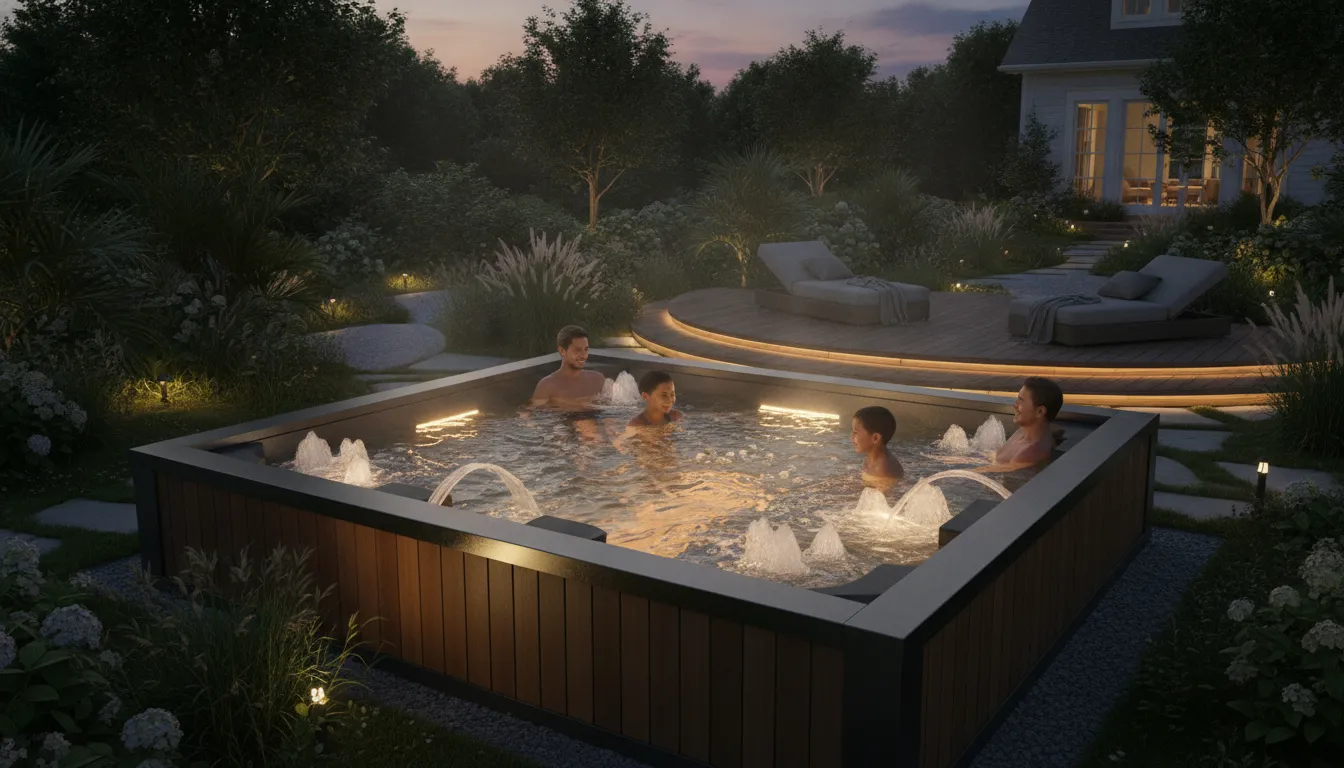
What does year-round use look like in real life?
Hot tubs and swim spas are designed around consistent temperature control, so they can remain part of the household routine throughout the year. That changes the experience from a seasonal destination to something you can use after work. Before breakfast, or on a cool weekend when the rest of the yard is quiet.
A hot tub is especially well suited to simple rituals. A short soak can create time to unwind, spend an evening with family, or ease into recovery after an active day. Properly maintained and covered, hot tubs can be used even when outdoor temperatures fall to 0 degrees Fahrenheit, according to regional hot tub guidance. That kind of cold-weather access is difficult to match with an unheated pool.
Swim spas offer a broader range of uses across the year. Their compact exercise area can support swimming against a current, water-based movement, and low-impact fitness, while the warm water also creates space for relaxation. Fun Outdoor Living describes the swim spa as a hybrid experience that combines pool-style exercise with hot tub hydrotherapy. Making it a practical fit for homeowners who do not want to choose between fitness and recovery. Explore the swim spa gallery to see how different layouts can fit a Carolina backyard.
Which option best fits your seasonal rhythm?
- Choose a pool if your priority is large-scale summer recreation, entertaining, and open water space.
- Choose a hot tub if you want the most focused option for relaxation, connection, and a reliable year-round soak.
- Choose a swim spa if you want one setting for regular exercise, hydrotherapy, and family use across more of the calendar.
The right comparison is not simply pool vs hot tub vs swim spa. It is how often you want to use the water, what you want to do there, and whether heating and maintenance fit your routine. For many Carolina households, year-round usability is what turns a backyard feature from an occasional summer amenity into a daily source of wellness and time together.
Resale Value: Do These Add to Your Home’s Worth?
Resale value is a reasonable factor in the decision, but it should not be the only one. A pool, hot tub, or swim spa can improve how a home feels to the right buyer. None reliably adds its purchase price dollar for dollar, and the effect depends on the property, the neighborhood, the installation quality, and the buyer’s priorities.
Pools are especially personal. One buyer may see a finished backyard and an ideal place for summer gatherings. Another may see years of chemical care, safety concerns, higher utility bills, insurance questions, and less room for other uses. In the Carolinas, a pool can also be a seasonal feature unless the homeowner invests in heating. That can make it a strong lifestyle asset for one household and a liability for another.
Why usable outdoor space often matters more than a single feature
Well-designed hardscaping is usually easier for future buyers to understand. A properly built patio, deck, or paver pad creates flexible space for dining, relaxing, grilling, or adding outdoor furniture. It does not require a buyer to adopt one specific routine, and it can make the entire backyard feel more finished. Quality construction, thoughtful drainage, safe access, and a design that fits the home matter more than simply adding square footage.
That does not mean hardscaping guarantees a particular return. Poor workmanship, difficult maintenance, or a layout that consumes the yard can work against the home’s appeal. The best improvements support how people already use the property while leaving enough room for different households to make the space their own.
Where hot tubs and swim spas may fit
Hot tubs and swim spas can offer a more contained alternative to a full-sized pool. A hot tub generally occupies less space and supports relaxation, hydrotherapy, and social time. A swim spa can combine a compact exercise area with hydrotherapy, giving it more than one practical use for a household. That broader function may help it appeal to buyers who want wellness or fitness without giving up most of the backyard.
Still, buyers will consider the condition of the equipment, the access needed for service, electrical requirements, operating costs, and whether the placement feels intentional. A clean installation with a suitable pad, safe access, privacy, and an attractive surrounding area is easier to evaluate than equipment that looks temporary or neglected. Buyers may also prefer a home with no spa at all, so removal and replacement logistics can influence their view.
The most honest answer in a pool vs hot tub vs swim spa comparison is that resale value depends. Choose the improvement that gives your household years of meaningful use first, then make the installation durable, maintainable, and visually connected to the rest of the backyard. That approach can broaden appeal without making a promise about the home’s eventual selling price.
How to Choose Between a Pool, Hot Tub, or Swim Spa
The right choice depends less on which feature looks best in a backyard photo and more on how you expect to use it on an ordinary week. Start with the experience you want, then test that choice against your space, budget, maintenance preferences, and the Carolina seasons.
1. What do you want to do most?
- Choose a pool if your priority is entertaining, active play, cooling off in summer, or having room for several people at once. A full-sized pool is the strongest fit when swimming and outdoor gatherings are the center of the plan.
- Choose a hot tub if you want focused relaxation, hydrotherapy, and an easy evening ritual. Hot tubs are typically the most compact option, making them practical when you value comfort and conversation more than lap-style exercise.
- Choose a swim spa if you want one space for exercise, recovery, relaxation, and family time. A swim spa combines a current for swimming with spa seating, so it can bridge the gap between a pool and a hot tub without requiring both.
2. Does the space support the experience?
Measure the usable area, not just the open area. An in-ground pool can require up to 800 square feet before you account for decking, access, equipment, setbacks, and landscaping. Swim spas commonly run about 12 to 19 feet long. While hot tubs need less room but still require a stable foundation, service access, and a comfortable path around them.
For a smaller lot, a hot tub or swim spa may leave more room for seating, planting, and circulation. Our swim spa cost vs pool comparison can help you think through the space and ownership trade-offs in more detail.
3. What budget and maintenance level feel comfortable?
Pools generally carry the highest upfront commitment because excavation, permitting, construction, and surrounding hardscape add complexity. A hot tub is usually simpler to install. A swim spa sits between the two in scale and can provide more than one use without the full footprint of a pool.
Look beyond the purchase price. Ask what you are comfortable spending to heat, clean, balance, and service the water. The U.S. Department of Energy notes that hot tubs generally take less energy to heat than full-sized pools because they contain significantly less water. Every option still needs proper chemical balance and filtration. If you want a closer lifestyle comparison, read our guide to hot tub vs swim spa choices for Carolina backyards.
4. Will you use it all year?
In North and South Carolina, a pool can be ideal through the long, warm summer but may be used less during the cooler months unless you add heating. Hot tubs and swim spas are better suited to a year-round routine, including a quiet winter soak or an early-morning workout.
If you are still weighing the options, there is no need to decide from specifications alone. Visit a Fun Outdoor Living showroom and book a test soak. A calm, no-pressure conversation and time in the water can make the differences between each option much easier to feel.
Ready to experience one for yourself? Book a test soak at a Carolinas showroom
Frequently Asked Questions
What is the difference between a pool, a hot tub, and a swim spa?
A pool is built primarily for swimming, recreation, and larger gatherings. A hot tub is a more compact, heated space designed around sitting, soaking, and hydrotherapy. A swim spa combines both experiences in one unit, using a current for exercise while also providing seating and water massage for relaxation.
Is a swim spa better than a swimming pool?
That depends on how you plan to use your backyard. A pool may be the better fit for children’s play, entertaining, or traditional recreational swimming. A swim spa may suit homeowners who want exercise, relaxation, and more consistent year-round use in a smaller footprint. It also avoids much of the excavation and surrounding space a full-sized pool requires.
How do maintenance requirements compare between pools, hot tubs, and swim spas?
Pools generally demand the most ongoing work because they hold more water and often include larger filtration systems, surrounding surfaces, and seasonal preparation. Swim spas typically fall in the middle. Hot tubs are often the most manageable because their smaller water volume makes routine cleaning, testing, and chemical adjustments more contained. Proper chemical balance and filtration remain essential for safety and hygiene for every option, according to the CDC: https://www.cdc.gov/healthywater/swimming/aquatics/pools-hot-tubs.html.
Which option is best for a small backyard?
A hot tub is usually the most compact choice for focused relaxation. A swim spa can work well when you want a dedicated exercise area plus hydrotherapy without giving up the entire yard to a pool. Before choosing, measure access paths, equipment space, and the finished installation area, not just the water vessel itself.
Ready to Compare Your Options in Person?
Cost is only part of the decision. Seeing how a swim spa fits your routine, space, and comfort preferences can make the trade-offs between a pool, hot tub, and swim spa easier to understand. If you are comparing options for your Carolina backyard, book a test soak in a swim spa at a local Fun Outdoor Living showroom. A hands-on visit gives you a clearer starting point for choosing the right backyard experience.