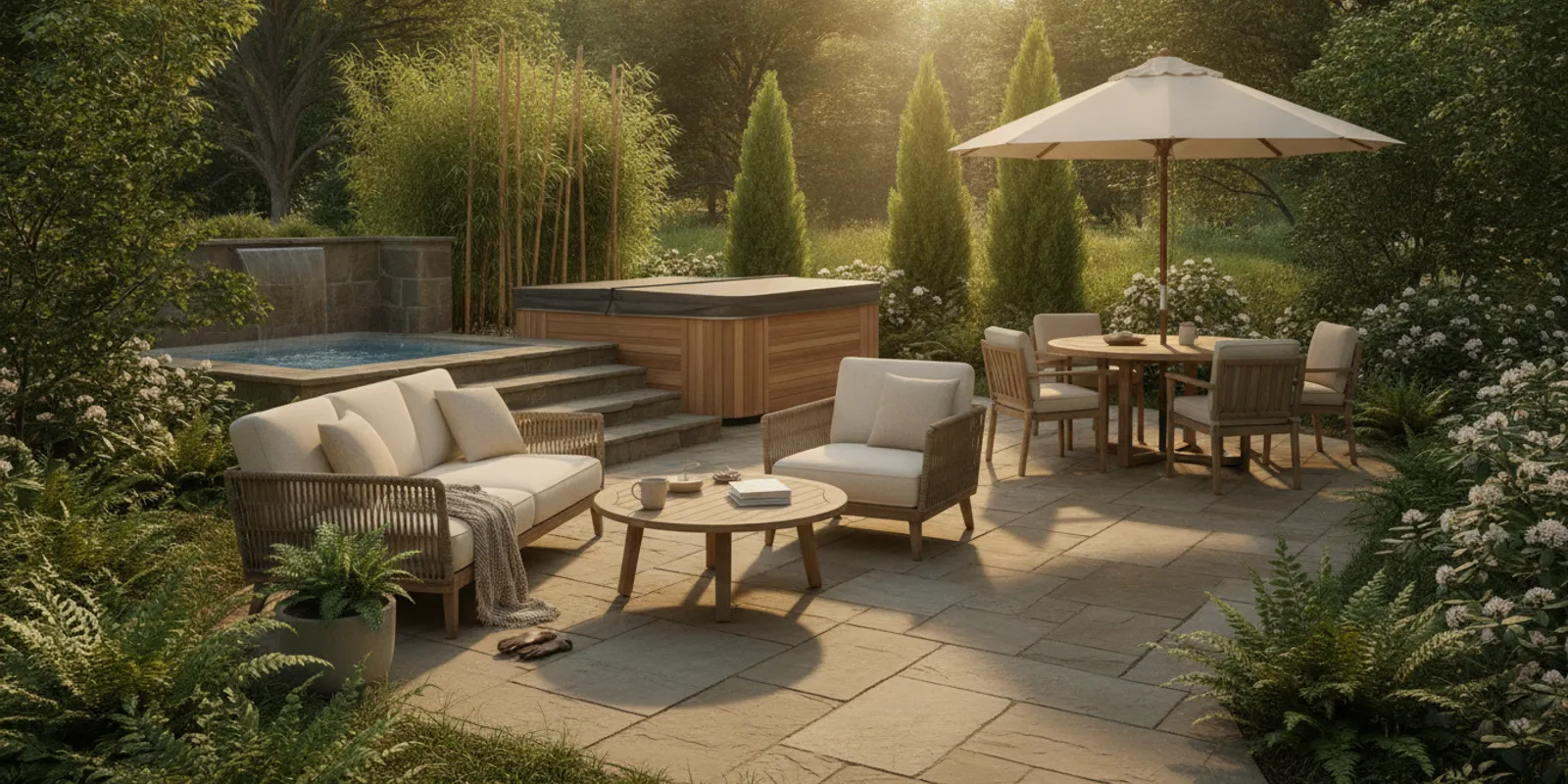
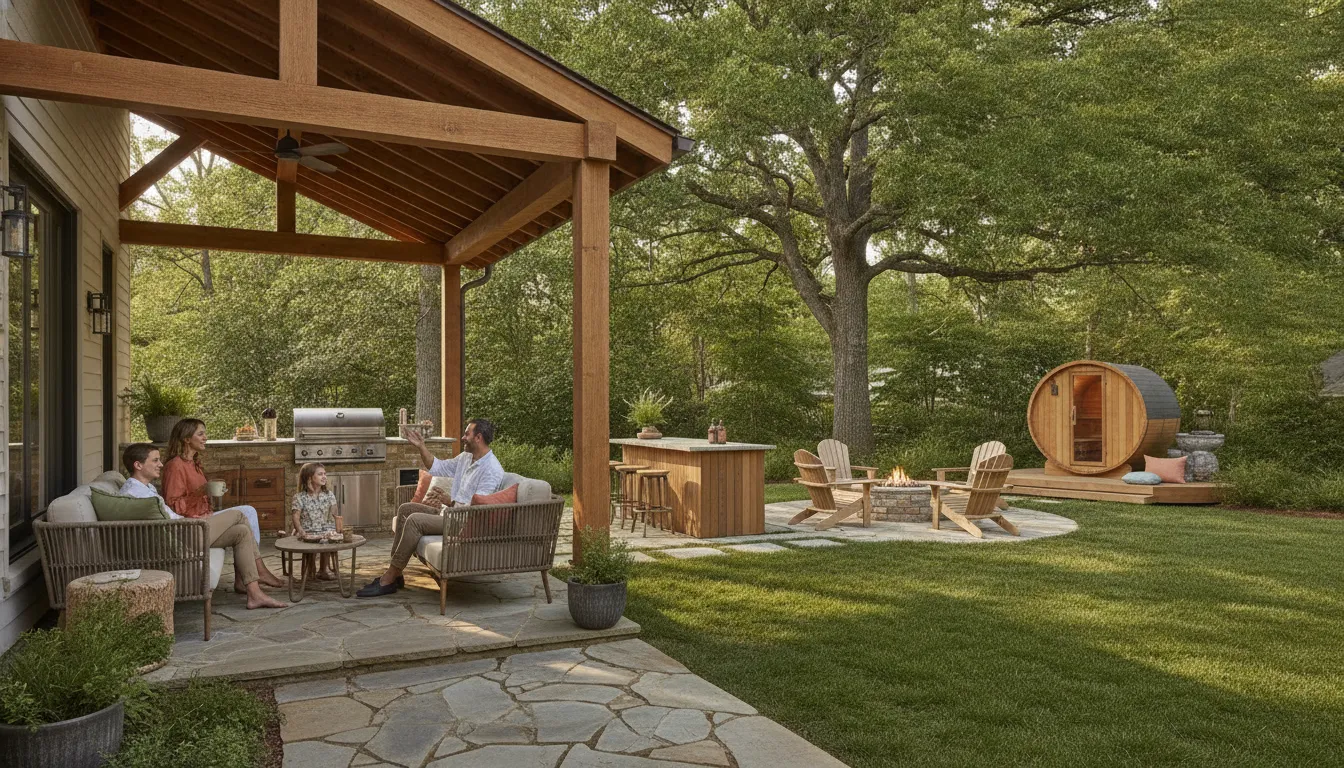
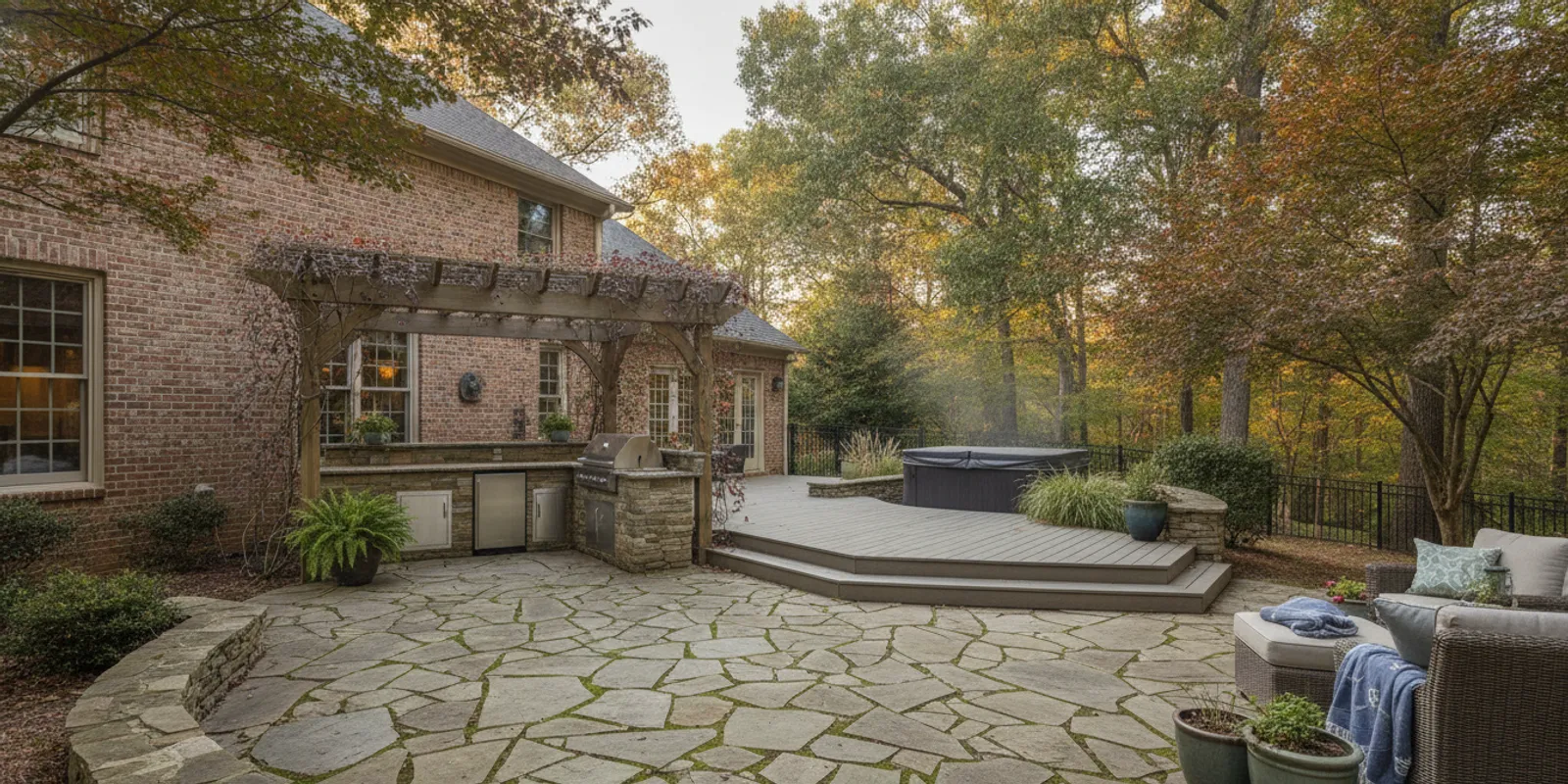
As Carolina evenings begin to cool, a backyard fire can change how often you use the space. It gives family dinners a natural gathering point, makes outdoor hosting feel easier, and adds warmth during the shoulder seasons when the patio is otherwise quiet.
The right fire pit depends on how you want to use your backyard. Gas offers quick, low-smoke enjoyment, while wood creates a traditional crackle and rustic atmosphere. A custom design can place either option into the patio, seating, or outdoor kitchen layout so the feature feels intentional rather than added on later.
That planning matters in the Carolinas, where a fire feature may serve everything from a casual weeknight conversation to a full evening with guests. Instead of choosing a standalone unit first, consider how its location, materials, fuel source, and surrounding seating will shape the way people move through the backyard. The result can become more than a source of heat, and a true anchor for outdoor living.
Schedule a free home consultation and design appointment
Why a Custom Fire Pit Is the Centerpiece of a Carolina Backyard
A well-placed fire pit changes how a backyard feels after sunset. It gives guests a natural place to gather, keeps a conversation going when the evening turns cool, and adds an easy rhythm to outdoor life. In the Carolinas, that can mean coffee outside on a crisp morning, dinner that lingers after the plates are cleared, or a relaxed weekend gathering around the fire.
The appeal is especially clear as summer gives way to fall. Fire pits and outdoor fireplaces become top-of-mind as temperatures begin to cool, because warmth makes the backyard comfortable for more of the year. A fire feature can also add recreation and cooking utility, not just a visual focal point. Depending on the design, it may support everything from roasting marshmallows with the kids to keeping a host comfortable while preparing dinner outdoors. The U.S. Environmental Protection Agency recognizes outdoor fires as a source of warmth, recreation, and cooking utility, while also offering guidance for responsible use at backyard recreational fires.
Designed for the way your backyard is used
An off-the-shelf fire bowl can provide a flame, but a custom fire pit can help the entire outdoor space work better. It can be positioned to face the seating area without blocking views, placed at a comfortable distance from the kitchen. And sized to suit the patio rather than forcing the patio to work around it. The result feels less like an object set in the yard and more like part of the home’s architecture.
Fun Outdoor Living designs integrated outdoor environments in which a fire pit can be incorporated into a larger patio, outdoor kitchen, or other backyard zone. That approach helps connect separate activities. Someone can tend the grill while others gather near the fire. Guests can move between dining and conversation without leaving the central social area. Seating, paving, lighting, and planting can all support the same flow.
For inspiration, browse the outdoor fire gallery to see how fire features can anchor different backyard layouts. A custom design also gives homeowners more control over materials and proportions, which matters in neighborhoods across Charlotte. Pineville, Matthews, Lake Norman, Rock Hill, and Winston-Salem, where properties and outdoor routines vary widely.
A fire feature with lasting local support
Custom work is most valuable when the design and service behind it are dependable. Fun Outdoor Living has operated as a family-owned business in the Carolinas since 2004, with an in-house model that brings design, construction, and long-term support together. That local continuity helps homeowners think beyond the first season and plan a fire feature that fits the way their family expects to use the backyard for years to come.
Gas vs. Wood Fire Pit: Which Should You Choose?
The right fuel depends on how you want to use your fire pit. Gas suits homeowners who value quick, predictable heat with less smoke and cleanup. Wood creates a more traditional gathering place, with crackling logs, changing flames, and the unmistakable atmosphere of a campfire. Both can support comfortable evenings outdoors, but they ask for different routines and offer a different experience.
The U.S. Environmental Protection Agency notes that switching from wood to natural gas or propane reduces harmful air pollutants. That does not make fuel choice purely technical, though. Think about startup, storage, maintenance, local rules, and the kind of ritual you want to create before choosing a burner or fire ring.
| Consideration | Gas | Wood |
|---|---|---|
| Smoke and emissions | Produces little to no visible smoke during normal operation and reduces harmful air pollutants compared with burning wood. The EPA identifies natural gas and propane as cleaner alternatives. | Produces wood smoke, which contains gases and fine particles. Smoke can be reduced by burning only seasoned, dry wood, but it cannot be eliminated. |
| Startup | Starts with a switch, key, or ignition system, depending on the design. It is a practical choice when you want to enjoy the fire without gathering kindling. | Requires kindling, logs, and time to build the flame. It also takes longer to extinguish and cool before the area can be cleaned or used for another activity. |
| Maintenance | Requires burner, connection, and fuel-system checks. Some systems can use conversion kits to update an existing fire ring or pit for natural gas or propane. | Requires dry wood storage, ash removal, and regular cleaning. Never burn construction waste, plastic, garbage, or yard waste because these materials can create more smoke and toxic emissions. |
| Ambience | Offers a controlled, even flame with a clean-lined look that works well with contemporary patios, seating walls, and outdoor kitchens. | Creates a classic rustic atmosphere with crackling logs, natural scent, and shifting flames. It often feels especially fitting for relaxed gatherings and campfire-style evenings. |
| Running cost note | Ongoing cost depends on whether the system uses propane or a natural gas connection, local utility rates, and how often you use it. A permanent connection may involve a higher upfront installation cost. | Cost depends on local firewood prices, delivery, and storage. Seasoned wood with about 20 percent moisture burns hotter and cleaner, so buying or preparing suitable fuel matters. |
Which fuel fits your routine?
Choose gas if your ideal evening begins with pressing a button and ends without a pile of ash. It can be a strong fit for a frequently used patio, an outdoor kitchen, or a seating area where smoke would drift toward guests or the house. Gas may also be worth considering when members of the household are sensitive to wood smoke. The EPA specifically identifies children, older adults, and people with heart or lung disease as more sensitive to its effects. Review the full EPA guidance on backyard recreational fires before deciding.
Choose wood if tending the fire is part of the experience. The preparation, scent, sound, and changing flame are not inconveniences for everyone. They are the reason many homeowners choose this kind of fire pit. Use properly seasoned dry wood, keep it stored out of the weather, and follow local restrictions. Your municipality may limit backyard recreational fires, so verify ordinances and burn bans before finalizing the design.
If you are still weighing the layout and fuel together, this guide to choosing a fire pit can help clarify which option fits your backyard and your evenings outdoors.
Fire Pit Design Ideas That Fit Your Outdoor Living Space
The best fire feature feels connected to the way you already use your backyard. It should give guests a natural place to gather, leave enough room for comfortable movement, and work with the patio, seating, cooking, and serving areas around it. A thoughtful layout can make a fire pit feel like part of the architecture rather than an object placed in an empty corner.
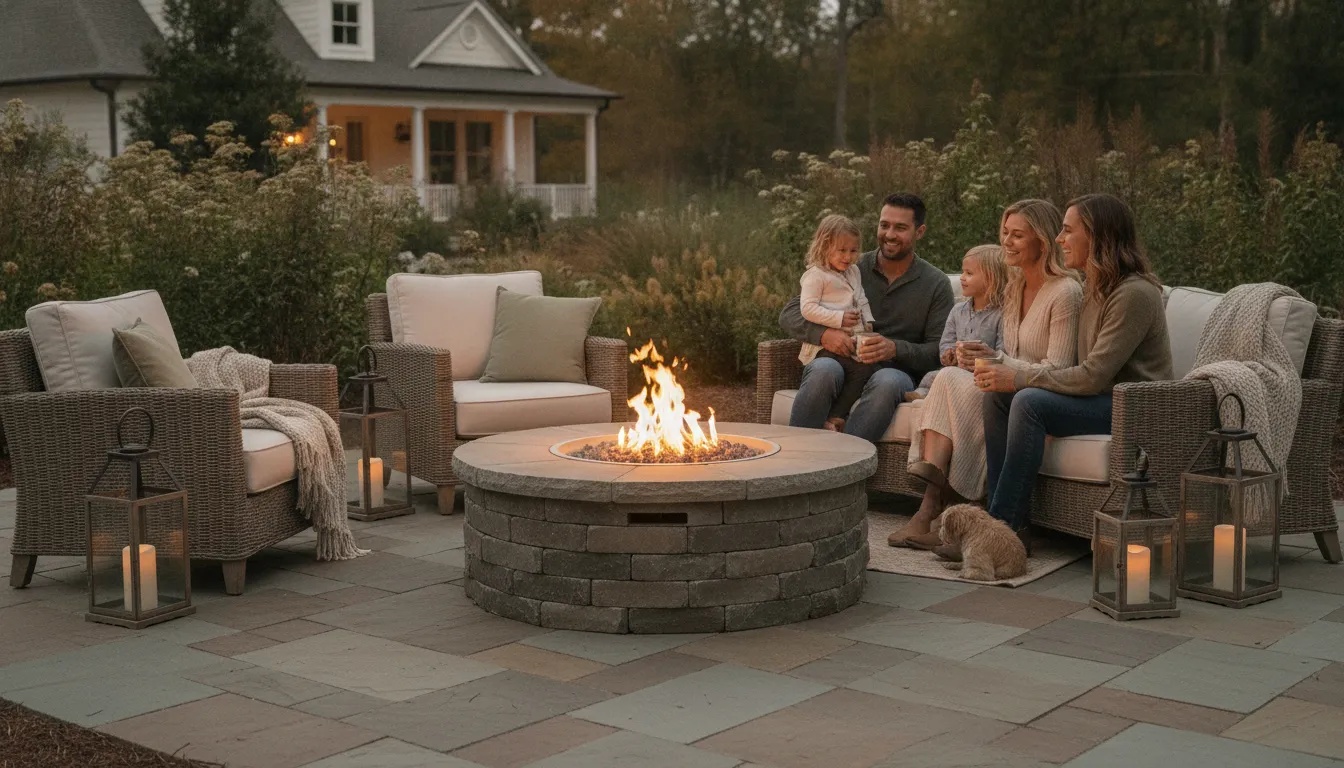
Consider these design directions when shaping the space:
- Paver patio fire pit: Build the fire feature into a custom-paved sitting area with a clear visual center. Pavers can define the gathering zone, create paths from the house, and coordinate with steps, retaining walls, or an outdoor kitchen. A paver patio with fire pit can be scaled for two chairs and a quiet evening or expanded for larger gatherings.
- Fire pit table: A fire pit table combines a useful surface with a built-in burner. Giving people somewhere to set a drink while keeping the flame at the center of the conversation. This is a practical choice for compact patios, covered seating areas, and homeowners who want the flexibility of a table when the fire is not in use.
- Hidden-tank table: A propane model with a concealed tank compartment keeps the utility equipment out of sight and preserves a cleaner profile. The table can then coordinate with lounge seating, dining furniture, or the finishes already used elsewhere in the backyard.
- Integrated patio and kitchen zone: Instead of treating the fire feature as a separate destination, place it within a larger outdoor living plan. A fire pit can help connect a kitchen, dining area, and conversation seating, so the person tending the grill is still part of the group. Custom paving can unify those zones while giving each one a distinct purpose.
Scale matters as much as style. A round fire pit encourages face-to-face conversation, while a linear burner can reinforce the edge of a seating wall or divide a dining area from a lounge. Think about sightlines from the kitchen and the house, where people will set down food, and how the space will feel when the flame is off. Those details help the design serve everyday routines, not only special occasions.
For more ways to connect warmth, seating, and hardscape, browse the outdoor fire gallery. The right direction will depend on your yard, traffic patterns, preferred fuel, and the larger improvements you may want to make over time.
How Safe Is a Fire Pit and What Rules Should You Follow?
A fire pit can be a comfortable, inviting part of an outdoor living space when it is planned and used with care. The right safety approach starts before the first fire: confirm local requirements, choose a suitable location, and match the fuel type to how your household uses the space.
Wood smoke contains a complex mixture of gases and fine particles, also called particulate matter. Children and teenagers, older adults, and people with heart or lung conditions, including asthma and COPD, can be more sensitive to those particles. The EPA recommends never burning wood on air-quality alert days, when pollution is already elevated. The EPA’s backyard recreational fire guidance explains these considerations in more detail.
Check local rules before you plan the fire feature
Fire regulations can vary by city, county, neighborhood, and fuel type. Some local governments restrict or prohibit backyard recreational fires, and temporary burn bans may apply during dry or high-risk conditions. Check with your local fire department or governing authority before installation, then confirm whether the design, fuel source, permits, and operating conditions meet current requirements.
Location matters as much as the fire bowl or burner. As a general planning rule, keep the burning area at least 15 feet from buildings, structures, combustible fencing, furniture, and other flammable objects. The National Park Service campfire guidance also emphasizes selecting a clear location away from flammable materials and maintaining control of the fire. Local requirements may call for more distance, so follow the stricter standard when rules differ.
A practical fire pit safety checklist
- Verify local ordinances, burn bans, and any required approvals before using the fire pit.
- Keep the burning area at least 15 feet from structures and flammable objects, or farther if local rules require it.
- Do not burn wood during an air-quality alert or when conditions are unusually dry or windy.
- If burning wood, use only seasoned, dry firewood. Wood at about 20 percent moisture burns more cleanly than damp wood.
- Never burn plastic, garbage, yard waste, or construction materials, which can create excessive or toxic smoke.
- Keep children supervised, provide a clear path around the fire, and keep water or another appropriate extinguishing method close by.
- Fully extinguish the fire before leaving the area, and confirm that ashes or embers are cold.
For households with smoke-sensitive family members or guests, a properly designed gas or propane fire feature may be worth considering. The EPA notes that switching from wood to natural gas or propane reduces harmful air pollutants, although every fire feature still requires responsible placement, operation, and maintenance.
What to Know Before Installing a Fire Feature in the Carolinas
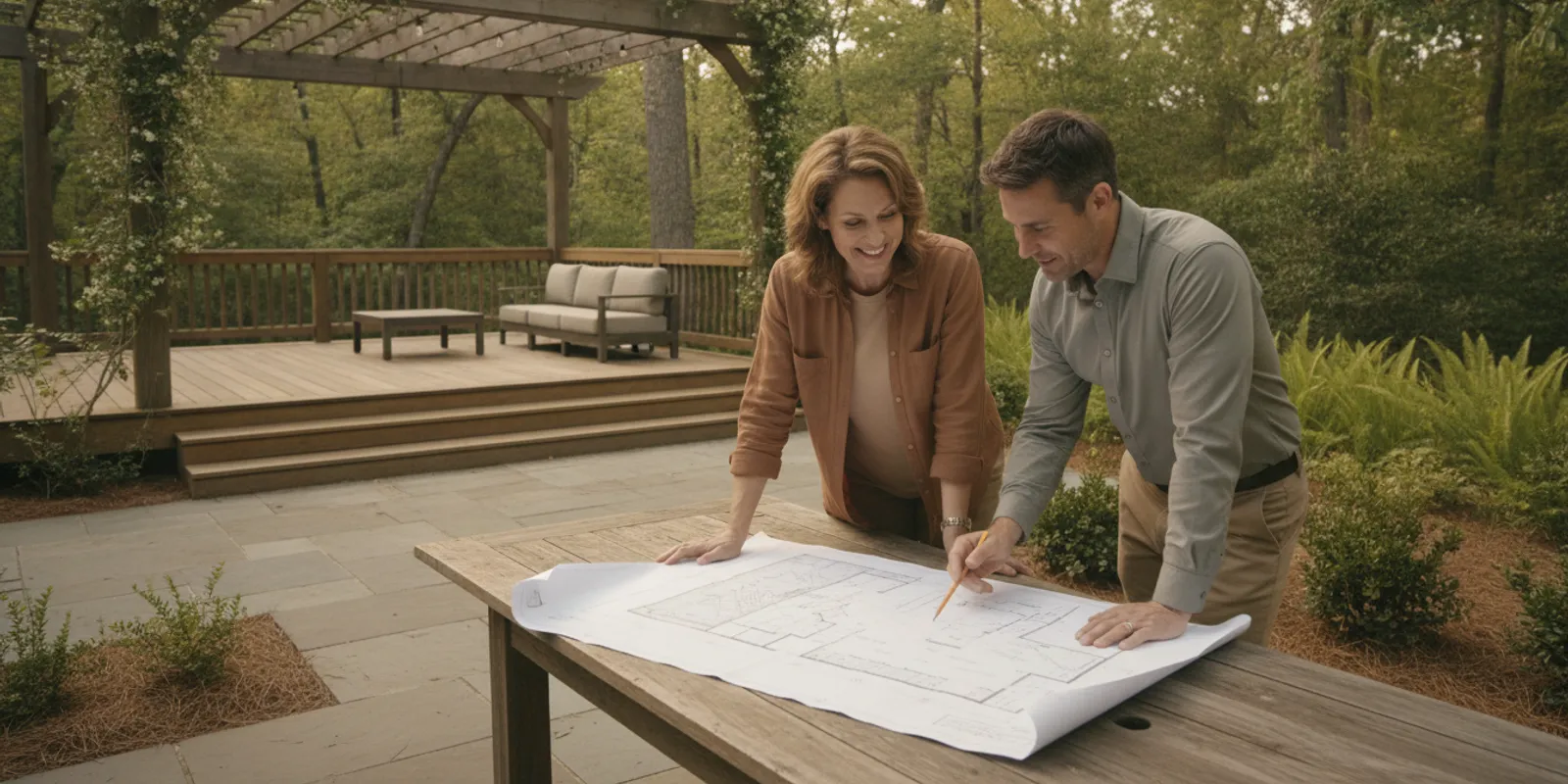
The best fire feature projects begin before anyone chooses a burner, stone finish, or seating arrangement. A design consultation gives you a chance to look at the whole backyard first: how people move through it, where guests gather. How the feature relates to a patio or outdoor kitchen, and how you want to use the space as Carolina evenings cool down.
That consulting-first approach matters because a fire pit is rarely an isolated object. It can anchor a conversation area, extend the usable season of a patio, or become one element in a larger outdoor living plan. The right scale, placement, fuel type, and finish should work with the architecture of your home and the way your family actually spends time outside. Fun Outdoor Living can also help coordinate the surrounding hardscape and gathering areas, rather than leaving you to manage separate contractors.
Why custom fabrication changes the project
Off-the-shelf fire features can solve a narrow need, but a custom design gives you more control over proportions, materials, and how the feature fits the property. Custom outdoor fire features can be integrated with specialized paving, seating walls, patios, or kitchen zones so the finished space feels intentional instead of added on later. See how these decisions can come together in this guide to custom outdoor fire features.
Fun Outdoor Living manufactures custom fire features, including gas fire pits and stone fireplaces, in-house at its 4-acre corporate warehouse in Monroe, North Carolina. That capability supports a more direct path from the initial idea to the finished build. It also keeps design, construction, and service connected when details need to be clarified or adjusted.
A local team for a connected build
Since 2004, Fun Outdoor Living has served homeowners across the Carolinas through a family-owned, vertically integrated operation. The company has more than 50 in-house staff members, works without subcontractors, and operates five regional showrooms. Service areas include Charlotte, Pineville, Matthews, Lake Norman, Rock Hill, and Winston-Salem.
Before installation, ask practical questions about fuel, placement, materials, access, maintenance, and local requirements. Local ordinances and HOA rules may restrict backyard recreational fires, so those should be checked before construction begins. The fireplace vs. fire pit comparison can help you weigh a permanent stone fireplace against a freestanding or built-in fire pit for your Carolina yard. A design team familiar with the region can help identify the decisions that need attention early, then carry the project through design, fabrication, installation, and ongoing service.
Get a free consultation to design your Carolina outdoor fire feature
Frequently Asked Questions
Which is better: gas or wood-burning fire pits?
Gas is usually the better fit for quick, predictable use, less smoke, and simple switch-on ignition. Wood offers a classic campfire atmosphere, but it requires dry, seasoned fuel and more cleanup. The right choice depends on how often you entertain, how much atmosphere you want, and whether smoke may bother people nearby. The EPA notes that natural gas and propane reduce harmful air pollutants compared with burning wood: EPA guidance.
How far should a fire pit be from the house?
Place it well away from the house, roof overhangs, fences, trees, and other combustible features. A common planning range is 10 to 20 feet from structures, but local ordinances may require a specific distance. Confirm local rules and burn restrictions before finalizing the layout: National Park Service fire guidance.
Are smokeless fire pits actually effective?
They can significantly reduce visible smoke when operated correctly, especially with dry, seasoned wood and adequate airflow. They do not eliminate fire, heat, or all emissions, so placement, ventilation, and local rules still matter. If minimizing smoke is the priority, a properly designed gas burner may be a more consistent solution.
Can I install a fire pit on a wooden deck?
Do not place a wood-burning or gas fire pit directly on deck boards. A professional design should evaluate the heat output, clearances, and a noncombustible, heat-resistant base or barrier. In many cases, a masonry or stone platform, or a separate ground-level location, is the safer approach.
How much does it cost to install a custom fire pit?
There is no single price because the scope may include the burner, fuel connection, stonework, pavers, seating, drainage, and related patio construction. A design consultation is the best way to develop an accurate plan and estimate for your backyard.
Ready to Plan Your Outdoor Fire Feature?
A well-planned fire feature can bring warmth, conversation, and a natural gathering point to your Carolina backyard. The right design should work with your patio, entertaining habits, and the way you want to enjoy the space through the seasons.
Schedule a free home consultation and design appointment to talk through your ideas with the Fun Outdoor Living team.