On a Carolina evening, the best gathering spot is rarely the one with the most features. It is the place where people can see one another, settle in comfortably, and move easily between the patio, deck, kitchen, and yard. That makes layout the first decision, before choosing finishes or fuel.
Learn More about a free fire-feature consultation
A successful outdoor fire pit layout balances proportion, sightlines, seating, comfort, and safety. Place the fire at a natural center of the gathering area. Keep chairs close enough for conversation without crowding the heat, and plan a noncombustible surface with local clearance requirements in mind.
For Carolina homes, the right arrangement also accounts for covered areas, changing weather, drainage, and how the space will be used in fall and winter. A well-planned fire feature can help define an outdoor room and make the backyard feel more inviting after the temperature drops. Start by looking at how people will gather, not simply where a fire feature will fit.
What Makes an Outdoor Fire Pit Layout Feel Natural?
The best fire pit areas do more than place flames in an open patch of yard. They give people a reason to gather, while making the rest of the backyard feel connected. Think of the feature as the center of an outdoor room, much like a living room fireplace. Seating, walking paths, the view from inside the home, and the direction of the evening breeze all influence whether the space feels inviting or awkward.
Start with the proportions of the patio or deck. A large fire feature can overwhelm a compact entertaining area, while a small one may lose its presence in a broad yard. The goal is visual balance, with enough room around the fire for seating and movement without leaving the feature isolated. A custom design can help the fire element relate to the scale, materials, and geometry already established by the home.
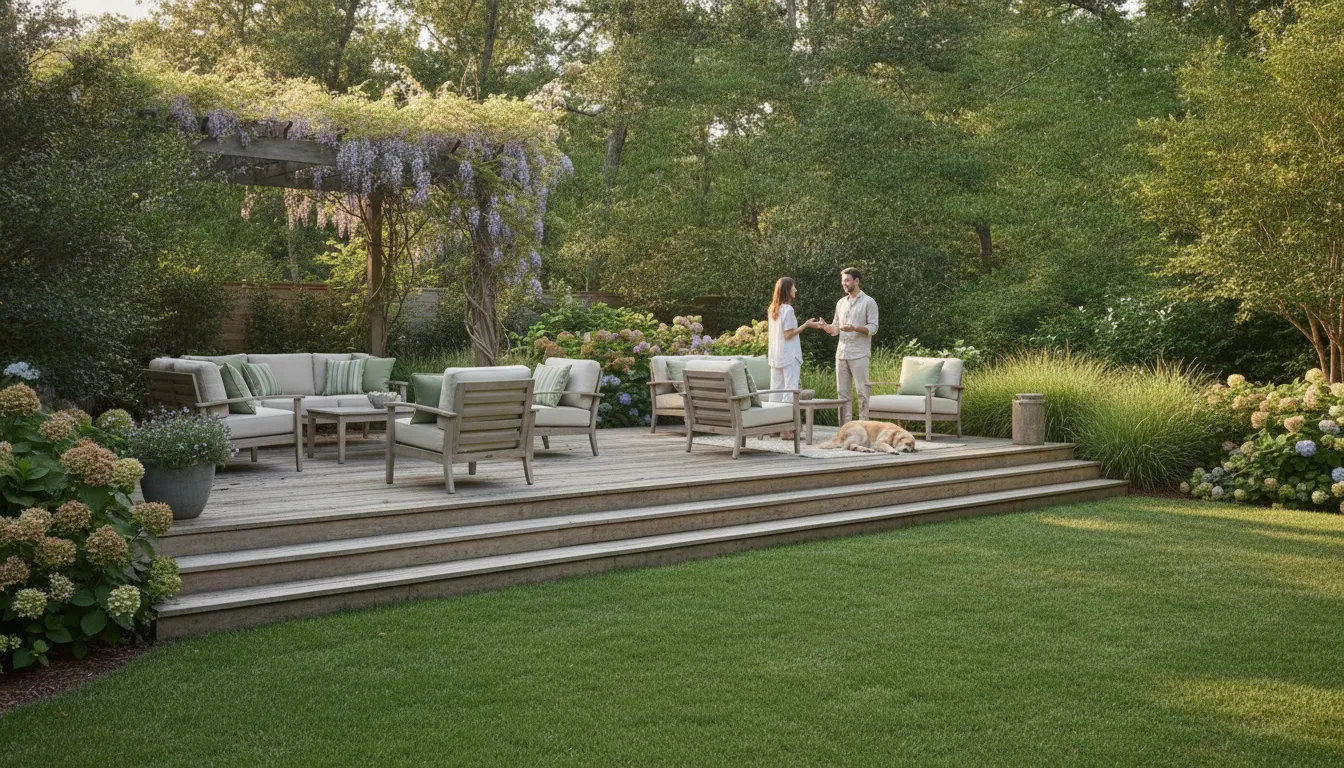
Seating should support conversation first. Arrange chairs or sofas so guests can see one another without constantly turning toward the flame. They should be close enough to share warmth, but far enough away for a comfortable, safe distance. Guidance from the University of Utah Health recommends planning seating around both comfort and safety, rather than treating the fire pit as a decorative object alone: fire pit safety guidance.
Keep sightlines in mind from several positions. From the kitchen or family room, can you see the fire without looking through a railing, planter, or tall piece of furniture? From the seating area, does the view open toward the yard, garden, or night sky? A low-profile fire pit may work well near the edge of a patio because it preserves the view. A taller feature can create definition where the yard feels exposed.
- Match the fire feature to the patio or deck scale.
- Face seating toward people, not only toward the flame.
- Preserve clear views from the house and the main walking route.
- Leave an intentional transition between the fire zone and nearby cooking or dining areas.
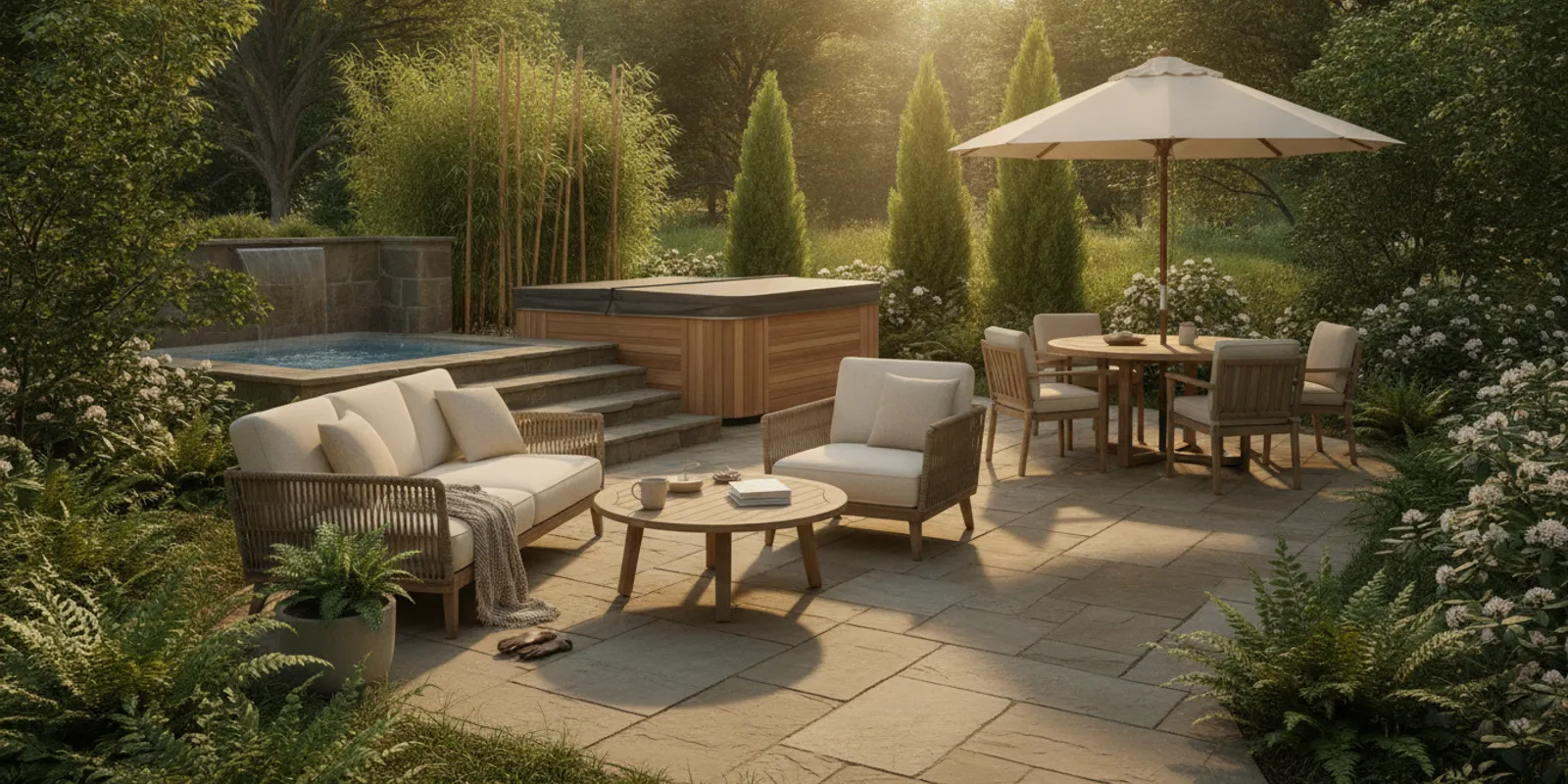
Finally, connect the gathering area to how people already move through the backyard. A path from the kitchen should not force guests through the seating circle. Likewise, the route to the grill, hot tub, or garden should remain clear when chairs are occupied. Browse outdoor fire pit design inspiration to see how integrated layouts can turn separate features into one comfortable Carolina backyard.
How Should You Place an Outdoor Fire Pit on a Patio or Deck?
Placement should make the fire pit feel like part of the outdoor room, not an obstacle added after the patio or deck is finished. In a Carolina backyard, account for everyday movement, changing wind, rain, nearby landscaping, and the way people will gather after sunset. Use this planning sequence before selecting a final location.
- Start with a level, stable base. A portable fire pit should sit on a completely level, nonflammable surface where it is difficult to jostle or tip. Keep it out of the main path between the house, grill, doors, and seating. Stone pavers or decorative gravel can create a defined noncombustible landing zone around the base, while also making the fire feature feel intentional. These recommendations are consistent with fire-pit safety guidance from the University of Utah Health.
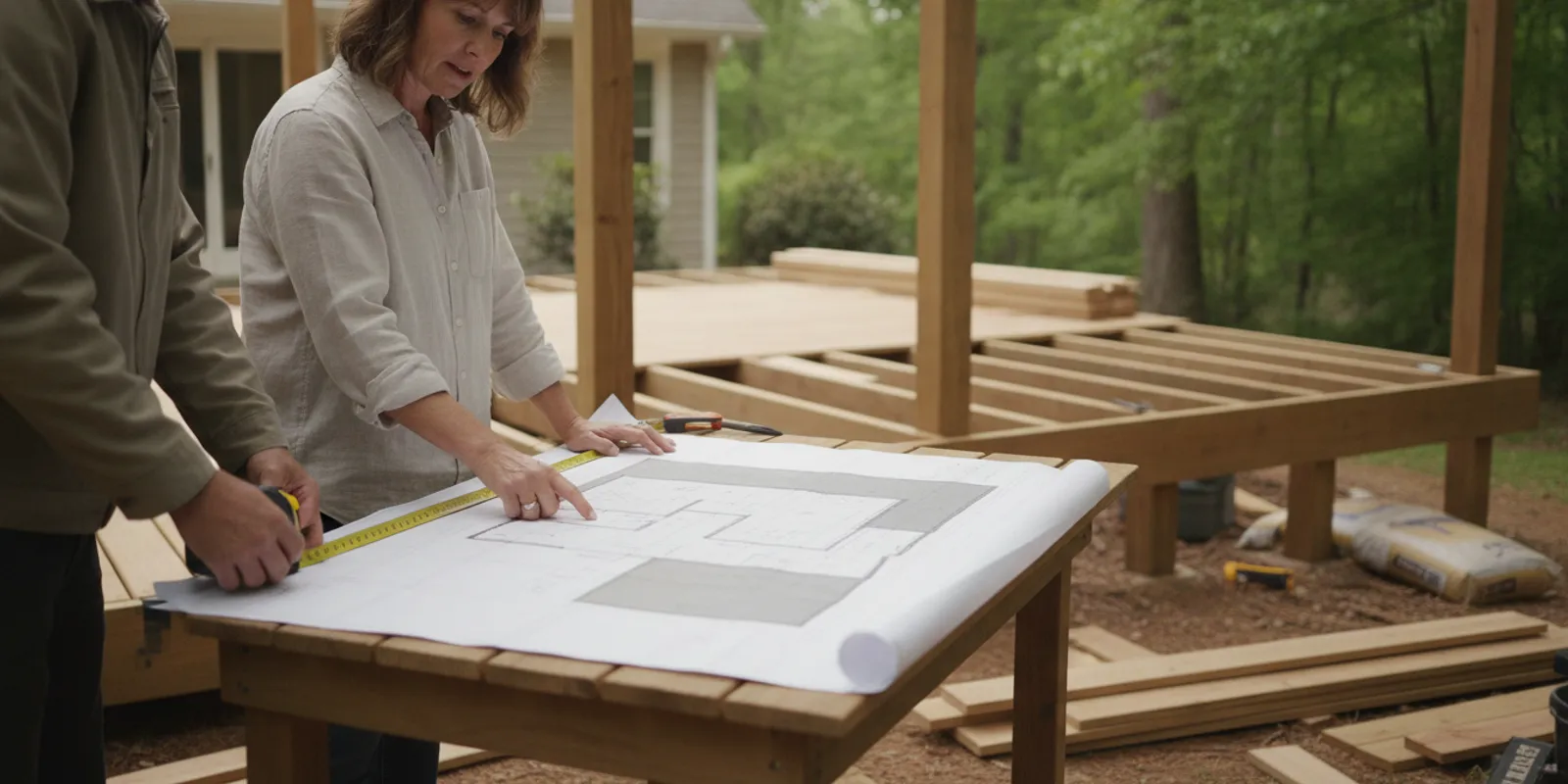
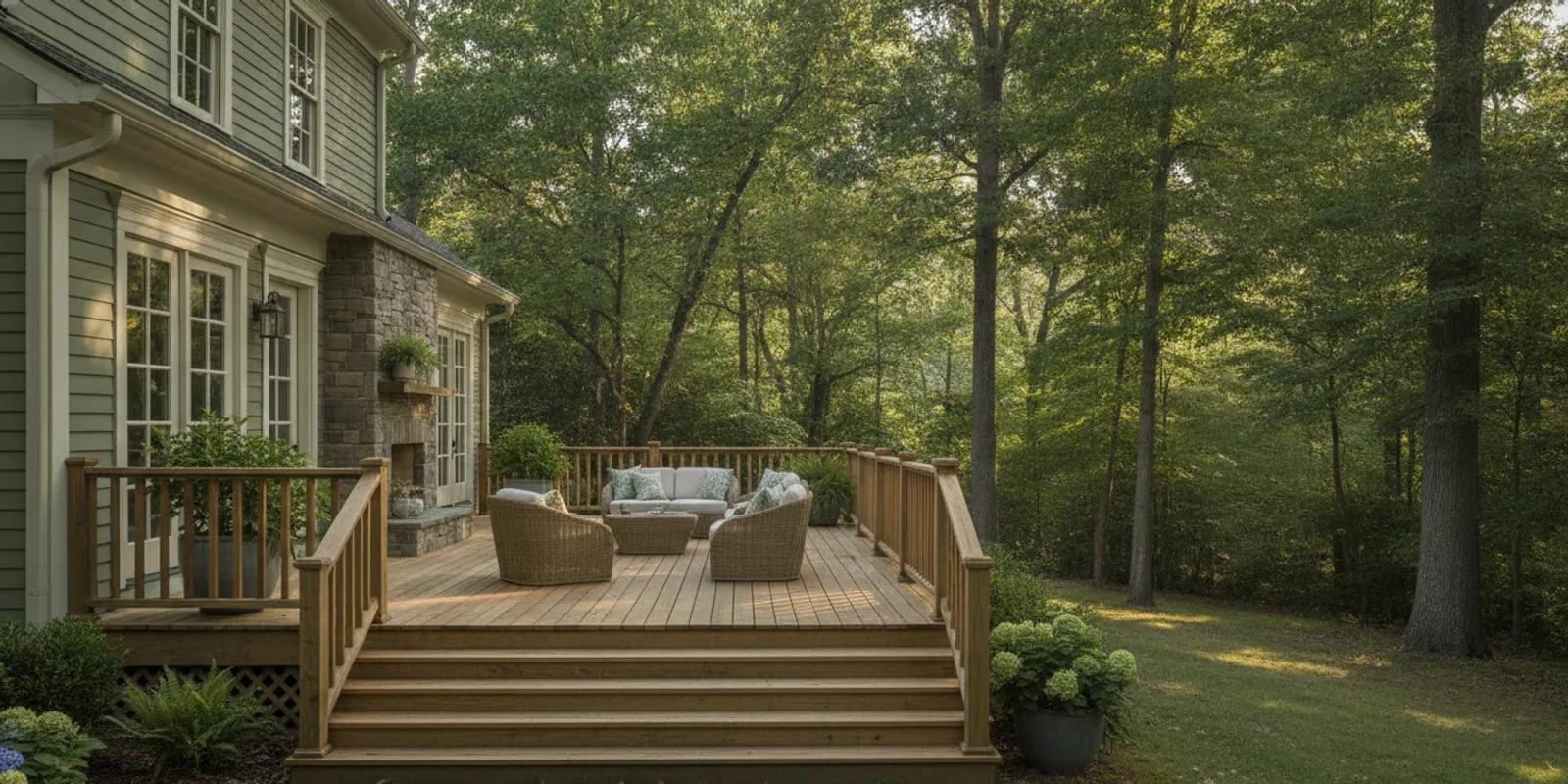
- Plan the circulation around it. Leave a clear route for people carrying food, drinks, or firewood. Arrange chairs so guests can talk and enjoy the warmth without forcing anyone to squeeze between the flame and a railing, wall, or table. On a deck, review the structure, surface materials, and load considerations with a qualified professional before placing any fire feature. A masonry or built-in installation should be designed as part of the deck or patio plan rather than treated like movable furniture.
- Use clearance as a planning reference, not a code shortcut. One general outdoor-heating reference suggests placing a fire pit 10 to 20 feet from structures and flammable materials. Treat that range as an early layout benchmark only. The correct location can depend on the fire pit design, fuel, overhead features, manufacturer instructions, property conditions, and local requirements. Confirm the final plan with the installer and the appropriate local authority before construction or use.
- Inspect the surrounding landscape. Keep the unit away from dry brush, loose leaves, combustible mulch, and hanging branches. Prune or relocate plants that could become exposed to heat or sparks. Consider how Carolina weather changes the area over time, especially after a dry stretch, falling leaves, or a storm. A generous noncombustible zone makes routine cleanup easier and reduces the chance that nearby landscaping becomes part of the fire area.
- Resolve drainage before installation. Water should not collect beneath or around the fire pit. Review patio slope, deck drainage, downspouts, and runoff from a covered porch or pergola. Pooling water can make the area slippery and may create maintenance problems for the base, burner, or surrounding materials. The solution may involve grading, a proper paver base, drainage improvements, or a different location.
- Check wind and overhead ventilation. Observe the direction smoke and heat travel during typical breezes. Wood-burning units need adequate ventilation because smoke and carbon monoxide can become hazardous in poorly ventilated areas, according to the EPA’s wood-burning guidance. Even a gas fire pit needs adequate air circulation. Be especially careful near covered porches and pergolas, where a roof can trap smoke or heat. Never assume a covered area is suitable simply because it is outdoors. Have the complete layout reviewed before adding overhead protection.
The best location balances safety, comfort, and connection to the rest of the yard. For more outdoor fire pit design inspiration, look at how the fire feature relates to seating, paving, and the home’s architecture rather than viewing the pit by itself.
Which Fuel Type Fits Your Carolina Backyard?
The best fuel choice depends on how you want the space to feel on an ordinary evening. Wood creates a traditional fire ritual, with the sound of burning logs and the opportunity to gather around a changing flame. Gas offers a cleaner. More controlled experience that can suit a covered entertaining area or a household that wants to turn the fire on without preparing a fire ring.
Neither option is automatically right for every Carolina backyard. Think about smoke, ventilation, maintenance, and how close the feature will be to the home before choosing the burner or firebox. The comparison below is a useful starting point.
| Consideration | Wood-burning | Gas |
|---|---|---|
| Atmosphere | Natural crackle, changing flames, and a hands-on evening ritual. | Steady flames with a streamlined look that fits an integrated design. |
| Smoke and ventilation | Produces smoke and carbon monoxide, so it needs strong air circulation and should stay away from home air intakes. | Produces no wood smoke, but the installation still needs appropriate outdoor ventilation. |
| Control | Requires tending, adding wood, and managing the fire as conditions change. | Offers convenient on and off control for shorter, more predictable gatherings. |
| Installation and care | Requires a place to store dry firewood and routine ash and debris cleanup. | Requires a correctly sized gas line installed by a licensed professional, plus clear burner ports and connections. |
For a wood-burning outdoor fire pit, the EPA emphasizes that smoke and carbon monoxide require adequate ventilation. That matters even more beneath a porch or pergola, where smoke can collect instead of dispersing. A wood fire also asks for more attention before, during, and after use.
Gas may be a better fit when easy control and a low-smoke setting are priorities. The North Carolina Office of State Fire Marshal notes that gas fire pits require professional installation, including properly sized gas lines. Confirm local requirements and have the work completed by a qualified professional rather than treating a gas connection as a do-it-yourself project.
In practice, choose the fuel that supports the ritual you will actually use. A designer can help coordinate the fuel decision with seating, rooflines, air movement, and the rest of your patio, rather than selecting the fire feature in isolation.
Materials and Features That Make the Space Cohesive
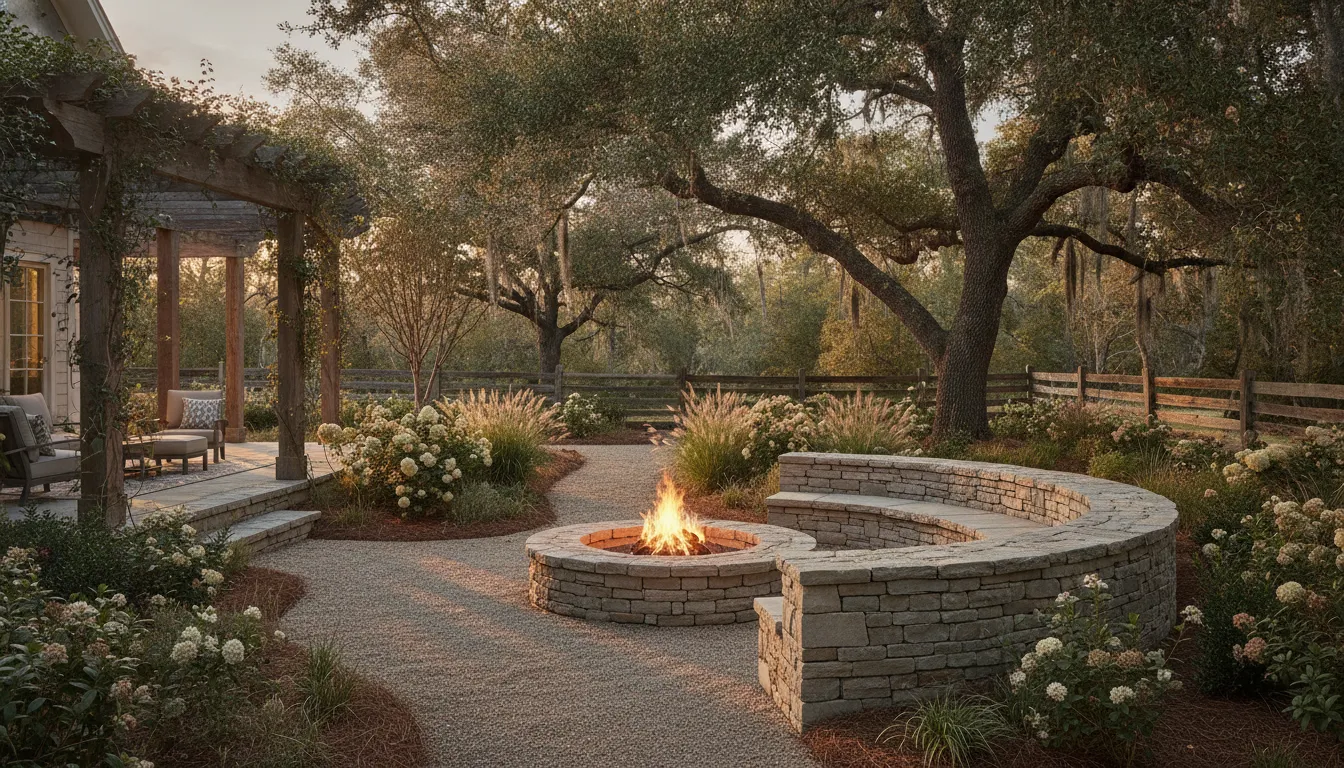
The most inviting fire areas feel connected to the home rather than added as an afterthought. Start by repeating one or two materials already present in the patio, retaining walls, steps, or exterior facade. A stone surround can echo a masonry wall, while concrete can relate to large-format patio slabs or a clean, contemporary foundation. Stone and concrete are durable, heat-resistant choices that can be customized to coordinate with the rest of the backyard design.
Think about the view from inside the house as well as the experience outdoors. A permanent outdoor fire pit can act as an architectural focal point, giving the yard a stronger visual anchor. Keep the shape and finish consistent with the lines of the home, then use seating to frame the feature without blocking pathways or important sightlines. In a smaller area, a fire-pit table may be especially useful. With its burner cover in place, it provides a practical tabletop. When the fire is lit, it becomes the gathering point without requiring a separate table.
- Materials: Repeat stone, concrete, pavers, or masonry details so the fire feature belongs to the architecture.
- Lighting: Layer soft path, step, and seating-area lighting so the fire remains the focal point without leaving circulation areas dark.
- Planting: Use greenery to soften hard edges, while keeping dry foliage and hanging branches away from the fire area.
- Connections: Align the feature with seating, the outdoor kitchen, and the main patio route to support conversation and easy hosting.
Lighting should support the fire, not compete with it. Low, warm illumination along a walkway or beneath a counter can make the space easier to use after sunset. Planting can provide texture and privacy, but it needs to be selected and positioned with the fire-safe zone in mind. Leave practical room for maintenance, airflow, and movement around the feature.
The same design language should carry from the fire area to nearby cooking and dining spaces. An outdoor kitchen might share the fire feature’s stone veneer, countertop color, or edge detail. A pergola or covered porch can repeat the structure’s trim and proportions while keeping the fire area visually open and appropriately ventilated. See examples of outdoor fire pit design inspiration, then explore how decks, patios, and pergolas can shape the larger outdoor room. If the fire area will sit beside a cooking zone, the outdoor kitchen gallery offers ideas for coordinating hardscape, seating, and hosting flow.
Fun Outdoor Living approaches these projects as integrated backyard designs, pairing fire features with patios, decks, and outdoor kitchens through in-house construction. That single design conversation helps the materials, circulation, lighting, and everyday rituals work together instead of competing for attention.
What Should Carolina Homeowners Know About Fire Pit Safety?
A well-designed outdoor fire pit should make an evening feel relaxed, not require guests to guess where they can stand or what they can touch. Establish a few simple habits before the first fire, then keep them consistent for every gathering.
Adult supervision is essential whenever the fire is lit. Set clear rules for children and guests, including a designated standing and seating boundary. Keep children and pets away from the heat, and do not assume a quiet moment means the area is safe. According to University of Utah Health, coals can remain dangerously hot for up to 12 hours after a fire appears to be extinguished. Plan for that residual heat when deciding when children, pets, and furniture can return to the area.
Inspect the fire pit before every use
Before lighting an outdoor fire pit, look for cracks, rust, loose components, or other damage. Clear away debris, and if the unit is gas-burning, make sure burner ports and gas-line connections are unobstructed. Never light a damaged unit or try to work around a problem that needs qualified service.
For a portable pit, use a level, nonflammable surface away from high-traffic areas so it cannot be easily jostled or tipped. Keep the fire away from dry brush, overhanging branches, and other combustible landscaping. A surrounding landing zone made from stone pavers or decorative gravel can help keep nearby materials and foot traffic organized. It does not replace appropriate spacing or supervision.
Use the right fuel and installation method
For a wood-burning fire, use only appropriate wood and kindling. Do not use gasoline, kerosene, or another accelerant, and avoid adding paper or other lightweight flammable materials that can lift out of the fire. Wood fires also need adequate ventilation, particularly near covered porches, pergolas, or home air intakes.
Gas fire features offer convenient control, but gas-line sizing and installation should be handled by a licensed professional. The North Carolina Office of the State Fire Marshal notes that gas-line installation must follow applicable requirements. A professional can also help identify ventilation, connection, and inspection needs for the specific design.
Confirm local requirements before construction
Do not rely on one universal clearance or permit rule across the Carolinas. The North Carolina OSFM explains that standalone outdoor pits are not listed as accessory structures under the North Carolina Residential Code. That statement is not a blanket approval for every installation, fuel type, property, municipality, or neighborhood restriction. Before building or connecting a permanent feature, verify local code, permit, fuel, HOA, and fire-safety requirements with the appropriate local authority. That check, combined with professional installation where needed, helps your fire feature support the backyard routines you want without overlooking the responsibilities that come with it.
How Can a Fire Pit Extend the Season?
In the Carolinas, a backyard does not have to go quiet when summer ends. As evenings become cooler, an outdoor fire pit can give your household a reason to step outside after dinner. You can linger over conversation or welcome friends for a relaxed weekend gathering. The fire becomes part of the evening ritual rather than an occasional feature used only for special events.
The most comfortable spaces are planned around how people actually use them. Arrange seating so guests can see one another, and keep a clear path between the house and the gathering area. Make the fire zone feel connected to the rest of the yard. A patio may place the fire at the center of a conversation area. A deck or covered porch can frame the view and create a more defined outdoor room. Your layout should account for the home, prevailing breezes, and the amount of open space around the flame.
A fire feature also works well beside an outdoor kitchen. Someone can finish dinner at the grill while others settle near the fire, keeping the group together instead of dividing the evening between separate parts of the yard. With thoughtful lighting, durable seating, and surfaces that remain easy to maintain, the same setting can support a quiet weeknight or a larger gathering.
Some homeowners take the idea further by pairing a fire feature with a wellness area, such as a spa or cold plunge. The warmth and glow can help make the transition between activities feel intentional, while the overall design keeps the backyard useful for more than one kind of retreat. These choices are less about adding isolated features and more about creating a space that supports changing routines throughout the year.
For outdoor fire pit design inspiration, look for examples where the fire feature feels proportionate to the patio and naturally connected to seating, cooking, or wellness areas. Fun Outdoor Living designs integrated outdoor spaces across North and South Carolina, with custom fire features planned alongside the surrounding architecture.
Learn More about your outdoor fire pit design
Frequently Asked Questions
Where is the best place to put an outdoor fire pit?
Choose a level location outside high-traffic paths, with comfortable seating sightlines and a noncombustible landing zone such as stone pavers or decorative gravel. Keep it away from dry brush, hanging branches, and other flammable materials. A general planning reference suggests 10 to 20 feet from structures or combustibles, but local requirements and the specific installation should always be confirmed before construction. Review the planning reference.
Can you install an outdoor fire pit on a deck?
It depends on the deck construction, fire-pit type, clearances, and the surface protection required. A portable unit should sit on a stable, level, nonflammable surface, not where it can be bumped or tipped. For a built-in feature, have the design account for heat, ventilation, drainage, seating circulation, and local requirements before work begins.
Is wood or gas better for a Carolina backyard?
Wood creates a traditional fire experience but also brings smoke, ash, storage, and ventilation considerations. Gas offers convenient on-off control and no wood smoke, while its gas line must be correctly sized and installed by a licensed professional. The better choice depends on whether your priority is ritual and crackling flames or simpler, more predictable use. See EPA guidance on wood burning.
How should drainage be handled around a fire pit?
Design the fire-pit area so rainwater moves away from the burner, seating, and nearby structures rather than pooling beneath the feature. Use an appropriate base and finished grade for the patio or deck, and coordinate drainage with the surrounding landscape. For a built-in installation, resolve drainage before selecting final materials or equipment.
What safety rules should everyone follow?
Keep children and pets at a defined distance, supervise the fire whenever it is lit, and inspect the pit for damage or debris before use. Never use gasoline or kerosene as an accelerant. After extinguishing the fire, remember that coals can remain hot for up to 12 hours, according to the University of Utah Health. Review these fire-pit safety tips.
Ready to Plan Your Outdoor Fire Feature?
A thoughtful layout can help your fire feature feel like a natural part of the patio, deck, or gathering area, rather than an afterthought. We can help you consider seating, sightlines, materials, fuel, drainage, and the way the space will be used through the seasons.