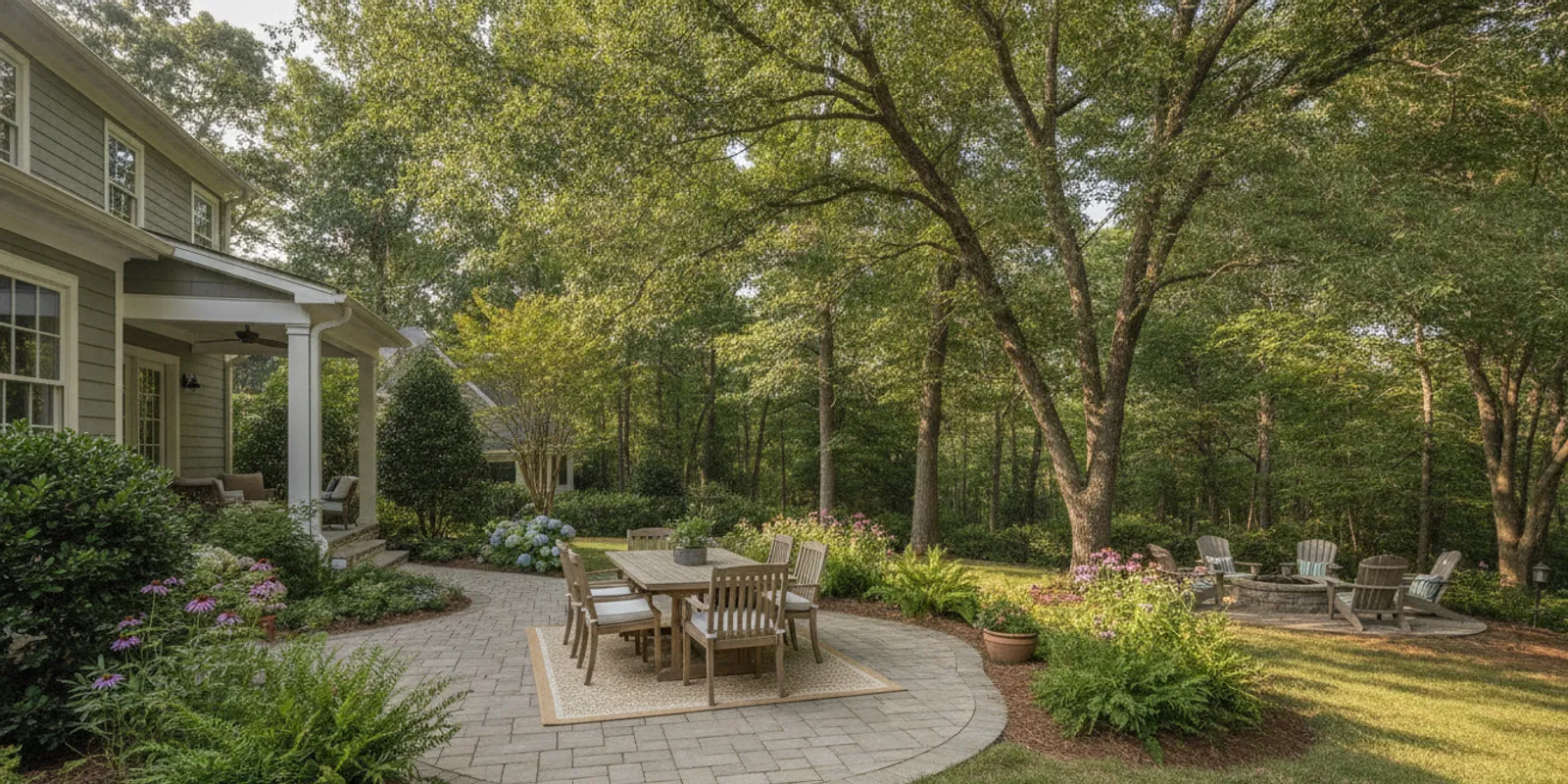
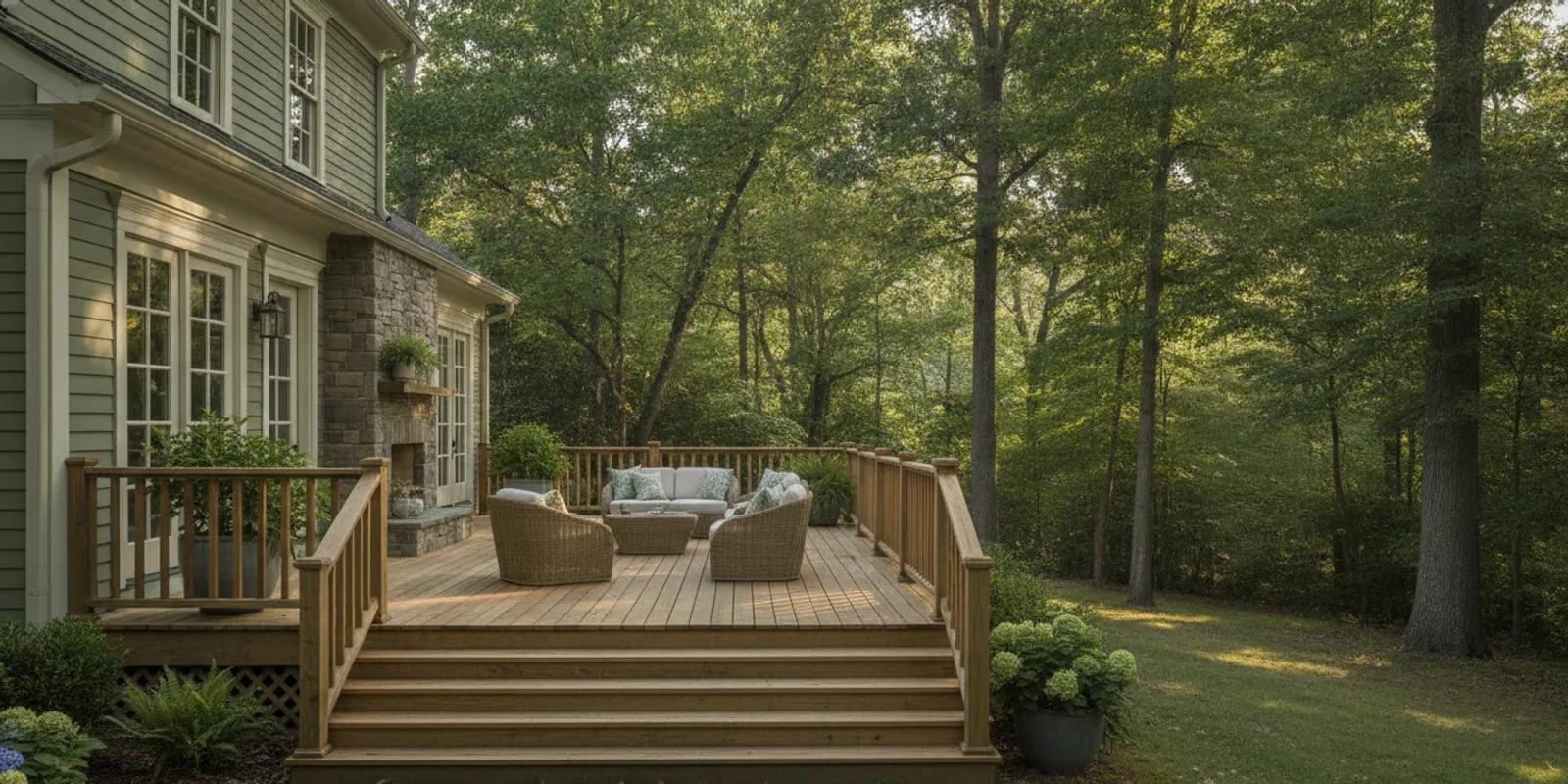
A backyard fire can turn an ordinary Carolina evening into a shared ritual, but the right setup begins before the first match. Smoke direction, nearby surfaces, overhead structures, wood storage, and changing local restrictions all shape whether the experience feels comfortable and manageable.
A wood burning fire pit can be a good fit when you want the scent, crackle, and gathering atmosphere of a live fire. You also need room to plan around smoke, sparks, ash, and safe clearances. It may be less practical when your property, HOA, weather conditions, or local rules make those responsibilities difficult. Confirm exact requirements with your fire authority, municipality or county, HOA, and the fire-pit manufacturer before installation or use.
That makes the first decision less about choosing a look and more about matching the fire feature to how your household uses the backyard. Consider the sensory experience you want, the maintenance you will accept, and how your site handles the practical demands of wood.
Learn more about a free fire pit design consultation
What Makes a Wood Burning Fire Pit the Right Fit?
A wood burning fire pit creates a kind of outdoor experience that is difficult to reproduce with a switch. The scent of burning hardwood, the sound of crackling logs, and the changing light across a patio can make an ordinary evening feel more deliberate. Gathering around the fire also gives people a natural reason to linger. That may mean hosting friends in Charlotte, spending time with family near Lake Norman, or enjoying a cooler night in Rock Hill or Winston-Salem.
That atmosphere comes with an active operating routine. Unlike a gas fire feature, a wood fire needs fuel, attention, and cleanup every time you use it. Before choosing one, consider whether the household will enjoy managing the fire as part of the experience, rather than viewing it as another outdoor chore.
The experience is hands-on
A wood-burning setup may be a strong fit when you value the ritual of carrying and arranging firewood. Building a smaller fire, adjusting the logs, and watching the flames change can feel especially natural in a less formal gathering area. However, the same qualities that make wood appealing can be inconvenient when you want immediate heat, precise control, or a quick fire before dinner.
- Smoke: Wind direction and wood quality affect where smoke travels. It can drift toward seating, doors, windows, or neighboring properties.
- Ash: Ash must cool completely before careful removal and disposal. It also means the fire pit needs periodic cleaning.
- Tending: Someone must monitor the fire, manage sparks, and ensure it is fully extinguished. It should not be treated as a set-and-forget feature.
- Storage: Dry, untreated firewood requires a stable storage area that is protected from excess moisture while remaining appropriately separated from the fire.
- Weather and neighbors: Rain, wind, drought conditions, local restrictions, and nearby homes can all affect whether a fire is practical on a particular evening.
Local rules matter as much as personal preference. In North Carolina, open-burning requirements can depend on jurisdiction, conditions, and current restrictions. So check with the relevant city or county authority, fire department, HOA, and manufacturer before burning. Do not assume that a fire pit is permitted simply because it fits your patio.
This guide is for homeowners who are deciding whether wood fuel fits their routine or who want a clearer operating plan for an existing fire pit. It focuses on smoke, supervision, firewood, ash, weather, and repeat-use decisions, rather than repeating a build or installation guide. If your priorities lean toward less smoke, simpler cleanup, and instant control, compare wood with a professionally planned gas fire feature before committing to the fuel source.
How Should You Site a Wood Burning Fire Pit for Safe Use?
The setting around a wood burning fire pit affects more than appearance. It determines how smoke moves, where sparks could travel, how people gather, and how easily you can manage rain, ash, and seasonal maintenance. Plan the fire area as part of the backyard, not as a portable object placed wherever there is room.
Start with the manufacturer’s clearance requirements
Use the specific fire-pit manual as your starting point for required clearances from walls, fences, plantings, furniture, structures, and other combustible materials. Do not rely on a general online setback number. Models differ, and local authorities or an HOA may impose additional restrictions. Property lines matter as well, particularly in established neighborhoods where a fire feature could affect nearby homes or shared boundaries.
Look above the fire, too. Tree limbs, roof overhangs, pergolas, umbrellas, screened enclosures, and other overhead elements can collect heat, smoke, or embers. A location that feels comfortable for seating may not be appropriate for an open flame. Keep the intended seating arrangement in mind while planning. Guests should be able to sit far enough from the heat and smoke. Move around the area without crossing the fire zone, and leave the space easily if conditions change.
Choose a stable, noncombustible base
A wood fire needs a level, durable surface that will not shift under the fire pit or surrounding seating. Select materials and construction details that are appropriate for heat exposure, and follow the manufacturer’s instructions for whether the unit needs a dedicated pad, hearth, or other support. Do not place a fire pit directly on a wood deck, artificial turf, dry mulch, or another surface that could ignite or deform.
- Use a stable, noncombustible surface suitable for the fire-pit model.
- Keep loose leaves, pine straw, mulch, and stored firewood away from the fire area.
- Plan enough room for seating, safe movement, tools, and extinguishing supplies.
- Make sure the surface remains level and accessible after rain or regular use.
Pavers can create a practical transition between the fire area and the rest of the backyard when they are properly selected and installed. See this guide to a paver surface for a fire pit for more context on Carolina patio materials and planning. Drainage deserves equal attention. Water should not collect beneath the unit or turn the surrounding seating area into a slippery, muddy path.
Account for Carolina weather and wind
A shifting breeze can push smoke toward a home, neighboring property, or seating area and can carry sparks beyond the immediate fire zone. Observe the backyard at different times, especially when prevailing breezes change between seasons. Carolina rain, humidity, falling leaves, and occasional dry conditions can also change how the site behaves.
Before lighting a fire, confirm current restrictions with the relevant city or county, fire authority, HOA, and North Carolina Forest Service where applicable. North Carolina guidance notes that a fire pit or outdoor fireplace may be treated as open burning depending on location and current conditions. Do not assume that a familiar site is always permitted.
What Should Carolina Homeowners Check Before Lighting a Fire?
A few minutes of planning can prevent a pleasant evening from turning into a smoke, spark, or compliance problem. Rules can differ between Charlotte, Lake Norman, Rock Hill, Winston-Salem, and nearby communities. Do not assume that a wood burning fire pit is governed by one universal North Carolina rule. Use this checklist before every first burn, and revisit it when conditions or local guidance change.
- Check your city and county requirements. Start with the municipality and county where the fire pit is located. Ask the county fire marshal or local fire department whether outdoor burning is allowed at your address. Ask whether permits or inspections apply and whether there are property-line, fuel, or appliance restrictions. Use the current rule rather than advice from a neighbor or an older project plan.
- Verify current state guidance and burn-ban status. North Carolina Agriculture guidance explains that a fire pit or outdoor fireplace may be treated as open burning depending on its location and whether a burn ban is active. Review the current information from the NC Department of Agriculture and Consumer Services. Then confirm whether your local authority has additional restrictions. Conditions can change quickly during dry, windy periods.
- Review the applicable materials and conditions. The North Carolina environmental rules distinguish permissible open burning from prohibited materials and conditions. Read the relevant North Carolina open-burning regulation, and ask the fire marshal how it applies to your specific setup. Never treat a general online summary as a site-specific approval.
- Confirm HOA and neighborhood rules. Your homeowners association, condominium board, or neighborhood covenant may limit wood smoke, outdoor flames, operating hours, fuel types, or fire-feature placement even when public rules allow burning. Check written policies and obtain any required approval before bringing wood onto the patio.
- Read the manufacturer manual. Confirm the approved fuel, spark-control equipment, clearances, surface requirements, weather limits, and extinguishing instructions for your exact fire pit. Manufacturer directions are part of the safety plan, not optional fine print. If the installation is custom or newly completed, confirm that the final setup matches the approved design.
- Check the weather immediately before lighting. Do not light the fire when wind could carry sparks or smoke toward your home, roof, neighboring property, road, or dry vegetation. Consider humidity, recent rainfall, and local fire danger. Keep a reliable way to extinguish the fire close by, and postpone the evening when conditions are uncertain.
If any answer is unclear, pause and call the relevant authority or the manufacturer before burning. A carefully planned site and a clear understanding of local rules make it easier to enjoy the fire without guessing at requirements.
What Wood, Smoke, and Spark Practices Matter Most?
The fuel you choose affects more than how long the fire burns. Clean, dry firewood generally creates a more predictable fire and less nuisance smoke than damp wood or mixed household materials. Store it off the ground in a dry, covered location with enough airflow to keep it from absorbing rain. Bring only a manageable amount to the fire area at one time.
Burn only clean, untreated firewood
Use properly seasoned firewood approved by the fire-pit manufacturer. Do not burn pressure-treated or painted lumber, plywood, coated boards, construction scraps, cardboard, trash, plastics, or other household waste. These materials can release harmful pollutants, create unpredictable flames, or leave residues that damage the fire pit and surrounding surfaces. The answer to whether ordinary lumber belongs in a wood burning fire pit is no. If you do not know the wood’s treatment or coating history, do not use it.
North Carolina rules distinguish permissible open burning from prohibited materials and conditions. Requirements can also depend on location, weather, and current restrictions. Review the North Carolina open-burning regulation, then confirm current guidance with your city or county, fire department, HOA, and the NC Forest Service before lighting a fire.
Manage smoke, sparks, and changing weather
Notice where smoke travels before you start. A fire that sends smoke toward a neighbor’s home, an occupied seating area, windows, or an outdoor kitchen can quickly make the space uncomfortable. Wind direction and speed can change, especially around structures, so postpone the fire when conditions are gusty or unpredictable. Never try to compensate for wind by adding more fuel.
- Keep a properly fitted spark screen in place when the fire pit design calls for one.
- Keep children, pets, loose fabrics, and combustible objects away from the fire area.
- Stay with the fire from ignition through complete extinguishment; never leave it unattended.
- Follow the manufacturer’s instructions for fuel size, loading, spark control, and safe operating conditions.
Good smoke practices protect the experience and your relationships with nearby homeowners. If smoke management, storage, or local restrictions make wood impractical, compare a gas feature with the same attention to site planning and manufacturer requirements.
How Do You Start, Tend, Extinguish, and Maintain the Fire?
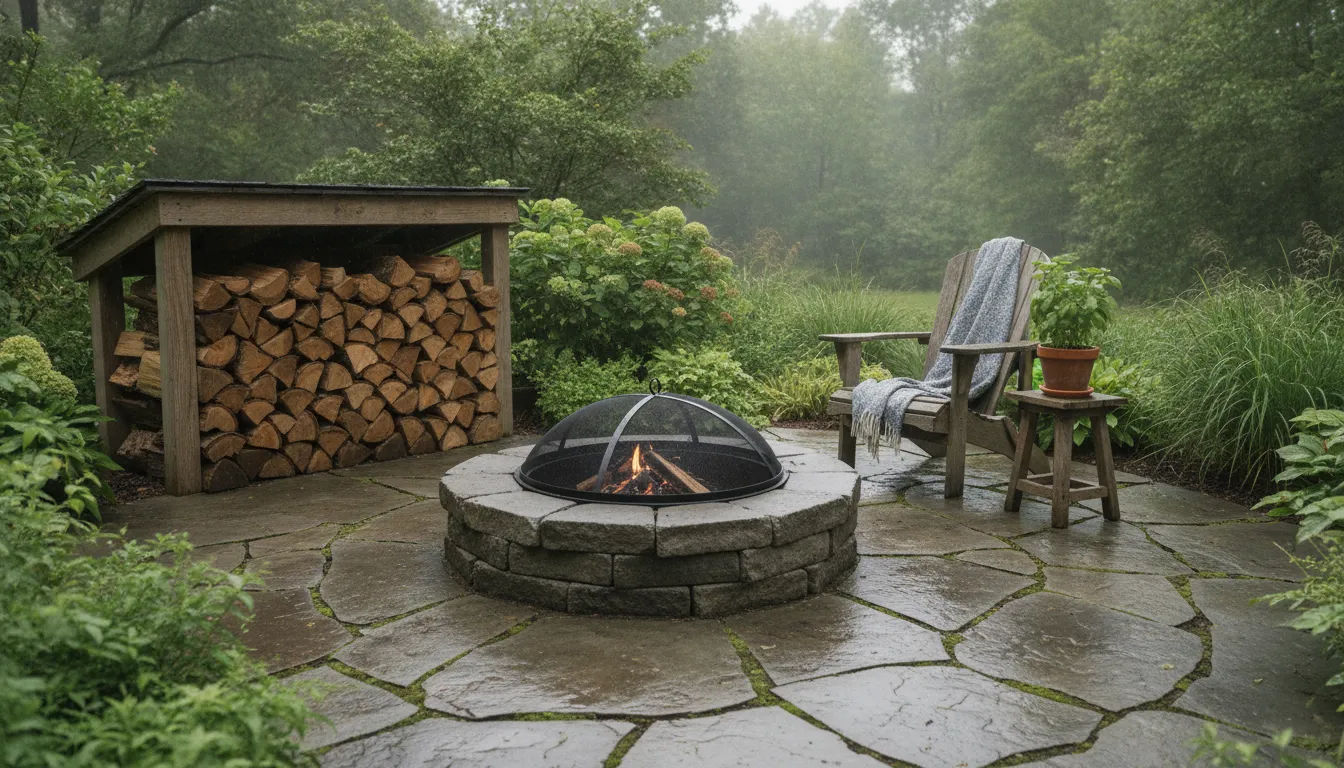
A wood fire is easiest to manage when you treat it as a controlled process rather than a set-it-and-forget-it feature. The fire should stay small enough to monitor, with a responsible adult present from the first flame until the ashes are cold. The exact burn time has no reliable fixed answer. It changes with the type and moisture of the wood, the size of each piece, airflow, weather, and the design of the pit.
- Build a small, controlled fire. Follow the fire-pit manufacturer’s instructions and use only appropriate, dry firewood. Arrange kindling and smaller pieces so air can move through the stack, then add larger pieces gradually. Avoid trying to create a large fire immediately. Keep a spark screen or other manufacturer-approved spark-control device available when appropriate.
- Stay with the fire and tend it carefully. Watch flame height, sparks, wind, and smoke direction as conditions change. Do not leave the pit unattended, even if the fire appears to be dying down. Keep children, pets, furniture, and combustible materials at a safe distance based on the manufacturer’s instructions and applicable local requirements. Never burn painted, treated, glued, or construction lumber, trash, or other prohibited materials.
- Extinguish it completely. Stop adding wood early enough for the fire to settle. When you are finished, follow the manufacturer’s extinguishing instructions. If water is permitted for your specific pit, apply it slowly to the embers while stirring carefully to reach the material underneath. Continue until there is no active flame, hissing, glowing ember, or rising heat. Do not cover a hot fire with a lid unless the manufacturer specifically permits that procedure.
- Handle ashes only when they are cold. Ash can retain heat long after the visible fire is gone. Wait until the pit and ash are fully cool, then use the manufacturer’s recommended tool and container. Store ashes in a suitable noncombustible container away from the home, deck, mulch, and other combustible surfaces. Do not place them in household trash while warm.
- Inspect and store the pit between uses. Remove debris according to the care instructions, check the bowl or structure for corrosion, cracks, warping, loose hardware, and damaged screens, and address problems before the next fire. Carolina rain and humidity make post-weather checks especially worthwhile. Once the pit is dry and cool, use its cover if approved, keep it ventilated as directed, and store firewood off the ground in a dry, protected location.
What should you check after rain or humidity?
Before relighting, look for standing water, blocked drainage, wet fuel, rust, and changes to the surrounding surface. A cover helps limit exposure, but it does not replace inspection. If the pit has gas components, electrical features, or integrated construction, do not operate damaged parts. Ask the manufacturer or a qualified service professional about repairs rather than improvising.
- Confirm the pit is stable, dry, and free of cracks or excessive corrosion.
- Check the spark screen, handles, vents, and fasteners for damage.
- Keep ash, embers, and damp wood from accumulating in the fire area.
- Review current weather and local restrictions before lighting again.
When Is Gas a Better Choice Than Wood?
A wood-burning fire pit can offer the crackle, scent, and hands-on ritual many homeowners want. Gas may be a better fit when the priority is quick control and a cleaner gathering area. It can also suit a fire feature that fits into a carefully planned outdoor room. The right choice depends on how you use the space, where smoke may travel, and what your property and local rules allow. Gas is not automatically better, but it can remove several practical obstacles that come with burning wood.
| Consideration | Wood-burning fire pit | Gas fire feature |
|---|---|---|
| Control | Requires building, tending, and extinguishing the fire. | Offers more immediate on-and-off control when properly installed. |
| Smoke and sparks | Produces smoke, ash, and sparks that can affect nearby seating and neighbors. | Typically avoids wood smoke and ash, though the installation still requires careful planning. |
| Cleanup and storage | Needs ash management and a dry, convenient place to store firewood. | Reduces routine ash cleanup and does not require a woodpile. |
| Planning | Must account for fuel, wind, spark control, and current burning restrictions. | Requires utility planning and installation that follows the manufacturer’s instructions and applicable requirements. |
| Atmosphere | Creates a changing, sensory experience with a natural flame and crackle. | Creates a consistent flame that can suit dining, entertaining, and defined outdoor living areas. |
What Will Daily Use Feel Like With Gas?
Smoke is often the deciding factor. A shifting breeze can carry it toward a covered porch, neighboring property, or the people gathered around the fire. Wood also brings ash, sparks, and the need to store appropriate firewood. Gas can simplify the routine. Turn the feature on when the space is ready, adjust it for the gathering, and shut it down without managing a stack of logs. It still needs inspection, responsible operation, and an installation suited to the site.
Weather, restrictions, and utility planning
Before choosing either system, check current rules with the relevant city or county, fire authority, HOA, and, where applicable, the North Carolina Forest Service. North Carolina guidance can treat a fire pit or outdoor fireplace as open burning depending on its location and current conditions. A local restriction or burn ban may affect whether a wood-burning fire pit can be used. Gas avoids some wood-burning concerns, but it is not a shortcut around planning. Confirm the fuel source, utility requirements, appliance instructions, and any permitting or inspection questions before construction.
Fun Outdoor Living documents custom gas fire pits, stone fireplaces, and linear fire walls, with design and construction coordinated through its in-house teams. Browse the outdoor fire feature gallery to compare forms and settings. Then evaluate which fuel supports the way you want to use your Carolina backyard.
Learn more about a free fire pit design consultation
Frequently Asked Questions
What is the best wood burning fire pit?
The best option is one that matches your available space, surface, wind exposure, storage plan, and local requirements. Look for a design with stable construction, a properly sized noncombustible base, spark control, and clear manufacturer guidance. A fire pit that looks appealing but creates smoke toward the house or sits too close to combustible construction is not a good fit. Before choosing, consider how often you will use it, who will supervise fires, and how you will remove and store ash.
Is it okay to burn lumber in a fire pit?
Do not burn painted, stained, pressure-treated, glued, or composite lumber. These materials can release unwanted substances and may be prohibited by local rules. Use only clean, dry firewood that is appropriate for your appliance and location. Never add household trash, plastics, or other unknown materials, and follow the fire pit manufacturer’s fuel instructions.
How long does wood burn in a fire pit?
There is no dependable single burn time. Duration changes with the wood species, moisture level, log size, airflow, fire-pit design, and how much fuel you add. Start with a modest fire, add small amounts gradually, and plan to remain with it until the fire is fully extinguished. Do not use burn duration as a reason to leave a fire unattended.
What should I check before starting a wood fire?
Check the current rules for your city or county, fire department, HOA, and property, including any active burn restrictions. North Carolina guidance notes that fire pits and outdoor fireplaces may be treated as open burning depending on location and conditions, so requirements can change. Also review the manufacturer’s clearances, inspect the pit and spark screen, check wind and weather, and keep water or another approved extinguishing method ready before lighting.
Ready to Plan a Fire Pit That Fits Your Backyard?
A design conversation can help you weigh wood smoke, clearances, surfaces, local requirements, and everyday upkeep before choosing a fire feature. Learn more about a free fire pit design consultation and discuss an approach that suits your Carolina home.