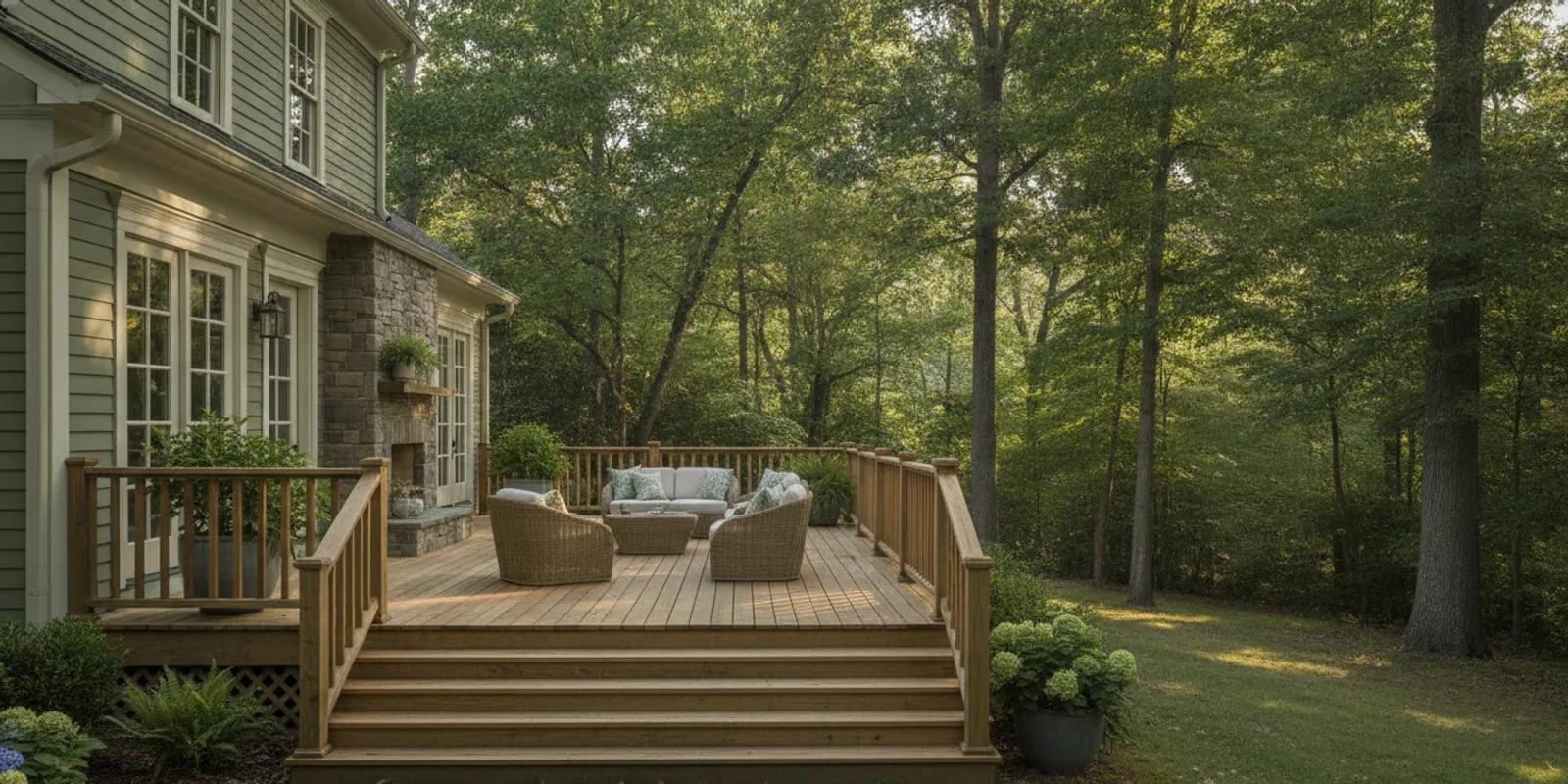
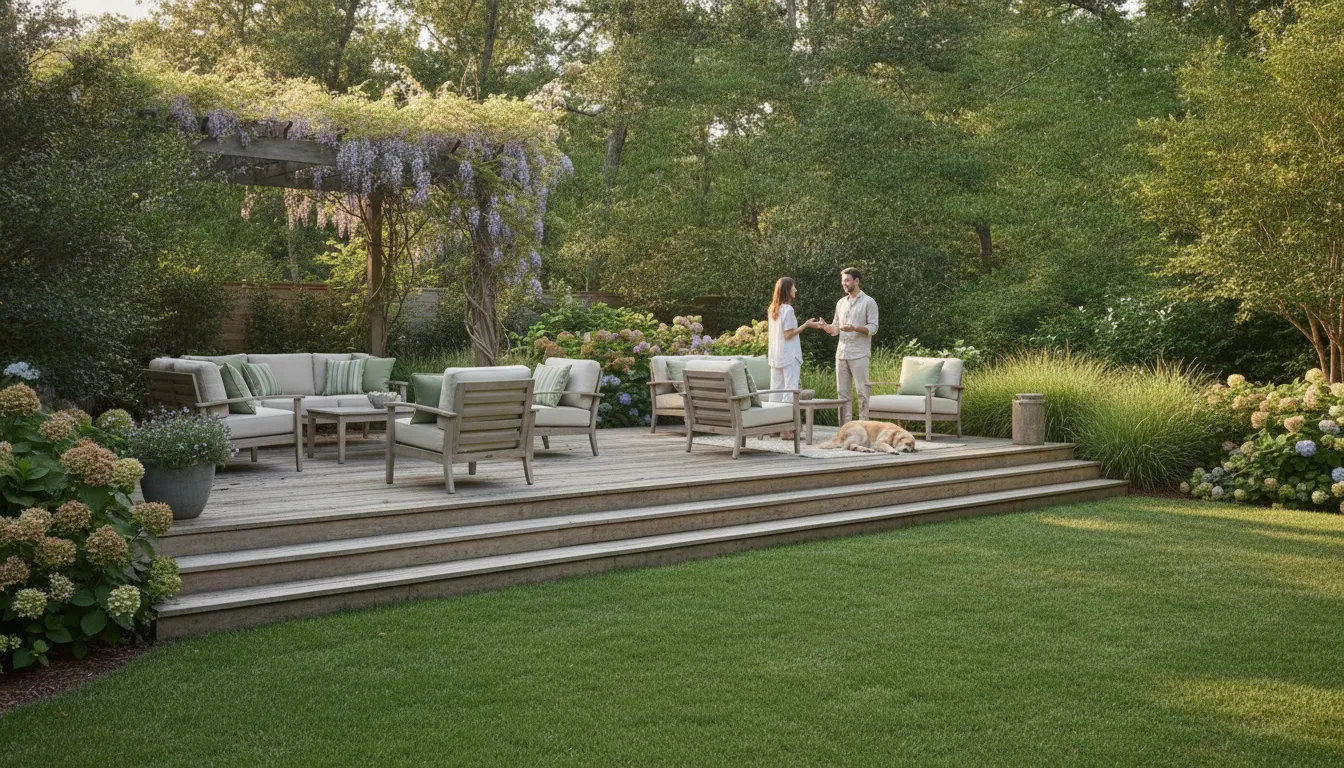
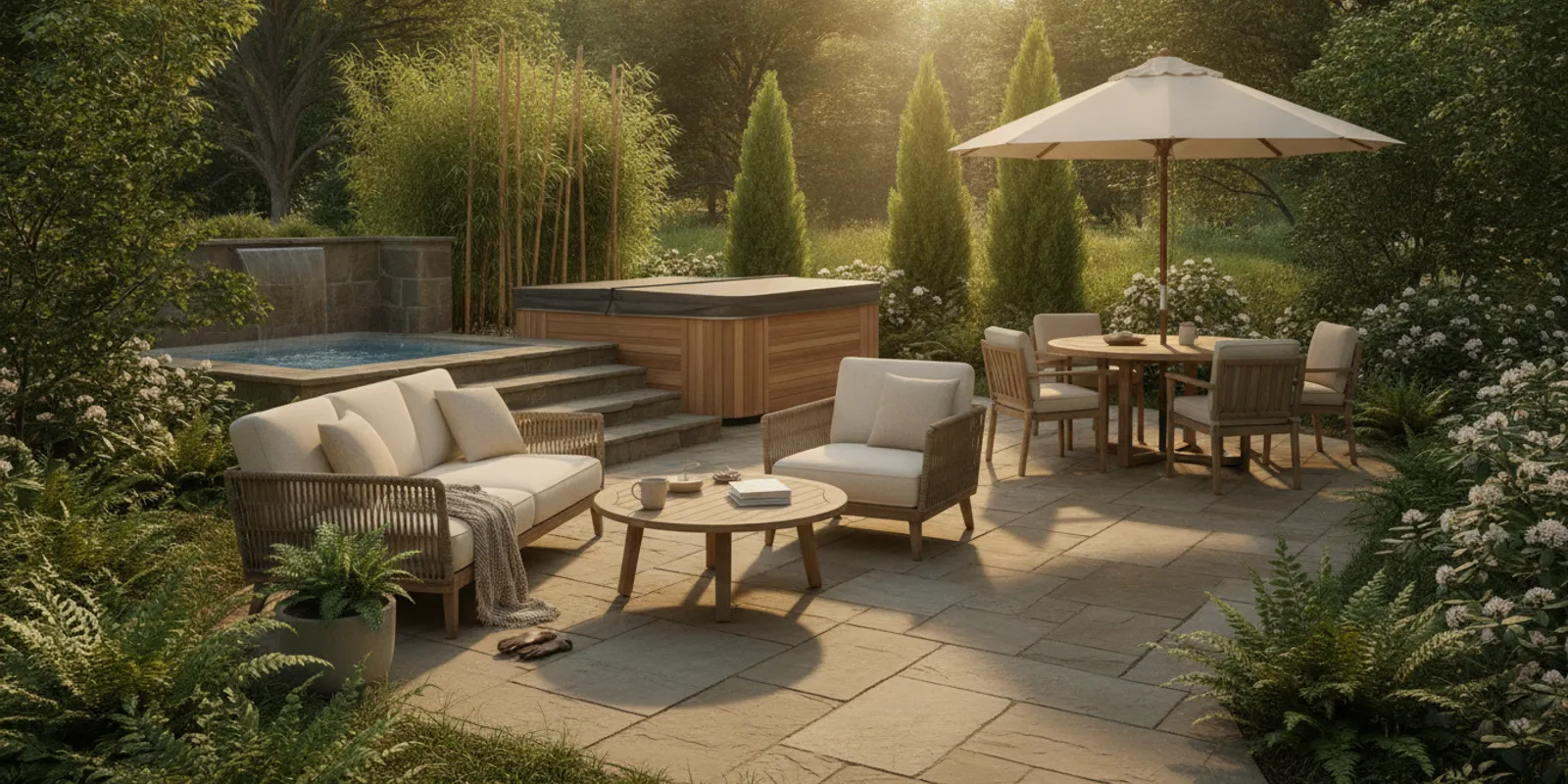
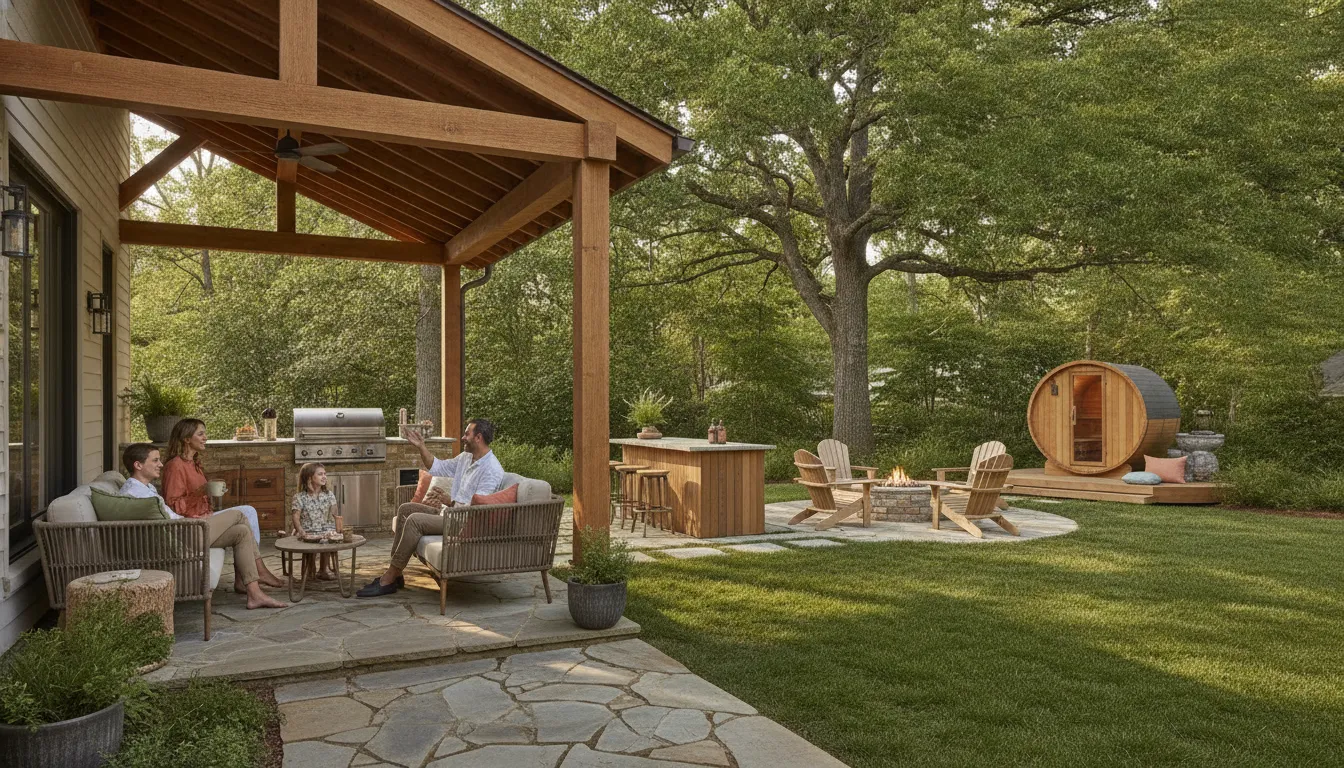
A Carolina backyard can become the place where mornings start slowly, dinners stretch past sunset, and cool fall evenings gather everyone around the fire. The difference is rarely the size of the yard. It is whether the space fits the way your household actually spends time outside.
A successful patio starts with your everyday routines, then brings together the right material, practical dimensions, and features such as a fire element, outdoor kitchen, or pergola. Planning those pieces as one connected space makes the result more comfortable, useful, and easier to enjoy throughout the year.
Before comparing pavers, concrete, or other surfaces, consider the moments you want to make room for. A quiet coffee corner needs a different arrangement than a dining area beside the grill, and both should relate naturally to your home. That lifestyle-first approach gives every later decision a clear purpose.
Schedule your free consultation and design appointment
Start With How You Want to Live Outside
A well-planned patio should make ordinary Carolina days feel easier and more inviting. Before choosing pavers, colors, or furniture, picture the moments you want the space to support. Maybe you want somewhere to drink coffee while the yard wakes up. A practical place to grill on Saturday, or a quiet corner where you can read after dinner. Those routines give the design a useful starting point.
Landscape design guidance from Michigan State University recommends identifying outdoor spaces by function first. Such as a grill area, relaxing nook, or garden, and applying design principles after those needs are clear. Planning an outdoor room around its function helps keep the finished patio connected to real life rather than a display of features that rarely get used.
- A dining zone with room for a table, chairs, and easy serving
- A grilling and cooking corner set close to the kitchen
- A relaxed seating area oriented toward conversation or a view
- A quiet nook at the edge for reading, coffee, or a slower moment
Give each routine a place
Start by listing the activities your household expects to do outside. A cooking zone might sit close to the kitchen for easy movement between indoors and out. A dining zone needs enough room to pull out chairs and serve a meal without interrupting the grill area. A quiet nook may work best at the edge of the patio, separated from the main traffic path by planting, a low wall, or a change in level.
These do not need to be completely separate rooms. They simply need to feel intentional. Private nooks, shaded dining areas, fire features, cooking spaces, and room for games can all contribute to a backyard that supports more of household life. As the University of California notes, today’s home landscapes reflect individual lifestyles. So a family patio should not be planned the same way as a space designed mainly for quiet evenings.
Think through the Carolina seasons
Consider how the patio will feel at different times of day and throughout the year. Morning coffee may call for soft light and a comfortable seat near the house. A summer cookout may need shade, clear circulation, and a surface that is easy to clean. In fall, the preferred gathering spot may shift toward a warmer, more sheltered area.
Hardscape planning is permanent and relatively costly, which makes this lifestyle exercise worth doing before construction begins. A covered patio can be especially useful when you want outdoor time to continue through bright sun or changing weather. But its placement should follow the way you expect to use the yard. Once those moments and zones are clear, the right size, layout, materials, and features become much easier to evaluate.
What Patio Material Is Best for the Carolinas?
There is no single best patio material for every Carolina backyard. The right choice depends on how you plan to use the space, your budget. How much maintenance you are willing to handle, and the look you want beside your home. Humidity, heavy rain, temperature changes, and tree cover also make installation and drainage important parts of the decision, not details to solve later.
Concrete is often the practical starting point. It offers a clean, flexible surface at a moderate cost and generally requires little maintenance once it is properly installed. It can work well for dining, grilling, and everyday circulation, especially when the design benefits from simple, uninterrupted lines. The trade-off is that repairs or future changes can be more involved than they are with individual units.
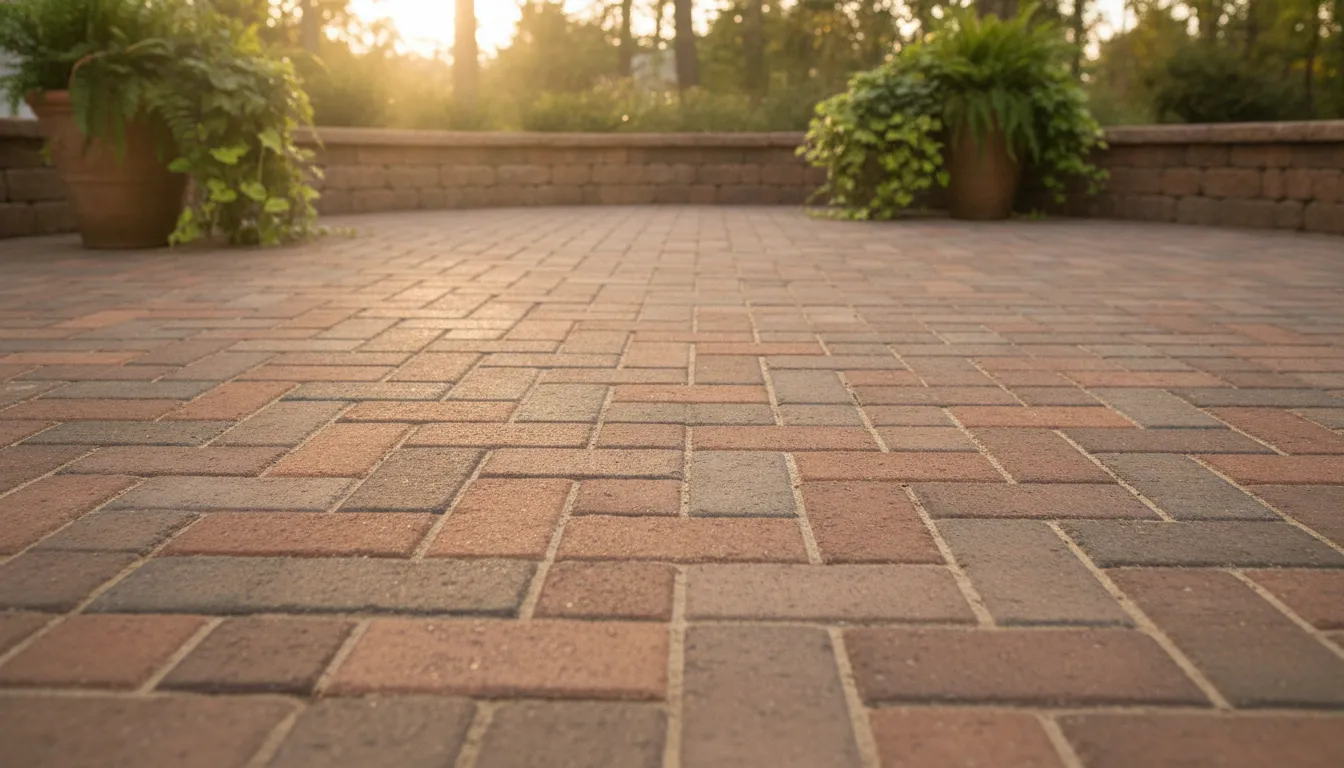
Unit pavers, including brick and natural stone, bring pattern, texture, and a more varied appearance. They are durable and highly adaptable for borders, curves, and defined outdoor rooms. That visual flexibility comes at a higher installation cost, particularly when pavers are installed over a concrete base. A flexible base of compacted rock can reduce the initial cost, but it is generally less durable and may require more maintenance over time. Fun Outdoor Living’s outdoor pavers options can help homeowners compare patterns and materials in a design context.
| Material | Cost outlook | Durability and maintenance | Look and best fit |
|---|---|---|---|
| Concrete | Moderate | Low maintenance when well installed | Clean, adaptable surface for dining and circulation |
| Unit pavers | Higher, especially over concrete | Durable; base choice affects maintenance | Patterned, structured, and easy to tailor to zones |
| Flagstone | Varies with stone and installation | Requires careful setting and periodic attention | Natural, irregular character for relaxed outdoor rooms |
| Gravel or decomposed granite | Lower initial installation cost | More difficult to maintain; may shift or need replenishing | Informal, permeable-feeling setting for paths or casual areas |
Flagstone is another natural option when the goal is an organic, less uniform patio. Its individual pieces can create a strong connection to planting beds and masonry, but the irregular shapes require thoughtful layout and skilled installation. It may be less convenient for rolling furniture or a perfectly level dining area than a more uniform surface.
Loose materials such as gravel or decomposed granite are usually easier and less expensive to install, but the maintenance trade-off is real. They can move, collect in adjoining areas, and require periodic raking or replenishment. The University of California Agriculture and Natural Resources notes that material selection should balance budget, intended use, maintenance goals, and aesthetics. That is a useful standard for any Carolina patio decision: choose the surface that supports the way you will actually live outside. Not simply the one that looks best in a sample.
How Much Space Does Your Patio Need?
The right patio size is less about chasing a standard measurement and more about making room for the way your household actually spends time outside. A couple who uses the space for morning coffee needs a different footprint than a family that hosts weekend cookouts. Or homeowners who want dining, lounging, and a fire feature in the same backyard. Patios are permanent investments, so thoughtful planning before construction matters. The University of California Agriculture and Natural Resources recommends scaling gathering areas to the number of people who commonly use them and studying how the proposed space relates to the home and existing yard conditions. Read the hardscape planning guidance.
Use this simple process to create a practical starting point for your patio plan:
- Count the usual users. Start with the people who will use the patio most often, then account for the gatherings you realistically host. List each activity, such as dining, grilling, conversation, play, or relaxing. Leave enough room for chairs to pull out, people to walk behind them, and guests to move between zones without cutting through the center of a conversation.
- Measure a familiar indoor room. Measure your dining room, family room, or another space that feels comfortable when furnished. Mark those dimensions on the yard with stakes or landscape paint. This gives you a physical reference for how a table, sectional, grill, or lounge chairs will fit outdoors. It is much easier to notice a circulation problem at this stage than after the hardscape is installed.
- Map the activities into zones. Give each purpose a clear home. A dining area may sit closest to the kitchen, while a quieter seating area can face the garden. If you plan to add an outdoor kitchen or fire feature later, reserve its footprint now rather than squeezing it into leftover space. A patio that supports several routines can feel more useful than one large, undefined surface.
- Study sun, shade, and the house. Visit the yard at different times of day and note where the afternoon sun lands, where shade naturally collects, and how doors, windows, steps, and slopes affect movement. In the Carolinas, a sunny winter corner may be pleasant, while the same location can be uncomfortable during a humid summer afternoon. Place dining and lounge areas where the conditions match how you expect to use them, then consider whether a pergola or covered area would improve comfort.
- Test the layout before deciding. Walk the proposed edges and furniture zones for several days. Check sightlines from the kitchen and living room, access to the yard, and space for service or future changes. At Fun Outdoor Living, a 3D design can help homeowners visualize how the patio will connect to the home before construction begins.
There is no universal ideal footprint. The best patio feels comfortably proportioned to the house, yard, and people who use it. With enough flexibility for everyday life without paying to build space that sits empty.
Pairing Your Patio With Fire Features for Year-Round Use
A patio can become the place everyone naturally gathers when it includes a reason to linger after the sun goes down. In the Carolinas, a fire pit or outdoor fireplace adds that invitation. It brings a comfortable glow to a cool evening, gives guests a natural place to settle in. And helps the backyard feel useful beyond the warmest part of the year.
Fire features are especially helpful during the shoulder seasons. Early fall often brings the first evenings when homeowners start thinking about warmth outdoors, even while afternoons remain pleasant. A well-planned fire element lets you keep using the patio for conversation, dinner, or a quiet drink instead of moving inside as soon as the temperature drops.
Choose the fire feature around the way you gather
The right choice depends less on adding the largest possible feature and more on how your household spends time outside. A fire pit can create a relaxed circle for conversation and works well beside lounge seating. An outdoor fireplace can establish a stronger architectural focal point, especially when the patio connects to a covered porch or an outdoor room. Both can be designed to support the atmosphere you want, whether that means casual family evenings or a more defined setting for hosting.
Placement matters just as much as the feature itself. Leave comfortable room for chairs and circulation, keep the fire at a safe distance from structures and furnishings. And consider how smoke, wind, and sightlines will affect nearby seating. The best layout makes the fire feel connected to the patio without allowing it to crowd the dining or cooking areas.
Make the surrounding space comfortable
Think beyond the flame. Durable seating, soft lighting, nearby surfaces for drinks, and a clear path from the house can make a fire feature easier to use on an ordinary weeknight. Materials should also relate to the rest of the patio so the fire element feels intentional rather than added as an afterthought. Stone, brick, pavers, and surrounding plantings can help tie the gathering area into the broader backyard design.
Fun Outdoor Living can help coordinate the patio and its fire feature as one connected environment. Explore our outdoor fire features for ideas, then consider how the layout could support the evenings your family actually enjoys. With thoughtful placement and a comfortable setting, a patio can remain a welcoming part of Carolina living well into the cooler months.
Adding an Outdoor Kitchen to Your Patio
An outdoor kitchen can turn a patio from a place you pass through into the natural center of a Carolina gathering. Instead of stepping away from friends to check the grill or prepare another round of drinks, the cook stays part of the conversation. Meals feel more relaxed, and the patio works just as well for a Saturday cookout as it does for a quiet dinner outside.
Start by thinking about the way you host. A built-in grill zone gives you a dependable cooking anchor, while a nearby prep area creates room for seasoning, plating, and setting out serving dishes. Depending on your routine, the plan may also include storage, refrigeration, a sink, or counter space for guests to gather. The goal is not to add every possible feature. It is to create a practical sequence that supports the moments you want to enjoy outdoors.
Plan the Kitchen Around the Patio’s Main Flow
Placement matters as much as the equipment. Keep the grill and prep counter close enough to the house for convenient access. But avoid positioning the cooking area where smoke, heat, or foot traffic will disrupt the dining space. A clear path between the kitchen, seating, and the home helps people move naturally without crossing directly through the cook’s work zone.
It also helps to define the patio in simple zones. Place dining furniture where meals can linger, keep comfortable seating oriented toward the conversation, and use the outdoor kitchen as an active but connected edge. If the patio includes a fire feature, preserve enough separation for comfortable circulation and safe use. Shade, lighting, and weather protection can make the kitchen more useful across changing Carolina seasons.
Good integration comes from coordinating the kitchen with the patio’s materials, elevations, utilities, and overall proportions from the beginning. Fun Outdoor Living’s in-house team can design and build these elements as one connected environment, helping the finished space feel intentional rather than assembled in stages. Their custom outdoor kitchens are manufactured in-house at their Monroe, North Carolina facility, supporting consistent quality control through the build.
For a closer look at planning the cooking and prep areas, explore this guide to outdoor kitchen design. The right plan gives the person cooking a place in the gathering while giving everyone else more reasons to stay outside.
Pergolas, Shade, and the Carolinas Sun
In the Carolinas, a patio can be beautiful and still sit empty during the brightest part of the day. A pergola, covered section, or carefully placed shade structure changes that rhythm. It gives morning coffee a more comfortable setting, makes an afternoon meal easier to enjoy, and creates a natural place to settle in when the sun is high.
Shade also helps divide a larger backyard into useful outdoor rooms. One portion of the patio might hold a dining table, while a shaded corner becomes a quiet reading nook or a comfortable place for conversation. Pergolas are not just decorative add-ons. They are constructed landscape features that provide structure and help make an outdoor environment more usable. Which is why they deserve to be considered early in the design process. The University of California Agriculture and Natural Resources recommends planning hardscape features, including patios and pergolas, carefully because they are permanent and relatively costly to change later: planning your hardscape.
Study the sun before choosing the structure
Before deciding where a pergola belongs, observe how sunlight moves across the yard. The sunny spot at 10 a.m. may be shaded by the house in the late afternoon. While the area that feels comfortable in spring may become intensely warm during a Carolina summer. Note the positions of the home, mature trees, neighboring structures, and the patio doors. Then consider which activities need the most protection.
A dining zone may benefit from shade during the hours when your family usually eats outside. A lounge area may need softer, later-day coverage. If the patio connects directly to the kitchen or living room. Placing shade near that transition can make the space feel like a natural extension of the home rather than a separate destination.
Shade can come from a roofed porch, a pergola with adjustable coverage, or a combination of structure and planting. Each option changes the amount of light, airflow, and weather protection available, so the right choice depends on how you want to use the patio. For more inspiration, explore these pergola design ideas for Carolina backyards.
A thoughtful shade plan does not try to cover every square foot. It creates comfortable zones while preserving open areas for sunlight, views, and evening breezes. That balance helps the patio work across more seasons and gives each part of the backyard a clear purpose.
Why Professional Patio Construction Matters
A patio is meant to make everyday outdoor life easier: a level place for dinner. A comfortable route from the kitchen, or a spot to enjoy a Carolina evening. The finished surface is only one part of that experience. What happens beneath it determines whether the space stays stable, drains properly, and continues to look good after years of weather and use.
Professional construction begins with the site rather than a material sample. Soil conditions, grading, drainage, and the foundation or base must be considered together. Water that collects beneath or beside the patio can create movement, settlement, or premature wear. A qualified installer also evaluates how the new hardscape relates to the house, existing grades, and adjacent features. Because patios are permanent and relatively costly, the University of California Agriculture and Natural Resources recommends careful planning before construction: hardscape planning guidance.
Where the budget creates long-term value
It is reasonable to compare estimates closely, but the lowest initial price does not always represent the lowest long-term cost. Material selection and installation technique both affect the investment, and labor can exceed the cost of the materials. More preparation and construction steps generally add cost, but they can also contribute to durability. A flexible base, for example, may cost less than a concrete base for unit pavers while requiring more maintenance and offering less durability.
That does not mean every patio needs the most expensive option. The right choice depends on how you plan to use the space, your maintenance expectations, your budget, and the look you want. Quality materials installed correctly give you a better chance of enjoying the intended value instead of revisiting drainage, shifting, or surface problems later. A clear patio installation timeline can also help you understand what the work includes before approving a plan.
The advantage of one accountable local team
Design coordination matters when a patio is part of a larger backyard environment. Fun Outdoor Living uses 3D design to help homeowners visualize the proposed space before construction begins. That makes it easier to review proportions, circulation, seating, cooking areas, shade, and connections to the home while changes are still practical.
The company also provides a single source for design, sales, construction, and service across North and South Carolina. With five regional showrooms, including locations serving Charlotte, Matthews, Cornelius, Rock Hill, and Winston-Salem, homeowners can review materials and discuss the project with a local team. If you are still defining the right scope, a free consultation can help connect your goals, site conditions, and budget into a patio plan that is built for how you actually live.
Start planning your custom patio with a free consultation
Frequently Asked Questions
What is the best material for a patio?
There is no single best choice for every Carolina backyard. Concrete offers a clean look and relatively low maintenance, while brick or natural-stone pavers provide texture, pattern, and durability. Decomposed granite can cost less to install, but loose materials generally require more maintenance. Choose based on how you will use the space, your budget, maintenance preferences, and the look you want. UC Agriculture and Natural Resources explains these material trade-offs.
How much does a new patio cost?
Patio cost depends on the size, selected material, site conditions, and design complexity. A simple layout with accessible conditions will have different installation needs than a patio that includes grading, drainage, steps, walls, a fire feature, or an outdoor kitchen. Labor can exceed the material cost, so compare complete installation plans rather than material prices alone. A site-specific design consultation is the most useful way to establish a realistic budget.
How do you plan a patio layout?
Start with the moments you want the space to support, such as dining, grilling, relaxing, or gathering around a fire. Mark those functional zones, then consider traffic between the house and yard, the number of regular users, existing doors and windows, and sunny and shady areas. Measuring a comparable indoor room can also help you picture how much outdoor space furniture and circulation will require. Michigan State University Extension recommends identifying function before applying design details.
What should I consider before building a patio?
Decide how you want to use the patio, what features you may add now or later, and how the new space should connect to your home. Review drainage, soil, elevation changes, sun exposure, access for construction, material maintenance, and the budget for the full project. Planning these conditions before installation helps create a patio that feels natural to use and performs well over time.
Ready to Plan Your Carolina Patio?
A thoughtful design appointment can help you connect the patio’s size, materials, shade, and gathering areas to the way you want to use your backyard. When you are ready to map out the next step, book a free consultation and design appointment with Fun Outdoor Living.